AIOctober 1, 202611 min read
Gemini 4 Argon vs GPT-6 Astra, the one you can't buy
Google announced Argon on 30 September at a fifth of Astra's price for an introductory period. It has no row on Google's own pricing page, and its only door is a program with 650 partners.
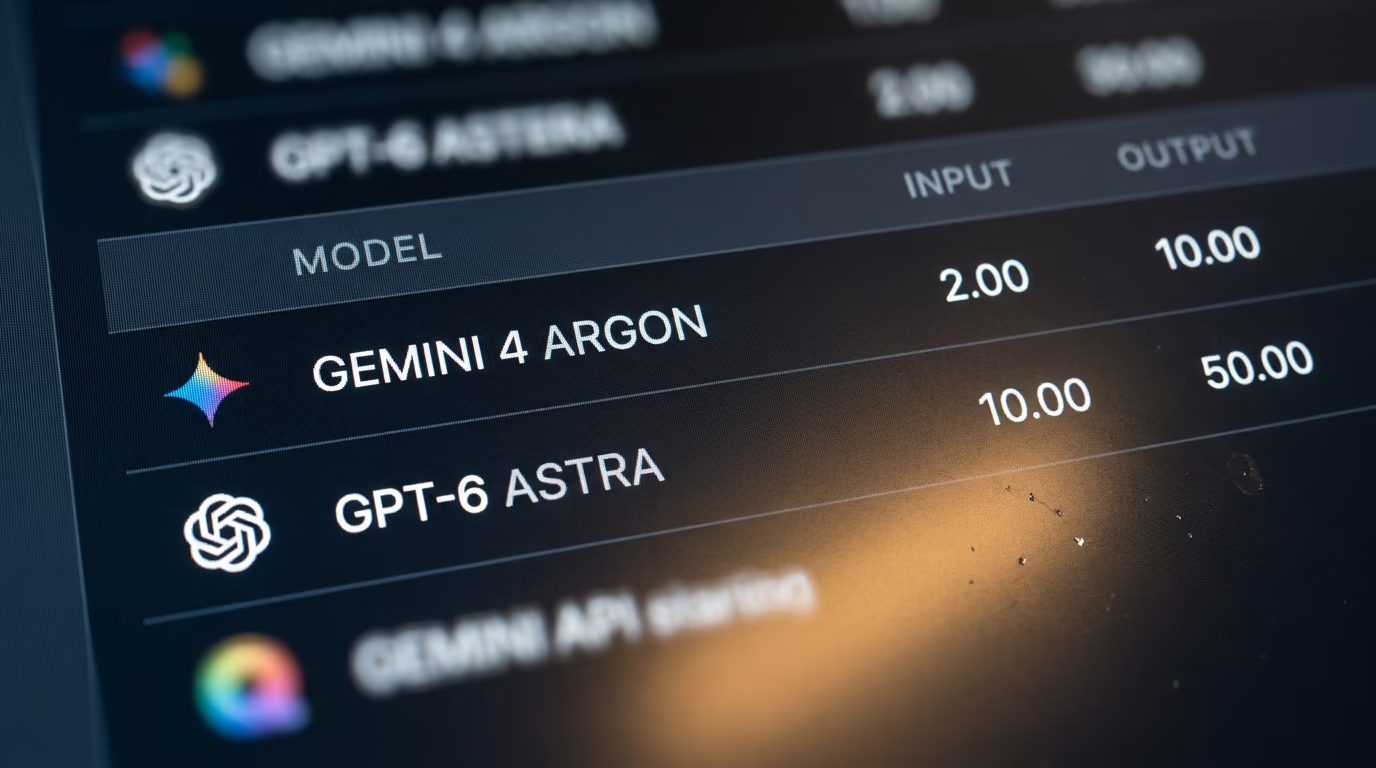
Gemini 4 Argon is the model Google announced on 30 September, and almost nobody can buy it. Google has priced it at a fifth of what OpenAI charges today for GPT-6 Astra, but the model is going out first through a restricted security program, and it appears on neither Google's public pricing page nor its published list of available models, both checked on the morning of 1 October.
GPT-6 Astra is the one you can call this afternoon, at $10 per million input tokens and $50 per million output tokens on OpenAI's live rate card. So the choice between them is not really about which model is cleverer, because the 2 independent firms that have run both of them do not agree on that. It's about which one you can put behind a product this week, what the other will cost when it opens, and how much Google still has not published.
Almost everything written about Argon in its first day is a table of benchmark rows. Those rows are real and Google published them, but they answer a question nobody is stuck on. Below are the 5 checks that actually decide something, who can use each model today, what each one costs, how long an answer each can write, who measured the difference, and what Google has not said yet.
Can you actually use Gemini 4 Argon today?
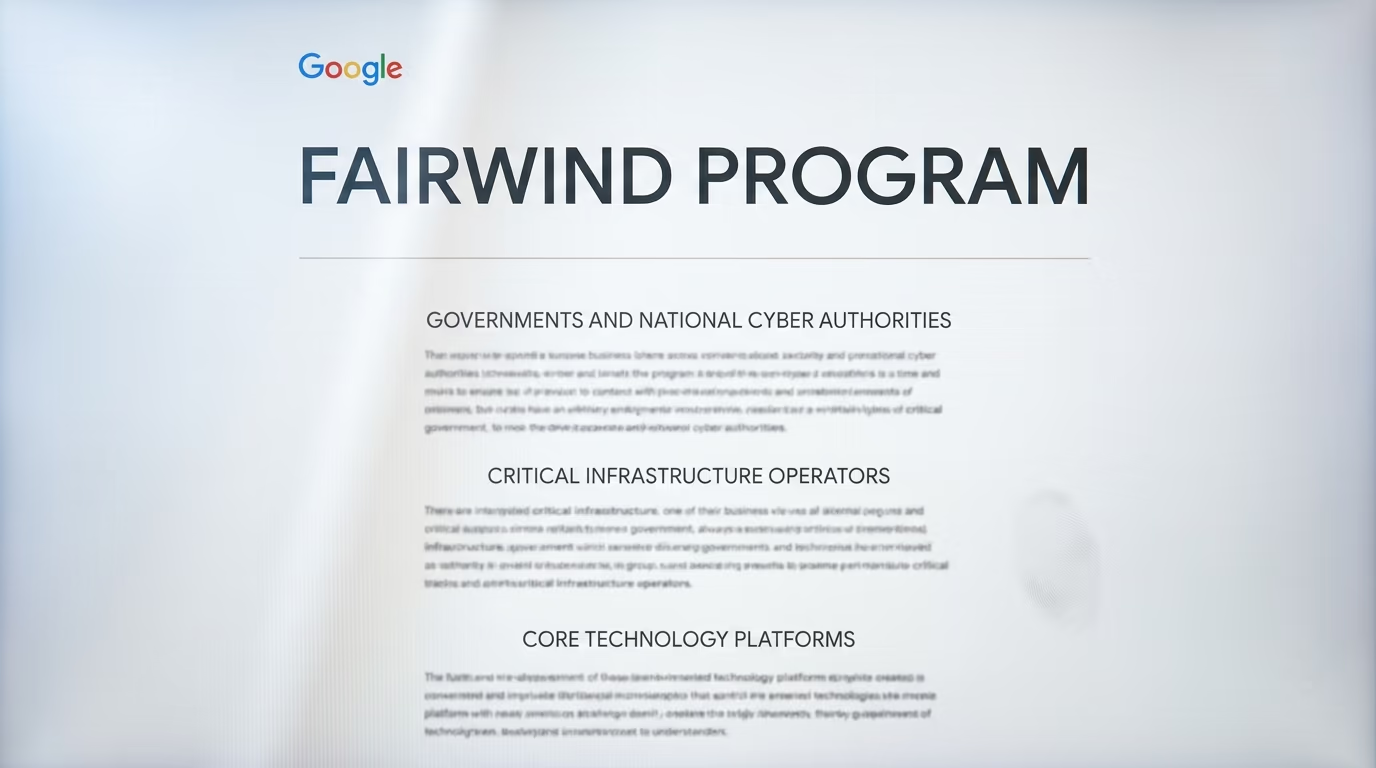
No, not unless your organization is already inside Google's Fairwind Program. Google's announcement says Gemini 4 Argon is rolling out to a set of trusted cyber defenders through that program, and the Fairwind page gives no form, no email address and no application link for anyone else. The announcement is signed by Koray Kavukcuoglu, who is Google DeepMind's SVP and the company's chief AI architect, and it describes the restriction as a phased approach to releasing frontier capabilities safely.
Fairwind launched in early September in a post by Google's vice president for security and privacy, who describes it as a limited access program for governments and trusted partners to use the company's most advanced cyber defense capabilities. Google says it has more than 650 participating partners globally. The page names 3 kinds of organization it prioritizes, governments and national cyber authorities, operators of critical infrastructure across healthcare, telecommunications, energy and financial networks, and the core technology platforms whose software sits underneath millions of other users.
None of those 3 categories describes a software company building a product. If you run a startup, a consultancy or an agency, you are not in the group Google wrote that page for, and the page publishes no queue you could join even if you were.
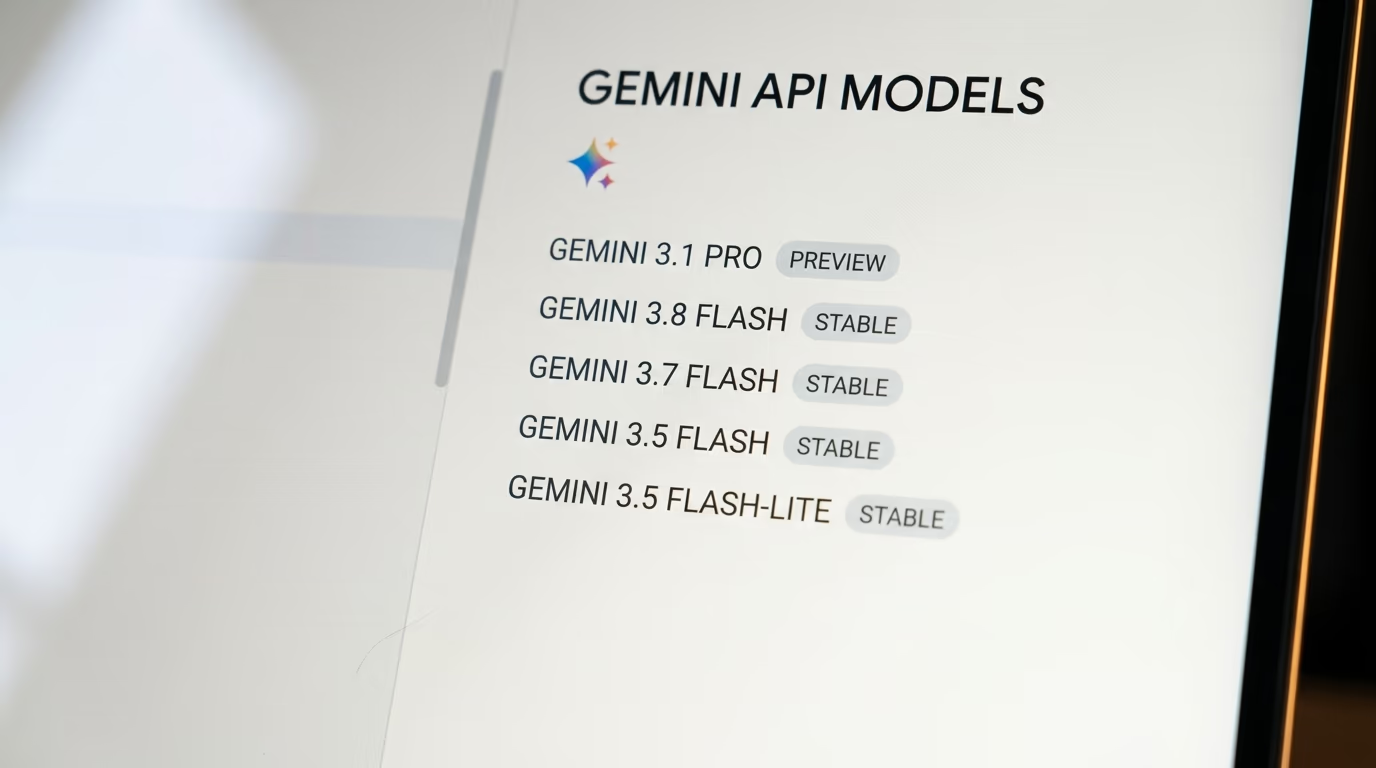
The second check is simpler to run and nobody printed it. On the morning of 1 October, Gemini 4 Argon has no row on Google's published API pricing page, and it does not appear in Google's list of available Gemini models either. The newest entry on that list is still a Gemini 3 model marked as a preview. So the price Google announced is an announced price rather than a rate anyone can be billed against, and that difference matters a great deal if you were planning a migration around it.
Google does say what happens next, without saying when. The announcement commits to making Argon available to developers, enterprises and consumers as soon as possible, starting with paid API customers and Google AI Ultra subscribers. There is no month attached to that sentence and no waitlist sitting behind it.
Astra is the opposite situation in every respect. It sits on OpenAI's public rate card with its context window and its output ceiling printed beside it, any account on a paid API tier can call it, and it reached ChatGPT subscribers during September. We covered that rollout while it was happening, in what Astra changed for people paying for ChatGPT.
What does Gemini 4 Argon cost against GPT-6 Astra?
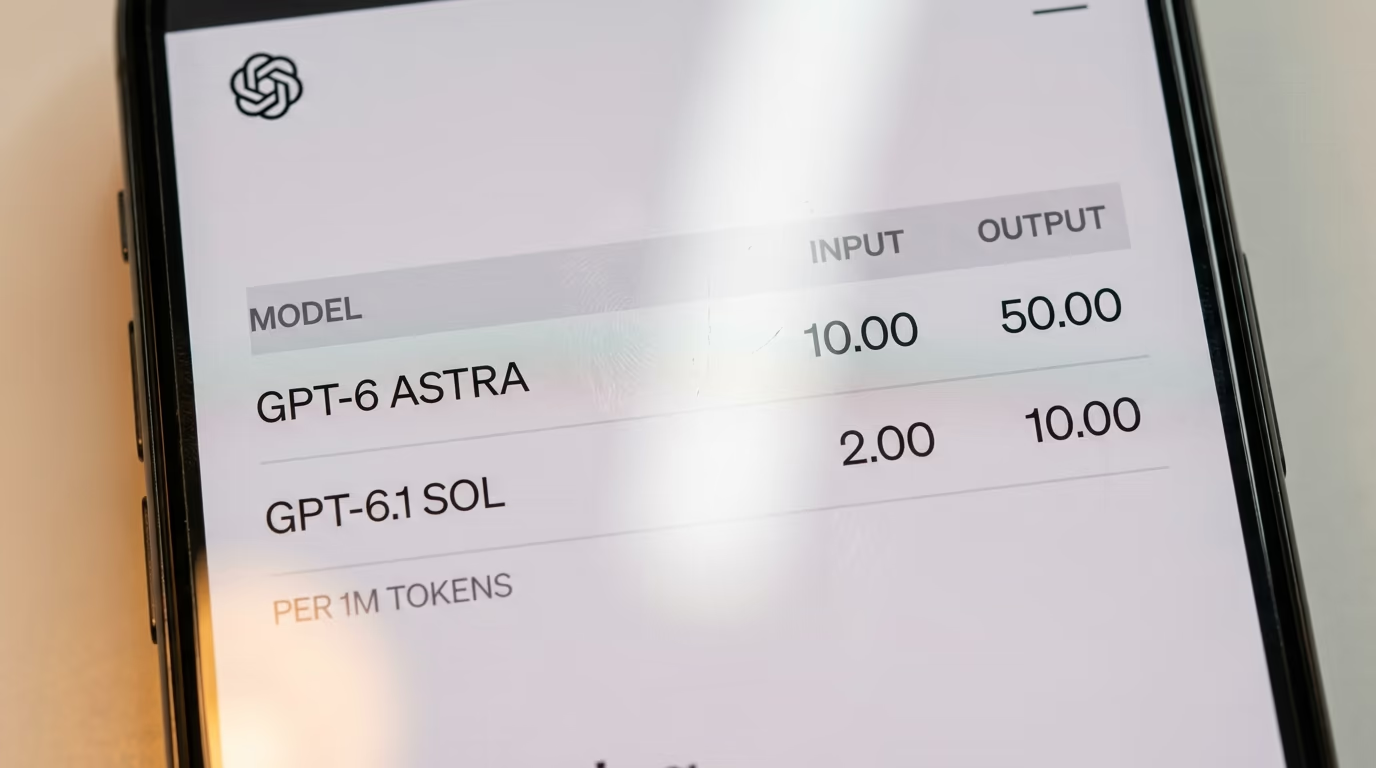
Google says Gemini 4 Argon will cost a fifth of Astra's current rate on both meters during an introductory period, rising to 2 fifths of it once that period ends. Google has not named the date the introduction expires, which means nobody can model what a year of running on Argon would actually cost. Every published figure for both models sits in the table below.
| Gemini 4 Argon | GPT-6 Astra | |
|---|---|---|
| Can you call it today | No, Fairwind partners only | Yes, any paid API tier |
| Input, per million tokens | $2 introductory, $4 after | $10 up to 272K, $20 above |
| Output, per million tokens | $10 introductory, $20 after | $50 up to 272K, $75 above |
| Cached input, per million | 95% off, per Google | $1 up to 272K, $2 above |
| Longest single answer | 1,000,000 tokens, per Google | 128,000 tokens |
| Input context window | Not published | 1,050,000 tokens |
| On the vendor's pricing page | No, checked 1 Oct | Yes |
A million tokens is roughly 750,000 words of English, which is a small shelf of novels. So handing Argon that much text to read would cost a fifth of what the identical job costs on Astra today, and asking either model to write that much back is where the gap really opens, because output is the expensive meter on both of them.
There is a detail in those figures that none of yesterday's comparisons picked up, and it changes how you read Google's intent. Argon's introductory rate is exactly what Anthropic charges for Claude Sonnet 5.5, its middle model, and Argon's standard rate is exactly what Anthropic charges for its Opus model. Both were read off Anthropic's live pricing page this morning. Google has not invented a new price point to undercut the market. It has placed its frontier model precisely on Anthropic's 2 existing rungs and left OpenAI's flagship sitting well above both of them.
The same thing is true inside OpenAI's own catalog, which makes the pressure easier to see. Sol, the cheaper model OpenAI shipped at DevDay, already sells at the identical figures Google has put on Argon's introduction. Google is arguing that frontier intelligence should cost roughly what the rest of the market already charges for a mid tier model.
On cached input the published gap is wider still. Google says cached input on Argon is discounted far more steeply than the tenth of the standard rate OpenAI charges for the same thing on Astra. For anything that re reads one long document on every call, an agent with a fixed instruction file, a support bot carrying a product manual, that line is often the largest item on the monthly bill. We put those meters side by side across the market in our comparison of what the major models charge for 3 real jobs.
One caution travels with every figure in this section. OpenAI's numbers are a live rate card that will bill you tonight, and Google's are a price in a blog post attached to a model you cannot order. Those 2 things are not the same kind of fact, and quietly treating them as equivalent is how a migration plan goes wrong.
Which model can write a longer answer in one go?
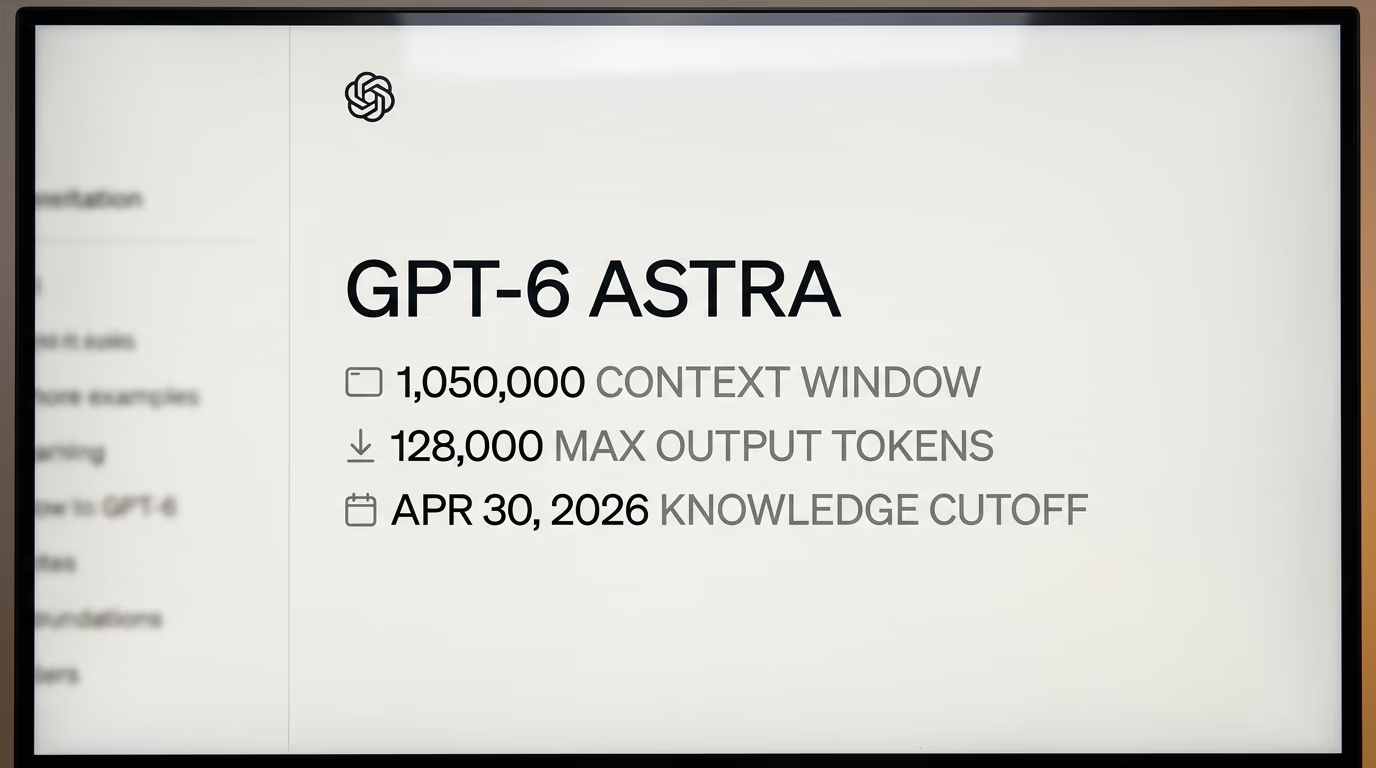
Google claims Gemini 4 Argon can produce up to a million tokens in a single response, the same shelf of novels it can read, while OpenAI's own model page lists a far lower ceiling for Astra, roughly one novel. In plain terms, Google says Argon can write a bookshelf in one answer where Astra writes a book.
Google also says the ceiling used to be far lower, and that it has risen more than tenfold in this single release. That is a bigger change than anything in the benchmark table, and it is the one specification in the whole announcement that would genuinely alter how a working system gets built.
Away from the spec sheet, this decides how a job gets built. Any job that produces more text than a model can emit in one response gets chopped into pieces and stitched back together, and the stitching is where the errors live. Translating a book, migrating a large codebase, generating a long compliance document, producing a full test suite, all of those are currently built as loops that hand the model one chunk at a time and hope the voice, the variable names and the numbering survive the seams. A ceiling that large removes the loop rather than merely speeding it up.
2 things keep that from being a settled win. A published ceiling is not a measured one, and nobody outside the Fairwind group has run a generation at that length and reported what it cost, how long it took, or whether the quality held all the way through. The cost is real money rather than a rounding error too, because output bills at 5 times the input rate, so one answer at the ceiling costs 5 times what it costs to read the same amount of text.
There is a gap on the other meter, and it runs the other way. Google published a limit for how much Argon can write and published nothing at all about how much it can read, while OpenAI lists its context window for Astra on the same page as the output ceiling. When most people say context window, the reading figure is the one they mean, and for Argon that number does not exist in public yet.
Who actually measured Argon against Astra?
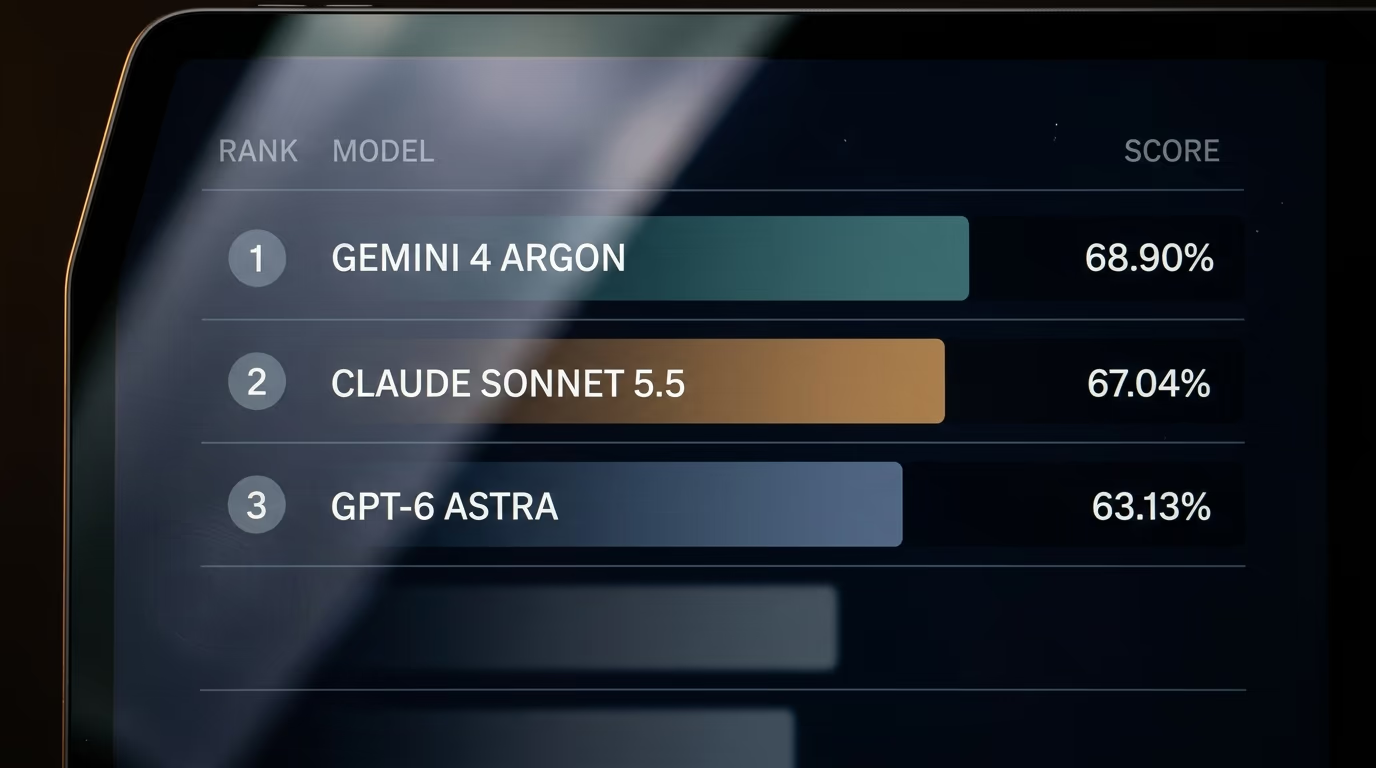
2 independent firms have now run both models and they disagree with each other. Vals AI puts Gemini 4 Argon top of its index at 68.90% with Astra third, while Artificial Analysis scores both models identically on the same version of its Intelligence Index. One scoreboard calls it a clear win and the other calls it a tie.
The Vals Index was refreshed on the day of the announcement, and the firm states on its own site that it runs all of its evaluations and builds many of its benchmarks in house. That is what makes the ranking worth quoting at all. Argon leads it, Anthropic's Claude Sonnet sits second, and Astra is third. Vals also publishes what each run costs, and Argon came in cheaper per test than the Anthropic model directly above Astra.
Artificial Analysis reaches a different conclusion on the headline and the same one on the money. Both models score the same on its Intelligence Index, so on that scoreboard the 2 of them are level on capability. What separates them is the bill, because Artificial Analysis measured $1.99 to run Argon through its index, well under what the identical run cost on Astra.
Google's own numbers sit in a third category and should be read as the company's claims rather than as findings. The announcement reports leading scores on a software engineering test, a business automation test, a long video understanding test, and a vulnerability benchmark where Google says Argon ties for first. Those are Google measuring Google and publishing the result, and nobody outside the company has reproduced any of them yet.
Put the 3 sources together and an honest reader gets a useful answer rather than a tidy one. On capability the models are close enough that 2 serious evaluators split on which is ahead, so anyone telling you Argon decisively wins is quoting one scoreboard and ignoring the other. On price the 2 evaluators agree, independently, that Argon does the same work for meaningfully less, and that finding survived both measurements.
What do we not know about Gemini 4 Argon yet?
Google has not published Gemini 4 Argon's input context window, has not given a date for general availability, has not said what the model costs inside a Google AI Ultra subscription, and has not published any route for an organization to apply to the Fairwind Program. Each of those gaps blocks a decision somebody is trying to make this week, which is why they belong in the comparison rather than in a footnote at the bottom.
The reading limit is the largest of them. Google's announcement names a ceiling on what Argon can write and says nothing whatsoever about how much it can take in, and a model's usefulness for document work, codebase work and long research sessions depends almost entirely on that second figure. Until Google publishes it, every comparison of Argon's context against Astra's is guesswork dressed up as a specification.
Timing is the second hole, and it has no edges at all. Google says it wants Argon with developers, enterprises and consumers as soon as possible, beginning with paid API customers and Google AI Ultra subscribers, and names neither a month nor a trigger. The introductory price carries the same problem in reverse, because Google tells you the rate will double without telling you when that happens.
3 smaller unknowns round it out, and each one blocks a real plan. Google has not said whether Argon inside a Google AI Ultra subscription is included outright, metered, or capped the way most consumer plans handle their best model. It has published no rate limits, meaning no requests per minute and no tokens per minute, which is the figure that decides whether a product can serve customers on a model rather than merely demo on it. And nobody outside the Fairwind group has published an independent reading of that output ceiling, so the headline specification of the whole release still rests on the vendor saying so.
None of this makes Argon a weak release. It makes the release an announcement rather than a product, and those 2 things get confused constantly in the first day after a launch.
Which model should you build on this week?
Build on Astra, because it is the only one of the 2 you can actually call. This is a question of which one takes a credit card rather than which one is better, and for anything shipping this quarter that settles the whole decision. Argon is simply unavailable, which no amount of capability fixes.
The answer changes shape if what blocks you is output length rather than intelligence. If your product keeps hitting Astra's ceiling and losing quality at the seams where you stitch the pieces back together, Argon's announced limit is the first good reason in months to hold a decision rather than commit to an architecture you will later tear out. The signal to watch for is a row for Argon appearing on Google's API pricing page, because that row is what turns an announcement into something you can be billed for.
There is a third reading that helps even if Argon never opens to you at all. 2 independent evaluators now agree that the same quality of work can be bought for well under what OpenAI charges for Astra, and Anthropic already sells its Opus model at the exact rate Google is heading toward. Competitive pressure of that shape tends to reach the rate card of whichever model you are already paying for, which is worth more to most readers than being early on a model they cannot order. We watched the same pattern play out on voice when Gemini Live undercut OpenAI's realtime voice rates, and in the licensing fights behind the open models you can actually ship with.
So the practical move for the next few weeks is small and slightly boring. Keep building on the model you can call, write down the single number that would make you switch, which for most teams is either a published input context window or an output ceiling somebody has tested, and check Google's pricing page rather than its press coverage. The press will keep telling you Argon is the most capable model Google has ever made. The pricing page is what tells you when that claim turns into a line on your own bill.
Questions people ask
Can I use Gemini 4 Argon right now?
Almost certainly not, unless your organization is already a Fairwind partner. Google is rolling Gemini 4 Argon out through its Fairwind Program, a limited access program aimed at governments, critical infrastructure operators and core technology platforms, and the Fairwind page publishes no form, email address or link to apply. Argon also has no entry on Google's public API pricing page or its list of available models.
How much does Gemini 4 Argon cost?
Google's announcement gives an introductory rate of a fifth of what OpenAI charges for Astra on both the input and the output meter, with cached input discounted steeply on top of that. After the introductory period, which Google has not dated, the rate roughly doubles. None of those figures can be billed yet, because Argon does not appear on Google's pricing page.
Is Gemini 4 Argon better than GPT-6 Astra?
The 2 independent firms that have run both of them disagree. Vals AI ranks Gemini 4 Argon top of its index with Astra third, while Artificial Analysis scores the 2 models identically on its Intelligence Index. Both firms agree that Argon produces the same work for meaningfully less money, which is the finding that survived both measurements.
Should I switch from GPT-6 Astra to Gemini 4 Argon?
You cannot switch yet, because Gemini 4 Argon is restricted to Fairwind Program partners and carries no public rate card. If output length is what limits your product, Argon's announced ceiling is a reason to delay a long term architecture decision rather than commit. The signal that it has become a real option is a pricing page row, not another benchmark post.
How long an answer can Gemini 4 Argon write?
Google says Gemini 4 Argon can produce up to a million tokens in a single response, a small shelf of novels, and that this is many times its previous ceiling. OpenAI publishes a much lower maximum for Astra, around one novel's worth of text. Nobody outside Google's early access group has independently tested the larger figure.
What is Google's Fairwind Program and can I join it?
Fairwind is a limited access program Google launched in early September to give governments and trusted partners its most advanced cyber defense capabilities, and Google publishes its partner count on that same page. The page prioritizes governments and national cyber authorities, critical infrastructure operators, and core technology platforms. It publishes no application route, so there is no queue a software company can join.
When will Gemini 4 Argon be available to everyone?
Google has not given a date of any kind. The announcement says the company wants to make Argon available to developers, enterprises and consumers as soon as possible, starting with paid API customers and Google AI Ultra subscribers, without naming a month or a quarter. Google has also not said whether Argon will be included in a Google AI Ultra subscription or metered separately.
What is Gemini 4 Argon's context window?
Google has not published that figure at all. The announcement names a limit on what Argon can write in one response and says nothing about how much text it can read in, which is what most people mean by context window. OpenAI publishes a context window above a million tokens for Astra, so no honest comparison of the 2 reading limits is possible yet.