AISeptember 21, 202612 min read
Qwen Image 2.1 is free to download, and not yours to sell
Alibaba's new image model is a free download that bans commercial use. The 6 Qwen image models before it are Apache 2.0, and every one of them is still on Hugging Face.
Alibaba published Qwen Image 2.1 on 20 September as a free download that forbids commercial use, and that's new for this family of models. Every Qwen image model released before it carries the Apache license, which lets anyone sell what the model makes, and all 6 of them are still sitting on Hugging Face this morning.
So the short answer for anyone with a business is that you can download the new model, run it and write about it, and you can't put it in a product or sell the pictures it makes. The license file calls that non commercial and defines the words itself, which we read line by line below. The odd thing is that Alibaba's own announcement recommends the model for design, content creation, e commerce and visual storytelling, and the license attached to the download forbids all 4 of those jobs unless you email the company first.
What did Alibaba actually ship?
Alibaba shipped a single model that both makes pictures from a written description and edits pictures you already have. The Qwen team inside Alibaba put it on Hugging Face, on GitHub and on its own blog the same evening, Beijing time, and the weights cost nothing to download.
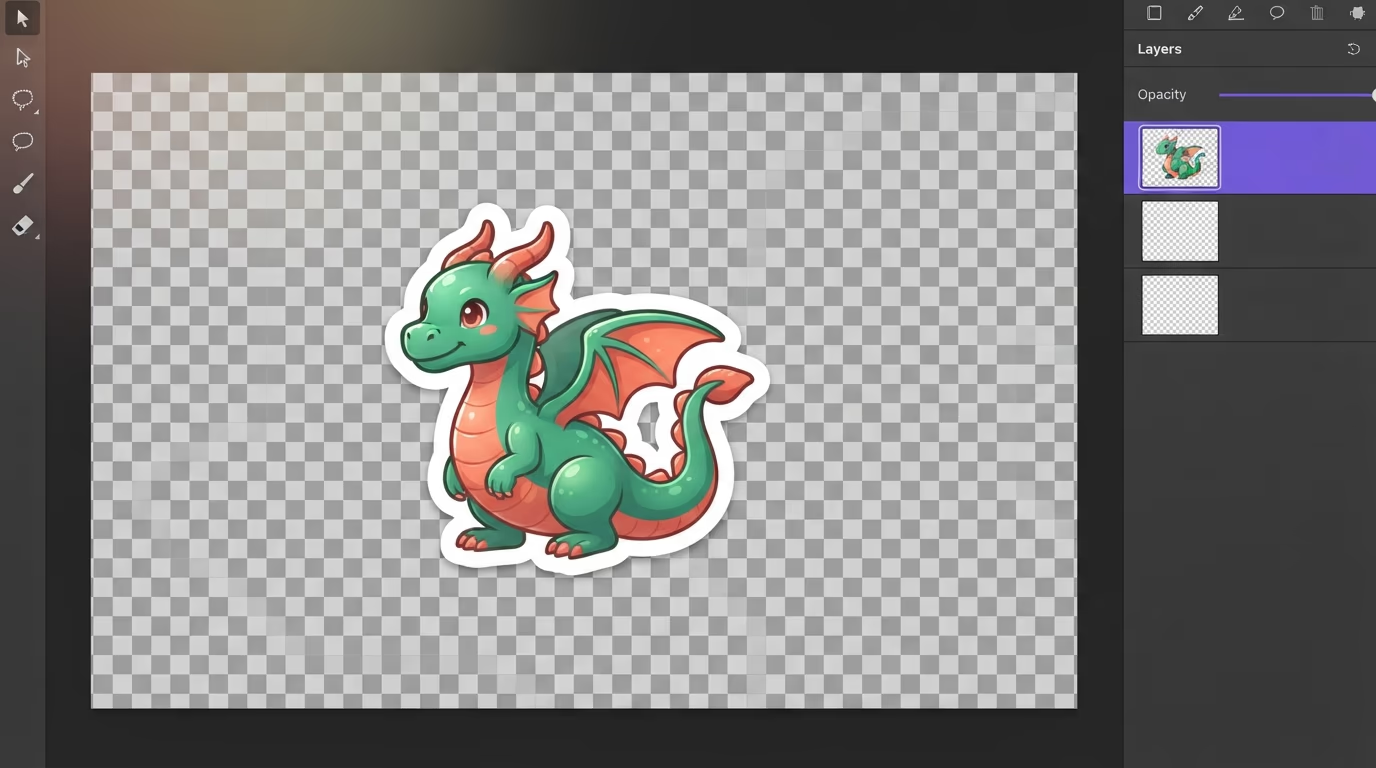
The headline addition is transparency, and it's the reason designers noticed this release at all. Most image models hand you a rectangle, so if you want a sticker or a logo with nothing behind it, somebody has to cut the background out afterwards. Alibaba says this model produces a picture with a see through background directly from the words you type, and can also lift a person or an object out of an ordinary photograph as a clean layer. The lab shipped a separate model for that job in December and has now folded the ability into the main one.
The second addition is how many pictures you can feed it at once. Alibaba says it accepts up to 10 reference images in a single request, which is what the jobs people actually do with these models need, putting several different faces into one group photograph, or dressing a model in a jacket, shoes, a bag and a hat that each came from their own product shot. You can also mark up an image to say where an edit should happen, by drawing a circle on it or painting over the area, instead of describing the spot in words.
Everything above comes from Alibaba's own announcement rather than from a measurement anyone outside the company has made. The lab also put a comparison chart on that page showing the new model against other open and closed systems, and we come back to that chart further down, because what it runs on matters more than what it shows.
What does the Qwen research license forbid, and what does a commercial one cost?
The Qwen research license lets you use the new model for research or evaluation and nothing else, and Alibaba publishes no price for anything beyond that. The license file sits in the model repository on Hugging Face, carries the same release date as the announcement.
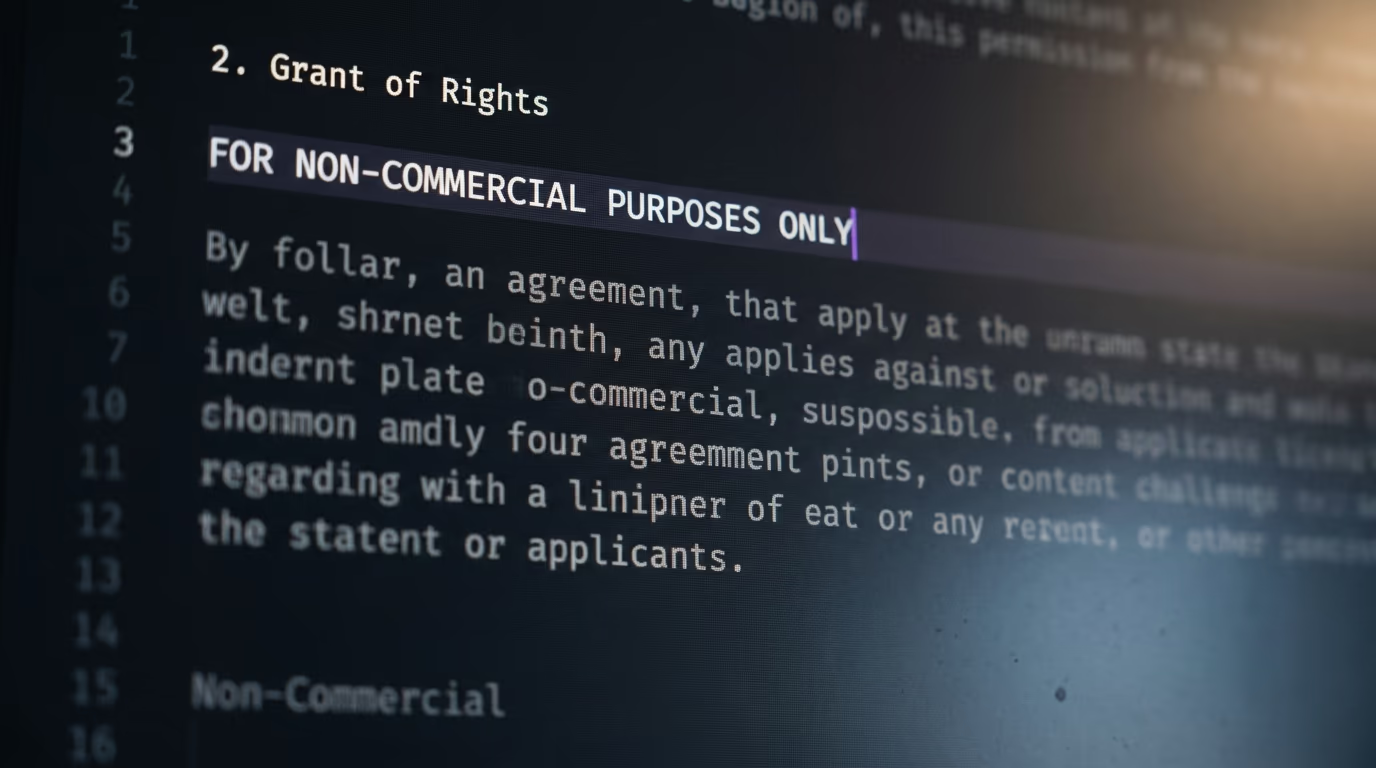
Section 2 grants a free worldwide license to use, copy, modify and redistribute the model, and then caps it in capital letters, for non commercial purposes only. Section 1 defines the phrase so that nobody can argue about it later, saying that Non Commercial shall mean 'for research or evaluation purposes only'. Section 2 then adds one more sentence, and it's the one that matters to anyone running a business. 'You shall not use the Materials for any commercial purpose without obtaining a separate commercial license from us.'
In plain words, you can download the model, run it on your own machine, compare it against others, write a paper or a blog post about it, and show what it produced. You can't put it inside an app you charge for, use it to make pictures for a client, run it behind a website that takes money, or sell the stickers it generated. The line is drawn at the money and not at the size of the operation, so a freelancer billing a single invoice sits on exactly the same side of it as a company with a data center.
The edge cases are where people get stuck, and the definition in Section 1 answers most of them. A picture you post on a personal blog with no advertising on it is evaluation. The same picture used as a thumbnail on a channel that earns money is not. A mockup you put in front of a client is commercial, because the pitch exists to win paid work, and an app you hand out free while selling a subscription tier is commercial throughout. None of that is Alibaba behaving unusually, since a research license has always meant this, and the only reason it stings here is that the previous models in this family carried no such line at all.
The commercial route is an email address. Section 2 tells you to request a license from a business address at Alibaba's cloud domain, and that's the entire procedure the company publishes. There is no rate, no tier list, no turnaround time and no indication of whether a solo developer would get an answer at all. Alibaba does publish per image prices for the image model it hosts on its own cloud, so the company clearly knows how to put a number on image generation. It hasn't put one on this.
One more clause catches anyone planning to build on the model later. If you use it to train or improve another model and then release that model, the license requires you to display the words Built with Qwen in the documentation. The agreement is also governed by the law of China, with the courts of Hangzhou holding exclusive jurisdiction, which quietly decides where any disagreement about it would be settled.
Which Qwen image models can you still use commercially?
6 Qwen image models published between August and December of last year carry the Apache 2.0 license, which allows commercial use, and every one of them is still downloadable from Hugging Face. We read the license field of each repository through the Hugging Face API this morning rather than trusting a summary of it, and the table below is what came back.
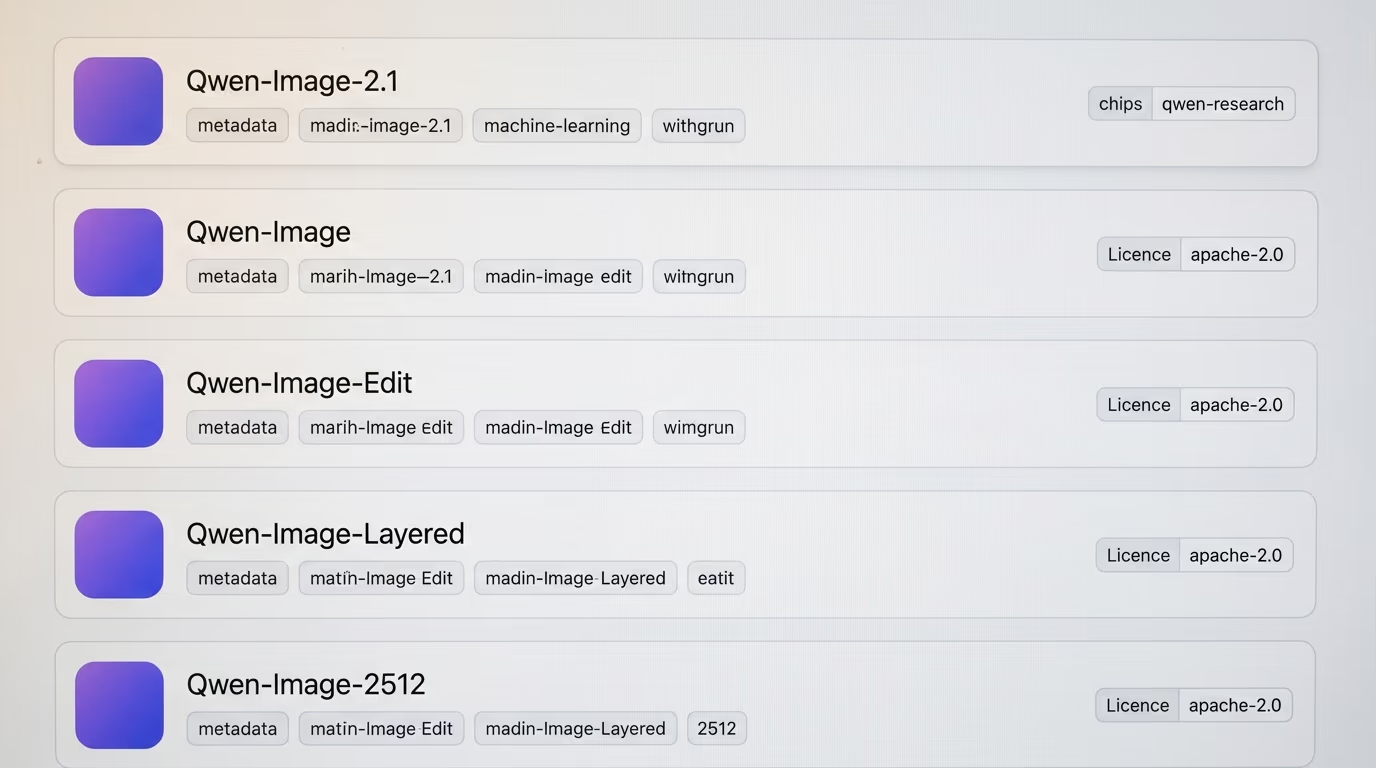
| Model | Published | License | Downloads, last 30 days |
|---|---|---|---|
| Qwen-Image | 2 August 2025 | apache-2.0 | 307,901 |
| Qwen-Image-Edit | 17 August 2025 | apache-2.0 | 128,251 |
| Qwen-Image-Edit-2509 | 22 September 2025 | apache-2.0 | 473,808 |
| Qwen-Image-Edit-2511 | 17 December 2025 | apache-2.0 | 323,200 |
| Qwen-Image-Layered | 17 December 2025 | apache-2.0 | 79,081 |
| Qwen-Image-2512 | 30 December 2025 | apache-2.0 | 53,240 |
| Qwen-Image-2.1 | 20 September 2026 | qwen-research, non commercial | 183 |
Those download counts say something that the license change on its own doesn't. One of the editing models on that list was pulled close to half a million times in the last month alone, which is the traffic of an established tool rather than a curiosity, and every one of those copies arrived with permission to sell the work. Whatever else has happened here, a large number of people have already built on Qwen image models under terms that allowed them to charge for the result.
Anyone who has already shipped something built on a Qwen image model is fine, and nothing about this release reaches backwards into a product they have already sold. The license on the model you downloaded is the license you keep. What changes is the upgrade path, because the obvious next step, moving to the newest version for better output, now costs an email and an answer nobody can predict instead of a download. Teams that treated this line of models as a dependable free base have to plan around a release they cannot adopt, and that planning question matters more to them than anything in the announcement.
A license already granted can't be taken back for the copies already published. The Apache text grants a perpetual, worldwide, no charge, royalty free and irrevocable copyright license in its own wording, so the older Qwen image models stay usable on those terms for anyone holding a copy, whatever Alibaba chooses to do with the files later. Downloading the weights you might need, and keeping the license file in the folder beside them, costs you an evening and removes the question entirely.
Is Qwen Image 2.1 open source?
No, the new model is not open source under the definition the Open Source Initiative publishes, because that document forbids exactly the restriction this license carries. Its 6th clause says a license must not stop anyone from using a program in a specific field of activity, and it names business use as its own example of what a license may not block. A license that permits research and blocks commerce fails that clause on its first line.
Alibaba's own announcement calls this an open source release, and the GitHub repository describes it as the lab's most powerful open source image generation model. Both of those sentences sit one click away from a license file whose second section says non commercial only. A developer reads that description before deciding whether they can build on something, and almost nobody opens the license file first.
The accurate term is open weights, and open weights is a real and useful thing to be handed. You can download the files, run them on your own hardware, look at what they do and keep your images off somebody else's server, which is more than any closed model offers. We wrote about what open weight models are and where they stop, and the short version is that open weights and open source answer different questions, one about access and one about permission.
Alibaba deserves the fair version of this story too. The Qwen team has published more freely usable model weights than almost any laboratory in the field, 6 of its image models are still on the Apache license today, and nothing obliges a company to give its newest work away. Google did the same thing in reverse earlier this month when it closed the license on its newest forecasting model after shipping the previous version under Apache terms. A lab that builds an audience on open terms and then closes its newest release teaches everyone downstream to plan for the next one.
What does it take to run Qwen Image 2.1 tonight?
Running the new model on your own machine means downloading about 33 GB of files and owning a serious graphics card, so most people should open the free demo first. Alibaba runs a public demo of it on Hugging Face, which costs nothing and sits squarely inside what the license allows, since evaluation is one of the 2 uses the agreement names.
That figure comes from adding up the model files in the repository, which we did this morning. Most of the download is the piece that draws the picture and the language piece that reads your prompt, so the load can be split between the graphics card and ordinary system memory when the card is too small, at the cost of speed. If you've never rented a machine for work like this, our comparison of RunPod and Vast.ai covers what an hour of a decent card actually costs.
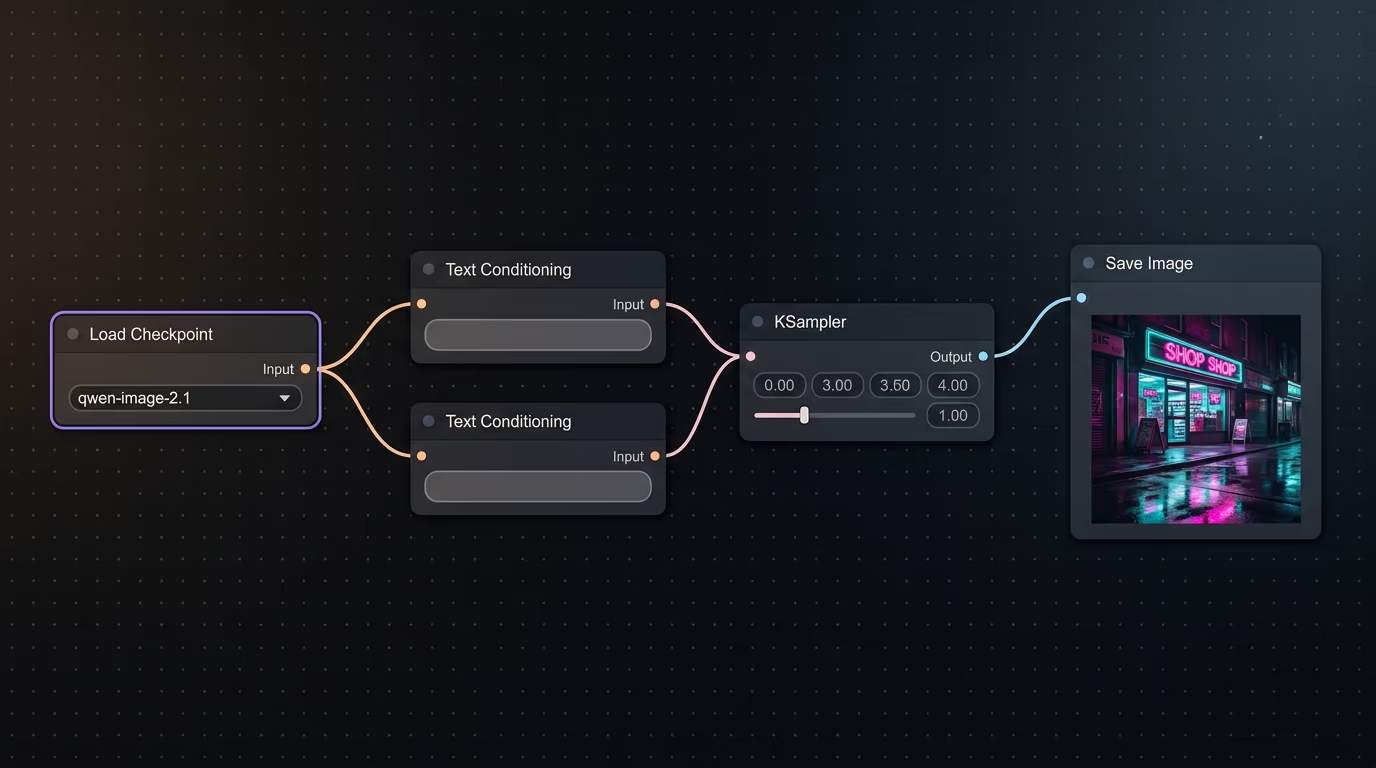
ComfyUI, the node based tool most people use for image models at home, added support on release day, and its own page walks through loading the weights and wiring the text encoder node. The other route is the diffusers library in Python, and Alibaba prints a short working snippet on the model card itself. Smaller repacked copies usually appear within days for people with less memory, and our explainer on why the same model comes in different file sizes covers what you give up when you take one.
A smaller repacked copy carries the same restriction as the original, because the terms travel with the files and cover anything derived from them. The community mirror of this model already on Hugging Face carries the same research license tag as Alibaba's own repository. Downloading from a different account changes nothing about what you're allowed to do with the result.
Alibaba also published 2 companion repositories on the same day, both tagged for prompt rewriting, which means they take what you typed and turn it into a fuller instruction before the image model ever sees it. Both carry the same research license as the main release, so pulling them in to improve your results does not open a door the main file closed. Neither had recorded a single download when we checked this morning, a few hours after they appeared.
What we do not know yet
Nobody outside Alibaba has independently measured the new model yet, which is normal this soon after a release. The comparison chart in the announcement runs on Qwen Image Bench, and that evaluation set is published on Hugging Face by the Qwen team itself, so the lab is both the contestant and the scorekeeper. That doesn't make the result wrong, and it does mean nobody has checked it.
The chart is also a picture rather than a table. Alibaba put the comparison on its blog as an image, so there is no set of figures in the written text to copy or to argue with. Several sites are already repeating a score for this model that appears nowhere in the announcement itself, and we're not going to add to that pile by reprinting a number we could not read at the source.
Other questions stay open as well. Alibaba publishes no price and no terms for a commercial license, only an address to write to. There's no statement about whether the older Apache models stay available for download, no signal about whether the next version returns to Apache terms, and nothing saying whether this is the new normal for the family. And the agreement is settled under Chinese law in the courts of Hangzhou, which very few people outside China would choose as the venue for a disagreement about a file they downloaded.
What to do tonight if you need images for a business
If you need pictures you can sell, use one of the older Apache models and leave this release alone for now. The December text to image update is still on Hugging Face under Apache terms, and Alibaba called it the strongest open model on its own arena testing when it shipped. The matching editing model from the same month sits on the same terms, and between them they cover most of what a small business asks an image model to do.
If what you want is the transparency trick specifically, the layered model from December was built for exactly that and carries Apache terms as well. It's a separate download rather than one model doing everything, which is less convenient than the new release and completely usable inside a product you charge for, which the new release is not.
If you only want to see what the new one can do, open the demo on Hugging Face and type something into it. Evaluation is explicitly allowed and costs nothing, and you'll know within a few minutes whether transparent backgrounds and a stack of reference images matter to the work you actually do. If they do, that's the moment to send the email and find out what Alibaba says back, and it would be worth telling the rest of us what the answer was.
And if you keep these models on your own machine, download the Apache versions you care about while they are there and keep the license file in the same folder as the weights. A license already granted holds for the copy in your hands, whatever happens to the page you got it from. It takes an evening and it removes a question you would otherwise be asking a lawyer about next year.
Questions people ask
Can I use Qwen Image 2.1 commercially?
No. The license grants use for research or evaluation only, and it says you shall not use the model for any commercial purpose without obtaining a separate commercial license from Alibaba. Selling the images it makes, putting it inside a paid product and using it for client work all sit outside what the free download allows.
What license does Qwen Image 2.1 use?
The Qwen Research License Agreement, which sits in the model repository on Hugging Face and is dated the day of the release. It grants a free worldwide license for non commercial use, requires anyone distributing a derivative to display the words Built with Qwen, and is governed by Chinese law with the courts of Hangzhou holding exclusive jurisdiction.
Is Qwen Image 2.1 open source?
No. The Open Source Definition forbids a license from restricting use in a specific field of activity and names business use as its example, and this license restricts commercial use. Open weights is the accurate description, meaning the files are free to download and run while the permission to sell with them is not granted.
Which Qwen image models can I still use for commercial work?
All 6 published before this one, checked against Hugging Face this morning. Qwen Image, Qwen Image Edit, the 2 later editing updates, Qwen Image Layered and the December text to image model all carry the Apache license, which permits commercial use. The table in this article lists each one with its publication date.
How much does a commercial license for Qwen Image 2.1 cost?
Alibaba publishes no price for one at all. The license names an email address for license requests and nothing else, with no rate card, no tiers and no stated response time. The company does publish per image prices for the image model it hosts on its own cloud, which is a different product entirely.
What hardware do I need to run Qwen Image 2.1?
The model files add up to about 33 GB, so you need a machine that can hold them across a graphics card and ordinary system memory. ComfyUI added support on release day, and the free demo Alibaba runs on Hugging Face needs no hardware from you at all.
What is new in Qwen Image 2.1 compared with the older Qwen image models?
Alibaba says it creates and edits in one model, produces pictures with transparent backgrounds directly from a prompt, and accepts up to 10 reference images in one request. Those are the lab's own claims, and no independent test of them has been published.
Does a smaller repacked version of Qwen Image 2.1 have a different license?
No. The terms travel with the files and cover anything derived from them, and the community mirror already on Hugging Face carries the same research license tag as Alibaba's own repository. Downloading from a different account does not change what you are allowed to do.