AISeptember 14, 202611 min read
What Claude Fable 5.1 really did to a 370 year old cipher
Vals AI says Claude Fable 5.1 read a cipher printed in 1653 in 44 minutes. A replication the next day reports 8 of the 64 letters, which is chance.
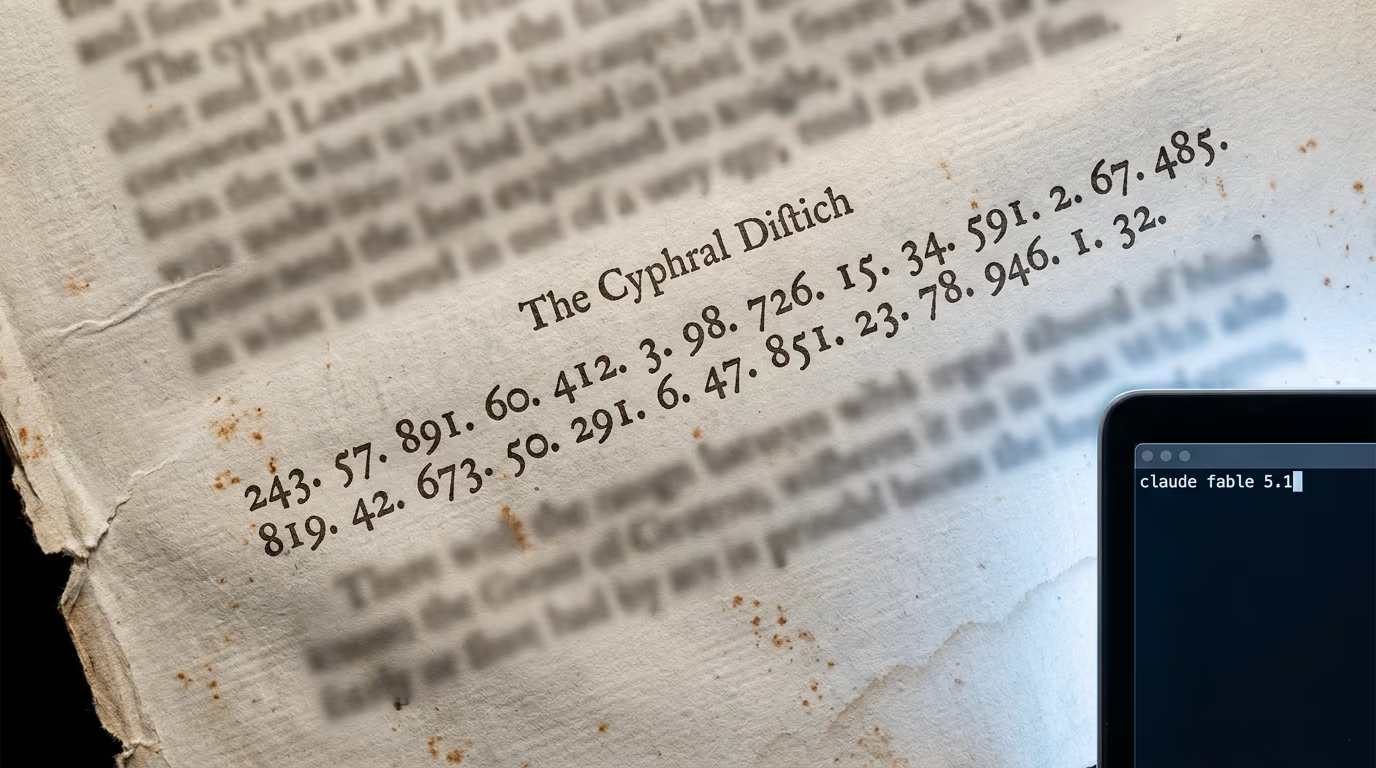
Vals AI published a post at the end of August saying that Anthropic's Claude Fable 5.1 had decoded the Cyphral Distich, a pair of lines made of numbers, printed by the Scottish writer Sir Thomas Urquhart in 1653, that nobody had managed to read since. Vals says the model worked for 44 minutes with no human stepping in, and that what came out was a rhyming prayer for King Charles the Second. The next day, an independent replication posted on GitHub said the same decoding rule produces 8 correct letters out of 64, which is what random guessing produces. A fortnight on, no named historian of ciphers has publicly confirmed or rejected either version.
That gap between the headline and the state of the evidence is what this piece is for. Dozens of sites carried the story within a day of the post, and nearly all of them stopped at the running time. What follows is the claim, the counterclaim, the arithmetic on what the run cost at Anthropic's published rate, and the free scan you can open tonight to go and look at the page yourself.
What did Claude Fable 5.1 actually do to the Cyphral Distich?
Anthropic's current flagship model was pointed at an unsolved historical cipher by the evaluation company Vals AI, and it produced a candidate reading inside a single hour. Vals published the account on the last day of August and says the model ran with zero interjections once it had started.
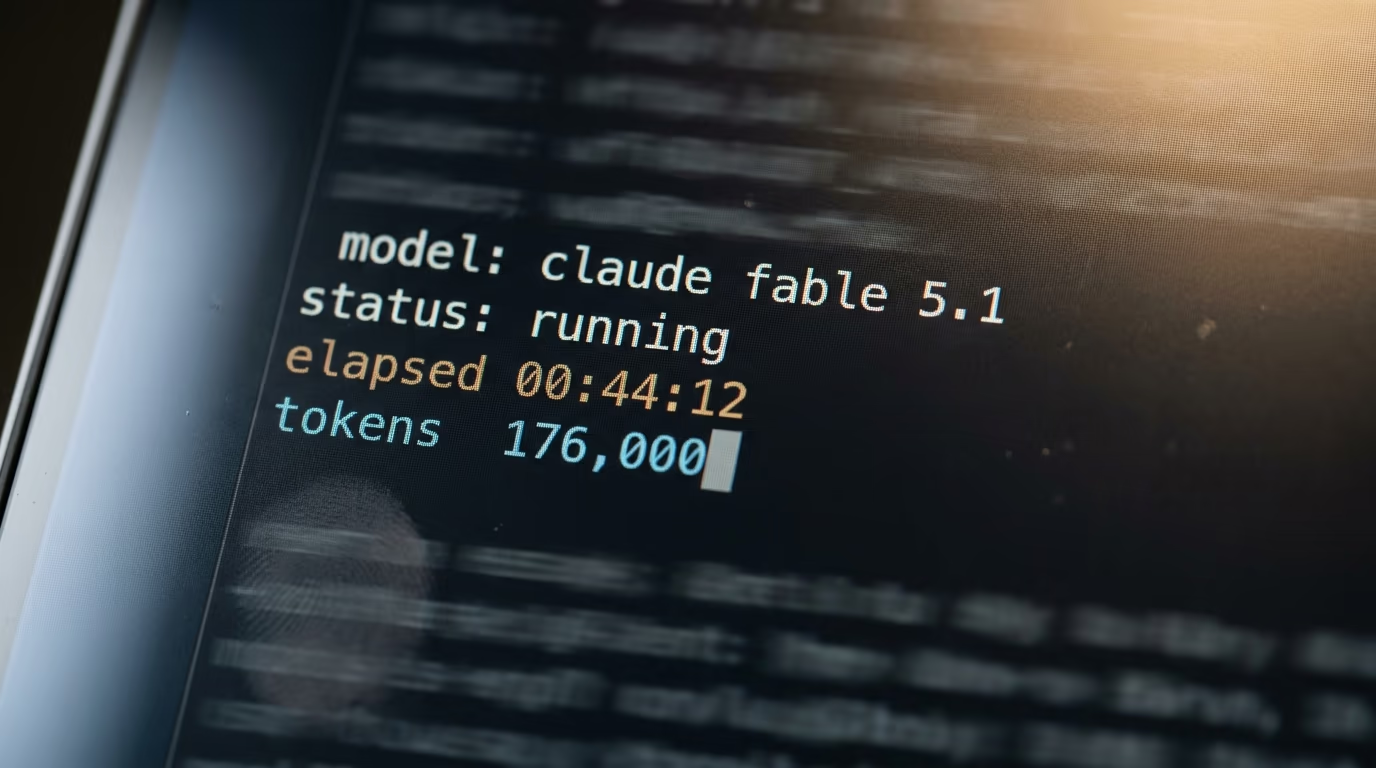
The figures Vals gives are small enough to say out loud without losing anybody. Roughly a long novel's worth of text moved through the model as it read the book and checked its own working, and it did all of that inside a single lunch hour. Vals says the model tried several approaches before one of them held, and that it recognised on its own when a line of attack was going nowhere.
What came out is a pair of English lines. Vals prints them as O GOD UPHOLD KING CHARLS THE SECOND AND, then MAKE HIM THE SUPREME RULER OF THIS LAND. Each line carries exactly as many letters as its cipher line carries numbers, and the lines rhyme on and and land. Vals calls that self verifying, and the argument is reasonable on its face, because a wrong rule would not normally hand you rhyming English of exactly the right length.
Vals then went further with the same rule. It reports that the model also read a longer cipher from Urquhart's earlier book The Jewel, and got a royalist poem out of it. That second reading is where the cracks start to show, and Vals flagged them in its own post before anybody else got there.
What is the Cyphral Distich, and who was Sir Thomas Urquhart?
The Cyphral Distich is a pair of printed lines made of numbers, published in Logopandecteision, a book by the Scottish writer Sir Thomas Urquhart, and it has sat in the unsolved pile since the Victorian era, when it was posed as an open question in the journal Notes and Queries. Urquhart was a royalist who fought for Charles the Second at Worcester, translated Rabelais into English, and spent years pushing a universal language nobody ever adopted.
Vals says the cipher appears on Klaus Schmeh's list of the top unsolved encrypted messages, and Schmeh is the reference most people in historical cryptography reach for. So on Vals's own account this wasn't an obscure curiosity somebody dug up to make a model look good, it had a place on the canonical list of things nobody had read.
Why did it stay closed for so long? There is almost nothing to work with. Frequency analysis, the workhorse of classical code breaking, needs volume to find a pattern, and a message this short gives a human almost no statistical grip on it. On top of that, a book cipher only opens if you already know which text it points at, and a wrong guess produces convincing nonsense forever.
What makes it an unusually good target for a language model is that the cipher and the text it points at were printed in the same volume. A model can hold Urquhart's whole book in its head at once, try a counting rule across all of it, look at the letters that fall out, decide they aren't English, and try a different rule, over and over, without getting bored or losing the thread. That patience across a fixed body of text is the actual skill on display, whoever turns out to be right about the answer.
How does the Cyphral Distich decoding rule work, in plain words?
The rule the model proposed is a book cipher pointing at Urquhart's own text, and it takes one sentence to state. For the first number in a cipher line, go to the first of Urquhart's numbered wishes, count that many words along, and write down the first letter of the one you land on.
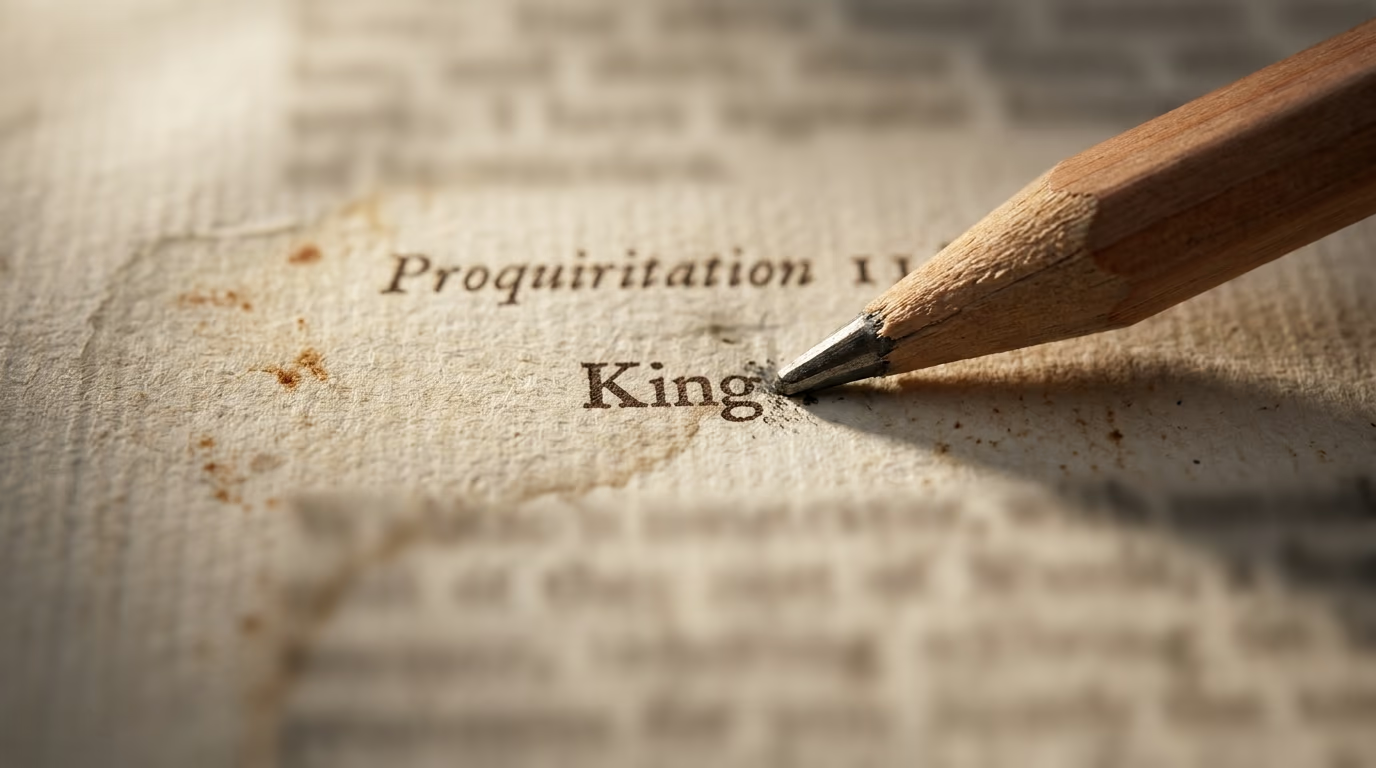
Then repeat for the second number using the second wish, the third number using the third wish, and so on down the line. Urquhart called those wishes Proquiritations, a term he seems to have coined, and the book holds exactly as many of them as each cipher line holds numbers, which is the coincidence the whole reading rests on.
Vals says the model noticed the clue almost at once. Urquhart bangs on about his Proquiritations throughout the text, and the little poem printed beside the cipher promises the reader will find in it his own heart's wishes, and the Author's minde. A double reference to wishes, next to a cipher with one number per wish, is the sort of coincidence a patient reader stops on.
The rule is completely checkable by hand, and that is what makes this story worth more than a benchmark score. Anybody with the printed text, a pencil and an evening can take a single position, count along, and see whether the letter the solution needs is the letter that actually turns up. It takes no API credit and no permission from anyone. That is a rare quality in an AI result, and it is exactly what somebody went and did the following day.
Who checked the answer, and what did the check find?
A GitHub account called Reticuli published a replication attempt the day after the Vals post, and it reports that the rule does not produce the claimed letters. Its central finding is that 10 of the cipher positions are what it calls hard infeasible, meaning the letter the solution needs begins nothing at all in the section that position points at.
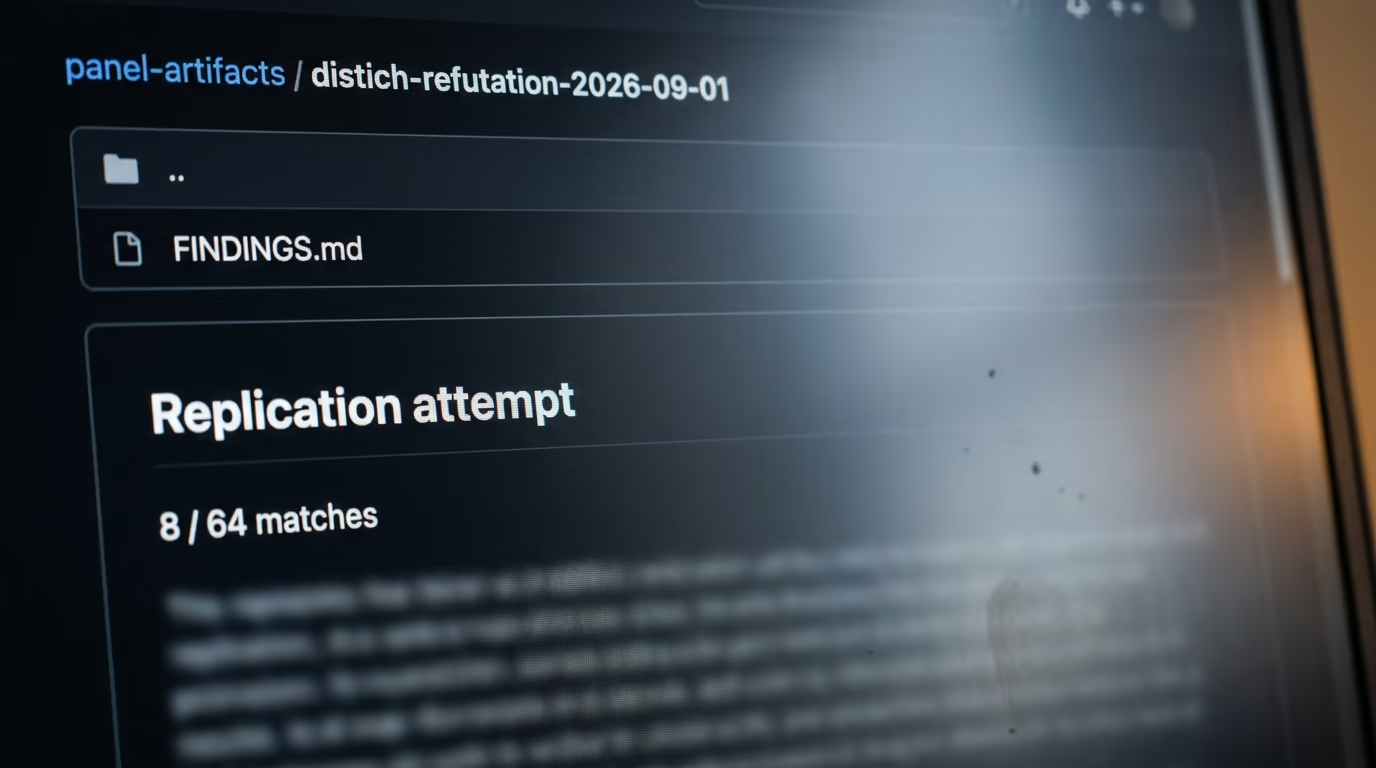
The clearest example it gives is the eleventh position of the first line. The solution needs a K there, for KING, and the document says the eleventh Proquiritation runs long and not a single thing in it starts with a K. If that holds, no amount of adjusting how you count rescues that position, because the letter simply isn't in the section. It lists others of the same kind across both lines.
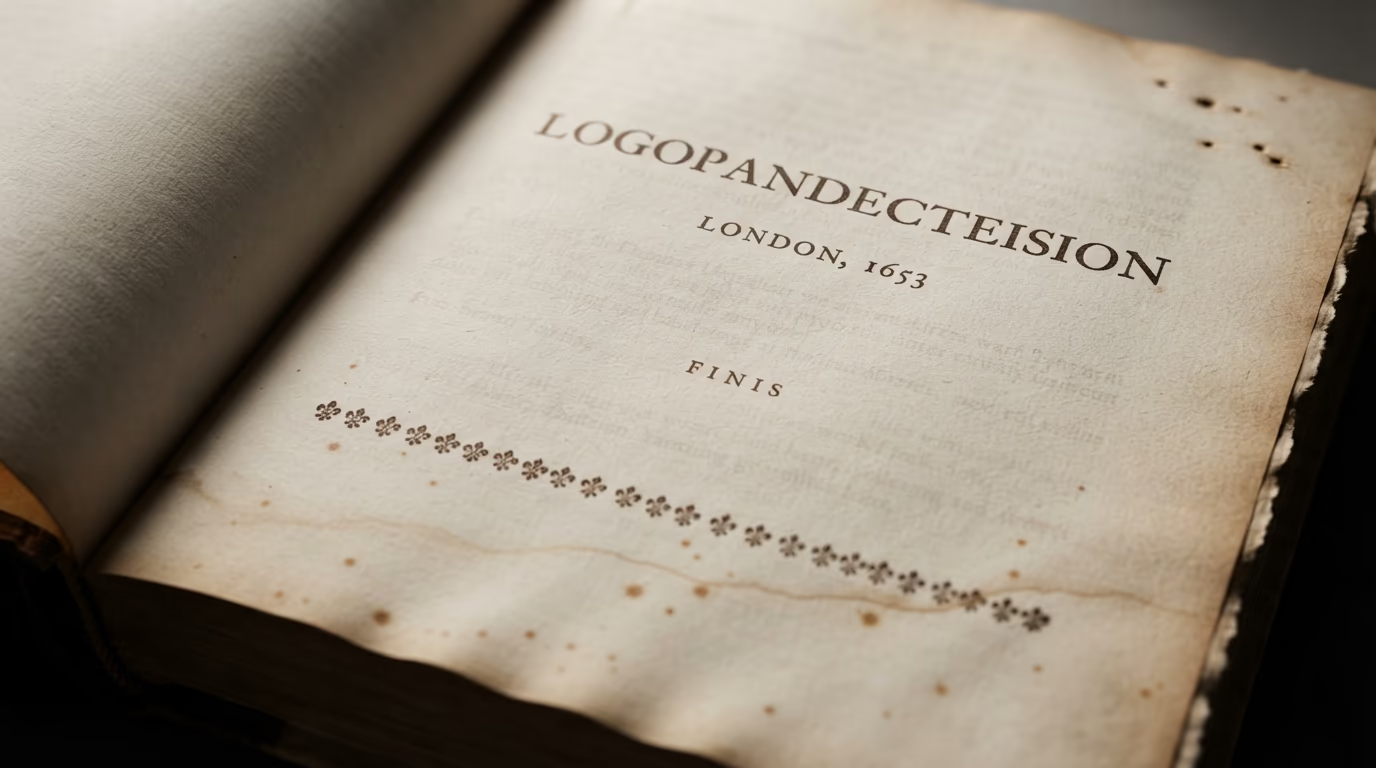
The document also says it ran a grid of dozens of different counting conventions, covering the sensible ways you might treat punctuation, the old spellings and the long s, and the best of them landed at chance level. Its second finding is more awkward still, because it says the copy of the book it examined has no cryptogram at the end at all, running instead from the last Proquiritations straight through a printer's ornament row to FINIS and the errata.
Before that lands as a verdict, here is what Reticuli actually is. It's a GitHub user account opened in July, holding a handful of public repositories, with no stars on the one containing the refutation, no website, no stated affiliation and no named author. The document itself is careful and it names its sources, a British Library film of the book on the Internet Archive and a print verified EEBO transcription, but a new anonymous account is not a cipher historian either. What we have is a claim and a counterclaim, both published by interested parties, neither confirmed by anyone with a name in the field.
| What Vals AI published | What the replication published | |
|---|---|---|
| Published | 31 August 2026 | 1 September 2026 |
| Who | Vals AI, an AI evaluation company | Reticuli, a GitHub account opened 10 July 2026 |
| Source text used | Internet Archive scan plus EEBO transcriptions | British Library film plus EEBO-TCP transcription A64608 |
| Is there a cipher at the end of the 1653 book | Yes, the Cyphral Distich | No cryptogram in the copy examined |
| Letters the rule produces correctly | All 64, as two rhyming lines | 8 of 64, described as chance level |
| Positions the rule cannot produce | None named | 10, listed one by one |
| Counting conventions tested | Not stated | 65 |
| Tokens and run time | 176,000 tokens, 44 minutes | Not stated |
| Underlying files published | No | Yes, in the repository |
| Confirmed by a named cipher historian | Not stated | Not stated |
What did the 44 minute cipher run cost?
Vals did not publish a cost, but Anthropic publishes what its flagship model charges, so the run can be bounded with arithmetic instead of guessed at. At the listed rate, the tokens Vals reports work out somewhere between $1.76 and $8.80, depending on how much of that volume the model wrote rather than read.
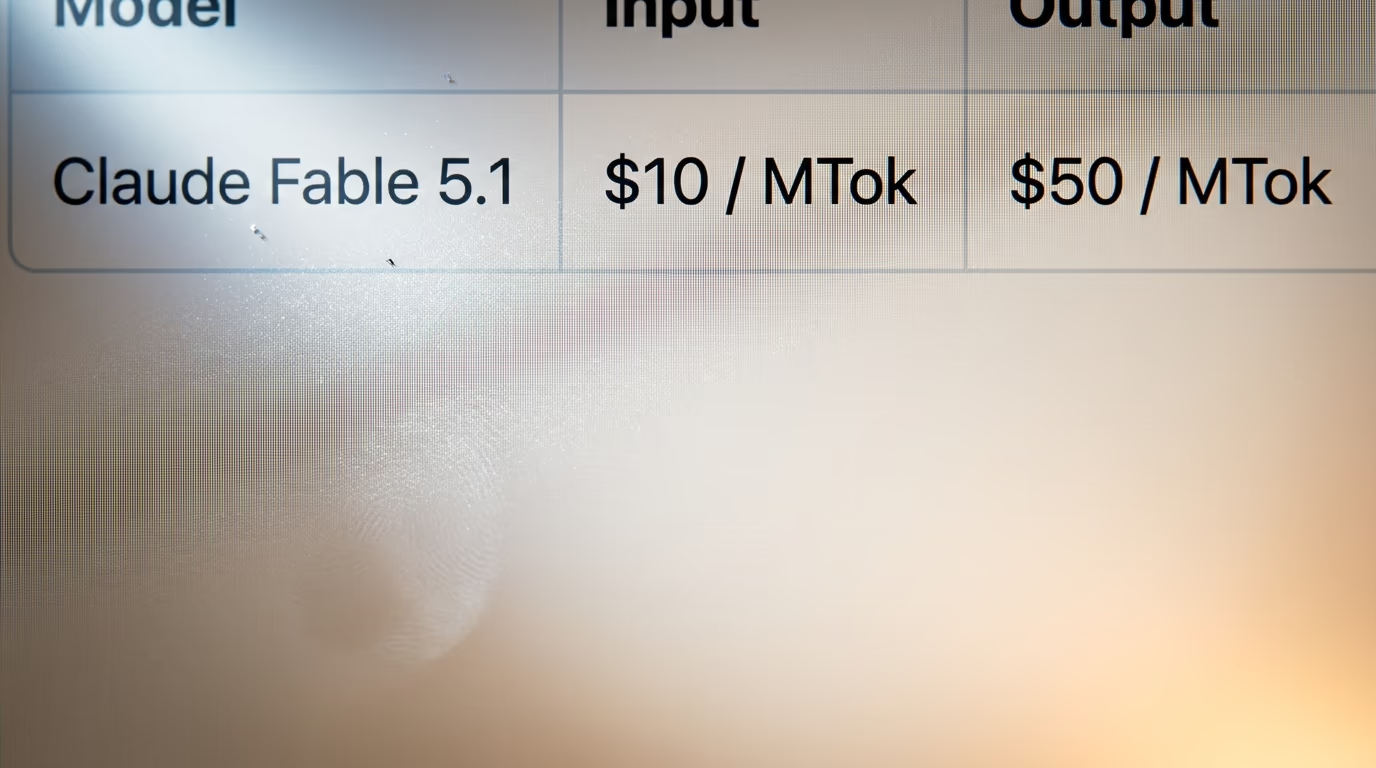
That is our arithmetic from the published rate and not a figure anybody has confirmed, because Vals didn't publish the split between what went in and what came out. In practice a run like this sits much nearer the bottom of the range than the top, since a model rereading the same book over and over is overwhelmingly reading rather than writing, and Anthropic charges a small fraction of the input rate for text the model has already seen and cached. If you want the wider picture on what the big models charge for a job like this, we put the rates side by side in our LLM API pricing comparison.
So the honest headline underneath the headline is that a centuries old puzzle got a serious attempt for less than a restaurant lunch, and that stays true whether or not the answer survives. It's the same shift we wrote about when OpenAI published what its own researchers run through coding agents, where the striking figure was never the capability but how cheap it had become to simply try something.
The consequence for anyone reading this is that the cost of attempting an open problem has collapsed to the point where attempting it is barely a decision any more. Every dusty unsolved thing with a text attached to it, every unreadable ledger and unexplained notation, now has a queue of people willing to spend a few dollars pointing a model at it, and the checking has to keep up with the attempting.
What did the human do, and what did the model do on its own?
Vals says the model ran with zero interjections, and the same post says the researcher chose the problem, told the model to go and read about its own strongest past results, told it to think creatively, and steered it away from the hardest unsolved ciphers toward ones more likely to give. Both halves of that are in the post, and both of them matter.
The accurate description is that the model did the code breaking and a person did the problem selection and the framing. Neither contribution is a small one. Picking a short cipher whose source text sits in the same book, rather than something like the Voynich manuscript where nobody knows what it points at, is most of what made the attempt tractable at all, and a researcher chose that.
The Hacker News thread on the story ran near the top of the front page, and the same objections come up in it repeatedly. The loudest one asks whether a solution was already sitting somewhere in the training data, in some obscure page nobody reads, in which case the model recalled rather than solved. Another asks about selection bias, since you only ever see the attempt that worked and never the ones that quietly failed. A third points out that telling a model its past achievements were impressive before asking it to work is a strange thing for a result to depend on.
The contamination objection has a clean answer, and it's that the origin of the rule doesn't matter. If the rule works on the printed text, the cipher is read and the origin of the idea is a footnote, and if it doesn't work, no amount of reasoning about training data makes it right. That is the whole reason the replication attempt is the interesting document here and the running time is not.
Can you check the Cyphral Distich yourself tonight?
Yes, and it costs nothing beyond an evening. Urquhart's Logopandecteision is on the Internet Archive as a free scan anybody can open, and checking a single disputed position needs nothing but that page, a pencil and the patience to count.
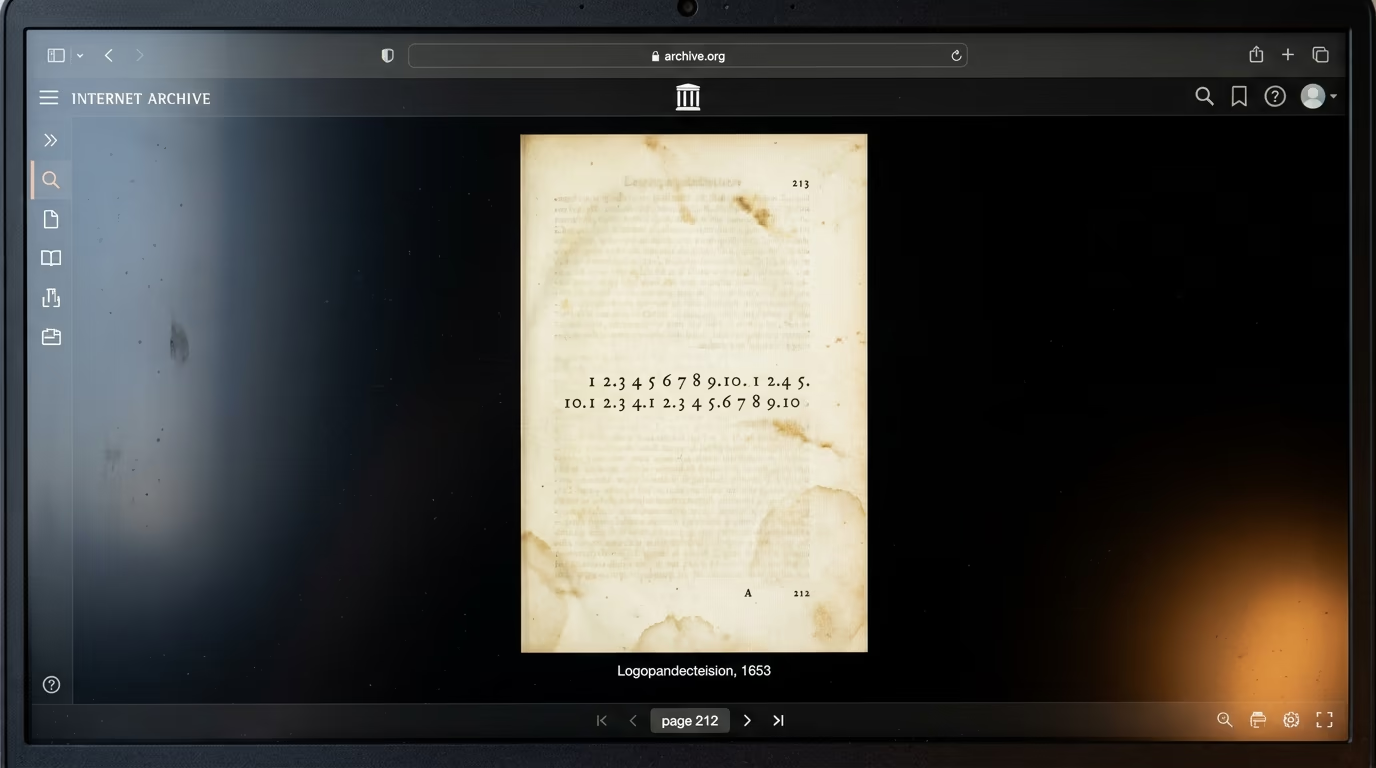
Open the scan of Logopandecteision on the Internet Archive, find the run of numbered Proquiritations toward the end, and pick the position the whole argument turns on, the eleventh number of the first line. Go to the eleventh Proquiritation, count along until you reach that number, and look at the first letter of what you land on. The solution needs a K there. The replication says nothing in that entire section begins with one.
Both documents deserve reading straight rather than through anybody's summary, including this one. Vals published its account of the solve, and the replication sits in a public repository in the folder named for the refutation. Read them in that order, because the second one only makes sense once you know what it's answering.
Almost nothing else in AI right now can be checked by an ordinary reader with a free scan and a pencil, and that is what makes this story unusual. A benchmark score arrives as a figure you either trust or don't, and the model comparisons we run mostly come down to reading what a lab chose to publish about itself. An old book cipher is the rare case where a stranger with an afternoon can settle an argument between rival claims, and somebody really should.
What we do not know yet, and what would settle it
A fortnight after the post, nobody with a name in historical cryptography has publicly confirmed or rejected the Cyphral Distich reading, and neither Vals AI nor the account disputing it has published the one thing that would let a third person settle the argument in an afternoon. These are the open questions, stated without hedging.
- Whether a cryptogram appears at the end of the original printing at all, since both sides worked from the Internet Archive and report different things
- Whether the disputed positions really fail, which needs the exact Proquiritation texts Vals worked from and those have not been published
- The unreadable stretch in the longer cipher, which Vals flagged itself and says needs a physical copy or the modern scholarly edition
- Whether a solution was already in the training data, which nobody outside Anthropic can answer from where they are sitting
One page image ends most of this. If Vals publishes the scans of the Proquiritations it used alongside the model's transcript, anybody can check the eleventh position in a minute and the disagreement is over. If the letters are there, the replication was working from a different or incomplete text and the reading stands. If they aren't, the rule is wrong and a careful run produced a beautiful answer to nothing.
Vals deserves credit for its caveats section, which most of the coverage skipped. That section named its own weak positions before anyone else could, including a stretch in the longer cipher it couldn't read and a note that confirming certain positions needs a physical copy because no free page images of that book exist. That is more honesty than most AI announcements manage, and it sits oddly next to how confidently the result then travelled.
What actually changed at the end of August is the price of trying. Pointing a capable model at a famous unsolved problem now costs a few dollars and less than an hour, which means these claims are about to arrive constantly, from labs and evaluation shops and hobbyists alike. The bottleneck moved from producing candidate answers to checking them, and checking is still done by people with the source text in front of them.
Questions people ask
Did Claude Fable 5.1 really solve a 370 year old cipher?
It produced a candidate reading of the Cyphral Distich that Vals AI published at the end of August, and that reading has not been independently confirmed. An anonymous replication attempt posted on GitHub the following day reports that the same decoding rule yields only a chance level count of correct letters. No named historian of ciphers has publicly ruled on either version.
What does the Cyphral Distich say, according to Claude Fable 5.1?
Vals AI prints the decoded lines as O GOD UPHOLD KING CHARLS THE SECOND AND, then MAKE HIM THE SUPREME RULER OF THIS LAND. Each line carries exactly as many letters as its cipher line carries numbers, and the pair of lines rhyme. Vals argues that makes the reading self verifying, since a wrong rule would not normally produce rhyming English of the right length.
How much did the Claude Fable 5.1 cipher run cost?
Vals AI did not publish a cost. Anthropic's published rate for the model, applied to the token volume Vals reports, puts the run between $1.76 and $8.80 depending on the split between reading and writing, which Vals did not publish. That is our arithmetic from the pricing page rather than a confirmed figure, and the real number sits nearer the bottom of that range.
Who is disputing the Cyphral Distich solution?
A GitHub account called Reticuli, opened in July with a handful of public repositories and no stated affiliation, published a replication attempt the day after the Vals post. It reports that several of the cipher positions are impossible under the proposed rule, because the letter the solution needs begins nothing in the section that position points at. Its files are public and its sources are named, but the account is anonymous.
Can I read Urquhart's Logopandecteision for free?
Yes, Urquhart's Logopandecteision is available as a free scan on the Internet Archive, and an EEBO transcription covers the same text. Both sides of this argument worked from those sources, which means any reader can open the same pages, count along a Proquiritation, and check a disputed position by hand.
Did the model solve the cipher on its own, or did a human help?
Vals AI says the model ran with zero interjections, and the same post says the researcher picked the problem, told the model to think creatively, and steered it away from the hardest unsolved ciphers toward more tractable ones. So the model did the code breaking and a person did the problem selection and the framing.
Has any cipher expert confirmed the Claude Fable 5.1 answer?
Not publicly, at the time of writing. Vals AI says the cipher appears on Klaus Schmeh's list of the top unsolved encrypted messages, but no statement from Schmeh or any other named historical cryptographer accepting or rejecting the reading has appeared. Vals also notes that confirming some positions in the longer cipher would need a physical copy of the book.
What would settle the Cyphral Distich argument?
Publishing the source pages would settle it quickly. If Vals AI releases scans of the numbered Proquiritation texts it worked from alongside the model's transcript, any reader can check the disputed positions in minutes. If the required letters are there, the replication used an incomplete text, and if they are not, the decoding rule is wrong.