AISeptember 10, 202611 min read
Siri vs Gemini, what each one keeps and what it costs
Apple's new Siri AI lands as an English only beta, and Apple says Google's Gemini models are underneath. Here is what each assistant sees, keeps and charges.
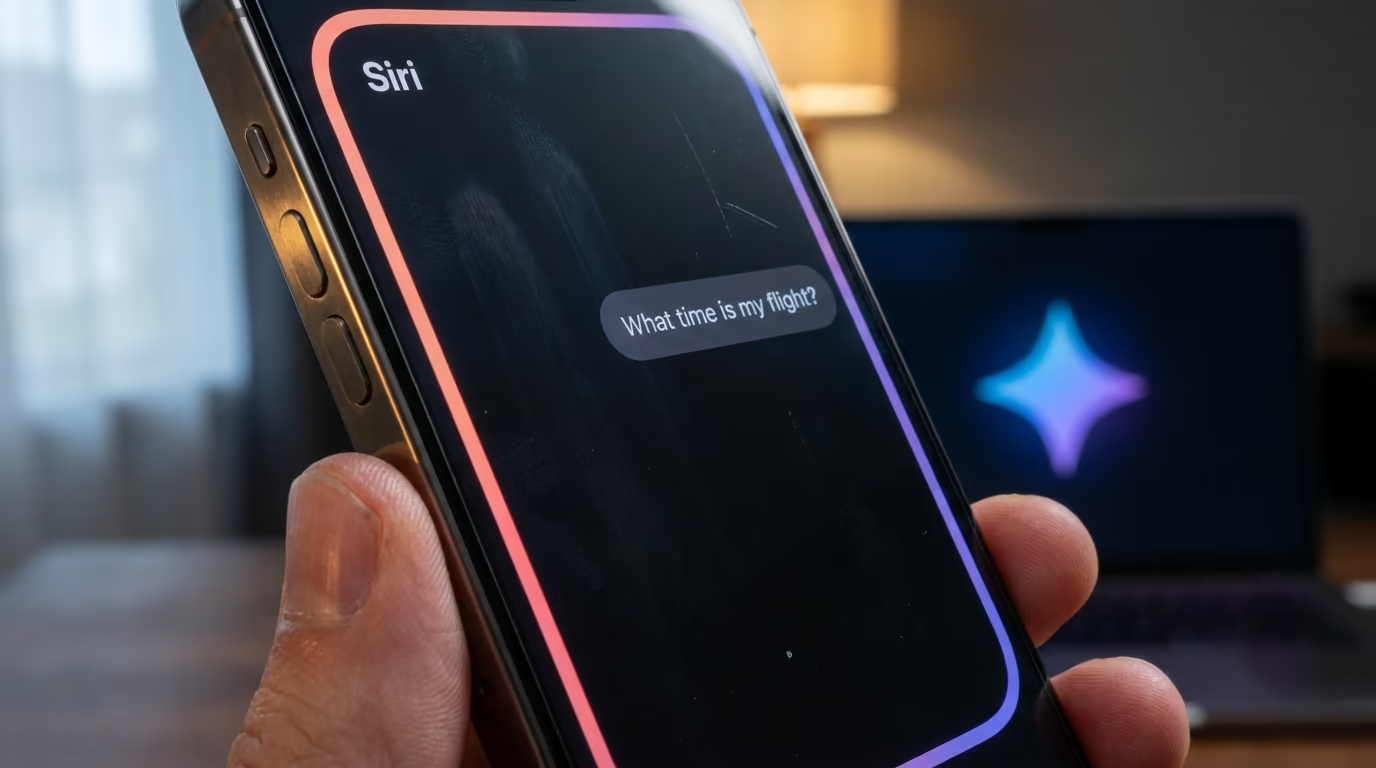
Siri vs Gemini is a stranger fight than it looks, because Apple says the models behind its new Siri AI were built in collaboration with Google and its Gemini models. What separates the 2 assistants today is who can switch each one on, what each one is allowed to read, how long each company keeps your conversations, and what you pay. Siri AI reaches the public on September 14, 2026 as an English only beta, free on a recent iPhone, and Apple says it will not ship on iPhone in the European Union, with no date given for when it might. The Gemini app is already free to install on iPhone and on Android, with paid plans stacked on top for heavier use.
Apple spent its autumn event this week on hardware you can hold, the folding iPhone Duo and a new Apple Watch that listens for sounds around you. TechCrunch reported chief executive John Ternus telling the room that "there's no product in the world better designed to be your intelligent personal hub than iPhone". The assistant that has to carry that sentence arrives a few days after the phones, and it arrives labelled beta.
Most comparisons published this week ask which assistant is smarter and answer with impressions. This one reads both companies' own pages instead, so the checks below are who can turn each assistant on, what each one can see and do, whose models sit underneath, what each one keeps, and what it costs.
Who can turn on Siri AI today, and who can use Gemini?
Siri AI arrives with the new iPhone software in the middle of September as a beta in English, and it needs an iPhone 16 or later, or an iPhone 15 Pro or Pro Max. Google's Gemini app is already sitting in the App Store, free, and it runs on any iPhone updated to iOS 17.4 or later, so an iPhone owner who cannot get Apple's assistant at all can install Google's in a minute.
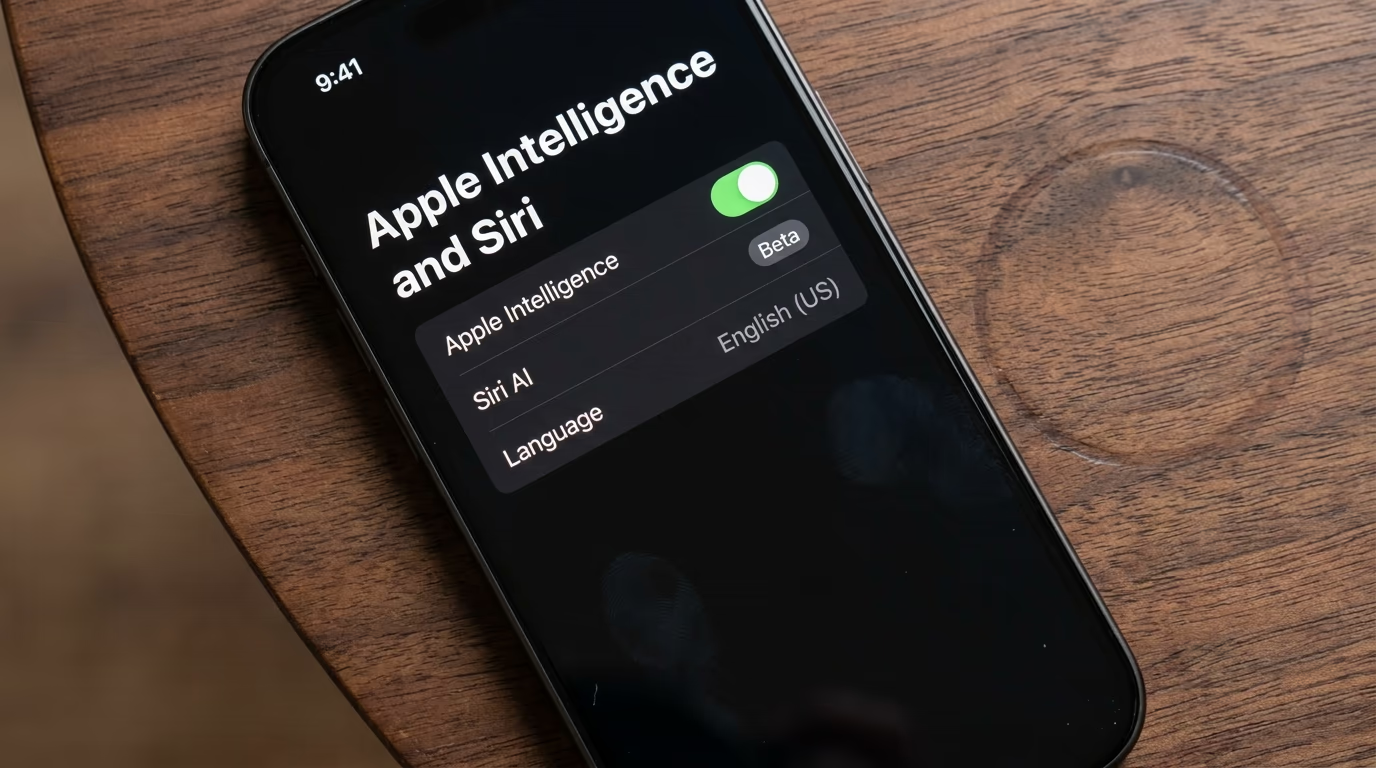
Apple's own page for the update says the assistant is available in beta, in English to start, and its footnote states that Siri AI will not be initially available in the EU. The hardware list is short because Apple Intelligence needs the newer chips, so it covers the recent iPhones named above, iPads and Macs on M1 chips or newer, Apple Vision Pro, and a recent Apple Watch paired with a supported iPhone. An older iPhone never gets it, and no update will change that.
Beta is Apple's term here rather than a label reviewers stuck on afterwards, and the footnote on its own page for the update carries it. What that buys the company is room for the assistant to be wrong in public while it improves, and what it costs you is any promise that today's answer is the shape of next month's. It also means a comparison like this one has a shelf life, and the honest move is to date it rather than pretend otherwise.
The European Union is a harder stop, and Apple published a note about it in June. Siri AI is not shipping in the EU on iPhone or iPad, and Apple's own line is flat, that "there is currently no timeline for Siri AI's availability in the EU on iOS and iPadOS". Apple points at the Digital Markets Act, saying that under the regulators' reading of it, any virtual assistant would have to be given direct access to a user's private data.
Mac and Apple Vision Pro owners in the EU do get Siri AI, so the blocker is a rule rather than a chip. China is a separate hold, where Apple says the new Apple Intelligence features are waiting on regulatory requirements it is still working through. Neither hold has a published end date, and Apple's own note says its proposed workaround was turned down.
Gemini walks past all of those doors. The app is free with optional purchases inside it, and Google's own support pages say it runs on Android, on iPhone and iPad, and in a browser on any machine you own. For an iPhone owner in Paris or Berlin, Gemini is the only one of the 2 assistants that turns on at all this month, which is a strange outcome for a phone sold as the best device for this.
What can Siri AI and Gemini see and do on your phone?
Apple gives Siri AI 3 ways into your phone, personal context that pulls answers out of your messages, emails and photos, onscreen awareness that answers questions about whatever you are looking at, and app actions that let it draft an email or edit and share a set of photos for you. Google gives Gemini a published list of Connected Apps instead, and that list is mostly Google, with Calendar, Home, Keep, Tasks and Workspace, next to outside services like Spotify, YouTube and Google Flights.
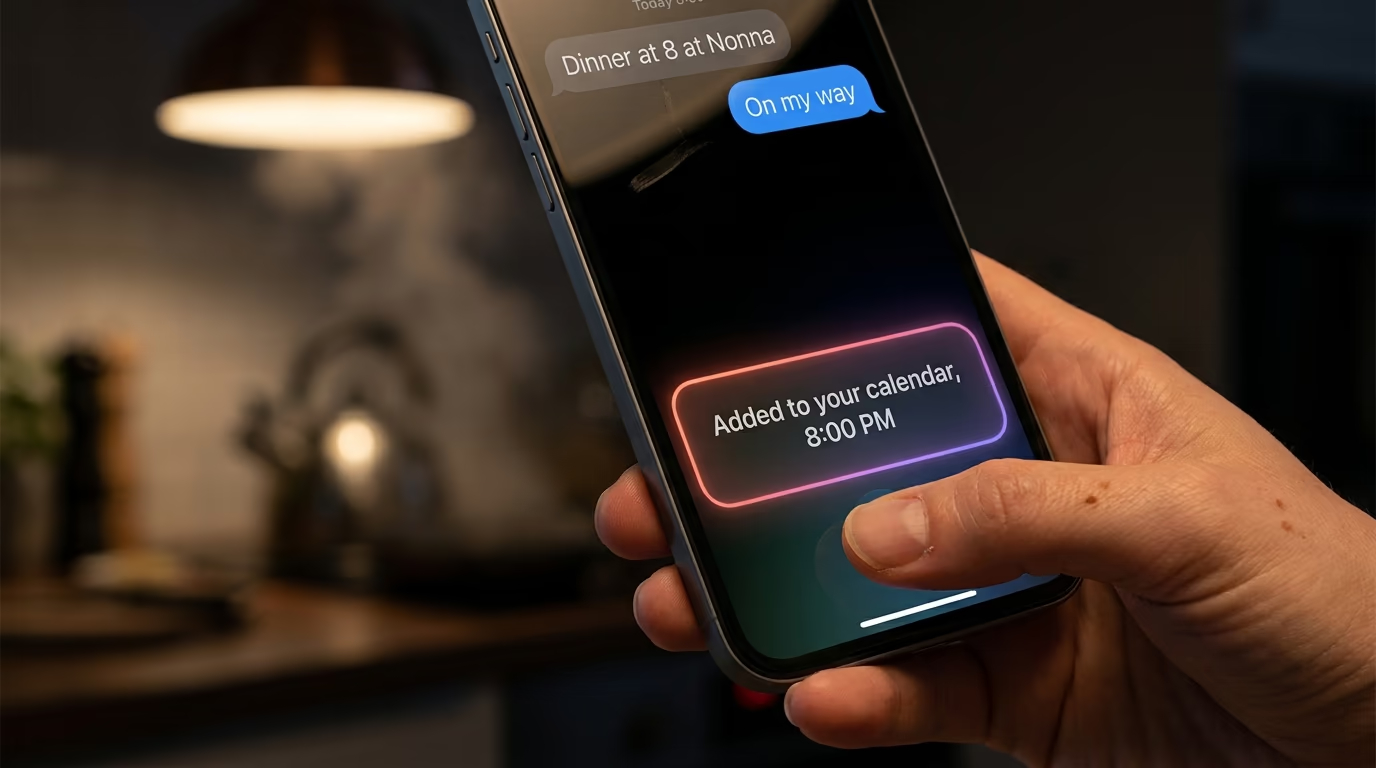
Craig Federighi, who runs software at Apple, summed the pitch up in one line, that Siri AI "can help users take action across apps more naturally than ever". The 2 assistants have different shapes on an iPhone. Apple's assistant is wired into the phone itself, which is how app actions work at all, while Gemini on an iPhone is something you open, and what it can touch outside itself is whatever you have connected to it.
The reach runs the other way as well. Google's subscription page lists work Apple's assistant does not try to do, Deep Research that runs a longer search and writes up what it found, Canvas for drafting and editing beside the conversation, Gems you set up once for a job you repeat, and image generation and editing inside the same chat. Siri AI answers, acts inside your apps and hands off, while Gemini sits closer to a workspace you stay in, and that gap shows up the moment your question needs more than a sentence back.
Google's own App Store listing answers the question of what it takes in, and the list is long. It names user content including emails, texts, photos, videos and audio, then contacts, precise location, search and browsing history, and what the label calls sensitive info, all of it linked to your identity. Apple's page answers the same question with a promise rather than a list, that your data is never stored and is used only for your requests.
An assistant allowed to act inside your apps is a small version of the bargain consumer agents are now asking for outright, and the connector list in what Meta Muse costs and what it needs from you first shows where that road goes when a company stops being shy about it. Siri AI and Gemini both stop well short of logging in and paying for you, and both are being pushed toward it by the companies behind them.
Does Siri AI run on Google's Gemini models?
Apple says the capabilities behind Siri AI are powered by the next generation of Apple Foundation Models, built in collaboration with Google and its Gemini models. The 2 companies said it more directly in a joint statement in January, where they wrote that the next generation of Apple Foundation Models "will be based on Google's Gemini models and cloud technology", and that those models would help power a more personal Siri.
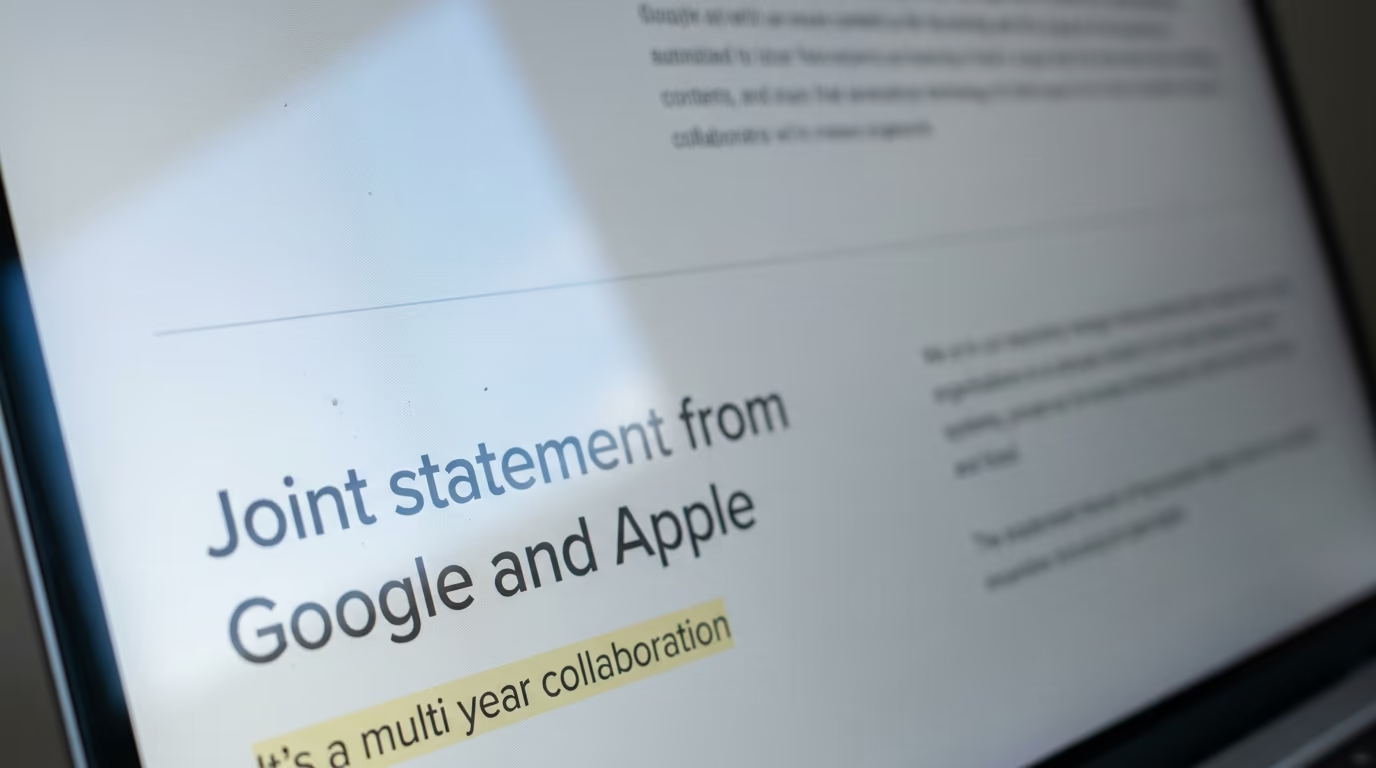
That sentence changes what any comparison can honestly claim. At the level of the underlying model, a test of Siri AI against Gemini reaches into the same family. It also puts Apple's promise of world knowledge in context, arriving after years of a Siri that struggled with a follow up question.
How much of Gemini survives inside the shipped models is where the reporting splits. 9to5Mac summarised Macworld's Jason Cross saying 4 of the 5 models are customised versions of Gemini rebuilt for Apple silicon, with the most capable one running on Google servers inside Apple's Private Cloud Compute. AppleInsider argued the reverse, writing that when you use Apple Foundation Models you never touch Google code, Gemini agents or Google Search, while still describing models polished by distillation from the loaned Gemini models. Neither version comes with a file a reader can open, so the only first hand line is Apple's own, and it says collaboration.
The brains are related, so the differences you can actually check are the rules around them, the reach each assistant is given, the retention each company promises, and the bill at the end of the month. Those are the checks in the rest of this comparison.
What does each assistant keep, and for how long?
Google's support pages say Gemini activity is deleted automatically after 18 months by default, that a subset of chats is read by human reviewers, and that reviewed chats are kept for up to 3 years after being disconnected from your account. Apple answers the same question in a single sentence, that when Private Cloud Compute handles a request, personal data "is not stored nor made accessible to Apple or anyone else".
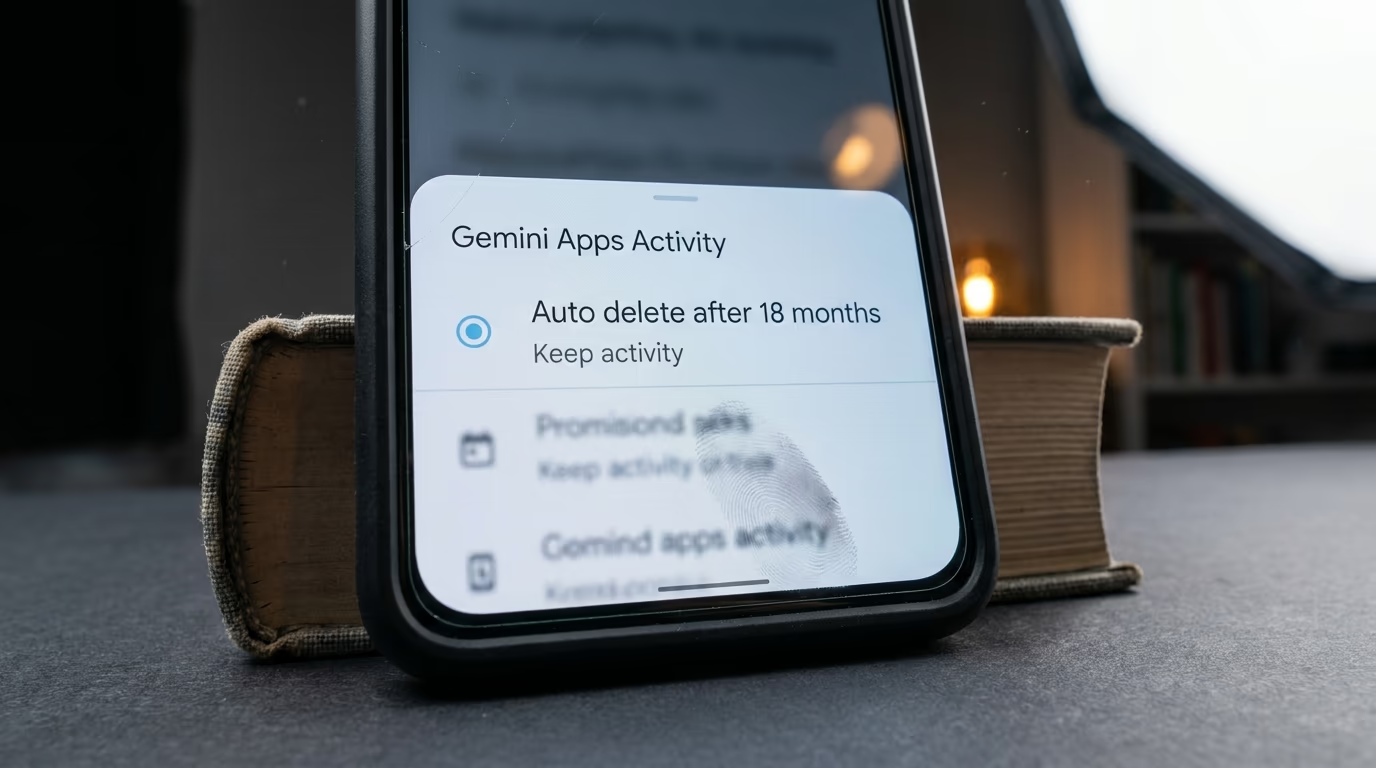
Google's number is yours to change, which is the useful thing about it. The same page says chats you have while the activity setting is off are held for 72 hours, that human reviewed chats are disconnected from your account before anyone reads them, and that the reviewers include trained service providers working for Google. You can shorten the retention or switch it off from your account settings tonight.
Apple's promise is the stronger sentence and the harder one to verify. Nobody outside the company has audited what the shipping Siri AI beta sends up to Private Cloud Compute, and Apple's own page calls it a verifiable privacy promise, which describes an intention rather than an audit anyone has published. It is a good claim, and until an outside team publishes an audit it stays a claim.
On the new Apple Watch the company went further and put the argument in hardware. Apple says the sound recognition feature runs inside a dedicated secure area of the chip, and that the raw audio used for processing is "completely inaccessible to the operating systems, apps, the user, or Apple". Phone makers keep reaching for that design when the data is sensitive, and the ranking in the best sign language translation app shows Google making the same argument on the Pixel.
What does Siri AI cost against Gemini?
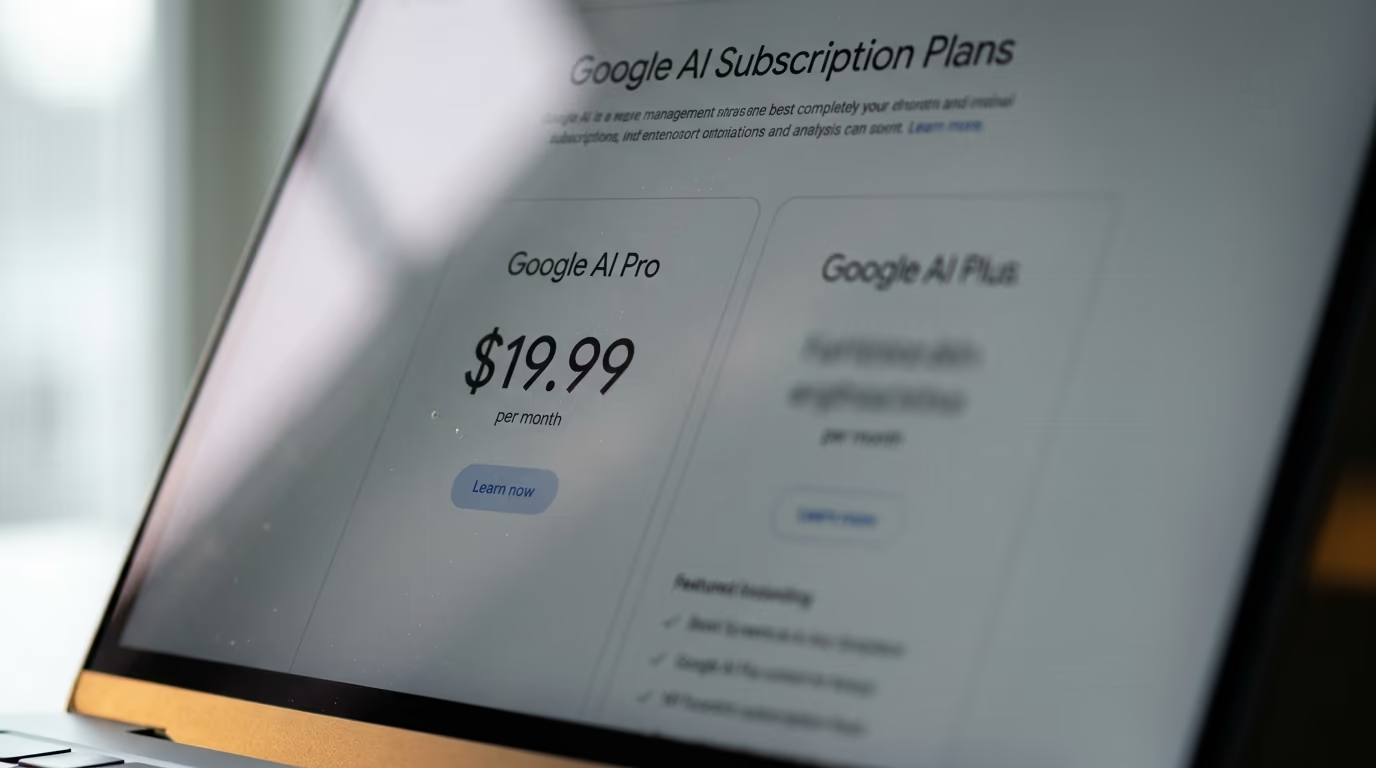
Siri AI costs nothing on top of the phone, and the Gemini app is free with limits, so in both cases the bill is optional. Google charges $19.99 a month for its AI Pro plan, with a cheaper AI Plus tier under it and a far more expensive Ultra tier above, while Apple charges nothing for Siri AI on a device that already supports it.
| Siri AI | Gemini app | |
|---|---|---|
| Price | Free on a supported Apple device | Free tier, then $4.99, $19.99 or from $99.99 a month |
| Available | September 14, 2026, as a beta | Already live |
| Phones | iPhone 16 or later, iPhone 15 Pro or Pro Max | Any iPhone on iOS 17.4 or later, plus Android |
| Languages at launch | English to start | Already shipping widely |
| EU on iPhone | Not shipping, no date given | Available |
| Chats kept | Apple says not stored | 18 months by default, 72 hours with activity off |
| Reads your screen | Yes, onscreen awareness | Through Connected Apps you approve |
Google's subscription page describes a free tier that is more than a demo. It lists its Flash model, some access to the Pro model, image generation and editing, Deep Research, Gemini Live, Canvas and Gems, which covers most of what a curious person would ask an assistant to do in a week. The paid tiers buy higher limits, more storage and the heavier research modes rather than a different assistant.
That monthly figure puts Gemini in the same bracket as every other assistant subscription on the market, and how Claude Pro and ChatGPT Plus compare at the same monthly price is worth reading before you add a third one. Paying for 2 assistants at once is easy to do by accident and hard to justify at the end of the month.
Free deserves an asterisk on Apple's side. Siri AI costs nothing extra, on a phone new enough to run it, and the folding iPhone Duo Apple showed this week starts at $1,999. Counted that way the cheapest route to Apple's assistant is a used iPhone from the supported list, and the cheapest route to Google's is the phone already in your pocket.
What do we not know yet about Siri and Gemini?
No independent side by side test of the shipping Siri AI against Gemini exists yet, because the beta only reaches the public in the middle of September. Neither Apple nor Google has published what their collaboration costs or how long it runs beyond calling it multi year, and Apple has given no date for Siri AI on an iPhone in the European Union.
How much of Gemini sits inside Apple's shipped models is unresolved in public. Apple names a collaboration, one report describes customised Gemini models running on Apple silicon, and another insists there is nothing of Gemini in what shipped. Until somebody publishes the detail, a reader has one first hand sentence from Apple and 2 second hand accounts that disagree.
The listening features Apple showed on the watch are beta as well, arriving later this year, so what Live Rewind and Siri Recap keep in daily use is not something anyone can check today. Apple describes summaries rather than transcripts, and encryption end to end, and those descriptions are all anyone has to go on until the features are in public hands.
Google's side has its own gap. The retention numbers are published and adjustable, but which conversations reach a human reviewer is described only as a subset, with no proportion attached, so a user cannot tell whether that means a handful or a large share. The checks that will settle any of this are ordinary ones, the same questions asked on both assistants, the same account connected to both, and a look at what each one has stored a week later.
Which assistant should you use tonight?
For most people with a recent iPhone the honest answer is to run both, because neither costs anything to try and they fail in different places. Siri AI is the one that can act inside your apps and answer without you opening anything, and that counts when your hands are full. Gemini is the one that will hold a longer conversation and chase a research question across a pile of sources.
If you live in the European Union and use an iPhone, the choice has been made for you this month, and it is Gemini. Apple has published no date, and its note gives no sign that one is close, so an EU reader comparing these 2 assistants is really comparing one assistant against a promise.
If your reason for asking is what happens to the conversation afterwards, Apple gives you the stronger promise and Google gives you the clearer paper trail. One tells you nothing is stored, the other tells you exactly how long it is kept and lets you shorten it, and which of those you trust more probably says something about how you feel about the 2 companies already.
If you are picking an assistant for work rather than for the phone in your pocket, this comparison is the wrong door, and how NotebookLM and ChatGPT handle your own documents is the one to open. The line worth watching here is the one Apple has not written yet, the date when Siri AI works on an iPhone in Europe. Until it appears, a large slice of the continent is comparing one assistant.
Questions people ask
Siri vs Gemini, which one is better for privacy?
Apple makes the stronger promise and Google gives you the clearer controls. Apple says data handled by Private Cloud Compute is not stored or made accessible to Apple or anyone else, while Google publishes how long it keeps your Gemini activity and lets you shorten that or switch it off. Neither claim has been audited publicly by an outside team for the versions shipping this month.
Is Siri AI really running on Google's Gemini models?
Apple says its new foundation models were built in collaboration with Google and its Gemini models, and the joint statement the 2 companies published in January says the next generation of Apple Foundation Models will be based on Google's Gemini models and cloud technology. How much of Gemini remains inside what Apple actually shipped is disputed between press reports, and neither company has published that detail.
Can I use Gemini instead of Siri on an iPhone?
You can install the Gemini app on any recent iPhone and use it for free, including the models Apple Intelligence does not support. Apple's assistant stays the one wired into the system, so Gemini answers when you open it rather than replacing Siri across the phone.
Does Siri AI cost anything?
Siri AI is included with Apple Intelligence at no extra charge, so the cost is the device rather than a subscription. It needs a recent iPhone from Apple's supported list, or an iPad or Mac on an M1 chip or newer, and no update brings it to older hardware.
When will Siri AI work in the European Union?
Apple has not given a date for it. Its June note says there is currently no timeline for Siri AI on iOS and iPadOS in the EU, and points at the way the Digital Markets Act is being applied. Mac and Apple Vision Pro owners in the EU can already use it.
Siri vs Gemini, which one works on an older phone?
Gemini takes that one by a wide margin, because Google's app runs on iPhones several generations older than Apple's supported list and on most Android phones, while Siri AI needs one of Apple's recent iPhones. An iPhone that misses Apple's list will never get Siri AI through a software update.
How long does Google keep my Gemini chats?
Google's support page says your Gemini activity is deleted automatically after 18 months by default, and you can change that or turn the setting off. Chats you have while the setting is off are held for 72 hours, and the subset read by human reviewers is kept for up to 3 years after being disconnected from your account.