AISeptember 4, 202612 min read
What is GPT-6 Astra, and what changes if you pay for ChatGPT
OpenAI announced GPT-6 Astra on 3 September 2026 and started a limited rollout. What it does, which plan gets it, what it costs, and which launch numbers somebody outside OpenAI has checked.
GPT-6 Astra is the model OpenAI announced on 3 September 2026, and it's built to operate a computer on your behalf, clicking through websites, filling in forms and assembling documents, instead of only writing answers back at you. OpenAI sent it first to a small group of business customers and says ChatGPT Plus, Pro, Business and Enterprise accounts get it over the coming days, so an ordinary paying subscriber who went looking this morning very likely saw nothing new in their model list.
That gap between the announcement and your own account is where most of the confusion sits right now. So here is what Astra actually does, which subscription it lands on and when, what it costs if you call it from your own software, why it might stop halfway through a job and ask you a question, and which of the launch numbers has been checked by somebody who doesn't work at OpenAI.
What is GPT-6 Astra?
Astra is OpenAI's new flagship model, the sixth generation of GPT, announced on its own site as the world's most intelligent and aligned model, and it takes over the top of the lineup from the previous generation. Where that generation shipped as a family, with cheaper and faster versions sitting beside the big one, the new one so far consists of Astra and a heavier variant called Astra Pro, and nothing else.
What OpenAI chose to grade it on has shifted. The launch post leads with computer use and browsing, then software engineering, cybersecurity, science and professional work, and it treats answering questions well as a given. The pitch is that the model runs the errand rather than describing how the errand should be run, and nearly every claim in the announcement is about finishing a task on a screen without a person nudging it along.
OpenAI leaned into that framing hard at the press briefing. The New Stack reported that OpenAI president Greg Brockman, after calling artificial general intelligence a gray and fuzzy thing, told journalists it is not unreasonable to feel that we are now in the AGI era, and that he leaves it to each reader to decide whether it qualifies for them. He closed the briefing with a single line.
Welcome to the AGI era.
ARC Prize, the outside group whose test Astra scored highest on, published its own results the same day and put it differently. It wrote that while it believes Astra represents meaningful progress towards generalization, it isn't claiming that it is AGI. Both organisations read the same run, one of them sells the model and the other one runs the test, and the wording each chose follows from that. If the argument itself interests you, we looked at what recursive self improvement in AI actually means earlier this year.
What can GPT-6 Astra do that the model before it could not?
The clearest change in Astra is computer use, which means the model drives an ordinary desktop for you, opening a browser, typing into a web form, updating a record in a customer database, then checking that the page it just built actually works. OpenAI lists filling out online forms, organising a calendar, running research and writing the summary straight into your email or your document editor, analysing data and drawing the plots, installing and testing software, and troubleshooting a problem you can see on screen.
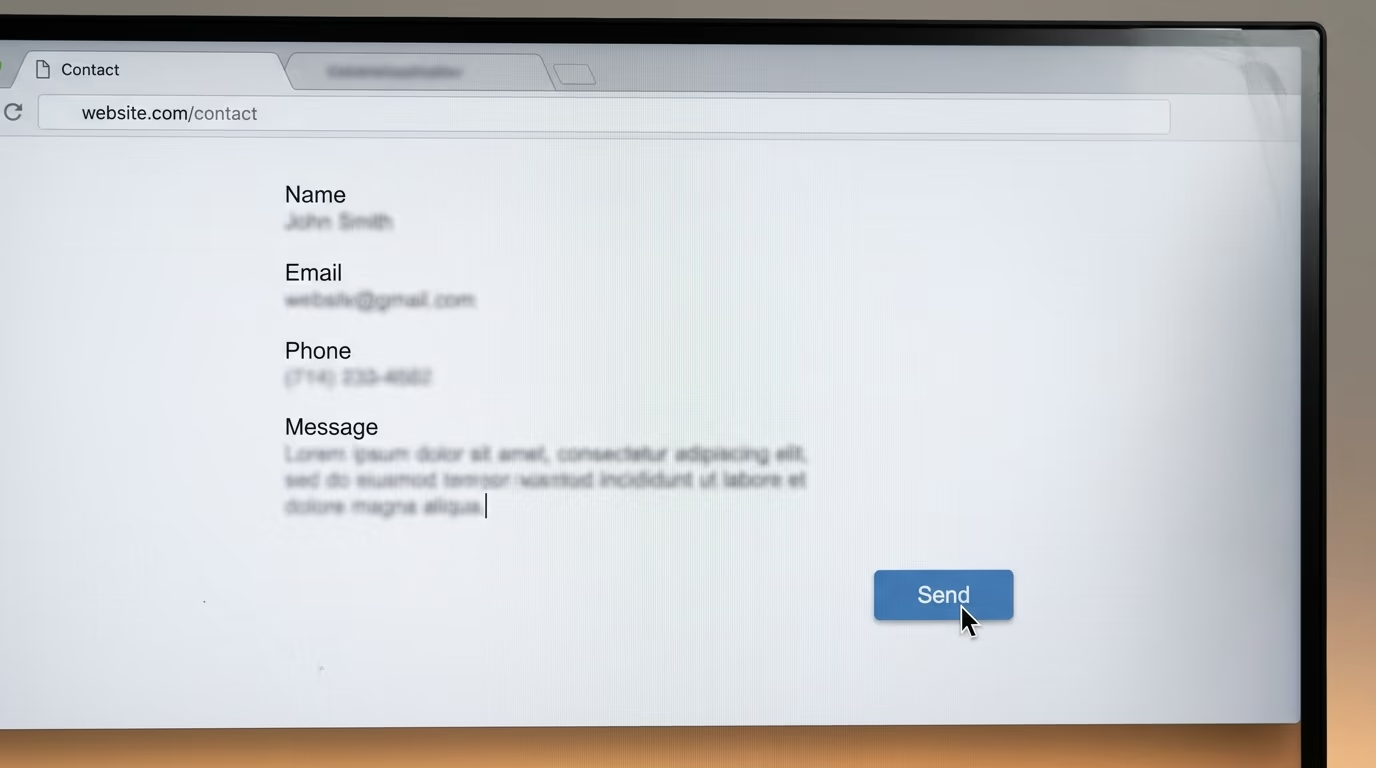
In one demonstration OpenAI put on the launch page, Astra opens Google Maps to find a pediatrician, visits the practice's website, fills in the user's contact details and writes a message asking about establishing care. Every step there is dull, every step costs a person a minute of their evening, and stringing them together unsupervised is exactly the sort of errand older models kept abandoning halfway.
The second claim OpenAI makes for Astra is speed. On its own desktop application test, it says Astra did better work in roughly 40 minutes per task where the model before it needed around 75, so a little over half the time on the same errand. That figure comes from OpenAI's own latency simulation rather than anyone else's stopwatch, and it's the sort of number that gets revised once outsiders run their own version of the test.
The third change matters mostly to people who write software. When a long coding session outgrows the model's memory, the usual fix has been compaction, which squashes the earlier conversation into a summary and quietly discards details like why a fix failed. In Codex, Astra can keep its own notes across those boundaries and search back through earlier messages and tool output instead. OpenAI says the feature sits behind an experimental setting today and becomes the default for Astra in the coming weeks. Anyone weighing that against the alternative will find our head to head on Claude Code versus Codex still holds up.
A smaller behavioural change is pleasant to live with. OpenAI says Astra asks a focused question when the answer would genuinely change the outcome, fills in routine gaps by itself when it wouldn't, and inside Codex can ask you something while carrying on with the work that doesn't depend on your reply. Anyone who has watched an agent confidently guess wrong for a solid quarter of an hour will understand why that made the announcement.
Which ChatGPT plan gets GPT-6 Astra, and when?
OpenAI's launch post names ChatGPT Plus, Pro, Business and Enterprise as the plans that receive Astra over the coming days, and the free plan and the cheaper Go plan aren't on that list. The ChatGPT release notes are blunter still, saying access is rolling out to a limited set of organizations and that Astra is not yet generally available.
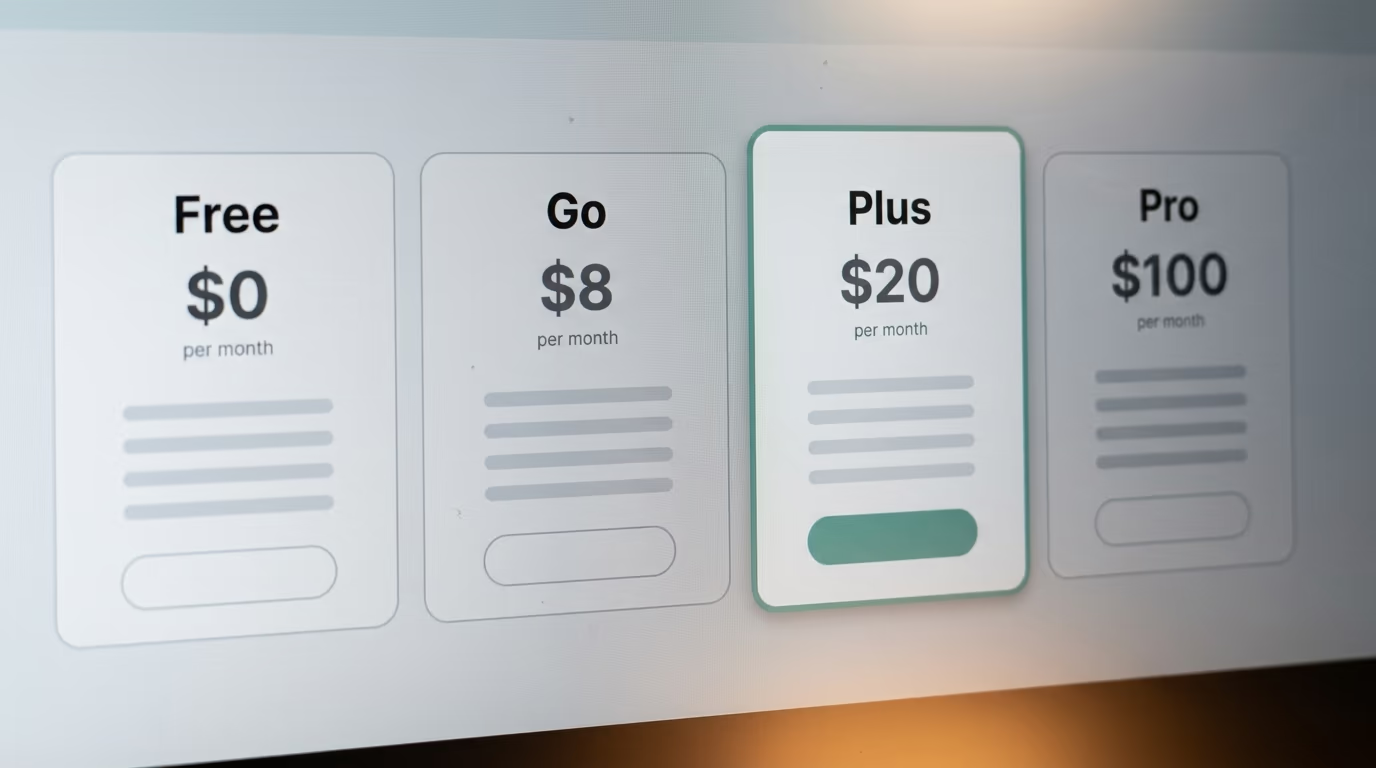
| ChatGPT plan | Price per month | On OpenAI's Astra list |
|---|---|---|
| Free | $0 | not named |
| Go | $8 | not named |
| Plus | $20 | yes, in the coming days |
| Pro | from $100 | yes, and Astra Pro as well |
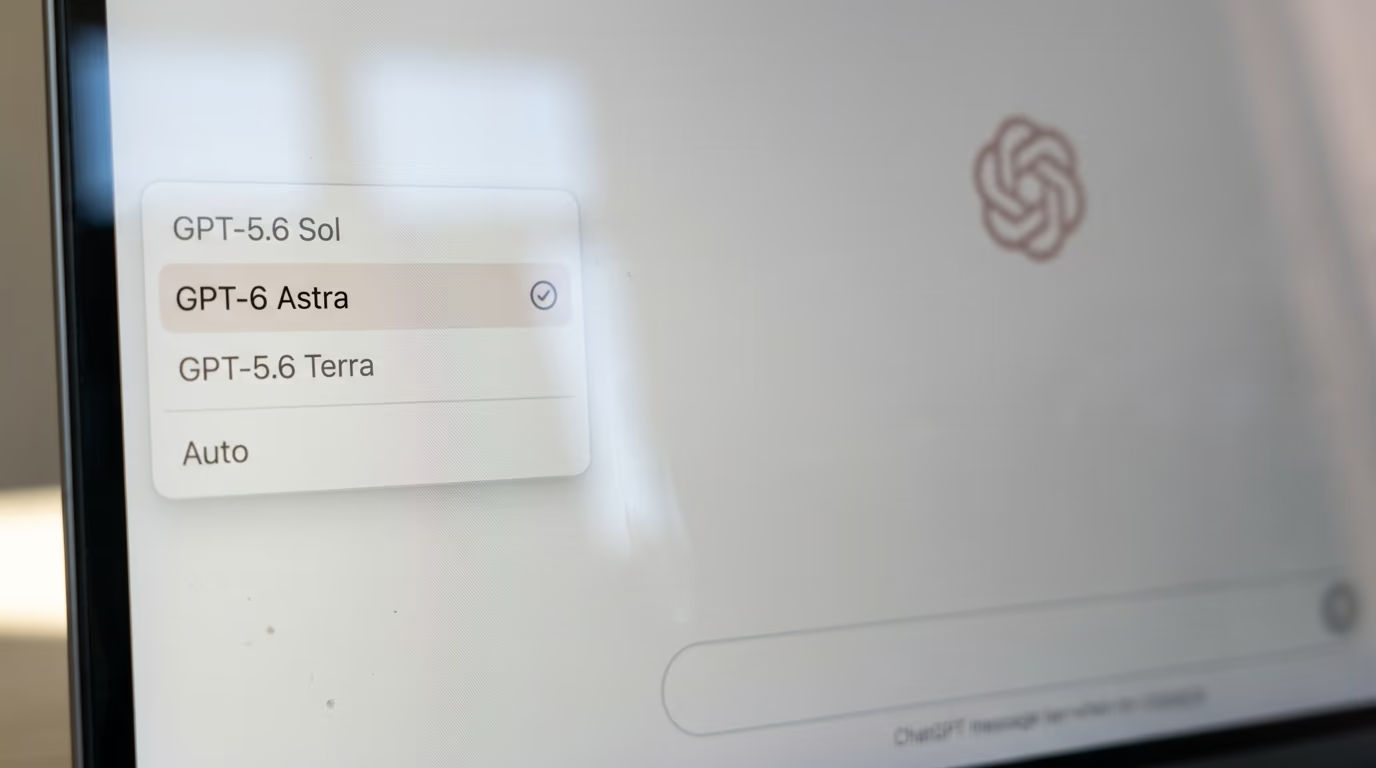
The prices in that table come from the ChatGPT pricing page as it reads today. Business and Enterprise customers are on the list too, with one condition their administrators need to know about, because OpenAI says access is off by default at launch and somebody has to switch Astra on for the workspace before anyone in it sees the model. Pro, Business and Enterprise accounts also get the heavier Astra Pro alongside the standard version.
On the money, OpenAI says Astra usage sits inside the allowances your subscription already carries, and that people and businesses will be able to buy credits when they want more than the plan gives them. It has not published what those allowances actually are for Astra, so the honest answer to how many Astra messages a Plus subscription buys is that nobody outside OpenAI knows yet. If you are weighing that subscription against the obvious rival, we compared what Claude Pro and ChatGPT Plus each give you for the same money.
There is a practical note here for anyone tempted to upgrade this afternoon. Paying now doesn't pull the rollout forward, because OpenAI is releasing this in waves and has published no dated schedule beyond the phrase coming days. The model appears in your picker when your account gets switched on, and until that happens a new subscription buys you the previous generation at full price.
What does GPT-6 Astra cost to run yourself?
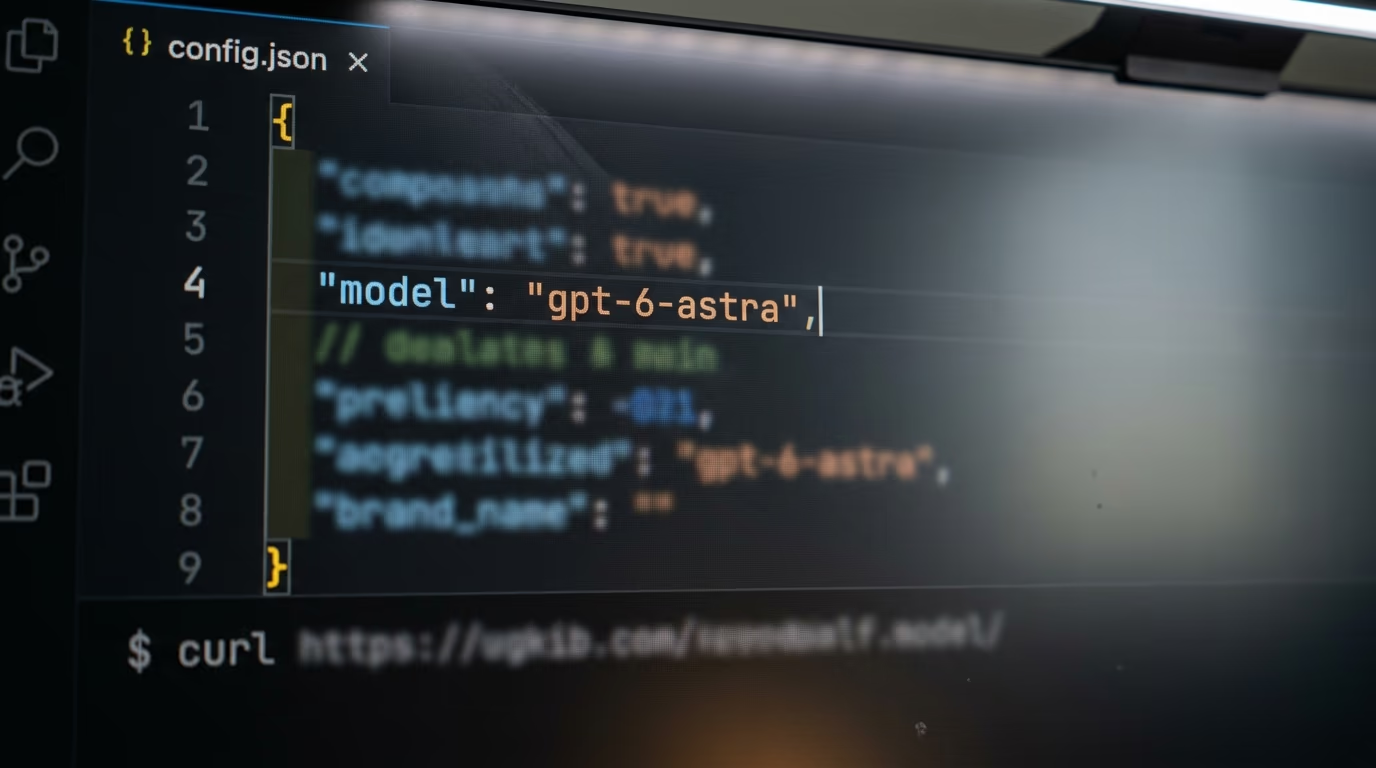
In the OpenAI API, Astra is priced at $10 per million input tokens and $50 per million output tokens on the standard rate, and the identifier developers call is gpt-6-astra. Tokens are the small chunks of text these models bill by, so you're paying for the volume of text going in and coming back out, and the rate sits well above what the model it replaces costs for the same volume.
| Rate per million tokens | GPT-6 Astra | GPT-5.6 Sol |
|---|---|---|
| Input | $10.00 | $4.00 |
| Output | $50.00 | $20.00 |
| Cached input | $1.00 | $0.40 |
| Input, long context | $20.00 | $8.00 |
| Output, long context | $75.00 | $30.00 |
Read across that table and Astra costs more than twice what OpenAI currently charges for the model it replaces, on every single row. Simon Willison, who has been reading these launches closely for years, points out that the rate lands on exactly the same number Anthropic charges for Claude Fable, so Astra is priced as a direct answer to it. There is also a faster tier in the API, which OpenAI says delivers up to twice the speed of standard processing at twice the standard price.
OpenAI's answer to the sticker shock is that a higher rate per token doesn't automatically mean a higher invoice, because a model that finishes the job in fewer steps and needs fewer retries can end up cheaper overall. Brockman put it as the price per task being what matters, and OpenAI says Astra uses fewer output tokens on several of its evaluations. The New Stack's reading of that argument is the fair one, which is that the launch data is too thin to show whether the savings really offset the premium. For how these rates sit against the wider field, our comparison of what the big model APIs charge has the shape of the market.
Why would GPT-6 Astra stop in the middle of your task?
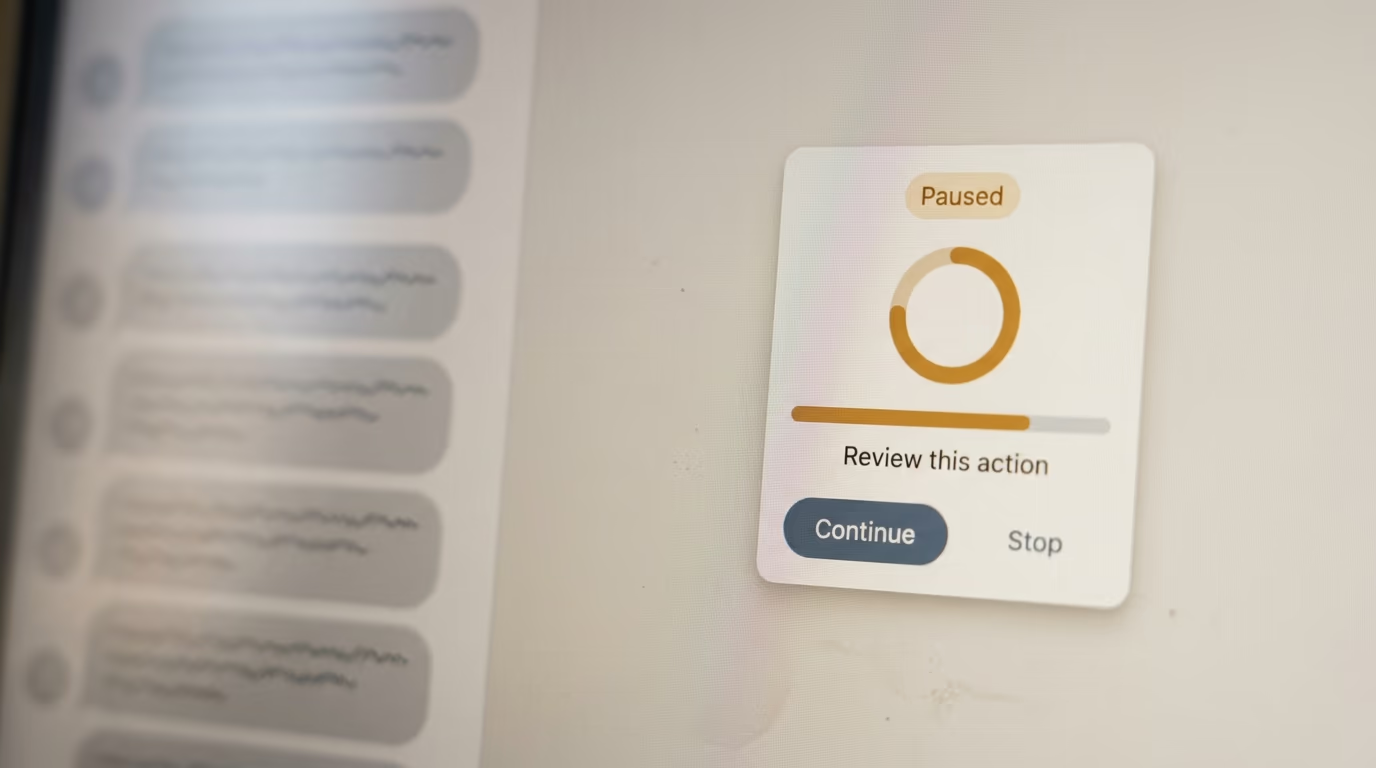
OpenAI has wrapped Astra in a safety layer that can pause or halt a running task, and it says people should expect that at launch rather than treat it as a bug. Inside ChatGPT and Codex you may be asked to review the action before the work continues, and through the API the task simply stops instead of waiting for you to approve anything.
The reason sits inside OpenAI's own risk framework. It says Astra is the first model it has ever designated at the Critical level for cybersecurity, which in its own wording means that with the right tools and access the model can find previously unknown security flaws and develop ways to exploit them across many well protected systems without a person guiding each step. That designation is OpenAI grading its own homework, but the grade it handed itself is the strictest one it has, and it delayed the release while it built protections around the model.
So the version anybody can reach refuses the advanced security work. OpenAI says Astra will decline tasks like writing proof of concept exploits for a vulnerability, while still helping with secure code review and patching, and that a vetted group of defenders gets less restricted access through a programme it calls Daybreak. On top of the refusals there is a monitoring system watching the model's reasoning and its actions, which can stop activity it reads as unauthorised.
OpenAI states the consequence for ordinary users directly rather than burying it. The checks can flag legitimate work, including work that has nothing obvious to do with security, and long running agent jobs are the ones most likely to trip them. The New Stack quoted OpenAI's Mia Glaese telling reporters that at launch, this is something that people should expect. If your automated job dies at 3am next week, that is now one of the first things to check rather than the last.
The design idea underneath is worth understanding, because rival products will copy it. This safety system isn't only judging whether your request is acceptable, it watches what the model does while it works, and it interrupts the machine instead of refusing the human. That's a different shape of control from the refusal messages everyone has learned to expect, and it will be judged entirely by how often it fires on nothing.
Has anyone outside OpenAI checked the launch numbers?
ARC Prize and Artificial Analysis both published their own results on Astra the day it launched, and both attach a qualification to the headline claims. Everything else in the announcement, including the computer use and cybersecurity figures, is OpenAI measuring OpenAI, which is normal on launch day and worth saying out loud anyway.
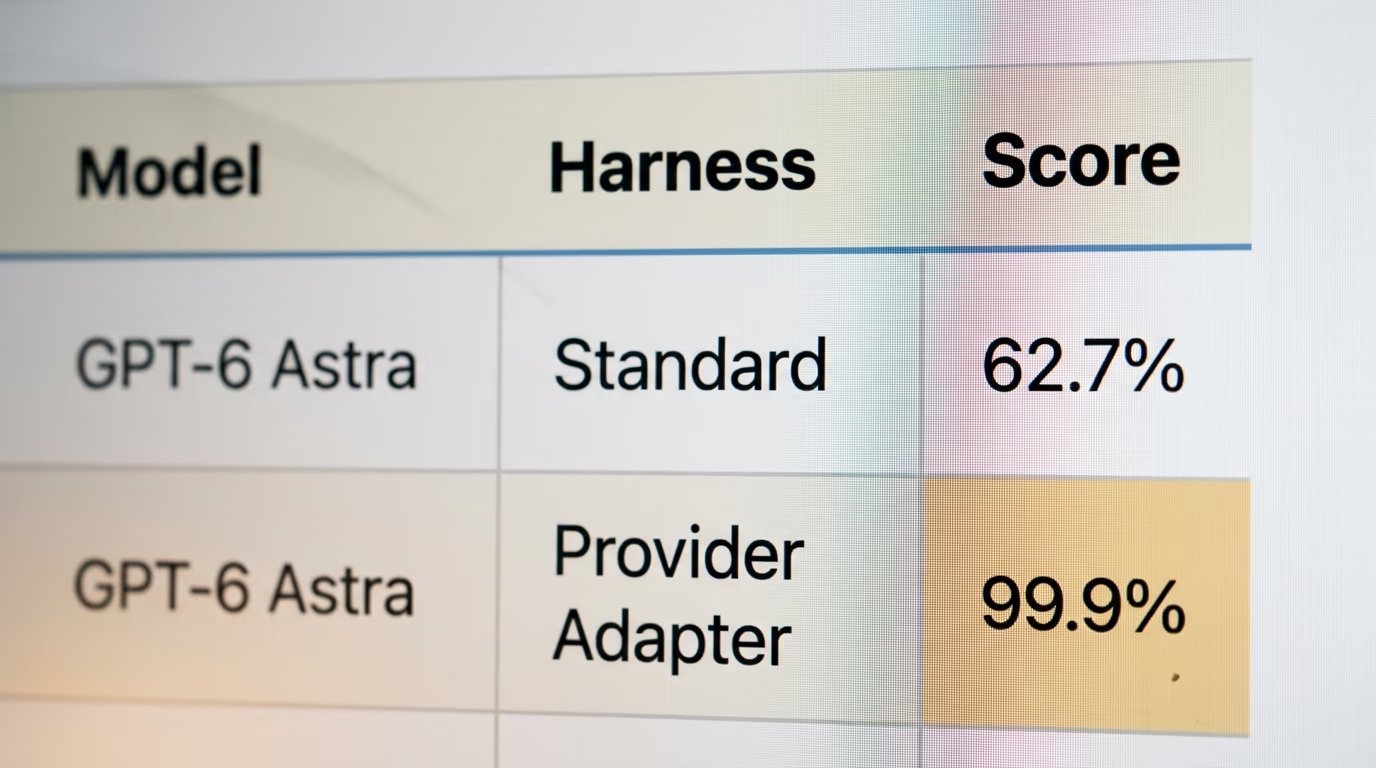
ARC Prize runs a test that is roughly a set of small unfamiliar video games an agent has to work out from scratch with no instructions, exploring, guessing the goal and planning its moves. Astra scored best in class on it, and the number depends entirely on how it was run. Using the neutral setup every model gets, Astra reached 62.7%. Using OpenAI's own setup, which keeps the model's private reasoning alive between turns so it can reuse earlier thinking, it reached 99.9%. Both are records, and only the second one made the headlines.
ARC Prize was straight about that and now reports both figures side by side on its leaderboard, labelled by which setup produced them. It also reported 2 findings that no score captures. Astra needed fewer moves than the median tested human on almost every level it finished, and it invented a compact shorthand notation of its own to track what was happening in each game. Whatever you make of the AGI label, a model writing itself a private note taking language mid game is new.
The second outside check is less flattering and it is sitting in OpenAI's own comparison table. Artificial Analysis, which maintains a composite index of model intelligence, scored Astra level with the model it replaces and below Anthropic's Claude Fable 5.1. OpenAI printed that row itself rather than leaving it out, which is to its credit, and Simon Willison flagged the same result in his write up. On the coding agent side of that index the ordering shifts again, with Astra ahead on cost per finished task and Claude ahead on raw score.
One more caution comes from The New Stack, which read the tables carefully. It notes that OpenAI's coding chart leaves out Meta's newest model entirely and uses a lower Claude result than the one on the public leaderboard, which makes Astra's advantage look wider than the full set of results supports. None of that makes the model bad. It means a launch table is a marketing document with real numbers in it, and the ordering usually changes within a fortnight. Our ranking of the best AI agents for coding gets its rematch once anyone can actually run this thing.
What we do not know yet about GPT-6 Astra
Almost everything published about Astra today came from OpenAI, and independent testing has barely started. The company itself notes that its evaluation scores are the maximum at any effort and were run in its research environment or through its API, which it says can behave differently from production ChatGPT because the system prompts and the available tools are not the same. That's a sensible disclosure to make, and it also means the numbers everyone is quoting this week are a ceiling rather than an average.
The rollout has no dates attached to it. Coming days is the only commitment anyone has been given, the release notes still say Astra is not generally available, and OpenAI hasn't said what usage allowance a Plus subscription carries for it. Whether the higher token rate really works out cheaper per finished task is untested in public, and it stays untested until enough people have run comparable jobs on both models and published what they spent.
The disclosure OpenAI made against its own interest deserves attention too. It says Astra's written reasoning is harder for its monitors to follow than the previous model's when the model is pushed to evade them, that Astra is better at controlling what it writes down and less likely to include incriminating detail, and that it takes the decline seriously. Its chief scientist Jakub Pachocki said the company will withhold scaling until it can regain enough confidence in monitoring future models. Nobody outside OpenAI can check any of that yet.
Then there is the plain user question nobody can answer for another week. How often will the safety layer stop legitimate work, and will it turn out to be a minor annoyance or the reason people quietly go back to the older model for long jobs. OpenAI has told everyone to expect interruptions at launch and says it is calibrating them down, which is honest and also impossible to argue with until the complaints start arriving.
What to watch over the next fortnight is fairly simple. Watch for the rollout actually reaching Plus accounts, for the first computer use results measured by somebody other than OpenAI, for the answers from Anthropic and Google, and for the first real invoices from developers who moved a live workload across. Until then the fair summary is that OpenAI has shipped a model that scores extremely well on its own tests, has one genuinely strong outside result with an asterisk attached, and hasn't yet reached most of the people already paying for it.
Questions people ask
What is GPT-6 Astra in simple terms?
Astra is the newest flagship AI model from OpenAI, and it sits at the top of the company's lineup. Unlike earlier models that mainly wrote answers back to you, it is designed to operate a computer on your behalf, browsing websites, filling in forms, building documents and spreadsheets, and checking its own work on screen.
When was GPT-6 Astra released?
OpenAI announced Astra on Thursday 3 September 2026 and began rolling it out the same day to a limited set of organizations. The ChatGPT release notes say it is not yet generally available, and OpenAI has said broader access is planned over the coming days without committing to a specific date.
Can I use GPT-6 Astra on the free ChatGPT plan?
No. OpenAI's launch post names Plus, Pro, Business and Enterprise as the plans getting Astra, and neither the free plan nor the cheaper Go plan appears on that list. Plus is the cheapest way in for an individual, at the monthly price shown on the ChatGPT pricing page today.
How much does GPT-6 Astra cost in the API?
The standard rate is $10 per million input tokens, and output is priced 5 times higher than that, with steeper rates again for very long conversations and a faster tier at double the price. Astra costs more than twice what OpenAI currently charges for the model it replaces.
Is GPT-6 Astra better than Claude?
It depends on the test, and the honest answer today is that it is mixed. Artificial Analysis, an independent group, scores Astra below Anthropic's Claude Fable on its composite intelligence index, a result OpenAI printed in its own comparison table. OpenAI's own figures put Astra ahead on computer use and document work.
Why does GPT-6 Astra pause or stop my task?
OpenAI classified Astra at the Critical level for cybersecurity under its own risk framework, so it added monitoring that can interrupt a running job. In ChatGPT and Codex you may be asked to review an action before it continues, and in the API the task stops. OpenAI says legitimate work can be flagged and that users should expect this at launch.
Did OpenAI say that GPT-6 Astra is AGI?
OpenAI did not declare it in any formal way. The New Stack reported that OpenAI president Greg Brockman said it is not unreasonable to feel that we are now in the AGI era, and that he leaves it to each reader to decide. ARC Prize, whose benchmark Astra scored highest on, wrote that it is not claiming the model is AGI.