AISeptember 2, 202611 min read
TimesFM 3 is Google's best forecaster, and you can't ship it
Google put the TimesFM 3 weights on Hugging Face under a license that blocks commercial and production use. The code stays open, and TimesFM 2.5 is still the version you can ship.
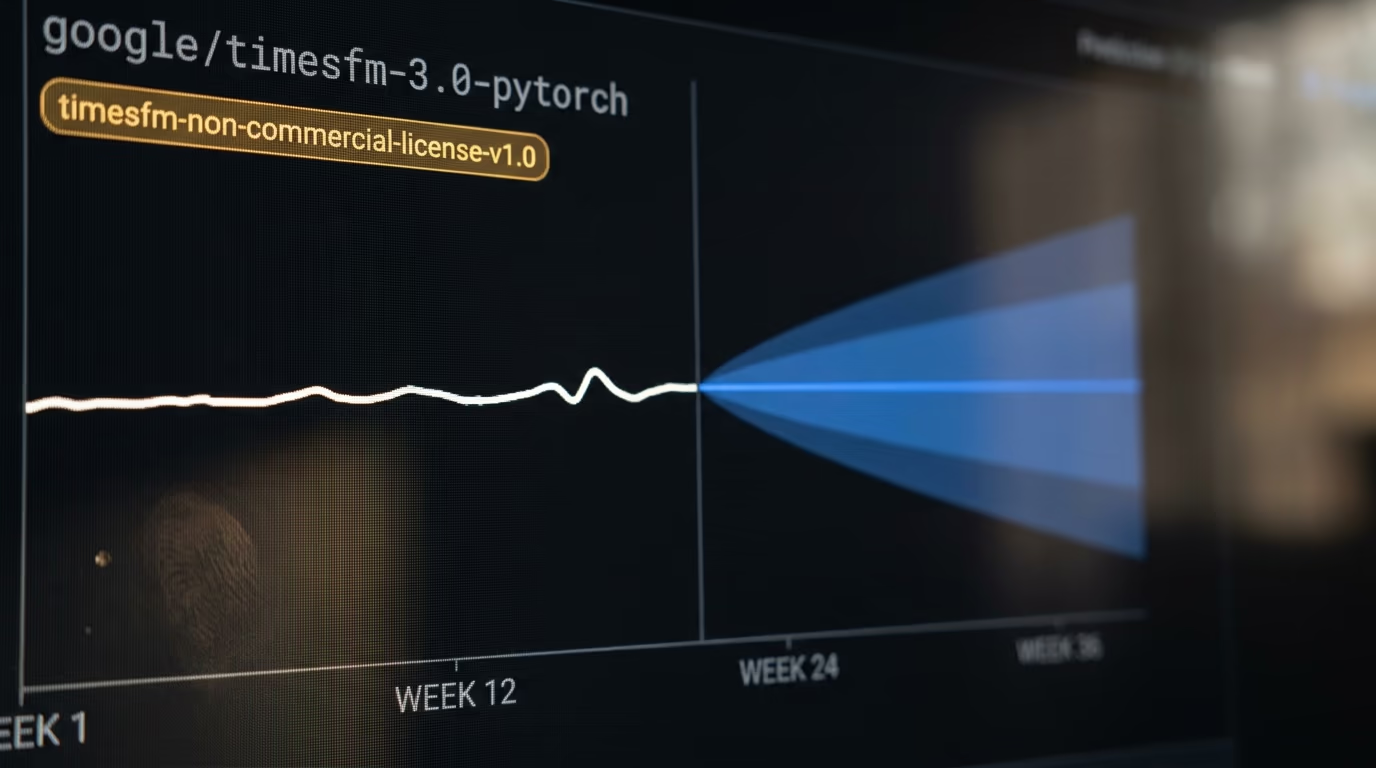
Google has released TimesFM 3 as its newest time series forecasting model, and the weights arrive with a license that forbids commercial and production use. The source code stays under Apache 2.0, the weights of the previous version stay under the same open terms, and TimesFM 2.5 is still the only recent checkpoint you can legally put inside something that earns money.
The files went up on Hugging Face on 24 August, and the matching release landed on the Google Research repository on 28 August. Google's own readme says TimesFM 3 finished first on the public forecasting scoreboards it lists, and a few lines below those results sits a boxed notice saying that commercial or production use of the default pretrained weights is not permitted. Both statements are in the same file, a screen apart.
Every TimesFM checkpoint before this one shipped under the open license Google has used since the first release in 2024, so this is a change of direction rather than a continuation. What follows is the actual license file read line by line, said in plain words, along with the routes that are still open if you forecast anything for a living.
What does TimesFM 3 actually do?
TimesFM 3 predicts what a number will do next using only the history of that number. You hand it a column of past values, orders per day, visitors per hour or electricity drawn per minute, and it draws the continuation along with a band showing how confident it is about each step ahead.
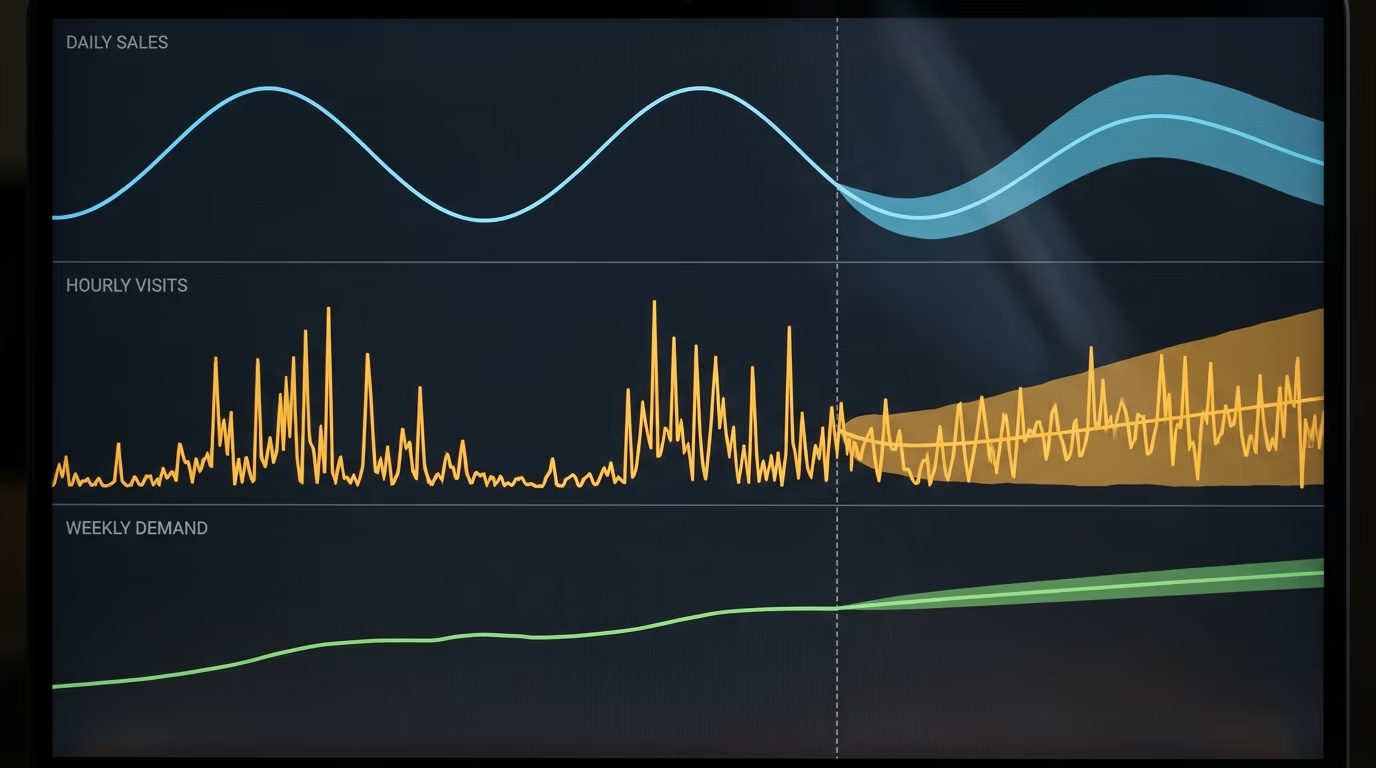
Forecasting like this used to mean fitting a statistical model to every series by hand, so a shop tracking every product on its shelves needed a fitted model for each of them and somebody to keep all of them alive. TimesFM belongs to a newer family that Google calls a time series foundation model, trained once on a large pile of historical series and then pointed at a series it has never seen. Nothing is trained on your data at the moment you use it, which is what people mean when they call this zero shot forecasting.
Version 3 adds something the earlier releases could not do natively, which is forecasting several related series together in a single pass instead of one at a time. If your ad spend, your website traffic and your orders all move together, the model can now treat them as one system rather than 3 unrelated columns that happen to sit in the same table. It also accepts information about the future you already know, a promotion calendar or a list of public holidays, and Google calls those extra columns covariates.
The model card says the training mixture included public forecasting collections, Wikipedia page view histories, the top queries from Google Trends and synthetic series built for the purpose. That mixture explains why the model does reasonably well on business data it has never met, and it also explains why nobody should expect magic on a series driven by something the model cannot see. If you want the background on how weights get released and what the labels on them mean, we went through open weight AI models and what they cost in a separate piece.
What does the TimesFM 3 license actually forbid?
The TimesFM 3 license allows testing, evaluation and research, and it blocks anything tied to revenue, production systems or real users. Google names it the TimesFM Non Commercial License v1.0 and ships the full text as a file called LICENSE inside the model repository, so anybody can read it before downloading a single byte.
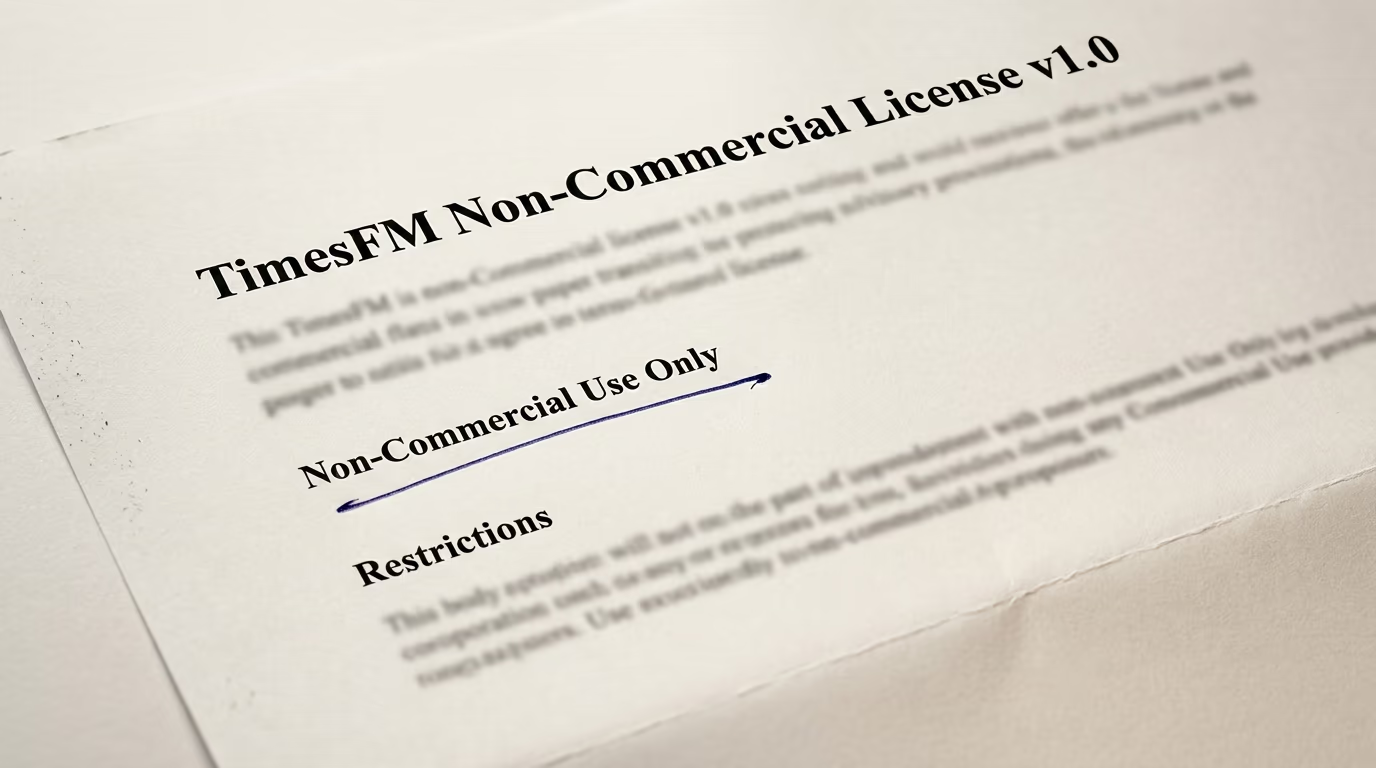
The document defines its own idea of a non commercial purpose as testing, evaluation or research that is not tied to commercial gain, production deployment or revenue generation. Internal benchmarking inside a company is explicitly allowed, and so are academic research and experimentation on private or public datasets, as long as the results do not feed a commercial decision, a client deliverable or anything sold. A data team can measure the model against their own sales history this afternoon, and they cannot use what they find to decide how much stock to order.
Google then names the uses that never count as non commercial. Any revenue generating activity is out, any direct or indirect interaction with end users or production systems is out, and using the model to train, fine tune or distill another model for commercial use is out. That last one closes the obvious workaround, because you cannot generate a pile of forecasts, teach a smaller model to imitate them and quietly ship that instead.
Commercial or production use of the default pretrained weights is not permitted. (Google, TimesFM readme)
Distribution is refused outright rather than merely restricted to non paying users. The text says you will not distribute the model or a derivative, and a derivative covers any version you fine tune, retrain or otherwise adapt, so publishing your improved copy is out even if you give it away. The grant is revocable, cannot be transferred and cannot be sublicensed, which is a much weaker footing than a normal open license gives you.
Their definition of a derivative is much wider than most people would expect. It covers a fine tuned version, a retrained version, any adapted version, and any work that incorporates or is based on the model, its logic or its parameters, whether or not copyright law would call it a derivative work. A team that trains the model further on its own sales history has made one, and that copy inherits every restriction attached to the original, so it cannot be sold, shipped or published either.
One clause decides who is actually affected. The definitions say outputs are not derivatives, which sounds generous on first reading, and the restrictions then forbid using the model or any outputs and data produced by it for commercial or production purposes. The forecast numbers themselves are covered, so running the model on your own laptop and pasting the result into a client report is precisely the behavior these terms were written to stop.
A commercial license does exist, and it has to come from Google. The text says the company may grant one at its sole discretion and that the additional use may carry a fee, a royalty or a revenue share, and no price for that is published anywhere. The document also says it applies to people who download the model, and that other terms may apply to customers reaching TimesFM through Google's own interface, which is the door the next section walks through.
Can you still use TimesFM at work?
Yes, through TimesFM 2.5, whose weights remain under the open Apache license, or through Google's own products where its commercial terms replace the download license. The restriction covers the version 3 weights file and nothing else, so the rest of the project is unaffected.
The source code in the repository is open and stays that way, so the library, the examples and the fine tuning code are all still usable in a commercial setting. The readme states the split in a single sentence, saying the code carries the open license, that the weights up to the previous version keep it, and that the new weights sit under separate non commercial terms. A repository being open source does not make the newest file inside it open, and that is the distinction to hold on to when somebody tells you Google just released an open forecasting model.
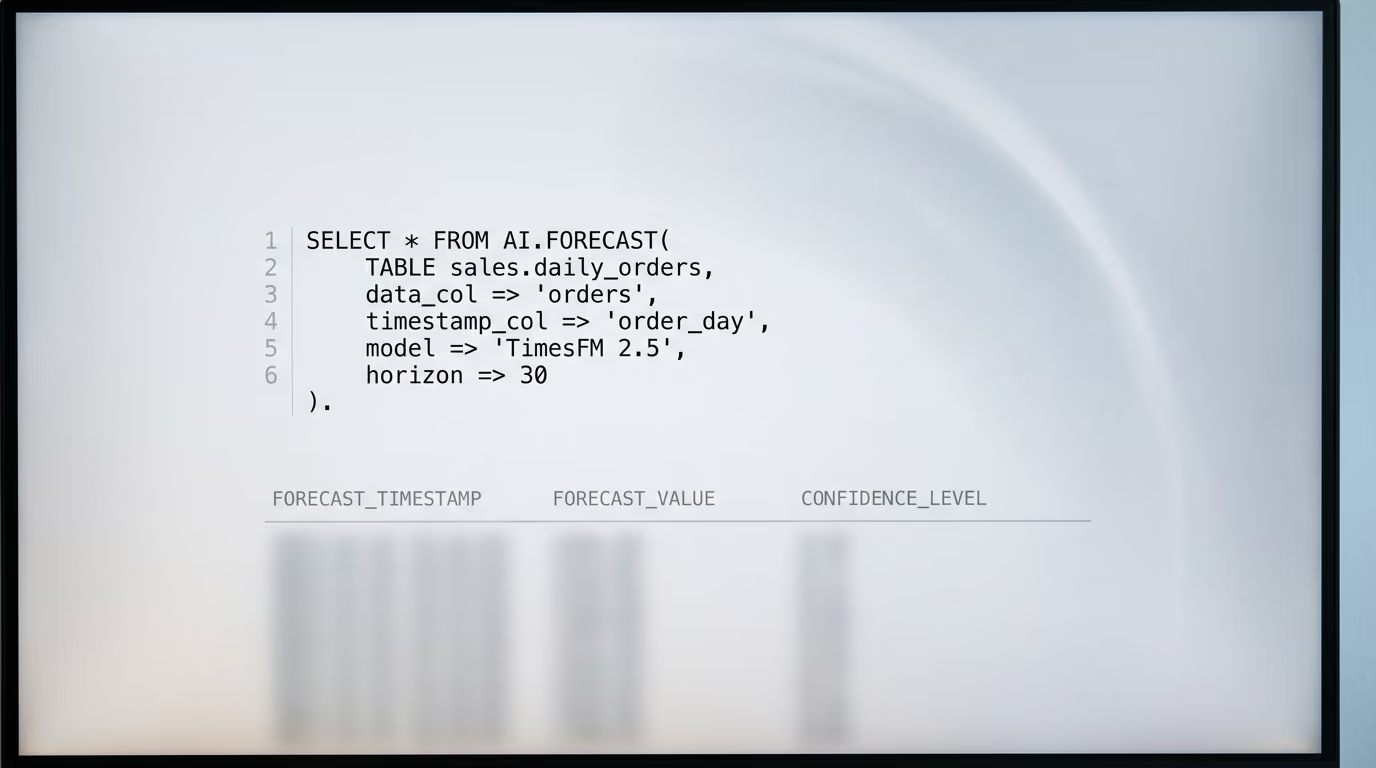
The hosted route is the other option, and it is clearly where Google would like commercial users to be. BigQuery ML runs TimesFM inside ordinary SQL through a function named AI.FORECAST, the documentation lists the previous generation checkpoints as the supported ones, and the newest of those supported checkpoints is what it serves by default today. The same family is wired into Connected Sheets for people who forecast in a spreadsheet, and into Vertex Model Garden as an endpoint that an agent or an application can call.
Other labs still hand theirs over for commercial use, which is the comparison that matters if what you needed was the capability rather than the Google name. Amazon publishes Chronos-2 on Hugging Face under the open Apache license, and IBM publishes its Granite time series models under the same license, both of them confirmed on their own model pages this run. Neither is a drop in replacement for what version 3 does, and both can sit inside a paid product today without anybody signing anything.
Version 3 has not arrived in BigQuery at the time of writing, so nobody can reach the new model through that paid door yet either. That leaves a strange gap where the newest weights Google has are available to download and unavailable to use for anything that matters, which reads like a commercial offer being prepared, though Google has not said that anywhere. If you want the wider picture, we looked at how AI companies make money and which side of the business actually keeps it.
What changed between TimesFM 2.5 and TimesFM 3?
TimesFM 3 forecasts many series together, accepts known future information without a separate module, and carries a license the previous version did not have. The table below puts the 2 releases side by side on the things that decide which one you are allowed to use.
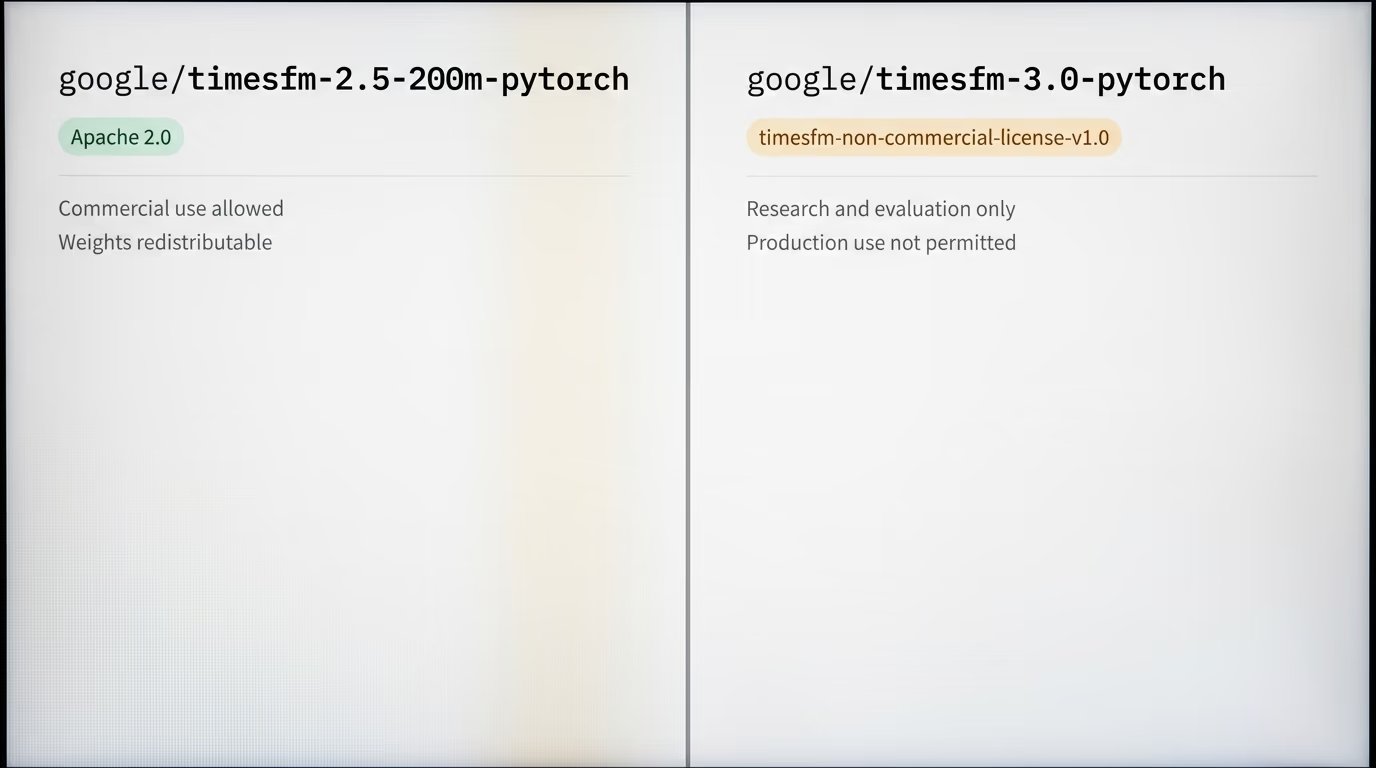
| TimesFM 2.5 | TimesFM 3 | |
|---|---|---|
| License on the weights | Apache 2.0 | TimesFM Non-Commercial License v1.0 |
| Inside a product you sell | Allowed | Not permitted without a separate agreement from Google |
| Redistributing the weights | Allowed | Not allowed, fine tuned copies included |
| Several series at once | One series at a time | Many related series together in one pass |
| Known future information | Added later through a separate module | Built in, past and future |
| Served inside BigQuery ML | Yes, and it is the default | Not yet |
| Where you get it | Hugging Face and Google Cloud | Hugging Face and the Google Research repository |
Google's readme claims first place on 3 public forecasting scoreboards, once overall on a collection of real world tasks, once overall on a second collection spanning many domains, and once among foundation models on a third. Google ran those comparisons itself, and nobody outside the company has published an independent check, so the ranking is the lab's claim rather than a result anybody has reproduced. Treat it as a claim from the lab that built the model.
The engineering change underneath that ranking is the one that will still matter in a year. Forecasting several series jointly is how demand behaves in a real business, because a promotion on one product moves the sales of another and a model reading one column at a time has to be told about that by hand. Version 3 removes the manual step, and that is also why the license change stings, since the thing it does better is exactly the thing a company would have paid for.
Can you run TimesFM 3 tonight, and on what machine?
Yes, if your use stays inside the license, and the hardware bar is low. The whole weights file is about 1.3 gigabytes, and the model holds roughly 330 million internal settings, so it is small next to the chatbot models many readers already have installed on a laptop.
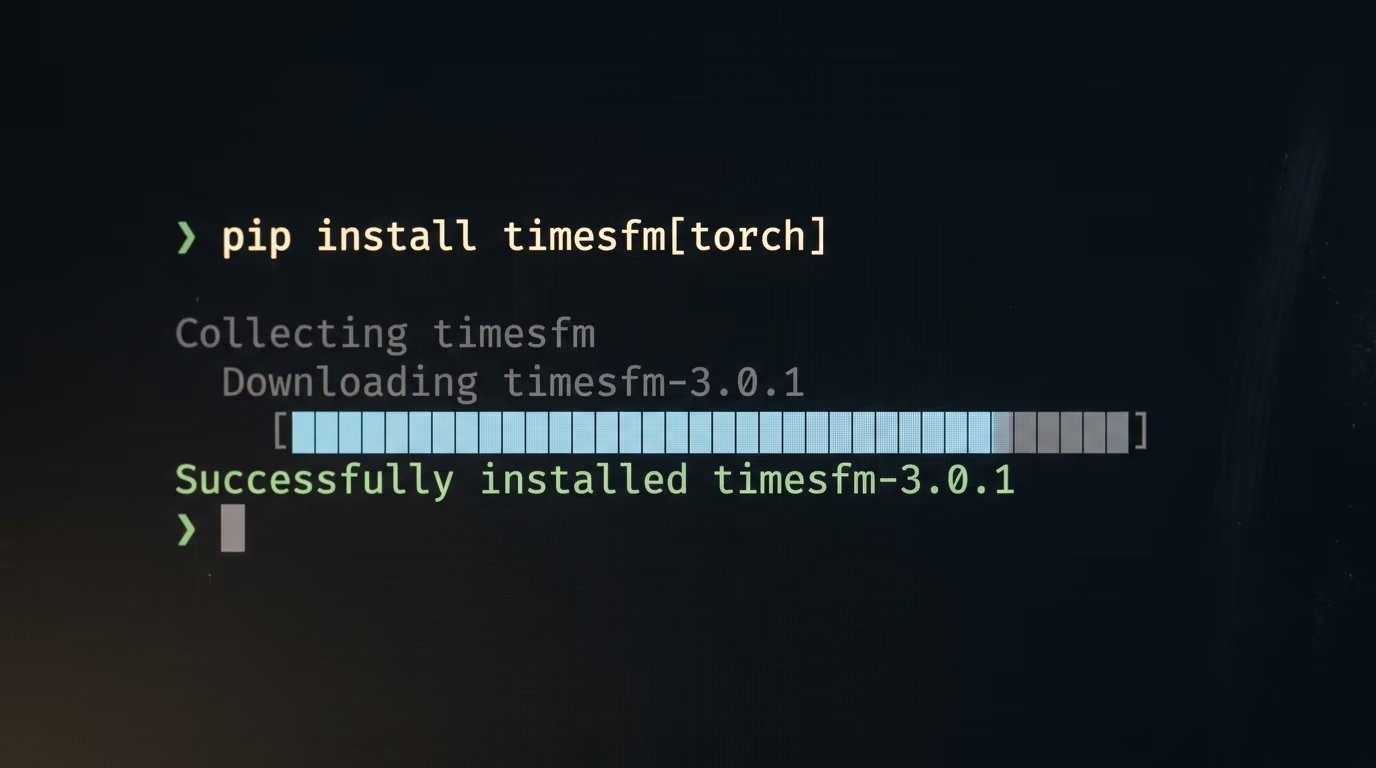
Installing it takes a single command, and the package on PyPI carries the open code license rather than the restricted one that covers the weights. The release that loads the new checkpoint is version 3.0.1, and the project page lists a recent Python 3 release as the requirement.
pip install timesfm[torch]That pulls the library along with the PyTorch pieces it needs, and it ends with a line naming the version it installed. No weights come down at this point, because the model file is only fetched the first time you point the code at the TimesFM 3 model page on Hugging Face, which is also where the license file sits.
One detail is worth knowing before you set aside an evening. Google's own example asks for a graphics card by setting the device to cuda, so a machine without one may need that line changed, and the readme makes no promise about a processor only path. If you want a feel for what different machines can actually hold, our roundup of the best local LLM for coding goes through what each amount of memory buys, and the same arithmetic applies here.
The license travels with the download, which matters more than where you run the model. Running the model on your own hardware does not put you outside the terms, because the restriction is about what the use is for rather than where the machine sits, and a forecast produced at home for a paying client is still a client deliverable.
What do we not know yet about TimesFM 3?
Several things are still missing, and Google says as much in its own files. There is no research blog post for the new version yet, no paper describing what changed, and no benchmark published by anyone outside the company.
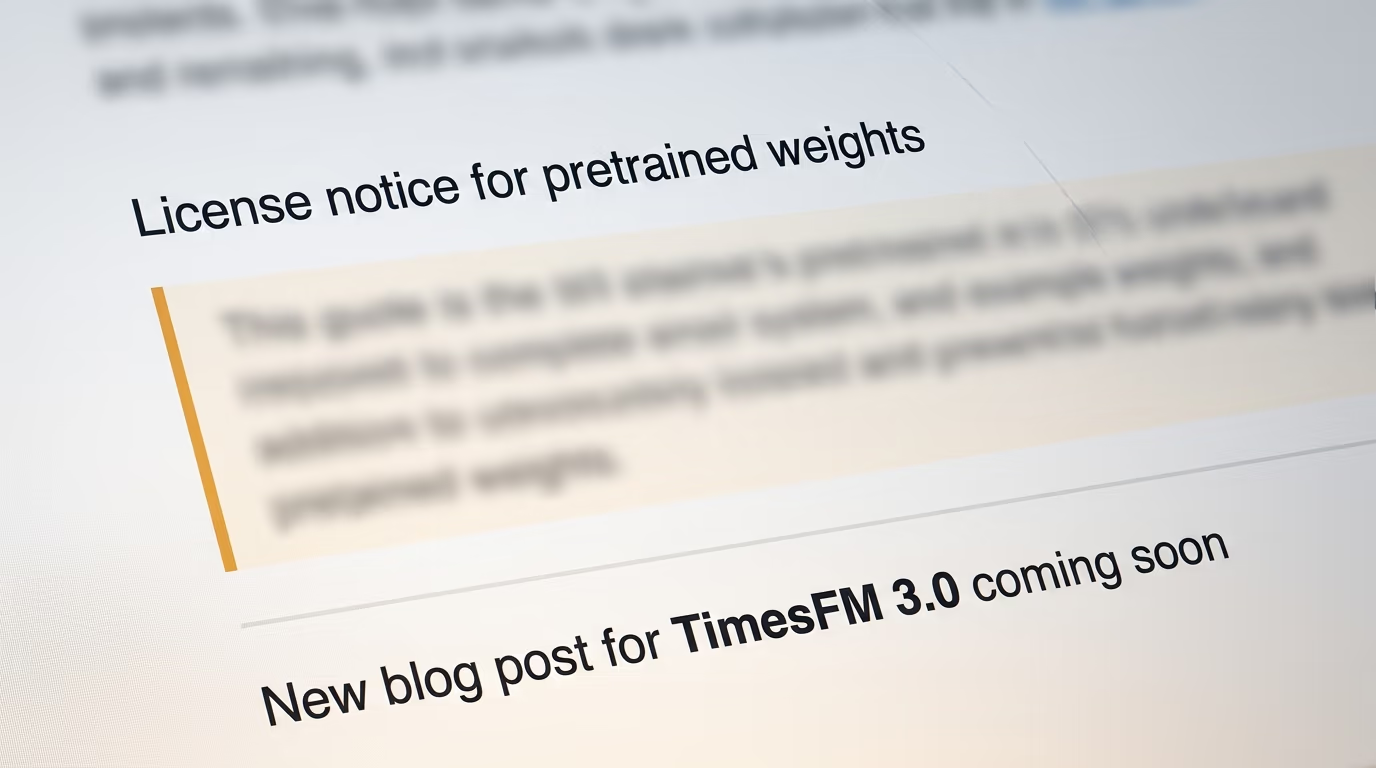
The repository readme carries a line saying that a new blog post for the model is coming soon, so the full account has been promised and has not arrived. The model card cites the original decoder only paper from the first generation rather than a new one, which means the design behind the ranking is described in a readme and has not been through review.
The restriction may also be temporary. Google's wording is that the weights carry the separate license for the time being, which is the company's phrase and not ours, and nothing in the file explains what would need to change for the weights to move back to the open license. Nothing says whether a commercial agreement can be signed today or whether the terms are still being decided internally.
The unanswered questions worth watching are narrow and easy to check later. Whether BigQuery moves to version 3 and on what terms, whether an independent group reproduces the ranking on the same public tasks, and whether anybody publishes a price for the commercial license. The repository also notes that this open version is not an officially supported Google product, which is a reminder that support and licensing are separate promises.
What this means if you forecast anything for a living
If you are a student, a researcher or an engineer testing what is possible, download it today and enjoy the fact that the model topping Google's own tables costs nothing to try. The terms were written for exactly that use, the file is small, and evaluating it against your own history is allowed as long as the answer stays inside the evaluation.
If you build products, plan around the previous version or around Google's hosted route, and do not let a proof of concept quietly grow into a shipped feature on the wrong weights. The awkward case is the consultant or the small team that would have run this on a laptop for a client, because that is the group with a real use, no procurement department and no commercial agreement to fall back on.
The wider signal is worth naming without any drama, since Google is entitled to license its own research however it wants and has kept the code open. A lab that gives away its forecasting weights for years, then holds back the version that finally forecasts several things at once, is telling you where the money in this technology now sits. Watch what happens to the next release, because if the open license comes back for version 3 then that will say something too, and if it does not, the pattern is set. Our comparison of what an hour on a Google TPU really costs against an Nvidia GPU covers the other half of the same story, which is how much of this stack a company can own end to end.
Questions people ask
Is TimesFM 3 free to download?
Yes, the TimesFM 3 weights are free to download from Hugging Face, and no payment or approval is required to get them. The cost sits in the terms rather than the price, because the license only allows testing, evaluation and research, and it blocks any use tied to revenue or to a production system.
Can I use TimesFM 3 in my company?
You can evaluate it internally, and you cannot use what you learn from it to make a commercial decision or to build anything you sell. Google's terms allow internal benchmarking and research on your own data, and they exclude revenue generating activity, production systems and any contact with real users.
Which TimesFM version can I use commercially?
TimesFM 2.5 is the newest checkpoint you can use commercially, because its weights stay under the open Apache license the earlier releases carried. Google also serves TimesFM inside BigQuery ML, Connected Sheets and Vertex Model Garden, where its own commercial terms apply instead of the download license.
What is the TimesFM 3 license called?
It is the TimesFM Non Commercial License v1.0, and Google ships the full text as a file named LICENSE inside the model repository. It permits testing, evaluation and research, it forbids commercial and production use, and it also forbids redistributing the weights or any version you fine tune from them.
Does the TimesFM 3 license cover the forecasts it produces?
Yes, the restrictions cover the outputs as well as the weights themselves. The definitions say outputs are not derivatives, and the restrictions still forbid using the model or the data it produced for commercial or production purposes, so a forecast pasted into a paid report sits outside the terms.
How big is TimesFM 3 and what machine does it need?
The weights file is a little over a gigabyte, which any ordinary laptop can hold without trouble. Google's own example asks for a graphics card by setting the device to cuda, so a machine without one may need that line changed, and the readme makes no promise about a processor only path.
Is TimesFM 3 open source?
The code is open source and the newest weights are not, which is why the answer confuses people. Google keeps the repository under the Apache license, and the version 3 weights sit under separate terms that allow research and evaluation while forbidding commercial and production use.