TechJuly 24, 202612 min read
Google TPU vs Nvidia GPU, what an hour on each really costs
Google rents its TPU by the hour and never sells you one. Nvidia chips you can rent from dozens of clouds or buy in a shop. Here are 5 checks and the list prices for both.
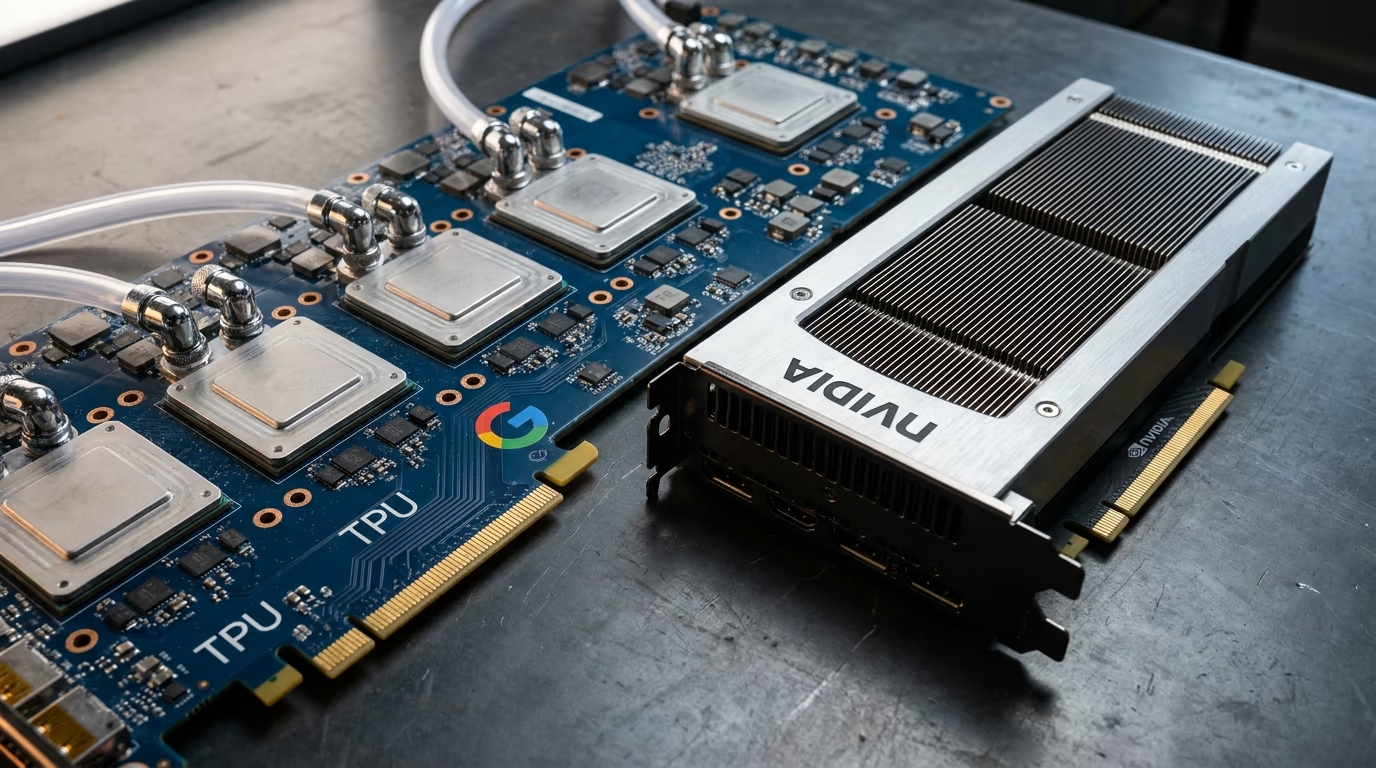
Google TPU vs Nvidia GPU comes down to one fact that no speed test will tell you, which is that a Google TPU can only be rented from Google, while an Nvidia GPU can be rented from dozens of companies or bought outright and carried home in a box. Google Cloud lists one Ironwood chip at $12.00 an hour in its Iowa region, and Lambda lists one Nvidia B200 at $6.99 an hour, both read off the vendors' own pricing pages while writing this.
Where you can get a chip shapes a project more than how fast the chip runs, because renting from a single supplier means their regions and their contract. This comparison runs the same 5 checks over both sides, using only prices and specifications published by Google, Nvidia, Lambda and Anthropic, and it ends with a verdict written for somebody who wants to train or serve a model this month rather than build a data centre.
What is the difference between a Google TPU and an Nvidia GPU?
A Google TPU is a chip Google designed for one job, the matrix arithmetic that neural networks spend nearly all their time doing, and an Nvidia GPU is a chip that began life drawing video game graphics and turned out to be very good at the same arithmetic. Google's cloud documentation describes TPUs as custom chips built to speed up machine learning work, and it is honest about the trade, because a chip built for one kind of maths is worse at everything else.
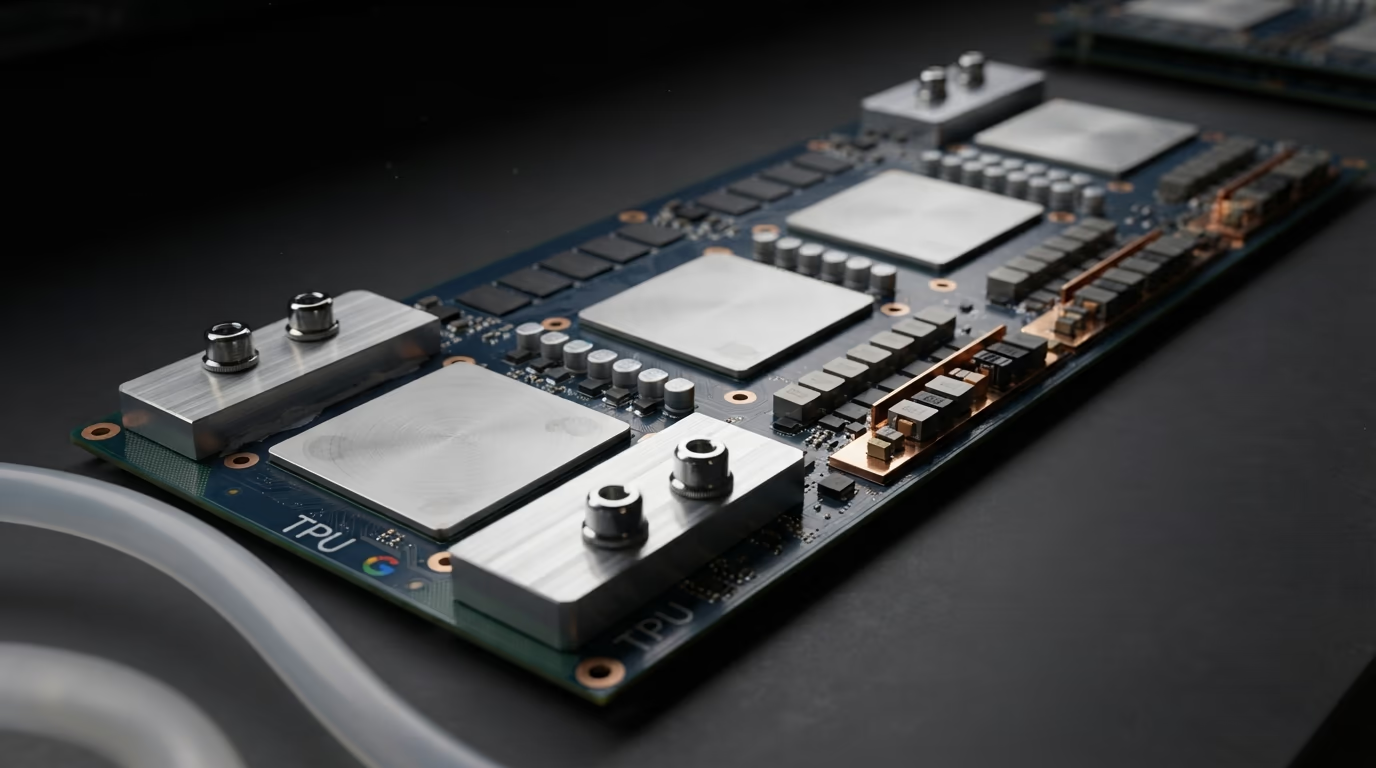
The current Google generation is called Ironwood, listed in Google Cloud's own documentation as TPU7x and the 7th version of the line. Google's launch post says a single Ironwood pod links 9,216 chips so that they behave like one enormous machine, which is the number that explains why Google talks about training runs nobody could attempt on a handful of cards. That figure describes Google's own hardware as Google built it, and nobody outside the company has published an independent check of what it delivers in practice.
On the Nvidia side the current flagship for data centres is the Vera Rubin NVL72, a whole rack sold as one unit rather than a card you slot into a computer. Nvidia still sells its Blackwell generation underneath that, and older Hopper cards are the ones most rental clouds actually have sitting in stock today, so the chip on the marketing page and the chip you can rent tonight are rarely the same object.
It helps to know what you are actually renting in each case, because the language hides a lot. A TPU arrives as one accelerator on a board that Google installs, cools and networks for you, and the price you see is quoted for a single one of those accelerators for a single hour. Nvidia hardware is quoted the same way by rental clouds, which is why the numbers in this article can be lined up next to each other at all.
The deeper answer to why a graphics chip ended up running chatbots has its own piece here, and if that is the question you actually came with, read why GPUs are used for AI instead. Both families win the same way, by doing thousands of small multiplications at the same instant rather than a few complicated operations one after another.
Can you buy a Google TPU or an Nvidia GPU?
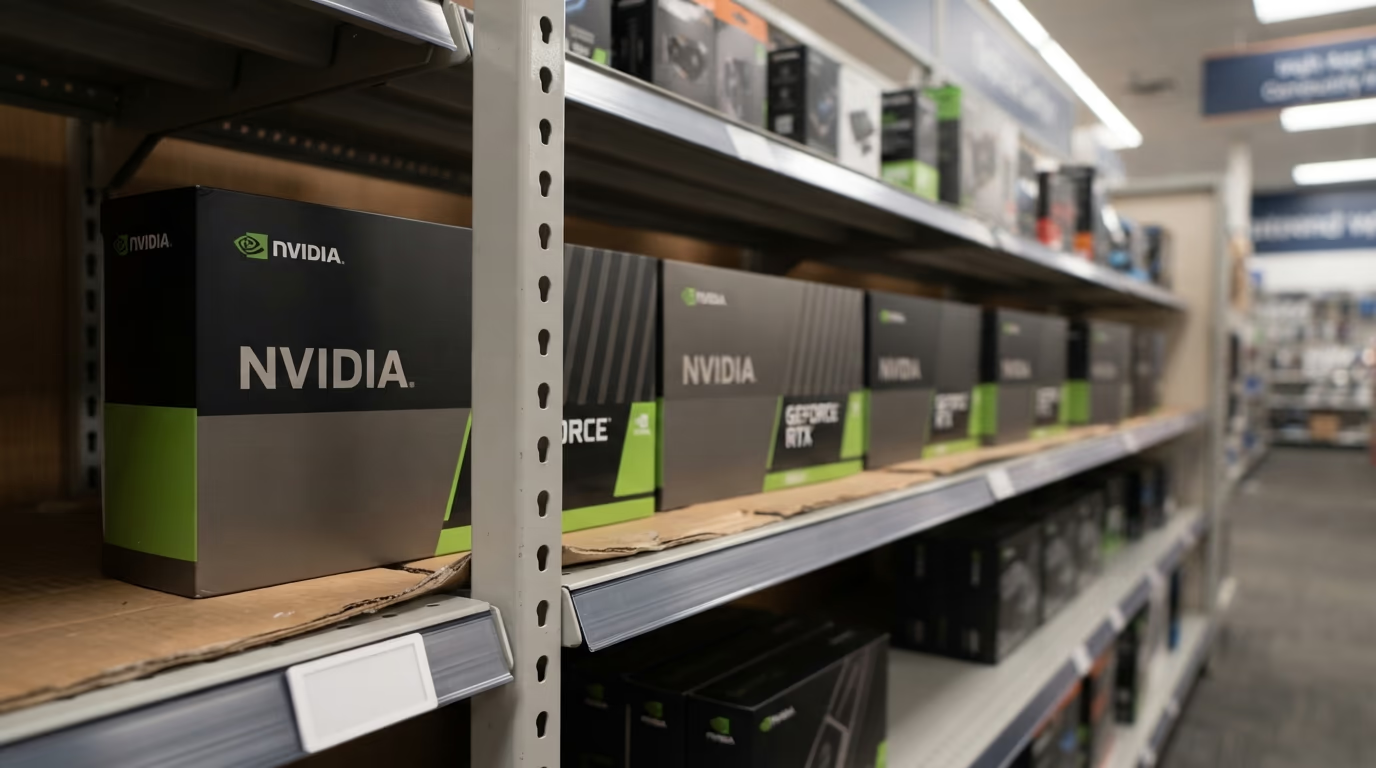
You can buy an Nvidia GPU and you cannot buy a Google TPU, and that single sentence settles more projects than any speed comparison. Nvidia's own product page for DGX Spark, its desktop machine for running models at home, sends buyers to Amazon, Micro Center and PNY, and ordinary Nvidia graphics cards sit on shelves in ordinary computer shops in most countries.
Google's cloud documentation lists 3 ways to reach a TPU, and they are Compute Engine, Google Kubernetes Engine and Vertex AI, all of them Google Cloud products. No retail box exists, no reseller sells one, and no version of the chip arrives in the post for a person who wants to own the hardware outright. Renting from Google is the only door there is.
That has consequences a benchmark never shows. Your capacity depends on one company having free chips in a region you are allowed to use, your price depends on a contract you negotiate with that same company, and your escape route if the relationship sours is a rewrite rather than a phone call to another supplier. Teams that care about this usually describe it as a risk question rather than a speed question.
The practical side of that is worth spelling out, because it surprises people who expect the sign up flow to look like any other cloud. Reaching the newest TPUs generally means an account with quota granted for a specific region, and capacity for the largest configurations is arranged rather than clicked. An Nvidia card from a rental market, by contrast, is usually running a few minutes after you enter a payment method.
An Nvidia card is the opposite in every direction. Dozens of rental companies compete for the same customer, prices move against each other week by week, and a card you own keeps working whatever any cloud decides to do with its pricing. We compared 2 of those rental markets in RunPod against Vast.ai, and the gap between providers renting the identical Nvidia card was wide enough to matter on a monthly bill.
What does an hour on a Google TPU cost against an Nvidia GPU?
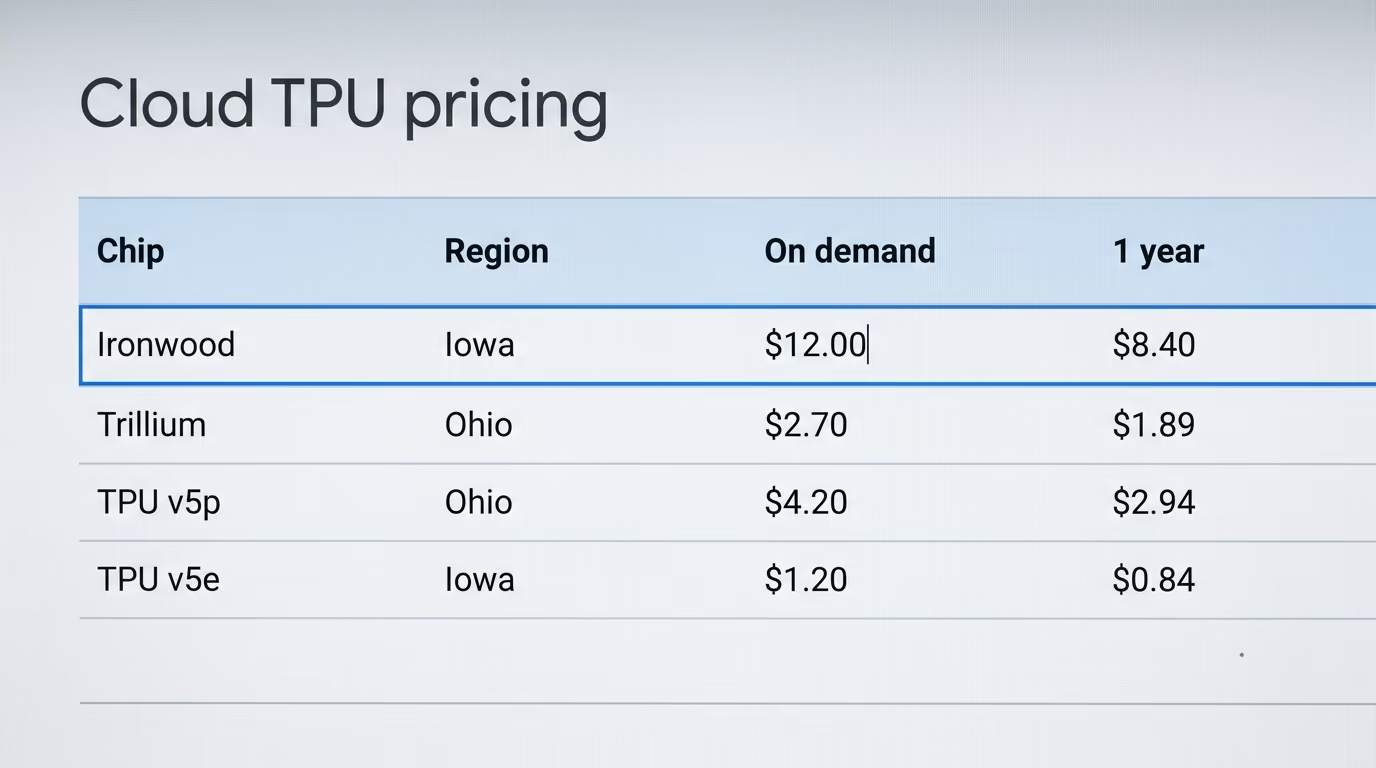
Google's newest TPU is the more expensive chip to switch on for an afternoon, and Google's older TPUs are the cheapest accelerators in this comparison by a wide margin. Every price in the table below is a public list price for one accelerator for one hour, taken from Google Cloud's TPU pricing page and Lambda's cloud pricing page, with no discount and no commitment applied.
| Chip | Who rents it | List price, 1 chip for 1 hour | Can you buy one |
|---|---|---|---|
| Google Ironwood (TPU7x) | Google Cloud only | $12.00, Iowa | No |
| Google Trillium (TPU v6e) | Google Cloud only | $2.70, South Carolina | No |
| Google TPU v5p | Google Cloud only | $4.20, Ohio | No |
| Google TPU v5e | Google Cloud only | $1.20, Iowa | No |
| Nvidia B200 | Lambda and many rivals | $6.99 | Yes |
| Nvidia H100 | Lambda and many rivals | $4.29 | Yes |
| Nvidia A100 | Lambda and many rivals | $1.99 | Yes |
The cheapest row is the one worth staring at, because Google's older v5e generation rents for $1.20 an hour, which is less than a cup of coffee for an hour on a chip designed to train neural networks. An older accelerator that is fast enough for your job beats a newer one you cannot afford to leave running, and the same logic applies on the Nvidia side of the table, where the previous generation costs roughly a third of the current one.
Put that in the terms of an actual experiment and it stops sounding like a spreadsheet. Fine tuning a small model overnight on that cheapest TPU, call it 8 hours of work, comes to about $9.60 of rented hardware, which is a restaurant dessert rather than a budget line. The same job on the newest chip costs many times that, and the question worth answering honestly is whether your model would finish soon enough there to earn the difference back.
Committing to a longer term changes the picture again. Google's pricing page shows the Ironwood rate falling by about a third for anyone signing a 1 year commitment, and by more than half over 3 years, which is the shape of every cloud contract and the reason list prices flatter nobody. If you are pricing a product rather than an experiment, the price of a finished API per token is often the number that actually decides things, and we broke those down across every major vendor in the LLM API pricing comparison.
One honest caveat belongs with that table, because these are 2 different companies quoting 2 different classes of hardware. The rows answer what an hour costs rather than which chip finishes a given job first, and nobody outside Google has published a fair run of Ironwood against a current Nvidia rack. Anyone quoting you an exact performance ratio between the newest chips on each side is estimating, and you should treat the figure accordingly.
Will your code run on a Google TPU, or only on Nvidia?
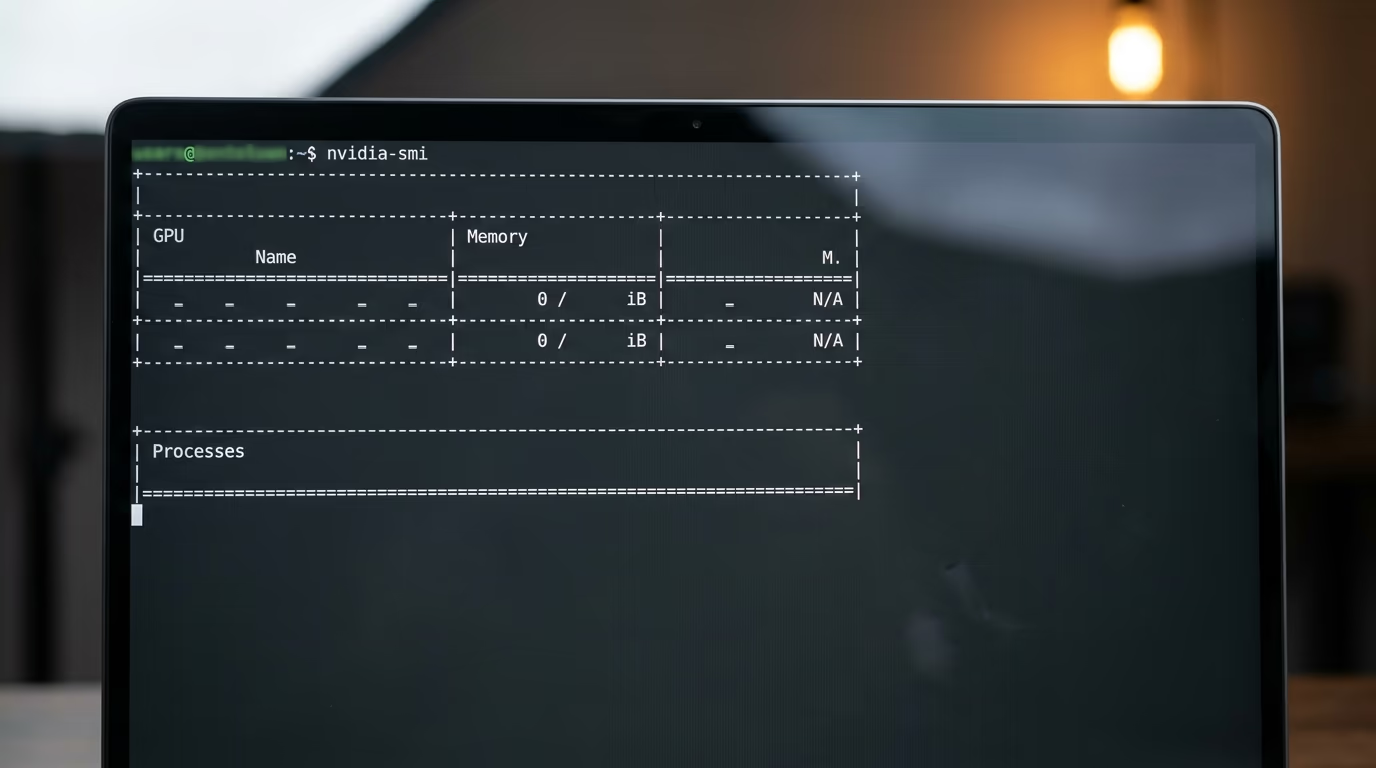
Most AI code written in the last decade assumes an Nvidia card is underneath it, and that assumption is the real reason Nvidia keeps winning arguments it loses on price. Nvidia's CUDA software has been the default target for so long that tutorials and installation guides quietly expect it, and a project downloaded tonight from GitHub will very often expect it too.
TPUs speak a different language underneath. Google's stack expects JAX, or PyTorch running through a translation layer called XLA that its documentation tells you to install separately, and when Google describes its very largest training clusters it credits JAX and a scheduler named Pathways for holding them together. Plenty of mainstream models do run on TPUs, and Google has spent years making the common paths work, but the burden of checking sits with you rather than with the wider software world.
For a person reading this on a laptop, the practical test is simple enough to do before spending anything. Take the exact model and the exact library you intend to use, search its documentation for TPU support, and believe what you find there rather than what any comparison article promises you. If nothing in the repository mentions TPUs at all, assume you would be the one doing the porting work, and price your own time into the decision.
This is also where the gap between the 2 companies is widest, and it has almost nothing to do with silicon. Nvidia built the software layer that everybody now writes against long before this rivalry became news, and that history is why a rival chip has to be substantially cheaper or faster before anyone will rewrite working code to reach it. Google knows this, which is why its own pitch leans on scale and price rather than on convenience.
None of this applies if the model runs on the machine already in front of you, which is a route more people take every month and a cheaper one than either chip discussed here. Our roundup of the best local LLM for coding ranks the options by how much memory your computer actually has, and the honest answer for many readers is that no rented accelerator is needed at all.
What is a Google TPU good at, and what is it bad at?
Google publishes a list of work its own TPUs are bad at, which is unusually candid for a company selling chips, and it is the most useful page on the entire Cloud TPU documentation site. Google says TPUs suit models dominated by matrix calculations, models that train for weeks or months, models with very large batches, and recommendation systems carrying enormous lookup tables.
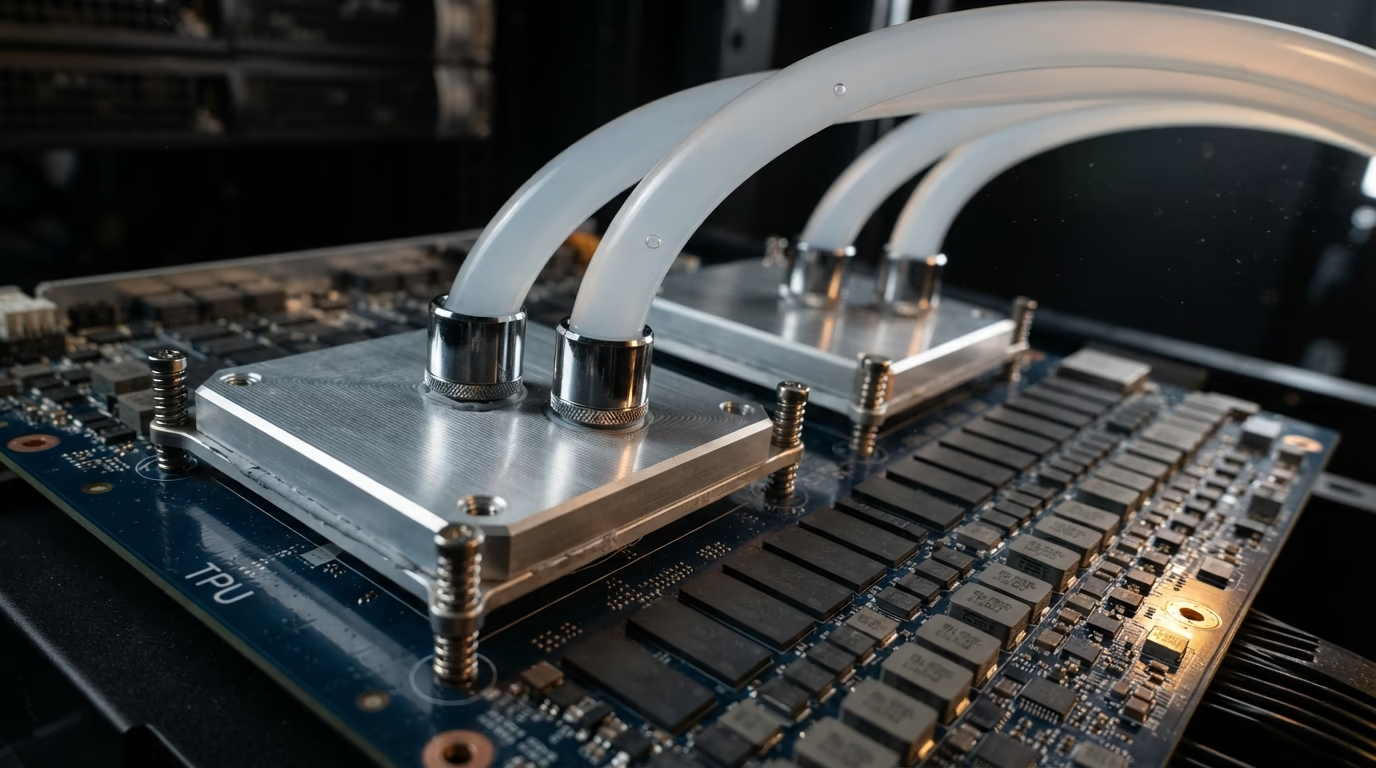
The same page names 3 kinds of work Google does not recommend for a TPU. Programs that keep branching down different paths instead of grinding through steady blocks of arithmetic are the first, work that needs very precise arithmetic is the second, and training loops containing unusual custom steps are the third. In plain terms, that is Google telling you its chip rewards predictable heavy maths and punishes anything irregular.
Nvidia's pitch is the mirror image of that. A GPU is less specialised, which costs efficiency on the perfectly regular workloads where a TPU shines, and buys flexibility everywhere else, including the messy experimental code where researchers spend most of their working lives. Neither position is marketing, since both follow directly from what the silicon was designed to do in the first place.
There is a useful rule hiding in that documentation for anyone deciding tonight. If your work looks like the same enormous calculation repeated for days, the specialised chip is built for you, and if your work looks like trying a dozen slightly different ideas before lunch, the flexible chip will waste less of your time even when it wastes more electricity.
The architecture of the model matters here too, and the newest Google inference chip was built with a specific one in mind. Google's April announcement describes its new inference chip as engineered for the low delay that agent workflows and mixture of experts models need, which is worth knowing if you run that kind of model, and we explained what a mixture of experts model is in its own piece.
Who actually uses Google TPUs instead of Nvidia GPUs?
Anthropic is the loudest TPU customer outside Google, and its own announcement says it is expanding to as many as 1 million TPUs in a deal worth tens of billions of dollars, bringing well over a gigawatt of capacity online during 2026. A gigawatt is roughly the output of a large nuclear reactor, which gives some sense of what a serious commitment to one chip family now looks like at the top of this industry.
The same announcement contains a sentence that changes how you should read the headline. Anthropic says it runs a diversified compute strategy across 3 chip platforms, naming Google's TPUs, Amazon's Trainium and Nvidia's GPUs together, so the company making the largest public TPU commitment in the industry did not stop buying Nvidia. It added a supplier instead of swapping one out.
Google itself is the other enormous TPU user, and its Ironwood announcement states that frontier models including Gemini, Veo, Imagen and Anthropic's Claude both train and serve on TPUs. Owning both the chip and the model is exactly why Google can price aggressively whenever it decides to. Everyone else still reaches for Nvidia first, which shows up in something anyone can check in an afternoon, that the rental clouds a normal person can sign up to all list Nvidia cards and rarely mention TPUs at all.
Google announced 2 new chips in April, one for training and one for inference, and described what they are meant to change.
Google's announcement of 22 April 2026 claims the new inference chip delivers 80% better performance for each dollar than the generation before it, and says both new chips will be available to Cloud customers soon.
That wording matters more than the percentage does. Soon is not a date, and on the day this was written those chips were an announcement rather than something a reader could rent, while Ironwood was sitting on the public pricing page with a number next to it. Judge a chip you can order today against another chip you can order today, and treat the rest as a roadmap.
So which should you pick, a Google TPU or an Nvidia GPU?
For almost everybody reading this, the answer is an Nvidia GPU, and the reason is availability rather than performance. Your code probably already expects it, dozens of companies will rent you one within minutes of signing up, you can buy the hardware outright if renting stops making sense, and if a provider disappoints you the replacement is a different provider rather than a different codebase.
The TPU makes sense in a narrower set of situations, and they are worth naming precisely rather than vaguely. You are already committed to Google Cloud, or your work is written in JAX, or you are running the kind of long steady training job Google's documentation openly recommends the chip for, or you have reached the scale where negotiating a multi year contract with a single supplier is normal business rather than a trap you walk into.
There is also the cheap route that neither company advertises loudly, and it is the one most readers of this site should take. An older TPU generation and an older Nvidia card at roughly the price of a coffee per hour will both train a modest model perfectly well, and the newest silicon on either side is aimed at organisations whose constraint is time rather than money. Most people are not in that group, and the older rows of the table are where their money goes furthest.
The honest summary is that this rivalry matters enormously to Google, Nvidia and their largest customers, and much less to an individual than the volume of coverage suggests. Anthropic, having committed tens of billions of dollars to TPUs, still runs Nvidia hardware alongside them, which tells you the professionals treat this as a portfolio question rather than a loyalty test. Pick whichever chip your software already runs on, and revisit the question when your bill grows large enough to be worth the argument.
Questions people ask
Is a Google TPU faster than an Nvidia GPU?
For the specific work TPUs were designed for, meaning large steady training runs built on regular matrix arithmetic, Google claims a substantial advantage for its Ironwood generation over its own earlier chips. Those claims come from Google measuring its own hardware, and no independent laboratory has published a fair comparison of Ironwood against a current Nvidia rack, so treat any precise speed ratio you read anywhere as an estimate rather than a measurement.
Can I buy a Google TPU?
No, and this is the clearest difference in the whole Google TPU vs Nvidia GPU comparison. Google's cloud documentation offers TPUs only through Compute Engine, Google Kubernetes Engine and Vertex AI, all of which are Google Cloud services. Nvidia hardware, by contrast, is sold through ordinary retailers including Amazon, Micro Center and PNY, so you can own an Nvidia card and you can only rent a TPU.
How much does it cost to rent a TPU for an hour?
Google Cloud's public pricing page lists one Ironwood chip at $12.00 an hour in its Iowa region with no commitment, while the older TPU v5e generation costs $1.20 an hour in the same region. Signing a 1 year commitment lowers the Ironwood rate by about a third, and a 3 year commitment lowers it by more than half.
Does PyTorch work on a Google TPU?
PyTorch runs on TPUs through a translation layer called XLA, but Google's preferred stack for large runs is JAX, and Google pairs it with a scheduler called Pathways when describing its biggest training jobs. The safe approach is to check the documentation of the exact model and library you plan to use, because support varies from project to project rather than being guaranteed everywhere.
Why do most AI companies still use Nvidia?
Nvidia's CUDA software has been the default target for AI code for well over a decade, so most repositories and installation guides assume an Nvidia card is present. That software gravity, combined with the ability to rent Nvidia hardware from dozens of competing clouds or buy it outright, keeps Nvidia as the first choice even where a rival chip looks better on price alone.
Is Anthropic replacing Nvidia GPUs with Google TPUs?
No. Anthropic's own announcement about expanding its TPU use also states that it runs a diversified compute strategy across Google's TPUs, Amazon's Trainium and Nvidia's GPUs. The largest public TPU commitment in the industry added a supplier rather than replacing one, which is a useful correction to the way the deal was often reported.
What are Google TPUs bad at?
Google's own documentation names 3 categories it does not recommend, which are programs that branch frequently instead of running steady blocks of arithmetic, work requiring very precise arithmetic, and training loops that contain unusual custom operations. A TPU rewards predictable heavy mathematics and punishes irregular code, and that is the trade you accept for a chip built to do one job.
What is the newest Google TPU you can rent?
Ironwood, listed by Google Cloud as TPU7x, is the newest generation with a published hourly price. Google has since announced a further pair of chips, one aimed at training and one at inference, and said they would reach Cloud customers soon rather than making them available immediately, so Ironwood is what a reader can actually order today.