TechOctober 12, 202611 min read
NVIDIA's 128GB DGX Spark is $6,950, a 128GB Surface is $5,899
NVIDIA raised the bigger DGX Spark and added a half memory box at $4,999. Microsoft then priced 2 machines with the same memory below both. Which Spark makes sense, and when.
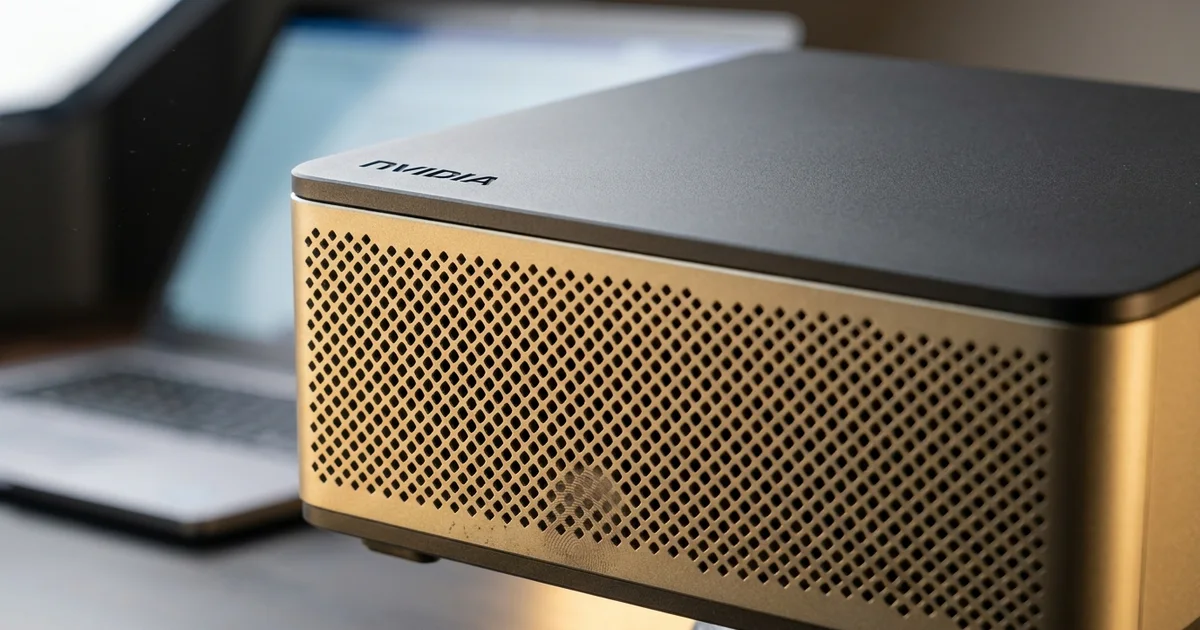
NVIDIA raised the price of its full memory DGX Spark to $6,950 on Friday October 2 and on the same day announced a cheaper configuration of the same machine, with half the memory, at $4,999. Microsoft then published prices for its own NVIDIA powered computers, and both of the ones carrying as much memory as that dearer Spark cost less than it does.
The question worth asking this week is which of these machines to buy, and the answer turns on 3 things nobody printed next to the prices, the high speed networking, the operating system and the drive inside. Get those wrong and you either overpay for a box you end up using as a laptop replacement, or you save money on a machine that can't do the one job you bought it for.
Every report that week ran the same comparison. It set the new cheaper box against last year's bigger one, worked out that a gigabyte of memory now costs well over twice what it used to, and blamed the memory shortage. All of that holds up as far as it goes. It stops one step short, because NVIDIA's chip now sells inside 2 separate product lines from 2 different companies, and this month the consumer line undercut the workstation line at the same memory.
What did NVIDIA just change about DGX Spark prices?
NVIDIA raised the full memory DGX Spark and added a configuration with half the memory and half the drive, sold only through its hardware partners, arriving the Friday after this one. The Register's Tobias Mann reported the increase on the day it happened and put it at nearly 75 percent above what the same machine cost at this time last year, with memory prices behind it.
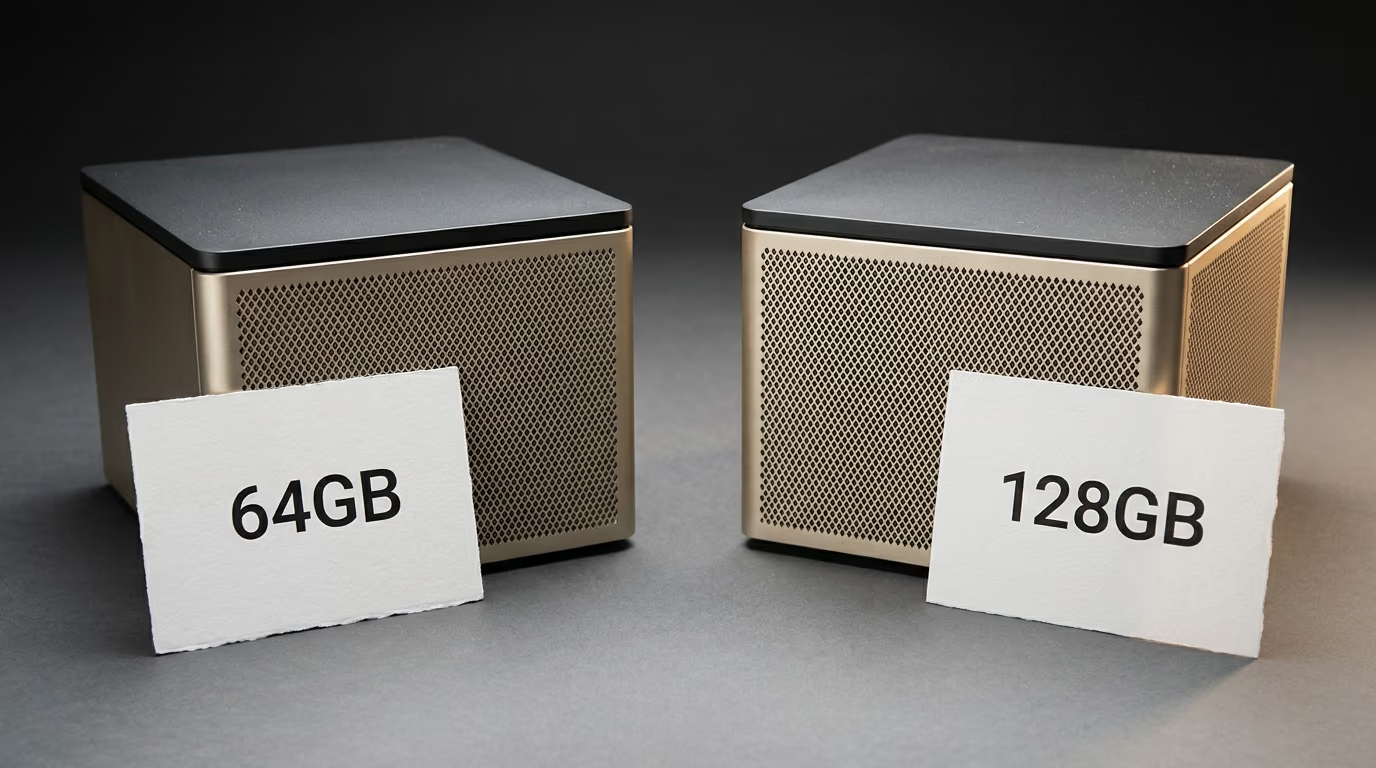
What makes that figure awkward to check is where it lives. NVIDIA's own DGX Spark product page carries no price at all, so the higher number reaches buyers through reporting rather than from the company, while the lower one sits on NVIDIA's own blog with a date and a list of resellers. Anyone repeating the increase is repeating a journalist who watched the store change, and that is worth knowing before you quote it anywhere.
The machine itself didn't change at all. The Register says the smaller configuration keeps the same GB10 Grace Blackwell chip, the same processor from MediaTek, the same DGX OS, the same high speed networking and the same speed at which memory feeds the chip, which means NVIDIA fitted lower capacity memory modules rather than fewer of them. Capacity and storage came down, and nothing else did. A price rise on a computer nobody has revised is a different animal from a new model costing more than the old one.
Price creep has followed this machine since before it had its current name. It shipped at a little over half of today's figure last year, and the configuration arriving later this month, carrying half as much memory, still costs more than the bigger one did at launch. The Register makes that comparison in its own report, and it is the line that stung in every write up that week.
One detail decides what you actually pay. The half memory version never appears on NVIDIA's own store, and the product page footnotes it as available exclusively through participating manufacturer partners, so Acer, ASUS, Dell, Gigabyte, HP and MSI set the real number. The figure NVIDIA published is a starting point, which during a memory shortage behaves like a floor rather than a promise.
Which NVIDIA Spark machine gives you the most memory for the money?
A Surface Laptop Ultra with 128GB of unified memory costs $5,899.99 on Microsoft's own store, which undercuts the DGX Spark carrying the same memory, and it ships this Friday rather than in a few weeks. That comparison is the one the week's coverage never made, and it holds the whole way down the ladder.
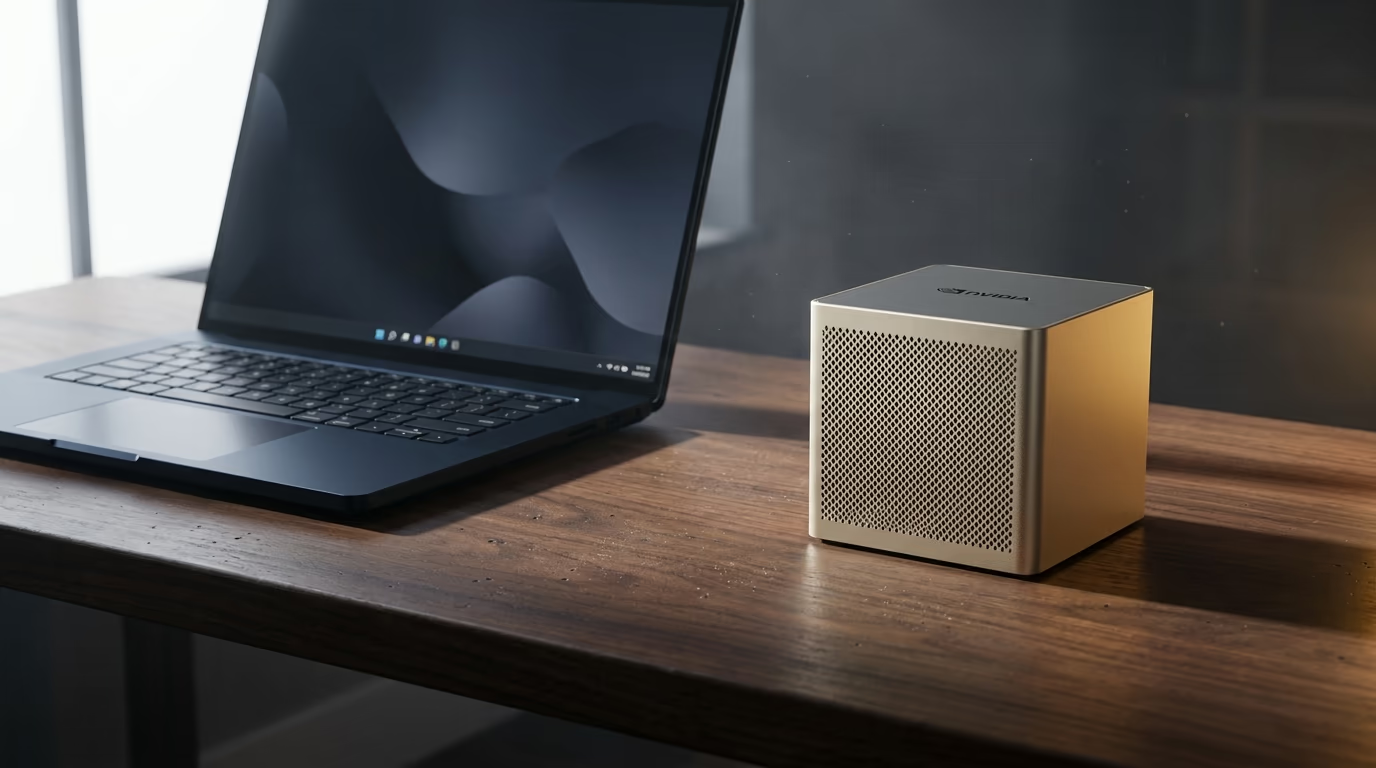
At the smaller size the gap holds. Microsoft lists the same laptop with half the memory and a 1TB drive at $4,299.99, under the half memory DGX Spark that arrives the week after, and the laptop comes with a screen, a keyboard, a battery and a Windows licence. The NVIDIA box comes with none of those and expects you to bring your own monitor.
| Machine | Unified memory | Drive | Price | Ships | System |
|---|---|---|---|---|---|
| NVIDIA DGX Spark | 128GB | up to 4TB | $6,950 | now | DGX OS |
| NVIDIA DGX Spark, new configuration | 64GB | half the bigger box | $4,999 starting | Friday, October 23 | DGX OS |
| NVIDIA DGX Spark at launch, last year | 128GB | up to 4TB | about $4,000 | no longer sold at it | DGX OS |
| Surface RTX Spark Dev Box | 128GB | not stated | from $5,999.99 | November | Windows 11 |
| Surface Laptop Ultra | 128GB | 1TB | $5,899.99 | Friday, October 16 | Windows 11 Pro |
| Surface Laptop Ultra | 64GB | 1TB | $4,299.99 | Friday, October 16 | Windows 11 Pro |
| Surface Laptop Ultra, entry model | 24GB | 512GB | $2,599.99 | Friday, October 16 | Windows 11 Home |
The desktop version lands in between those 2 machines. Microsoft lists the Surface RTX Spark Dev Box, a compact machine built on the same NVIDIA chip with the full memory, shipping in November and sold only through Microsoft.com in the United States, and its own listing says a monitor and a keyboard are sold separately. Its price in the table above also lands under NVIDIA's full memory workstation, which is the second time the same thing happens on this page.
Microsoft is also paying people to move across. It says a buyer who trades in an eligible MacBook Pro can take money off a qualifying Surface Laptop Ultra bought through its online store in the United States and Canada, on an offer it has published as running until late November. Whether that applies to you moves more money than any specification on either machine's page, and it tells you plenty about who Microsoft thinks it is competing with.
None of this makes the laptop the better machine, and the DGX Spark rows in that table do work the Surface rows cannot. It does mean that a buyer who wanted the full memory sitting on a desk this month had a cheaper route than NVIDIA's own box, and nobody said so while the price stories were running.
Why did everyone expect the RTX Spark machines to cost more?
On the day NVIDIA raised the workstation price, the reasonable forecast was that the consumer machines built on the same chip would land higher still, and The Register wrote exactly that. It had good reasons for it, and Microsoft's price list went the other way inside a week.
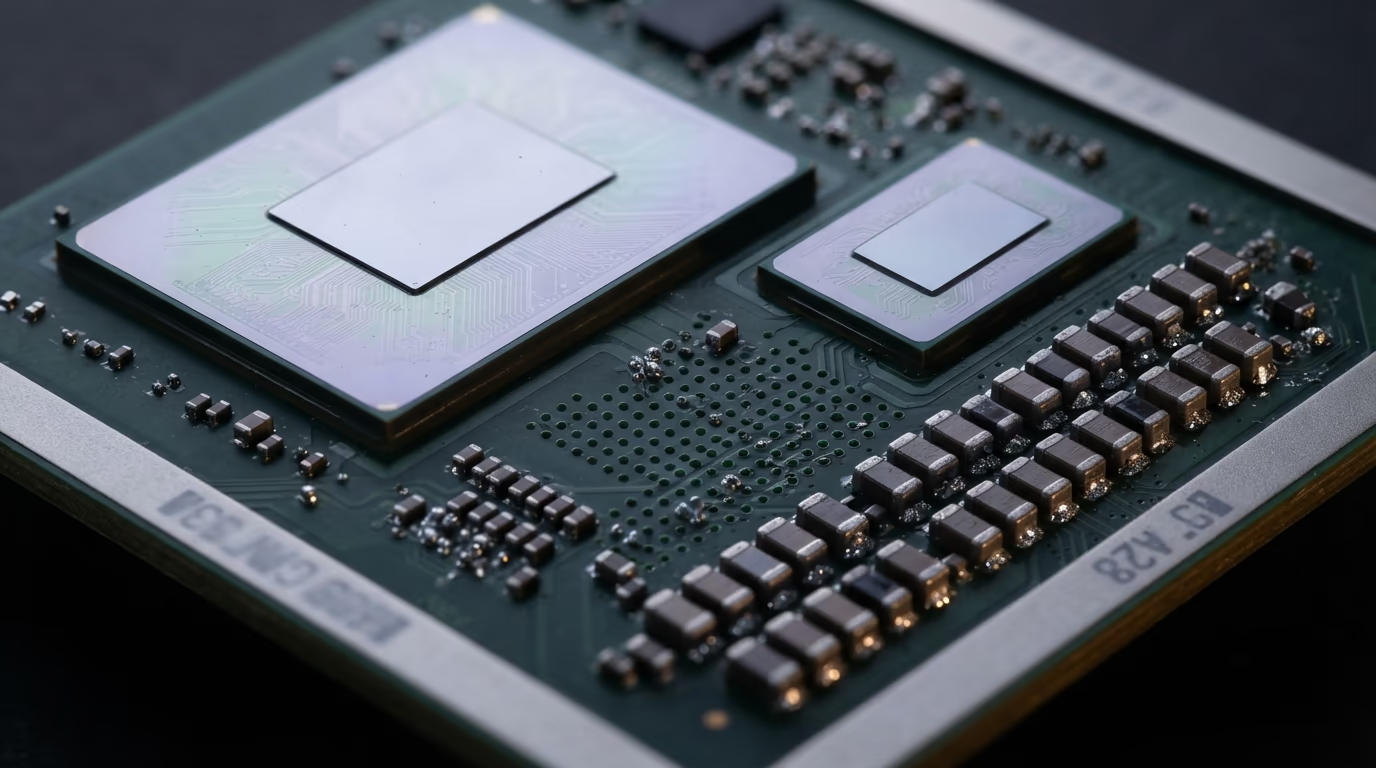
With DGX Spark pricing nearing $7,000, similarly equipped RTX Spark notebook offerings based on the chip could end up selling for significantly more.
That sentence comes from Tobias Mann's report for The Register, published on the day the workstation price moved, and the link to it sits in the sources at the end of this piece. The logic behind it was clean. The same silicon sat in both lines and the same shortage applied to both, so a machine built on that chip and sold with a screen and a battery attached should have cost more rather than less.
What arrived instead put the consumer machines underneath, and my reading is that they are selling into a different fight. Microsoft is pricing this against Apple rather than against NVIDIA, and the trade in offer aimed at MacBook Pro owners says so out loud. A premium laptop has a ceiling the market enforces whatever the memory inside costs. A workstation sold to developers who need the networking has no such ceiling, so the 2 machines can carry the same chip and still answer to different limits.
It's worth being fair to the forecast. The Register's report got right everything it could check that day, the unchanged chip, the unchanged memory speed, the halved drive and the partner only sales, and it made its prediction before Microsoft had published a single figure. A price story written on the day a vendor moves is a snapshot, and the comparison that decides your purchase can turn up a week later with nobody going back to correct the first one.
What can you actually run on 64GB of unified memory?
NVIDIA says the half memory DGX Spark handles models up to about 100 billion parameters, which in practice means the compressed versions of today's larger open models rather than the raw downloads. Unified memory is what decides this, because the whole model has to sit in it next to your conversation, and when it doesn't fit the machine either refuses or crawls.
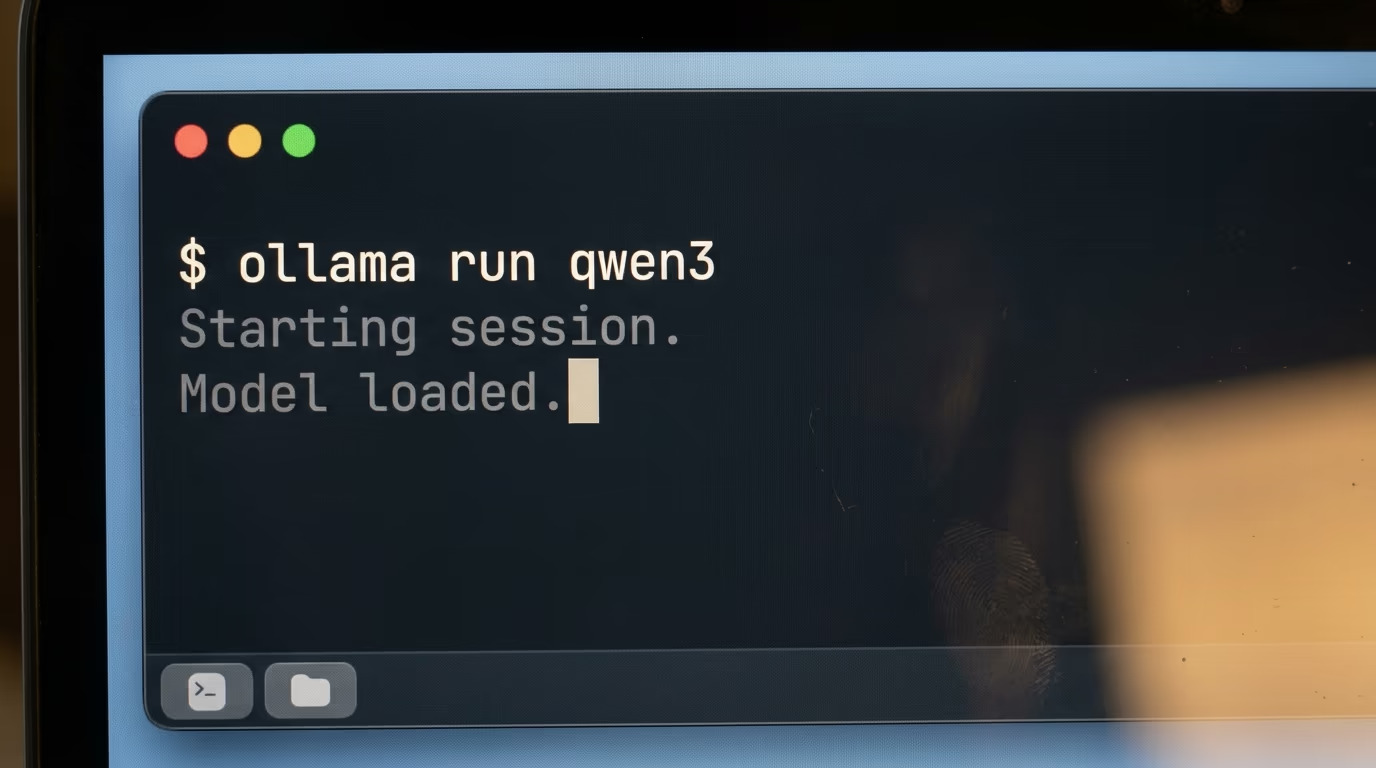
A model's download size is roughly what it occupies in memory, so the arithmetic here is unusually honest for this industry. At the compressed files most people actually run, a mid sized model leaves comfortable room on a machine this size, while the largest open weight releases of this year don't fit at all. We walked through the same sum when we ranked the best local LLM for coding by the memory you have, and the rule hasn't moved since. If you have never chosen between the compressed versions of one model, which model file to download covers that choice on its own.
Where the smaller box gives up ground is training rather than answering. The Register says it isn't as well suited to fine tuning, which means taking an existing model and teaching it further on your own material, because that work needs headroom well beyond the model itself. If you only want to run models rather than reshape them, that ceiling may never touch you, and it is the single question that decides whether the cheaper configuration is a saving or a mistake.
NVIDIA's own answer to the memory ceiling is to buy a second box. It says a pair of the smaller boxes joined through their networking ports pool their memory into one larger space, and in its own test on a mid sized Qwen model the pair ran faster than a single unit by less than double, which is a real gain and not the doubling that the memory arithmetic suggests. That claim comes from NVIDIA's test rather than an independent one, so treat it as the vendor's own figure.
Then do the sum before you take that offer, because 2 of the smaller machines cost more than 1 of the bigger ones. You also get a second power supply, a second fan and a cable to manage. Clustering earns its place when you have already filled the bigger machine, never as a cheaper road to the same memory.
When is the DGX Spark still the right machine to buy?
The DGX Spark earns its price on 3 things the Surface machines don't offer, the ConnectX networking that lets several units pool their memory, DGX OS with NVIDIA's own software stack already installed, and a drive up to 4TB. If none of those 3 matters to you, you are paying for them anyway, and that is the whole decision in one sentence.
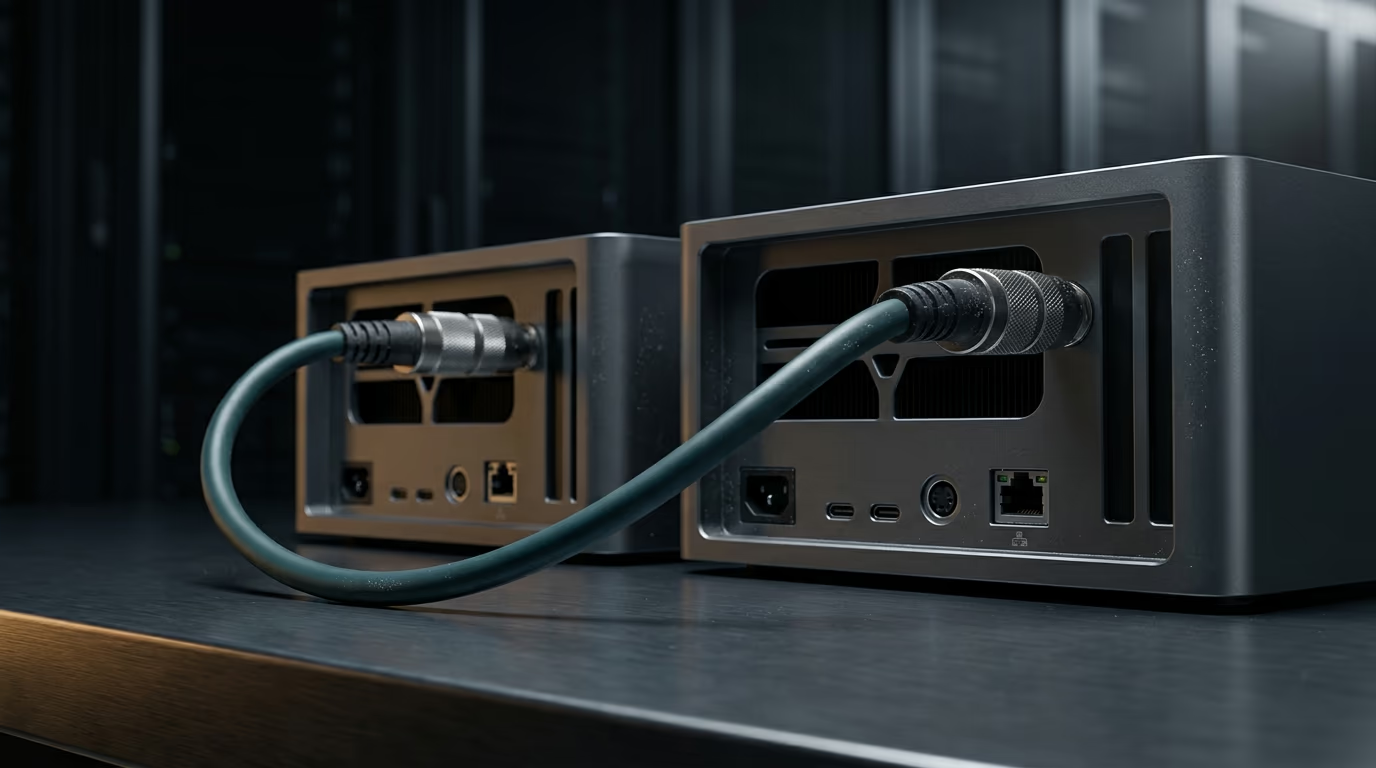
The networking is the clearest divide between the 2 lines. StorageReview, going through the preorder listings, noted that the Surface RTX Spark Dev Box makes no mention of the ports that every DGX Spark carries, and NVIDIA's specification page puts its ceiling at 4 units pooling memory together. If your plan involves growing into more memory later by adding boxes, only one of these product lines sells you that road, and the consumer machines are a dead end for it by design rather than by accident.
The software difference is smaller than it looks and still real. NVIDIA ships DGX OS with its agent toolkit, its CUDA libraries, its own Nemotron models and the popular runtimes supported out of the box, so the machine answers prompts on the evening it arrives. On a Windows machine you install those yourself, which for most readers is an evening of setup rather than an obstacle. Our walkthrough of LM Studio against Ollama covers the 2 apps most people end up using for exactly that, on either system.
Windows gets something back, and it is newer than the hardware. Microsoft says its execution containers, which keep an agent running on your machine inside limits the operating system enforces, reached general availability alongside these machines. If what you want from all that memory is an agent working on your own files all day, that containment is a reason to look at the Windows side rather than a footnote. The Register also reports that AMD's newest chips reach higher memory capacities than any Spark and sell for less than NVIDIA's bigger box, while its own testing still puts the NVIDIA graphics side substantially ahead for AI work. We haven't verified AMD's current prices ourselves, so take the capacity claim and leave the rest.
What do we not know yet about these machines?
5 things are missing from the record, and every one of them changes a buying decision. They are worth naming because the price coverage moved on quickly, and none of these gaps has been filled since.
- How fast memory feeds the chip in the consumer machines. NVIDIA's RTX Spark page lists capacity and no speed figure, so nobody outside the company can say whether it matches the workstation.
- How much of the shared memory the graphics side can address on the Surface machines. Microsoft's own footnote says the pool is divided between processor and graphics dynamically, and the maximum depends on configuration and workload.
- Which drive you get at the starting price of the half memory DGX Spark. NVIDIA named a figure without naming the storage, and the configuration is sold only through partners who each decide.
- Whether the price moves again. Nobody has published a floor, and the increase was blamed on a memory supply problem that suppliers expect to last.
- How the half memory box behaves in anyone's hands but NVIDIA's. It doesn't ship until later this month, so every figure about it today is the vendor's own.
Every performance claim on this page about the cheaper configuration traces back to NVIDIA's own testing, including the clustering result, and no independent review exists because the machine isn't in anyone's hands yet. The prices are checkable today and the behaviour isn't, which is the right way round for a buying decision and the wrong way round for a review.
What should you do if you were about to buy one this week?
If you want to run models on your own machine and you don't need to join boxes together, the laptop with the same memory costs less and arrives first, so buy that and spend an evening installing the software yourself. If you need DGX OS ready to go, the networking to grow into, the bigger drive or the headroom to train on your own material, the DGX Spark is still the machine, and the full memory one is the version to get, because 2 of the smaller ones cost more than 1 of those.
If you can't tell which of those 2 descriptions is you, that is the answer in itself, and it means renting before buying. An hour on somebody else's graphics card costs a rounding error against either of these machines, and it tells you whether you will use the thing every day or twice a month. We compared the 2 obvious places to do that in RunPod against Vast.ai, and the same logic applies to the bigger question of owning any of this hardware, which we took apart in what an hour on a Google TPU really costs against an NVIDIA GPU.
Local AI did not get cheaper this month. A gigabyte of memory on your desk costs more than it did a year ago and every machine here reflects that. What did change is that NVIDIA's chip stopped being sold by one company at one kind of price, and the moment it reached a laptop aimed at MacBook buyers, the workstation stopped being the cheapest way to get a given amount of memory onto a desk. Check both lines before you buy, because the week's coverage checked only one of them.
Questions people ask
How much does the NVIDIA DGX Spark cost now?
The full memory DGX Spark is $6,950 after an increase NVIDIA made at the start of October, as reported by The Register, which also notes NVIDIA does not print the price on its own product page. The new configuration with half the memory starts at $4,999 and arrives later in October, sold only through Acer, ASUS, Dell, Gigabyte, HP and MSI.
Is a Surface Laptop Ultra cheaper than a DGX Spark with the same memory?
Yes. Microsoft's own store lists a Surface Laptop Ultra with 128GB of unified memory and a 1TB drive at $5,899.99, about $1,050 under the DGX Spark that carries the same memory, and the laptop ships first. The laptop also includes a screen, a keyboard and a battery, while the DGX Spark includes the networking for joining units together that the laptop does not have.
Why did NVIDIA raise the DGX Spark price?
The Register reports memory prices as the cause, and its report measures the rise against what the same machine cost at this time last year. NVIDIA has published no statement of its own naming a figure, so the reason reaches buyers through reporting rather than from the company directly.
What can a 64GB DGX Spark actually run?
NVIDIA says it handles the compressed versions of today's large open models rather than their full downloads, and names its own ceiling in the announcement. The Register notes it is less suited to fine tuning, which means training a model further on your own material, because that needs memory beyond the model itself.
Can you join 2 DGX Spark units together to get more memory?
Yes, through the networking ports that every DGX Spark carries, and NVIDIA ships a cluster assistant that configures the pairing for you. Its own test on a mid sized Qwen model showed the pair running faster than a single unit by less than double, and 2 of the smaller machines cost more than one of the bigger ones, so clustering makes sense only once you have filled the bigger machine.
Does the Surface RTX Spark Dev Box do everything a DGX Spark does?
No. StorageReview notes the Dev Box listing makes no mention of the networking that lets DGX Spark units pool memory, and it runs Windows rather than DGX OS with NVIDIA's software stack preinstalled. Microsoft lists it with the full memory, sold only through Microsoft.com in the United States, shipping in November.
Is it worth buying a local AI machine at these prices?
It depends on whether you would use it daily or occasionally, because renting an hour on somebody else's graphics card costs a rounding error against any of these machines. Buying wins when your work is constant, your material has to stay private, or you need the machine ready every morning without a cloud bill attached.