TechAugust 22, 202611 min read
How do AI companies make money, and who keeps it
The 5 ways the money actually arrives, with prices read off the vendors' own pages, and the single quarter of Nvidia data center sales that came in larger than Anthropic's annualized run rate.
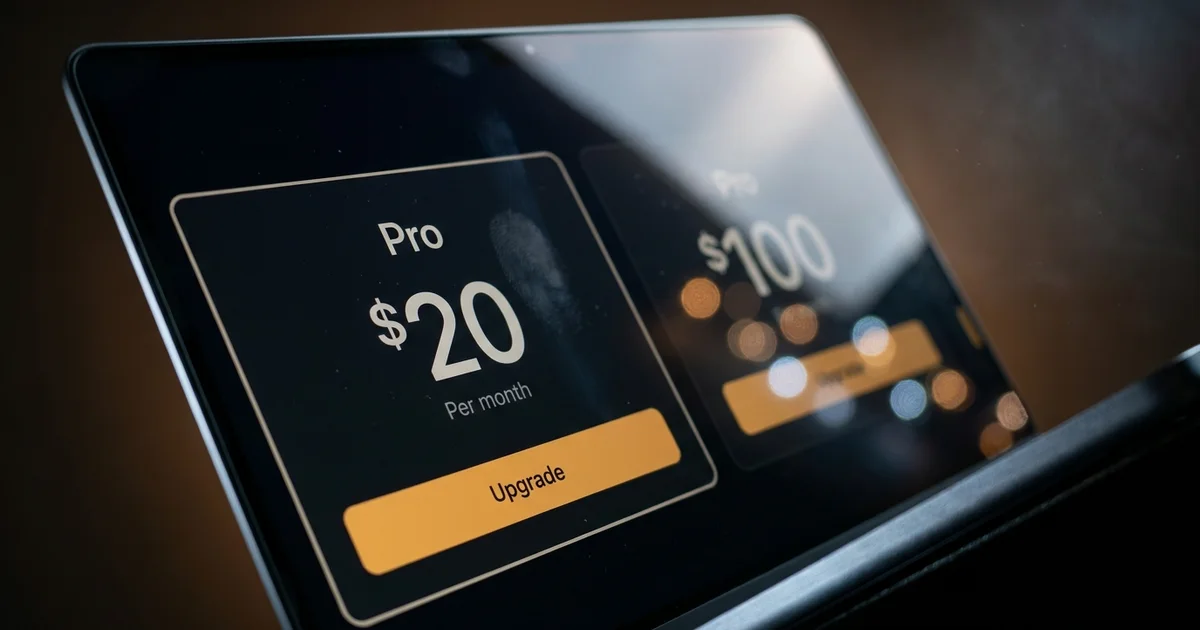
AI companies make money from 5 lines of business, and by the middle of 2026 those lines are nothing like equal in size. The consumer subscription is the visible one, at $20 a month for Claude Pro billed monthly on Anthropic's own pricing page. Metered API billing is the one developers feel, charged per million tokens sent and per million tokens returned. Behind both sit enterprise seats and contracts, a young advertising business, and the sale of compute itself, which is the only line in the chain whose owners publish audited quarterly profits.
Every figure below was copied from a vendor's own pricing page or from what these companies told investors, and the reporting behind each one is named in the sentence that uses it. That matters here because most answers to this question list the revenue models without ever pricing them, which leaves a reader holding 8 abstract nouns and no idea which one pays the electricity bill.
How do AI companies make money, in 5 lines?
AI companies make money from consumer subscriptions, metered API tokens, enterprise seats and contracts, advertising, and the sale of compute. Those 5 lines now move serious money, because Anthropic's annualized revenue run rate passed $65 billion at the end of July 2026, up from $9 billion at the end of 2025, according to Bloomberg reporting summarized by TechCrunch on 17 August 2026.
- Consumer subscriptions, a flat monthly price with usage limits attached to it
- Metered API billing, charged per million tokens in and per million tokens out
- Enterprise seats and contracts, a seat fee plus whatever the team consumes
- Advertising, sold against the free and cheap consumer tiers
- Compute itself, the chips and cloud capacity every other line has to rent
A run rate is a projection and not a bank statement. It takes a recent month and multiplies it out, so it flatters any company growing quickly and it says nothing whatsoever about costs. OpenAI's trajectory is reported the same way, doubling to $40 billion annualized from $20 billion at the end of 2025, again from Bloomberg. Both figures are real signals about demand, and neither one is a profit.
The order in that list is where most people guess wrong, because the chatbot subscription is the product everybody can see and therefore feels like the whole business. At OpenAI it stopped being the majority of revenue during 2026, and the company's finance chief said so to investors in August. The lines that grew past it are the ones a normal user never touches.
How much does an AI subscription cost, and why is it capped?
A consumer AI subscription runs from $0 to $100 a month at Anthropic, and every paid tier carries usage limits because the seller's cost rises with every message the buyer sends. Claude Pro is $20 a month billed monthly, or $17 a month on the annual plan, which is charged as $200 up front.
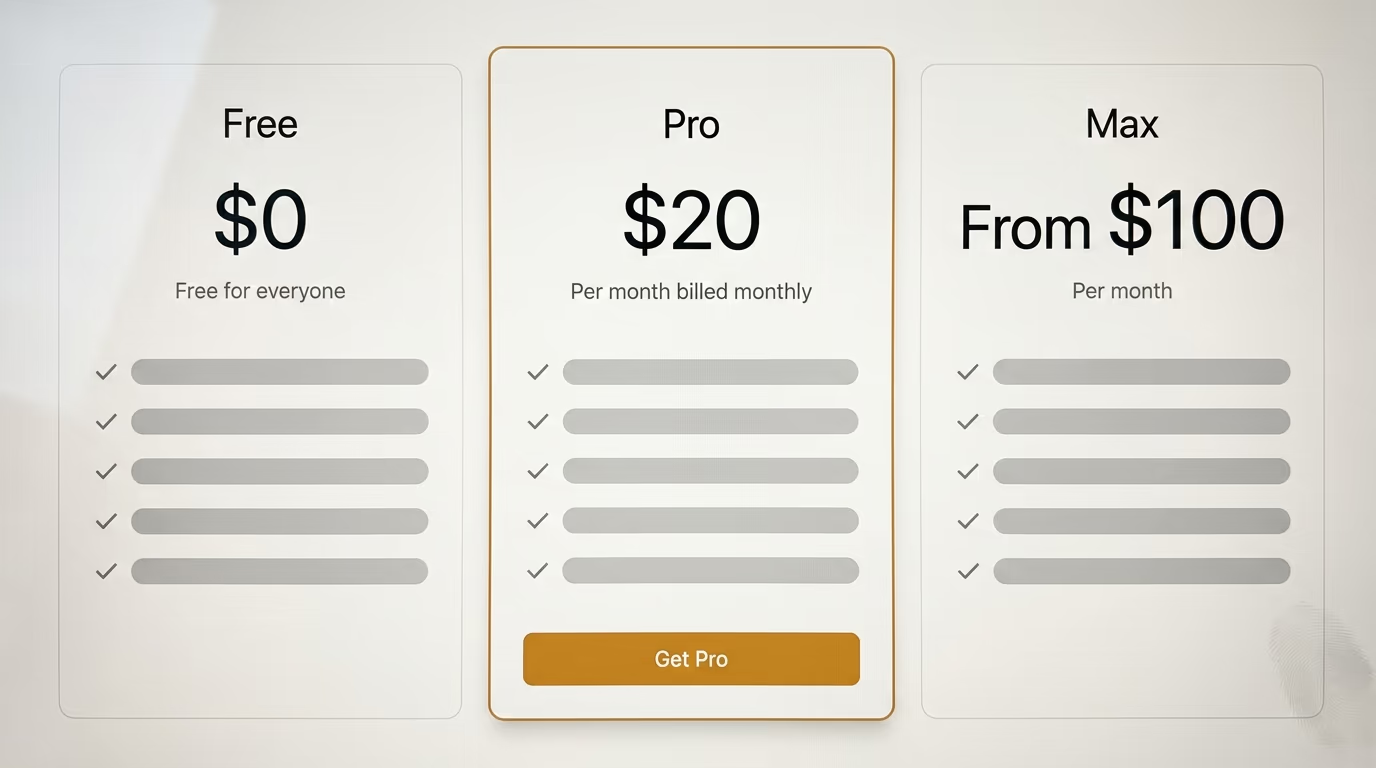
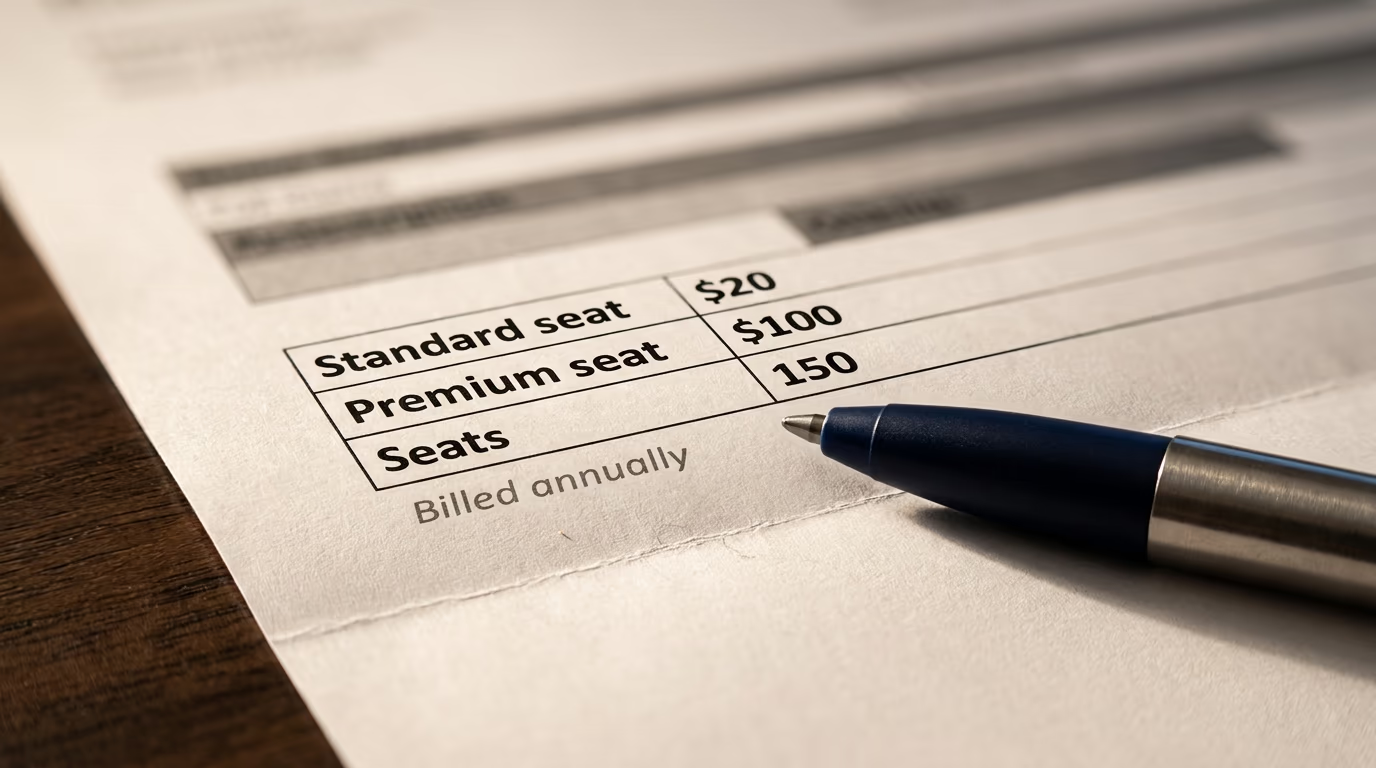
The tiers on Anthropic's pricing page are easy to read side by side, starting at $0 for the free tier, then $20 a month for Pro billed monthly or $17 a month if the year is paid as $200 in one go, then Max from $100 a month with 5x or 20x more usage than Pro. Team seats are sold at $20 per seat per month billed annually and $25 billed monthly for a standard seat, or $100 per seat annually and $125 monthly for a premium one.
That flat price is the seller's problem as much as it is the buyer's bargain. A subscription collects the same $20 from somebody who asks 4 questions a month and from somebody who runs an agent all weekend, while the cost of answering moves with every token generated. Usage limits are the mechanism that stops the second person from eating the margin of the first, and the 5x and 20x tiers on Max are the same idea sold honestly, as a larger allowance rather than an unlimited promise.
The annual plan is worth a moment of arithmetic, because it is where the seller's real preference shows. Paying monthly costs $240 over a year, while the annual plan takes $200 in one payment, so the discount is about 17% in exchange for handing over a year of cash on day one. A model company burning money on compute would rather have $200 today than $240 spread over 12 uncertain months, and the buyer is committing for a year to a lineup that turns over fast, judging by the stack of older Claude models still carrying their own prices further down the same page.
This is why heavy users end up on the API even when a subscription looks cheaper on paper. A subscription is a bet on your average month and a bill you cannot exceed, while the API is a meter you can read every morning. Anybody running agents that spend tokens on their behalf crosses that line within weeks, usually without noticing it happen.
How does token billing work when a company buys the API?
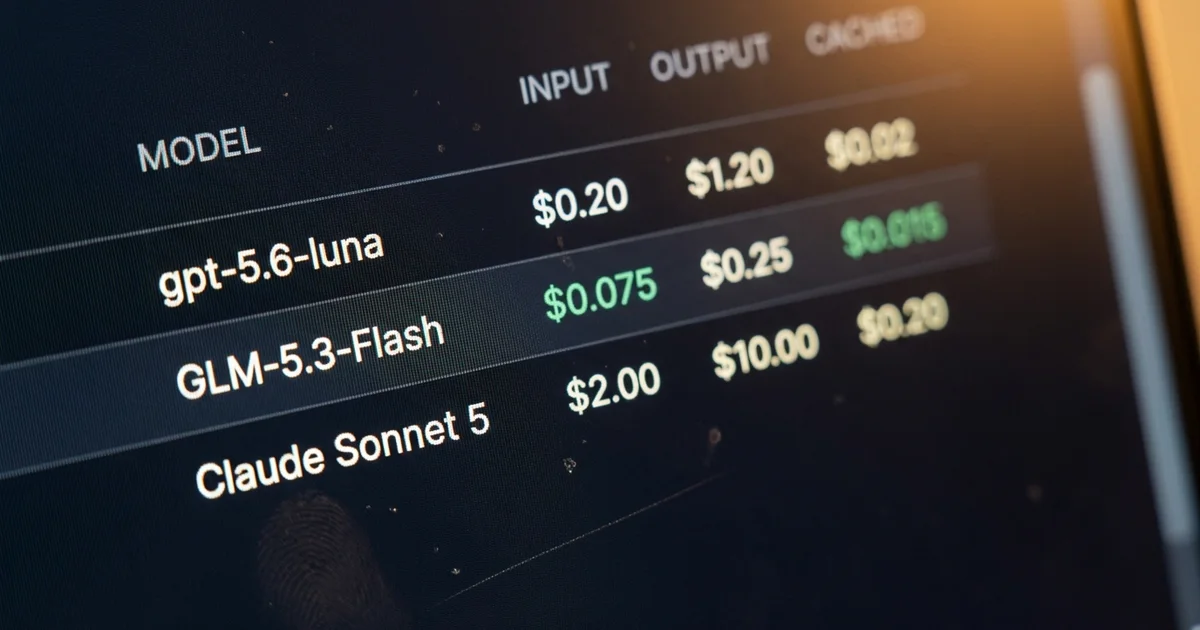
API billing charges separately for the text a company sends and the text the model writes back, priced per million tokens, and the output side always costs more. Claude Sonnet 5 is $2 per million input tokens and $10 per million output tokens on Anthropic's published price list, and the gap between those 2 numbers is the shape of the whole industry.
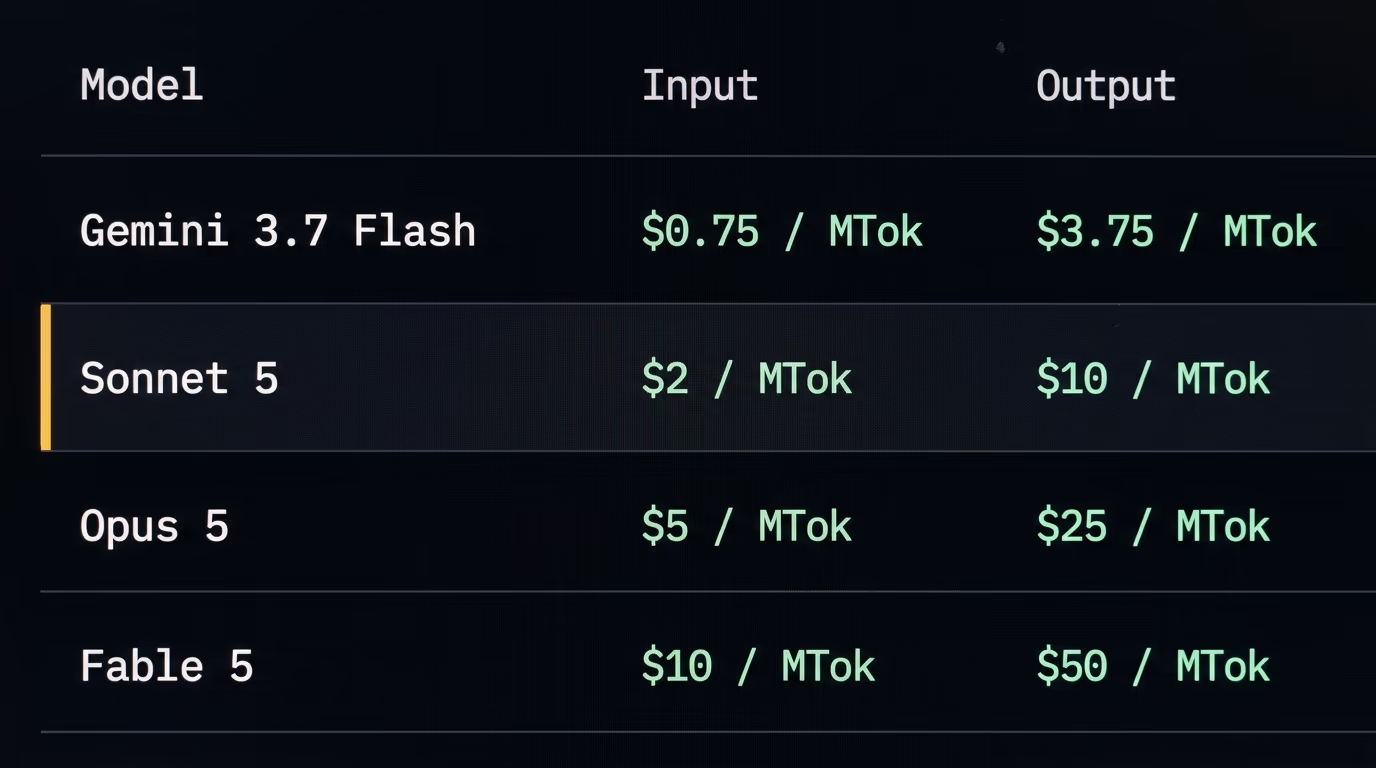
| Model | Input per 1M tokens | Output per 1M tokens |
|---|---|---|
| Gemini 3.7 Flash (Google) | $0.75 | $3.75 |
| Claude Sonnet 5 (Anthropic) | $2 | $10 |
| gpt-5.6-terra (OpenAI) | $2.00 | $12.00 |
| gpt-5.6-sol (OpenAI) | $4.00 | $20.00 |
| Claude Opus 5 (Anthropic) | $5 | $25 |
| Claude Fable 5 (Anthropic) | $10 | $50 |
The Google row has a date attached to it, and the date is the interesting bit. Google's Gemini API pricing page lists Gemini 3.7 Flash at $0.75 and $3.75 per million tokens through 31 December 2026, then says the same model becomes $1.50 and $7.50 on 1 January 2027. A workload sized against the cheaper number costs twice as much on that morning without a single line of code changing.
Those prices only mean something once a real workload runs through them. Take a support assistant handling 10,000 conversations a month, each one sending roughly 4,000 tokens of history and instructions and receiving about 400 tokens back. That is 40 million input tokens and 4 million output tokens, so the monthly bill is $80 plus $40 on Sonnet 5, and $200 plus $100 on Opus 5. The same product costs $120 or $300 a month depending on one line in a config file, which is why model choice has quietly become a finance decision.
Both vendors also sell the same tokens at several prices at once. OpenAI's API pricing page lists batch and flex processing at 50% of the standard rate and a fast mode at double it, so an identical request can cost 4 times more or less depending only on how patient the buyer is. Anthropic charges $0.50 per million tokens to read a cached prompt on Opus 5 against $5 to send it fresh, prices web search at $10 per 1,000 searches, and gives 50 free hours of code execution a day per organization before charging $0.05 an hour per container.
The cheaper model is not automatically the cheaper bill, which is the trap in that table. A model that writes 3 paragraphs where another writes 1 can cost more per task even at half the listed output price, because the invoice counts tokens rather than answers. The only honest comparison runs the same 100 tasks through both models and divides the invoice by the number of tasks, which takes an afternoon and settles arguments that otherwise run for months.
Caching is where the biggest saving usually hides, because most production prompts are the same instructions sent over and over. OpenAI's price list charges $4.00 per million tokens for fresh input on the top model in its current 5.6 line and $0.40 for cached input, a tenth of the price, with a separate charge of $5.00 per million to write the cache in the first place. A workload that resends a long system prompt on every call is paying full price for text the provider has already read, and fixing that is a configuration change rather than a rewrite.
Why is enterprise revenue now bigger than consumer at OpenAI?
Enterprise revenue passed consumer revenue at OpenAI during 2026 because seats and usage grow with a customer's headcount, while a consumer subscription is capped at one person paying $20. OpenAI's finance chief Sarah Friar told investors on 14 August 2026 that the 2 lines had crossed, and CNBC reported her remarks that day, sourced to somebody who was in the meeting.
We entered the year at 60-40, but enterprise has accelerated much faster than expected and those lines have now crossed.
Friar added in the same meeting that the majority of OpenAI's revenue is now enterprise. The mechanics behind that sentence are unglamorous. An enterprise contract sells seats and then bills the usage those seats generate, so a 500 person rollout produces a seat fee plus a token bill that climbs every time somebody automates another task. Anthropic writes the same shape into public pricing, charging $20 per seat per month plus usage at API rates on its Enterprise plan.
Consumer revenue cannot behave that way. A person on a $20 plan is worth $240 a year at the absolute ceiling and can cancel in one click, while a company that has wired a model into its support queue has procurement, a security review and a renewal date. The bill then grows without anybody deciding to spend more, which is the definition of a good revenue line and the reason both companies now staff sales teams that look nothing like a consumer app team. The stories we cover on the money and chips side of the tech desk keep landing on contracts rather than downloads for exactly that reason.
Do ads inside a chatbot make real money?
Advertising inside a chatbot makes real money and, so far, not very much of it. OpenAI's advertising pilot passed $100 million in annual recurring revenue less than 2 months after it launched in the United States, a company spokesperson told CNBC in March 2026.
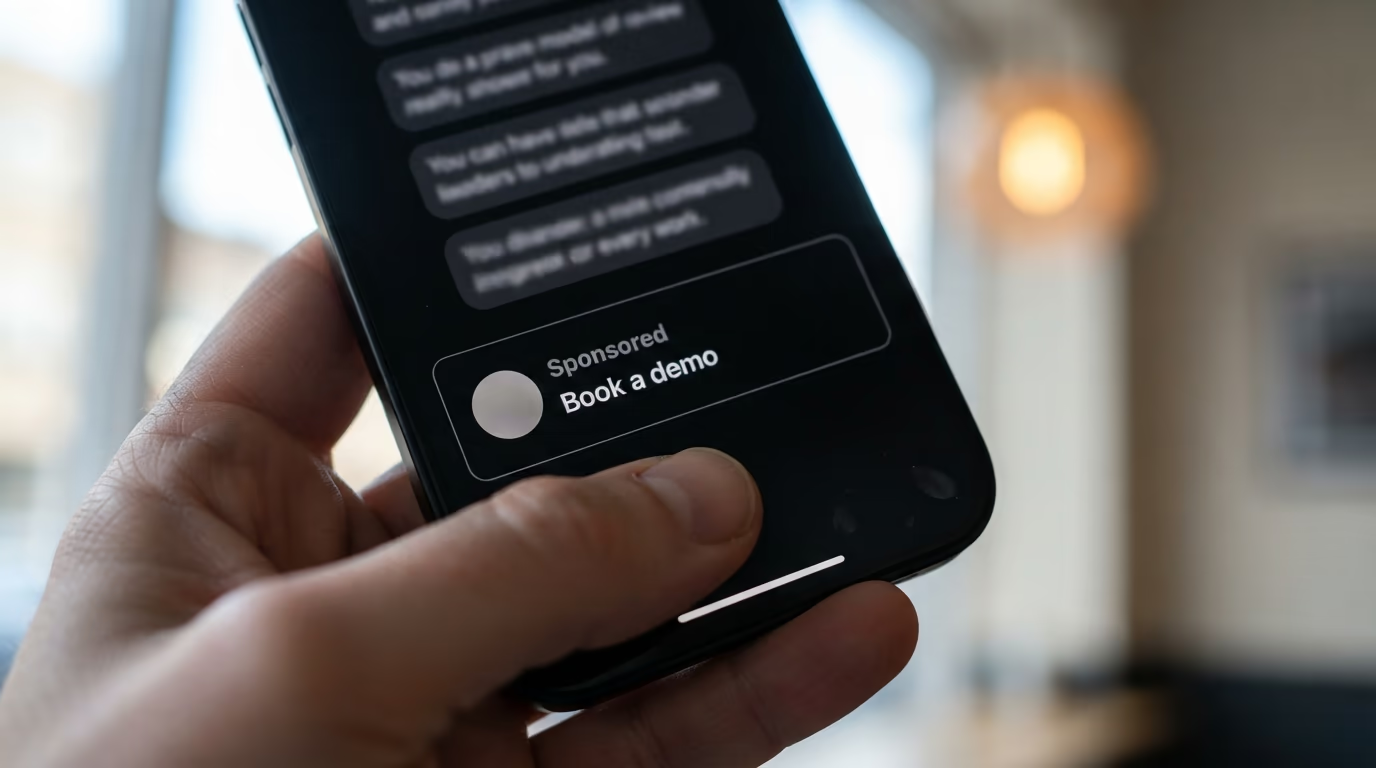
The pilot was announced in January 2026 and aimed at free users and ChatGPT Go subscribers in the United States, and CNBC reported that Anthropic made the ad push the focus of its first Super Bowl campaign. Put the 2 figures side by side and the size becomes clear. An advertising business at $100 million in recurring revenue in March sits against a company run rate reported at $40 billion in August, so advertising was worth well under 1% of the whole at the moment somebody counted it. The 2 numbers come from different months and different sources, so the ratio is an order of magnitude rather than a share.
The reason that number is small is also the reason it will grow. Advertising pays against attention the seller was giving away anyway, and the free tier is where nearly all of the users are. A subscription converts a small percentage of them, while an advertisement earns something from everybody else, which is the model that funded web search for most of its history.
Chat has a limit that search never had. In a chat the answer is the product, so an advertisement placed inside it competes directly with the reader's trust in the sentence above it. That is a design problem before it is a revenue problem, and it explains why a rival was willing to spend a Super Bowl slot mocking the idea rather than copying it.
Where does your money go after you pay it?
Most of the money leaves the model company quickly and lands with the chip and cloud suppliers, which are the only companies in this chain publishing audited quarterly profits. Nvidia's results on 20 May 2026 showed $75.2 billion of data center revenue for one quarter, which is more than Anthropic's entire annualized run rate at the end of July.
Nvidia's first quarter of fiscal 2027 ended on 26 April 2026, and the company reported $81.6 billion of total revenue, of which $75.2 billion came from data center, up 92% from a year earlier, at a GAAP gross margin of 74.9%. Those are audited figures from a public company, filed on a schedule anybody can check, and they describe the layer everybody else is renting.
The clouds show the same shape from a different angle. Alphabet reported Google Cloud revenue of $24.8 billion for the second quarter of 2026, up 82% from $13.6 billion a year earlier, with a cloud backlog of $514 billion, and it raised 2026 capital spending guidance to as much as $205 billion, all of which CNBC covered live on 22 July 2026. A backlog is signed future work, so it is the clearest public evidence that this buying is contracted rather than hoped for.
The chain from one monthly subscription to a chip supplier's margin is short enough to write in a single sentence. A person pays $20, a company pays a token bill, the model company pays a cloud, the cloud pays Nvidia, and Nvidia reports a 74.9% gross margin to its shareholders. The 2 companies in the middle are private, both filed confidentially for public offerings in early June 2026 according to CNBC, and neither one publishes its costs, so their revenue reaches the rest of us through reporters and their spending does not reach us at all.
What can you do about your own AI bill?
Published list prices alone let a company cut an AI bill by 60% by moving work from Opus 5 to Sonnet 5, and by another 50% for anything that can wait in a batch queue, which both vendors price at half the standard rate. Neither move changes what the product does for the person using it, which is why measuring comes before negotiating.
Start by reading your own meter instead of guessing, because the token bill is the one number in this article you can verify for your own account. Every provider dashboard reports input and output tokens per day, and the ratio between them tells you which lever matters. When output dominates, shorten what the model is asked to produce. When input dominates, cache the standing instructions instead of resending them, which Anthropic prices at $0.50 per million tokens to read on Opus 5 against $5 to send fresh.
Then test the cheaper model properly before switching to it. Flo Crivello, the chief executive of the AI startup Lindy, moved 100% of his company's traffic off Claude and onto DeepSeek's cheaper open weight models, which CNBC reported on 26 June 2026 in a story about companies reining in AI spending. In the same story, the D.A. Davidson analyst Gil Luria said some of the largest enterprise customers may start limiting what he described as their out of control token spend.
Watch the dated prices as well, because a price with an expiry date is a bill you have already agreed to. Gemini 3.7 Flash doubles on 1 January 2027 on Google's own page, so any budget built on the current rate needs a second column for next year. A model choice made this year comes with a price the vendor can raise on a date it has already published.
Right now 4 of these 5 revenue lines are still being sized in public, while the fifth is already a mature business with its margins printed in a filing. Anybody trying to work out who wins should watch seat counts, published token prices and capital spending guidance rather than model announcements, because those 3 come out on a schedule and cannot be spun very far. We follow the releases on the models and labs coverage of the AI desk and the products themselves on what actually shipped, on the tools desk.
Questions people ask
How do AI companies make money if I never pay them anything?
Free users pay in 2 indirect ways. OpenAI began testing advertising with free users and ChatGPT Go subscribers in the United States in January 2026, and that pilot passed $100 million in annual recurring revenue in under 2 months according to a company spokesperson quoted by CNBC. A free tier also works as a funnel toward the $20 subscription and toward the enterprise contracts that now bring in the majority of OpenAI's revenue.
How do AI companies make money from developers rather than consumers?
Developers are billed per token through the API, separately for what they send and what the model returns. Claude Sonnet 5 costs $2 per million input tokens and $10 per million output tokens, while Google lists Gemini 3.7 Flash at $0.75 and $3.75 per million through 31 December 2026. There is no ceiling on that meter, so a single automated workflow can bill more in a week than one person pays in a year.
Is a subscription or the API cheaper for one person?
For one person working by hand, the subscription is usually cheaper, because $20 a month buys more tokens than most people manage to type their way through. The API wins once the work is automated and runs without anybody waiting for it, since you pay only for what is consumed and can move the job to a cheaper model. That crossover arrives quickly when an agent starts sending requests on your behalf.
What is a token, and why am I billed for input and output separately?
A token is a chunk of text shorter than most words, and both your prompt and the model's reply are counted in them. They are billed separately because generating text costs the provider more compute than reading it. Every price list quoted in this article charges at least 5 times more for output than for input, which is why long answers cost real money and long questions mostly do not.
Does ChatGPT show ads now?
OpenAI said in January 2026 that it would test advertising with free users and ChatGPT Go subscribers in the United States, and CNBC reported in March 2026 that the pilot had passed $100 million in annual recurring revenue in under 2 months. It was described as a pilot at that point rather than a finished product. Anthropic responded by making the ad push the focus of its first Super Bowl campaign.
Are OpenAI and Anthropic profitable?
Neither company publishes audited results, so nobody outside them can answer that with any certainty. What is public is revenue, reported by Bloomberg at a $40 billion annualized run rate for OpenAI and above $65 billion for Anthropic at the end of July 2026, and both companies filed confidentially for public offerings in early June 2026 according to CNBC. Nvidia, which sells them the compute, does publish its numbers and reported a 74.9% GAAP gross margin for the quarter that ended on 26 April 2026.