AISeptember 22, 202611 min read
Best open source AI model in 2026, ranked by its license
Xiaomi published MiMo V2.6 on Monday under a plain MIT license, and an independent ranking already puts it first among open models. Every license below was read at its source.
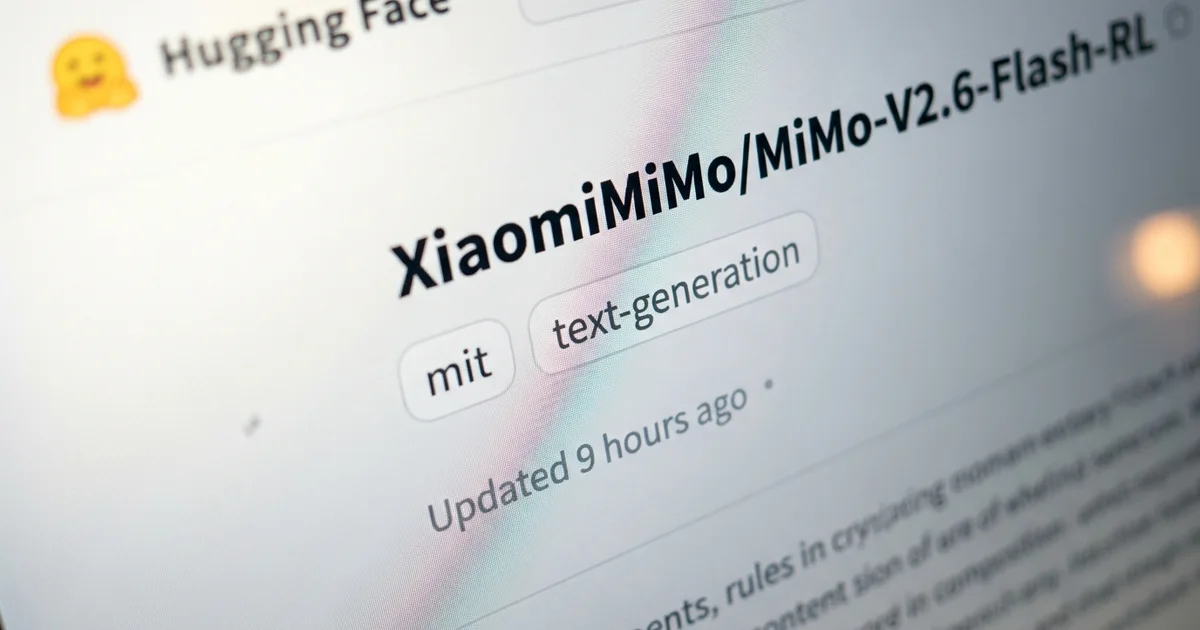
The best open source AI model right now is Xiaomi's MiMo V2.6, published on Hugging Face on 21 September under a plain MIT license that attaches no conditions of any kind, and placed first among open models by Artificial Analysis on its own intelligence index the morning after. It reads text, images, video and audio in the same conversation, and you can rent it through OpenRouter today for a small fraction of what Anthropic charges for Claude Opus 5 on the same platform.
That answer flips the moment you want the model running on your own machine instead of somebody's server. MiMo V2.6 is far too large for a laptop and Ollama has no entry for it at all, so the practical picks become Qwen3.6, Google Gemma 4 and OpenAI's gpt-oss, all published under the Apache license and all a single command away. What follows ranks the open models worth your time by the questions that actually decide anything, what the license lets you sell and what the weights need to run, with every license file read at its source this morning rather than copied from a model card summary.
What is the best open source AI model in 2026?
The best open source AI model today is MiMo V2.6 from Xiaomi when you are renting compute through an API, and Qwen3.6 or Google Gemma 4 when the model has to run on a computer you own. Those are 2 different questions with 2 different winners, and nearly every shortlist online answers only the first one while ranking purely on test scores.
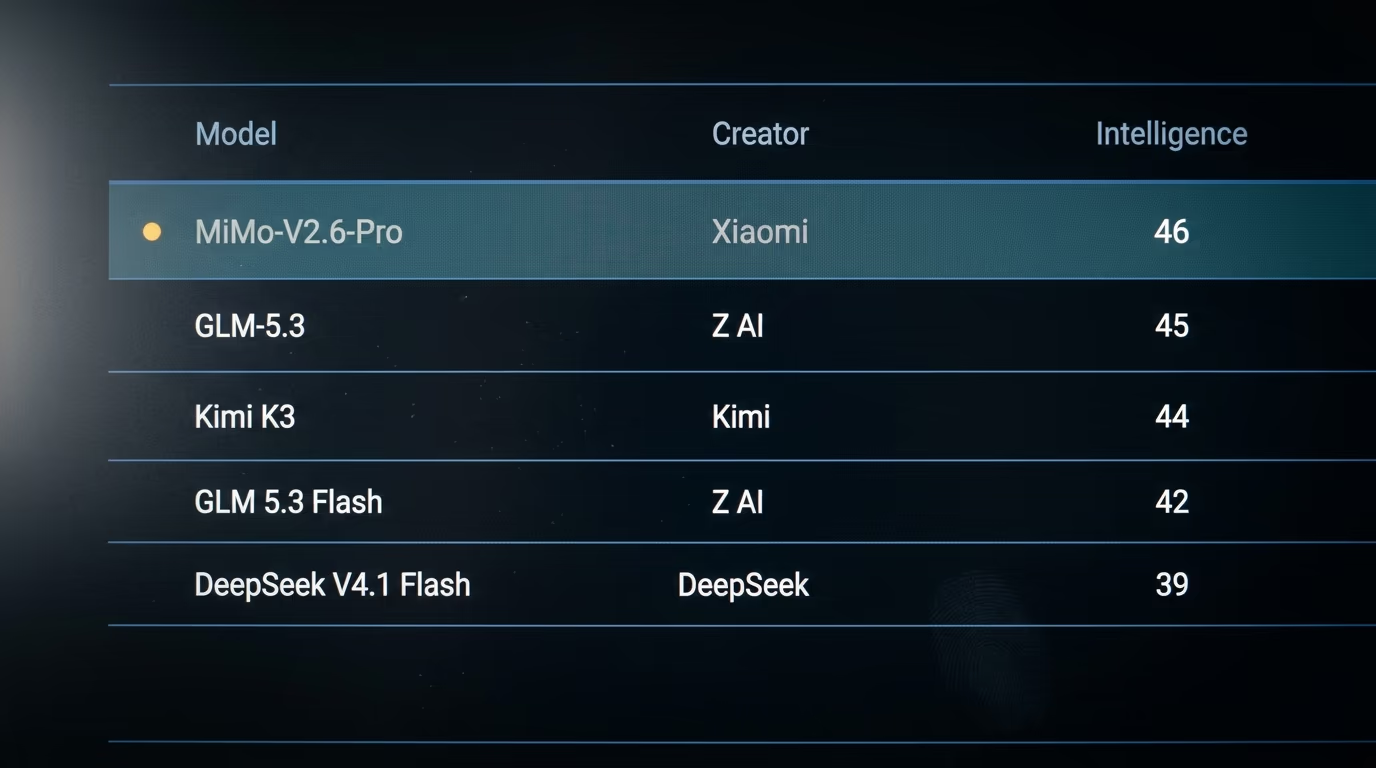
Artificial Analysis runs its own evaluations rather than repeating whatever a lab printed in its launch post, and this morning its open source ranking has MiMo V2.6 Pro in first place, just ahead of the GLM flagship from Z AI and Kimi K3 from Moonshot AI. The ordering matters less than what sits beside it in the table below, because a model that wins a leaderboard is worth nothing to you if its license forbids the thing you wanted to build, or if the weight files need more storage than your whole computer has.
So the table ranks by what you can actually do with each one. The license column comes from the license file inside each repository, opened and read this morning, because model card summaries round the truth off and several of these licenses say something quite different from the tag Hugging Face displays above them. The home column says whether a normal computer can run it. The last column is what a provider charges to run it for you, taken from OpenRouter's live price list, and those prices move often enough that a list like this one has to be rechecked rather than remembered.
| Model | Made by | License | What the license asks of you | Runs at home | Rent, per million tokens in / out |
|---|---|---|---|---|---|
| MiMo V2.6 Flash | Xiaomi | MIT | Nothing | No, weights are about 173 GB | $0.14 / $0.28 |
| MiMo V2.6 Pro | Xiaomi | MIT | Nothing | No, several times larger again | $0.435 / $0.87 |
| GLM 5.3 Flash | Z AI | MIT | Nothing | No | $0.15 / $0.50 |
| GLM 5.3 | Z AI | GLM-5.3 License | A security review above $10 billion of revenue | No | $0.84 / $2.64 |
| DeepSeek V4.1 Flash | DeepSeek | MIT | Nothing | No | $0.15 / $0.60 |
| Kimi K3 | Moonshot AI | Kimi K3 License | A separate agreement above $20 million of revenue | No | $3.00 / $15.00 |
| Qwen3.6 35B | Alibaba | Apache 2.0 | Keep the notice | Yes, ollama run qwen3.6 | $0.15 / $1.00 |
| Gemma 4 12B | Apache 2.0 | A separate prohibited use policy | Yes, 7.6 GB download | $0.09 / $0.34 | |
| gpt-oss 20b | OpenAI | Apache 2.0 | Keep the notice | Yes, 14 GB download | $0.03 / $0.13 |
| Llama 3.3 70B | Meta | Meta's own | Request access and wait for approval | Yes, on a large machine | $0.10 / $0.32 |
2 things jump out of that grid. The 3 models at the top of the independent ranking all come from Chinese labs, and 2 of them ship under a license as permissive as anything an American company has published. Meta, which pushed open weights into the mainstream with Llama and spent years as the answer to this exact question, hasn't put out a new open language model since April 2025, and the weights it does publish still sit behind a form you fill in while somebody decides whether to approve you.
Why is Xiaomi's MiMo V2.6 at the top of the list?
MiMo V2.6 tops the list because Xiaomi released it under the MIT license, the short permission slip that also covers jQuery and Ruby on Rails, while shipping a model that an independent ranking places above every other open model it measures. Nothing in that file asks for revenue sharing, a separate agreement, credit on your screen or an approval form.

The model card calls the series omnimodal, which means one model handles text, images, video and audio instead of 3 separate systems bolted together, and gives it a memory of roughly 750,000 words inside a single conversation. Read that as a model you can hand an entire codebase, a recorded meeting and the screenshots taken during it, all at once, without splitting anything up first.
Xiaomi publishes its own comparison table on that same card. It claims the Pro version lands close to Claude Opus 5 on coding agent tests and ahead of it on several agent tasks, and the card names every model it was compared against. Those are Xiaomi's figures, measured by Xiaomi, on Xiaomi's page. The one measurement from outside the company is the Artificial Analysis placement, and even that covers the Pro version only.
Xiaomi built the series around agents rather than around chat, and the card is explicit about it. The training pushed coding, general computer tasks and security work through one reinforcement run instead of separate ones for each skill, and the benchmark table is dominated by tests where a model has to drive a terminal, click through software or fix a repository rather than answer a question. If what you want is a model to write poems, this is not where the work went.
What makes a plain MIT file newsworthy is the direction everyone else has been walking. Alibaba published its newest image model over the weekend under a research only license, a switch we went through in what a research license stops you selling, and both Moonshot AI and Z AI attach revenue clauses to their flagship weights. Xiaomi shipped a model at the top of the open rankings and attached nothing at all, a day later.
There is a smaller member of the family too, built for people without a server rack. Xiaomi also published a distilled version trained on the big model's output and built on top of Alibaba's Qwen3.5, released under the same MIT terms, and volunteers had already converted it into the file format that LM Studio and llama.cpp read within hours of the release. It's a student model rather than the real thing, and Xiaomi describes it as a starting point for research rather than a finished product, so treat it as a taste of the family rather than the model that tops the ranking.
Which open source AI model can you run on your own computer?
Qwen3.6, Google Gemma 4 and OpenAI's gpt-oss are the open models a normal computer can genuinely run, because each one is published in sizes that fit in ordinary memory and each one is in Ollama's library today. Xiaomi's MiMo V2.6 isn't among them, and nothing about that is likely to change this week.
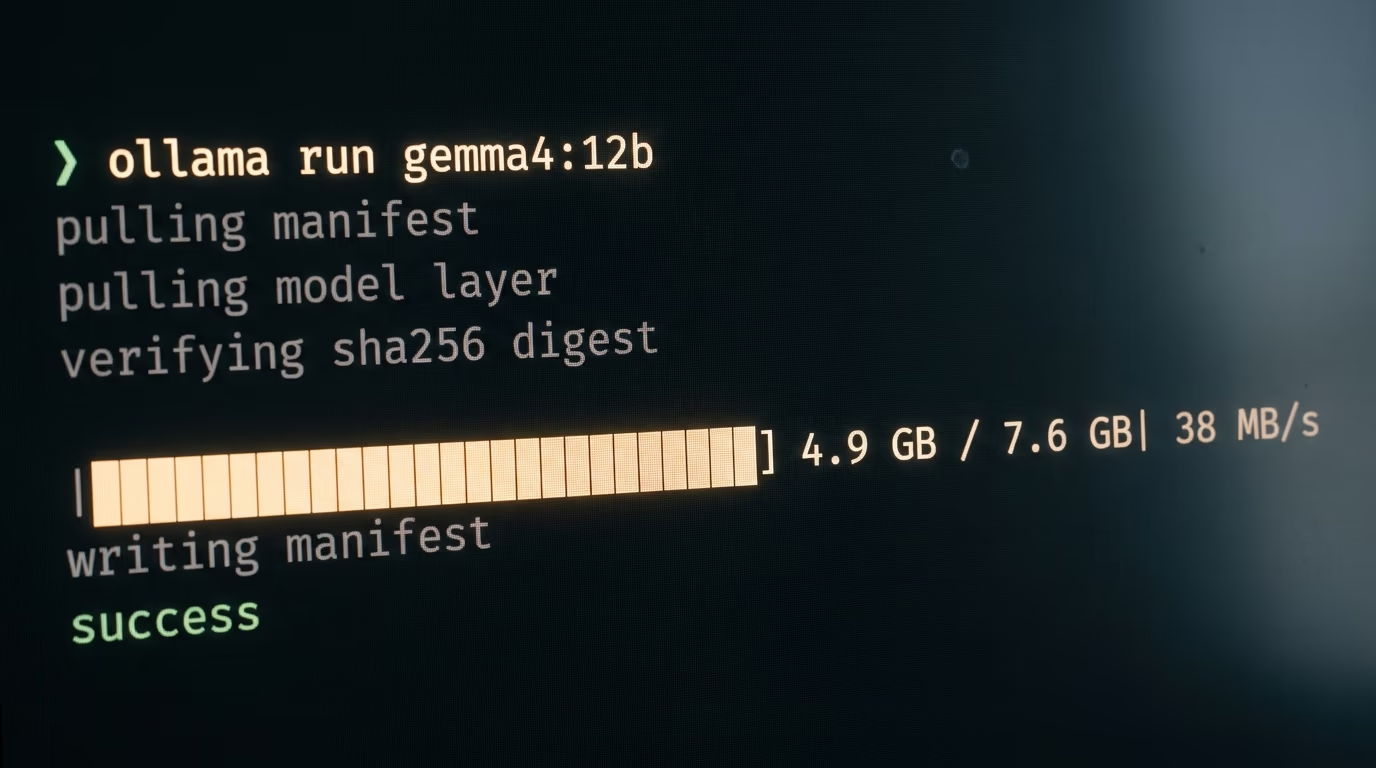
Ollama is the free app that downloads a model and runs it on your own machine with one line, and our comparison of LM Studio against Ollama covers the choice between the command line version and the one with buttons. Its Gemma 4 entry in the middle size is a 7.6 GB download that reads images as well as text, small enough that most recent laptops have the memory for it, and Google now publishes the whole Gemma 4 family under the Apache license.
ollama run gemma4:12bThat single line downloads the model and drops you into a prompt on your own machine, with no account, no card and nothing to sign up for. Swap the name for qwen3.6 and you get Alibaba's newest open model instead, a heavier download that wants a machine with real memory, and the small gpt-oss build gives you the only open weights OpenAI has published. All 3 keep working with the network unplugged, which is the entire reason people run models at home rather than renting them.
The rule that decides whether a model will run at home is easy enough to check before you download anything. The file you pull has to fit inside your machine's memory with room left over for the conversation itself, so the download size Ollama prints next to each entry is what you compare against the memory your computer has. A download comfortably smaller than that memory will feel quick, one close to it will crawl, and one above it won't load at all.
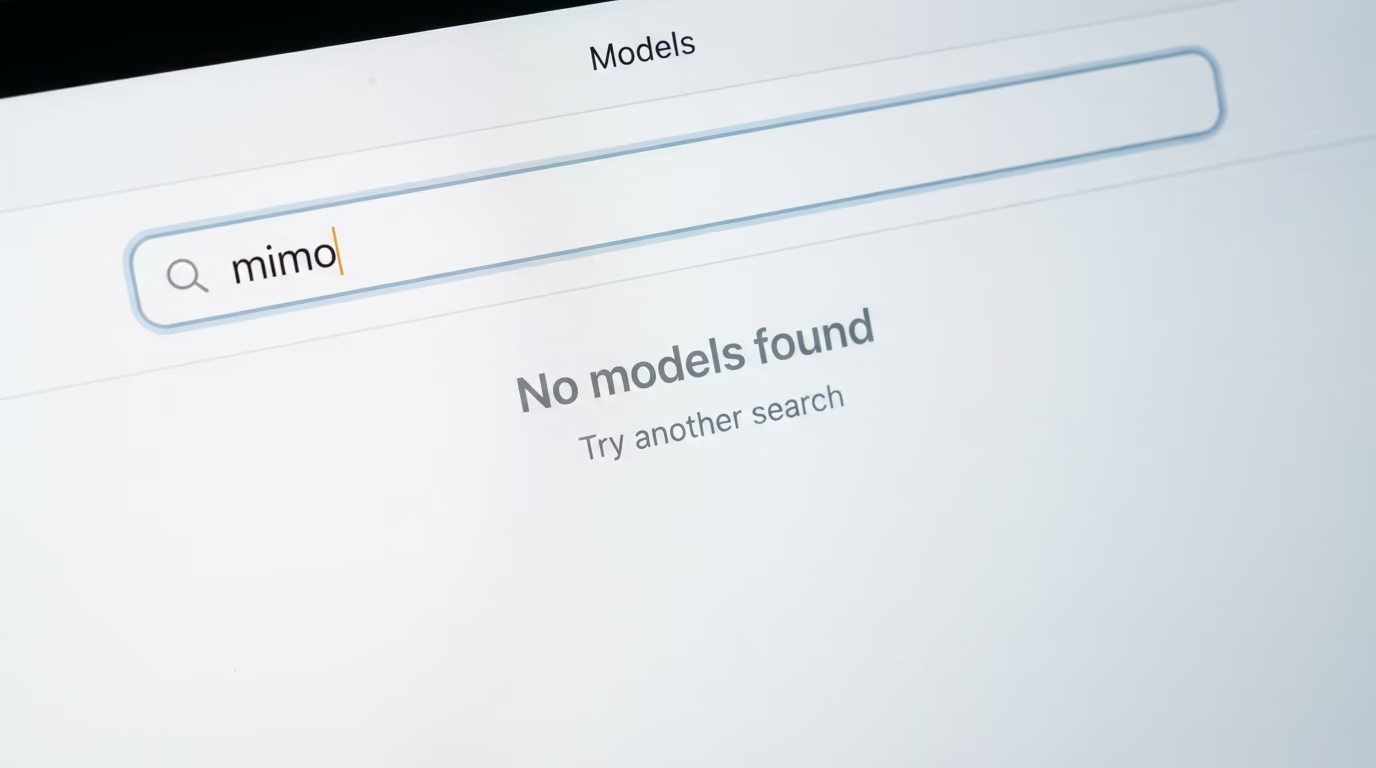
MiMo V2.6 belongs to a different category of hardware. The weight files for the Flash version add up to about 173 GB, more storage than most laptops ship with in total, and the Pro version is several times larger again. Ollama has no MiMo page, a search of its library returns nothing, and Xiaomi's own deployment notes send you to SGLang and vLLM, the serving stacks that run on rented server hardware rather than on anything under your desk. If a local model for writing code is what you are after, our ranking of local models by the memory they need is the piece to read next.
What does an open source AI model license actually let you sell?
An MIT or Apache license on an AI model lets you build a product with it, sell that product, keep the money and never tell the lab, which is what the phrase open weights is usually taken to mean. MiMo V2.6, DeepSeek V4.1 Flash and the smaller GLM build carry MIT. Qwen3.6, Gemma 4 and gpt-oss carry Apache. The interesting entries are the custom licenses, and both of them are short enough to read in a minute.
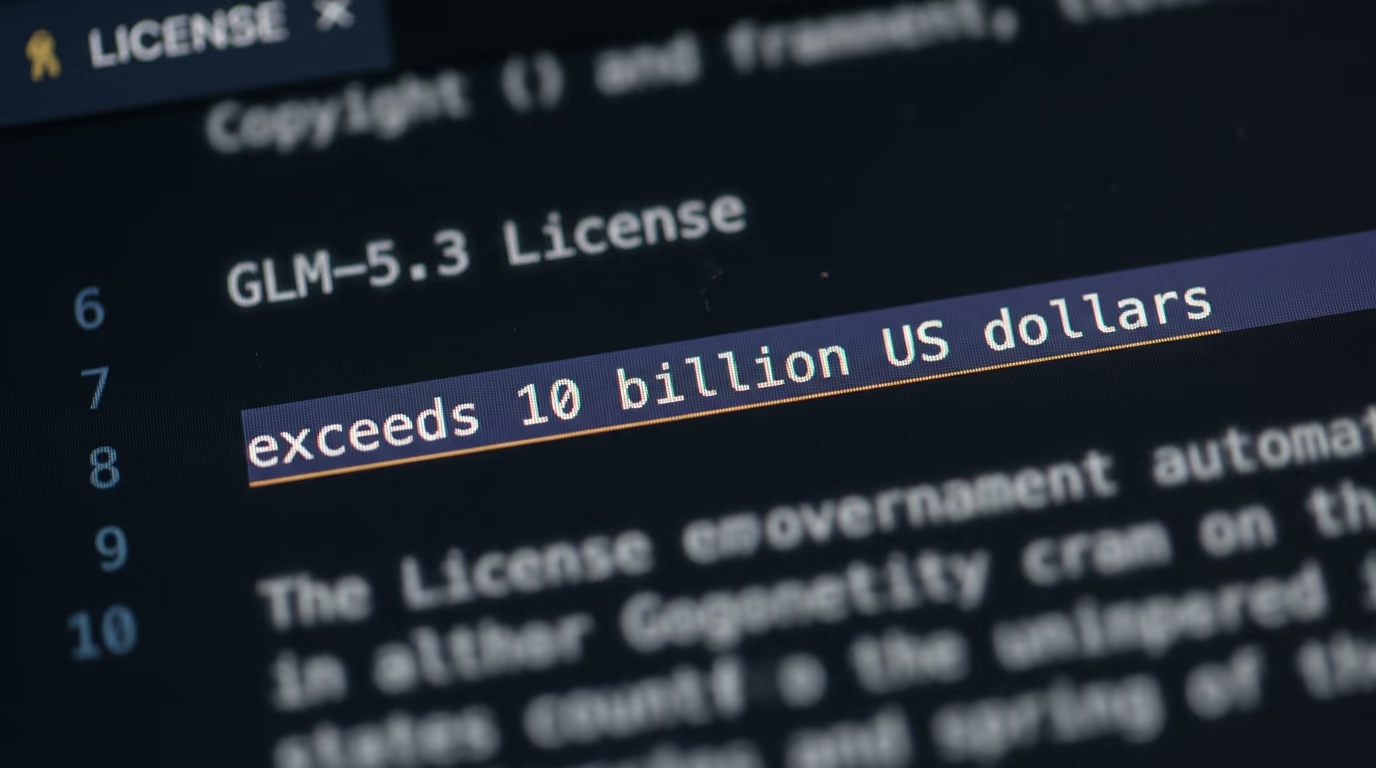
Z AI's file for GLM 5.3 is an MIT license with a single added clause, and the clause fires only if you run a business reselling model access and the revenue of your group passes $10 billion over any year, at which point Z AI wants you to pass a security review first. For anybody reading this, that license behaves exactly like MIT. Its smaller sibling skips the clause entirely and ships as plain MIT with nothing added.
Moonshot AI sets its bar far lower for Kimi K3. If you resell model access and your revenue passes $20 million over any year, the file says you must sign a separate agreement with Moonshot before using the weights for anything commercial, and any product with more than 100 million monthly users has to show the words Kimi K3 on screen. Neither clause touches a person building an app in their evenings, and both would matter enormously to a funded startup whose whole business is selling access to models.
the Licensee must enter into a separate agreement with Moonshot AI before using the Software or its derivative works for any commercial purpose (Kimi K3 License, clause 2)
Google's Gemma 4 license page states the Apache license, with a prohibited use policy published alongside it as a separate document rather than folded into the license itself. That separation is worth knowing about, because the permission you get from Apache and the behaviour Google asks for in that policy live in 2 different files, and only one of them is the license.
Meta's Llama works differently from everything else on this list. The weights sit behind a manual approval gate on Hugging Face, so you request access, wait for a human to say yes, and only then download anything, while every other model on this shortlist is a single click for anybody with an account. The license is Meta's own rather than one of the standard open ones. Our explainer on what open weights actually means walks through why that phrase now covers deals that look nothing alike.
What does it cost to rent an open model instead of running it?
Renting MiMo V2.6 Flash through OpenRouter costs $0.14 per million tokens of input, which is about 5 novels of reading, against $5 for the same amount through Claude Opus 5 on the same platform this morning. Output always costs more than input, which is why a chatty assistant costs more to run than a quiet summarizer even when both read the same documents.
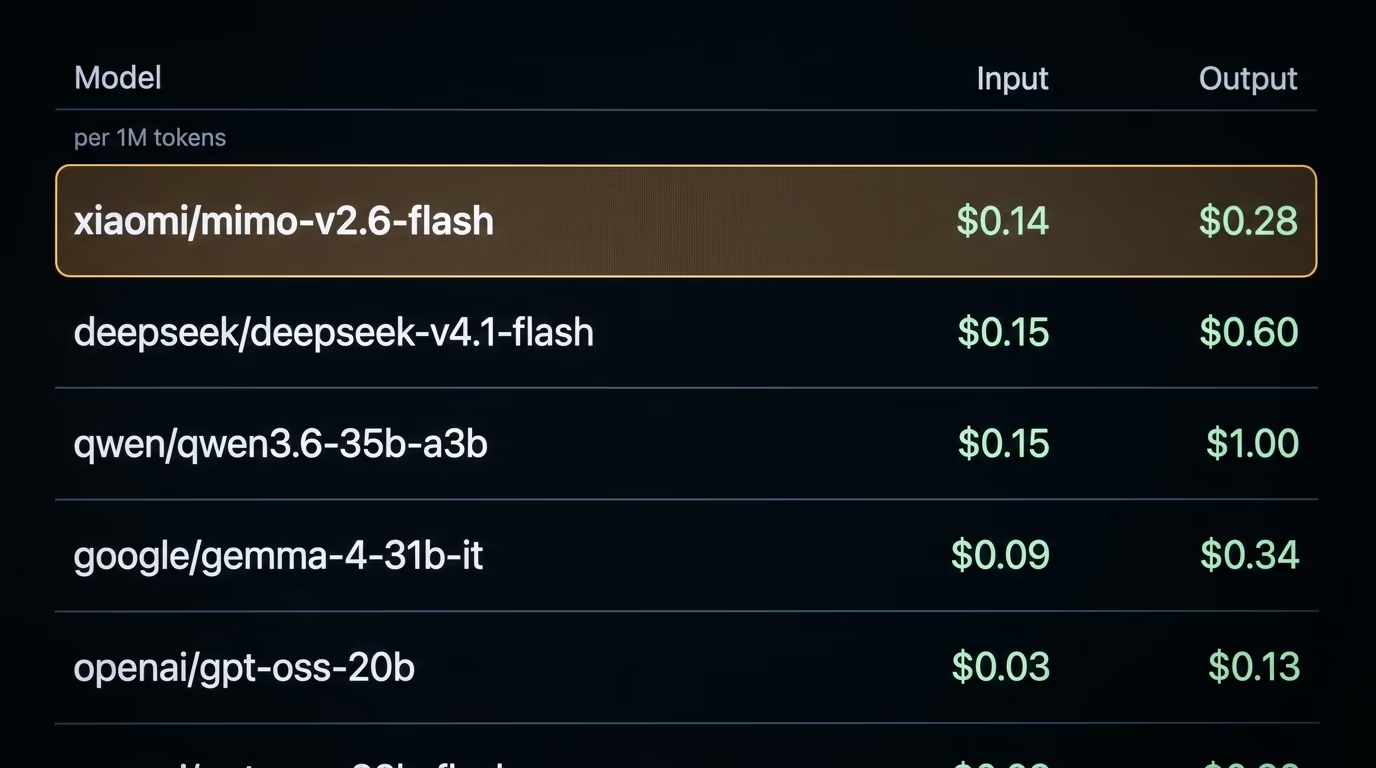
OpenRouter is one account that resells most of these models through a single API, and our walkthrough on how to use OpenRouter covers the signup and the first call. It's the reason an open license matters even to people who will never download a weight file, because a permissive license is what lets half a dozen providers compete to serve the same model, and that competition is what drags the price down to pennies.
Open doesn't automatically mean cheap, which the table makes obvious. Kimi K3 sits third on the independent ranking and is one of the most expensive entries on the whole list, above several closed models, because a model that enormous costs a fortune to keep loaded on somebody's hardware. The cheapest entry is OpenAI's gpt-oss in its small size, and that one you can also run at home for nothing beyond electricity.
A Chinese consumer electronics company giving away a frontier class model under MIT isn't charity, it's a fight for developer habits against OpenAI and Anthropic, and the price you see today was set while somebody is buying market share. The license, though, doesn't expire when the strategy changes. An MIT file you downloaded this morning stays MIT for the copy you hold, whatever Xiaomi decides to do next year.
What we do not know yet about MiMo V2.6
Nobody outside Xiaomi has independently measured the Flash version of MiMo V2.6, there is no supported way to run the full model on a personal computer, and the company's own serving instructions still point at recipes written for the previous release. Here is what remains genuinely open less than a day after the weights went up.
- Artificial Analysis has an entry for the Pro version and none for Flash, so the cheaper one carries no independent score at all yet.
- Ollama has no MiMo page and LM Studio lists nothing official, so running the full model on a personal machine has no supported route today.
- Xiaomi's deployment notes link a cookbook and a recipe written for the previous version, and the card warns that the stable build of vLLM may lag behind.
- Every benchmark figure on the model card was produced by Xiaomi, including the comparisons against models from Anthropic and OpenAI.
None of that makes the release less interesting. The license is confirmed because the file is public, the rent price is confirmed because a provider is charging it right now, one independent ranking exists for the larger version, and everything else on that card is still the lab's own claim.
Which open source AI model should you pick this week?
Take MiMo V2.6 Flash if you are building something you intend to sell and you are content renting the model through an API, because the license asks nothing of you and the price is the lowest of any model near the top of the independent ranking. Take DeepSeek V4.1 Flash or GLM 5.3 Flash from Z AI as the backup you switch to when one provider has a bad afternoon, since both carry the same MIT terms and sit in the same price range.
Take Gemma 4 or Qwen3.6 when the model has to live on your own machine, whether for privacy or because the work happens on a train with no signal. Both carry Apache, both are one command away in Ollama, and the smaller Gemma download won't eat your disk. If you want to understand why the same model comes in so many file sizes before you pick one, our explainer on why a model file shrinks covers the trade you are making.
Read the license yourself before you build a business on Kimi K3 or on Llama, because those are the entries here with conditions that could reach a company as it grows, and each one takes a minute to read. The pattern worth watching over the coming months is which lab flips its terms next, in either direction. Alibaba closed the license on its newest image model over the weekend, Xiaomi opened the license on its newest language model the day after, and in both cases the benchmark scores drew far more attention than the license file.
Questions people ask
What is the best open source AI model right now?
Xiaomi's MiMo V2.6, published on Monday under an MIT license, sits first among open models on the Artificial Analysis intelligence index this morning. If the model has to run on your own computer rather than on rented hardware, Google Gemma 4 and Alibaba's Qwen3.6 are the better answer, since both are in Ollama's library and both carry the Apache license.
Can I use the best open source AI model commercially?
Yes, when the license is MIT or Apache, which covers MiMo V2.6, DeepSeek V4.1 Flash, the smaller GLM build, Qwen3.6, Gemma 4 and gpt-oss. You can build a product on any of them, sell it and keep the revenue. The entries that add conditions are Kimi K3, which requires a separate agreement with Moonshot AI once a business reselling model access passes its revenue threshold, and Meta's Llama, which needs approval before you can even download the weights.
Can I run MiMo V2.6 on my laptop?
No. The weight files are far larger than the whole disk of most laptops, Ollama has no MiMo entry, and Xiaomi's own instructions target server side serving stacks. The nearest thing to a local option is the small distilled version Xiaomi released alongside it, which volunteers converted into the format LM Studio reads within hours, although Xiaomi presents that one as a research starting point rather than a finished model.
What does an MIT license mean for an AI model?
It means you can download the weights, change them, run them, sell what you build and never pay or ask permission, as long as you keep the copyright notice with any copy of the model you pass on. It's the same license used by thousands of ordinary software projects, and it's the most permissive terms a lab can realistically publish weights under.
Is Meta's Llama still worth using?
Only if something in your stack already depends on it. Meta's newest open language model is well over a year old, its weights still sit behind a manual approval gate on Hugging Face, and the license is Meta's own rather than a standard open one. Every other model on this shortlist downloads with a single click and carries either MIT or Apache terms.
How much does renting an open model cost compared with a closed one?
MiMo V2.6 Flash costs $0.14 per million tokens of input on OpenRouter this morning, against $5 for Claude Opus 5 on the same platform. Open models are resold by several providers at once, which is what pushes the price down, although the largest open models such as Kimi K3 still cost more than some closed ones because they are expensive to keep running.