AIOctober 16, 202611 min read
Muse Spark Open weighs 1,644 GB, more than 2 Macs hold
Meta says its new downloadable model runs at home on 2 Apple Mac Studios. The files it published are 1,644 GB, the 2 machines hold about 1,024 GB, and Apple ships the big one late October.
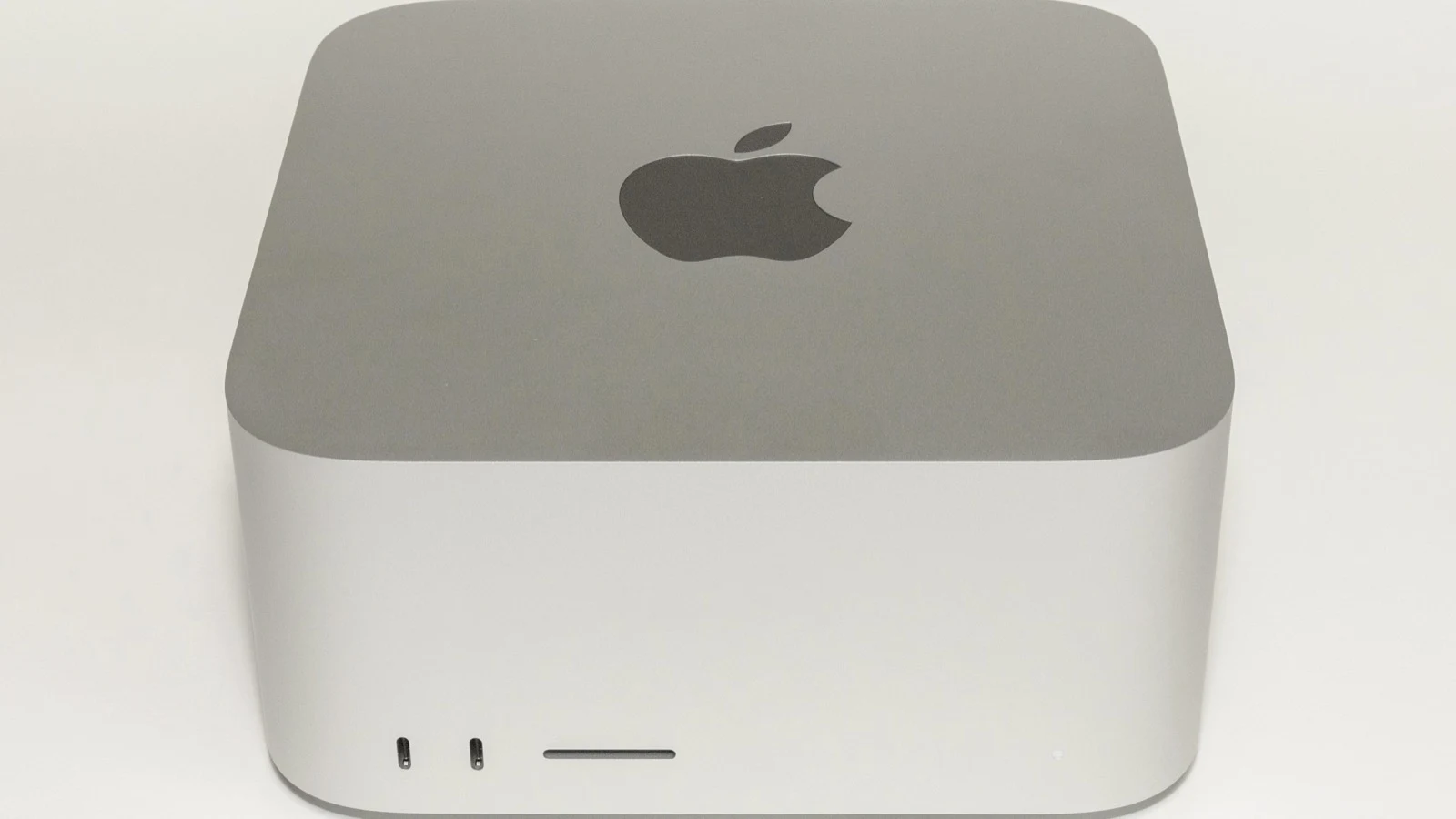
Meta published Muse Spark Open on 15 October, an AI model anybody can download, and its own announcement says it is the first of its kind to run on a desktop using 2 Apple M5 Ultra Mac Studios. The files Meta actually put online measure 1,644 GB, while those 2 computers hold about a terabyte of memory between them, so the version running on that desk is a shrunken copy rather than the download itself.
Apple's own announcement last month says the Mac Studio with its largest memory option arrives in late October, which means that on the morning this model shipped, neither of the 2 machines Meta names was on sale. Anybody who wants to use Muse Spark Open today can rent it from a hosting company for roughly the price of a coffee per long document, and that is the route almost every reader of this piece will take.
Every write up this morning repeated the sentence about the 2 Mac Studios and stopped there. This one opened the file listing and priced the hardware, and the gap between the announcement and what a reader can do tonight turned out to be about 600 GB wide.
What is Muse Spark Open, and what did Meta actually publish?
Muse Spark Open is a free to download AI model from Meta that reads both text and images, released under a licence the company wrote itself and calls the Muse Model License. It is built so that only a fraction of it switches on to answer any given question, which is the design trick that lets a model this large reply at a sensible pace instead of grinding away for a minute per sentence.
The number Meta leads with is the model's memory for a single conversation. It accepts about 750,000 words at once, a shelf of novels handed over in one go, without losing track of how the first chapter started. That window matches the one Meta sells on its paid models, and it is genuinely useful to anybody who wants to drop an entire codebase or a decade of email into a single prompt and ask questions about all of it.
The image reading changes what the model is for. Something that accepts screenshots can be pointed at a broken web page or a photographed whiteboard, which covers a fair share of the work a small company would otherwise hand to an assistant. Meta describes the model as natively multimodal, meaning the picture handling was trained in from the start rather than bolted on afterwards, and that usually shows up as fewer mistakes when somebody uploads a messy photograph of a document.
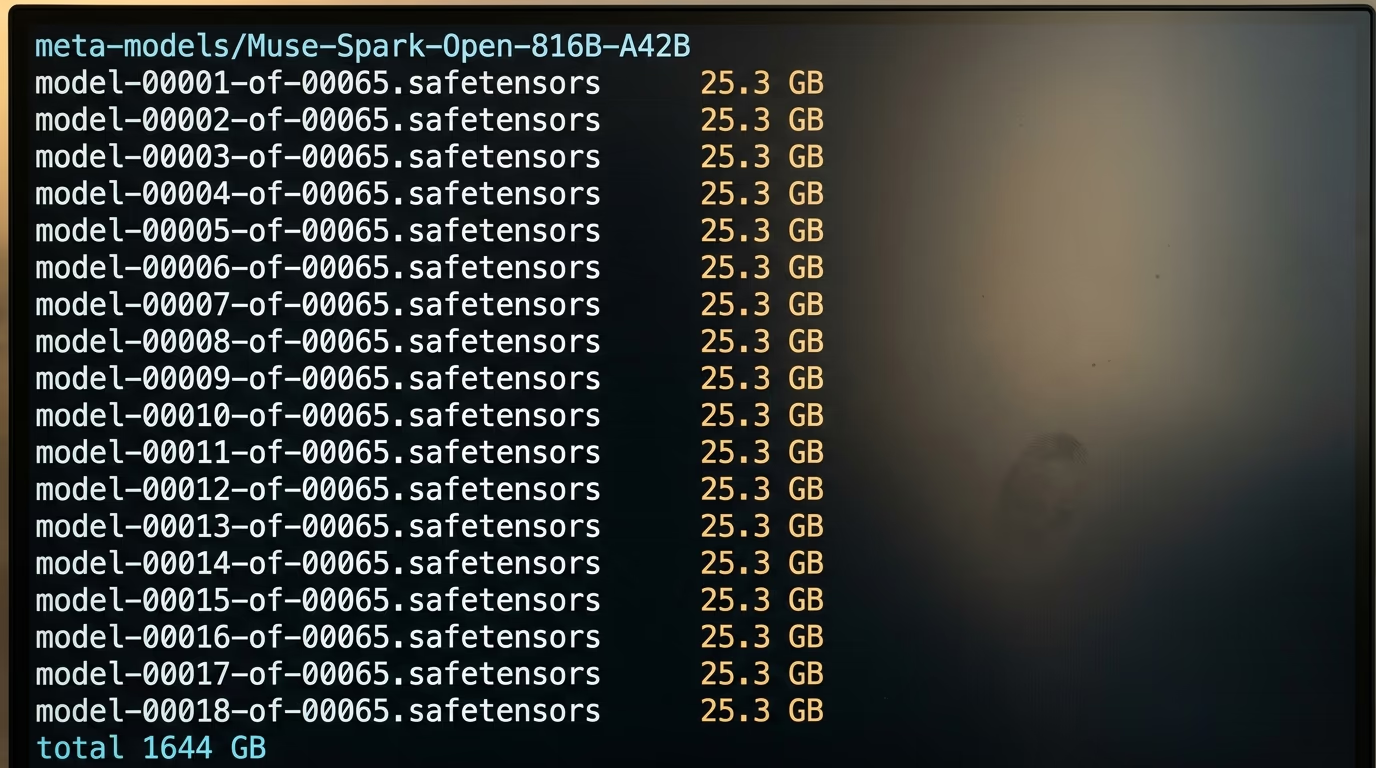
Hugging Face's own file listing, read this morning, shows the weights split across dozens of separate files, stored in the uncompressed form a lab publishes when it wants other researchers to start from the original rather than from somebody's compressed copy. For a sense of scale, that is more than most laptops can store on disk, before anybody asks a machine to hold it all in memory at once.
A second obstacle stands in front of those files. Meta keeps the repository behind a manual access gate, so the licence file and the configuration file both answer with a refusal to anybody who has not been approved. A reader who wants to know what the licence permits before agreeing to it cannot read it on Meta's own page, which is an odd door to fit to a model whose entire pitch is that you get to keep the weights forever.
Meta did publish a second, smaller copy beside the first one, compressed into NVIDIA's own number format. It sits behind the same gate, and it is shaped for NVIDIA hardware rather than for the Apple machines the announcement is built around. So the company shipped a copy for the chips it trained on, and left the Apple shaped hole in the middle of its own headline for somebody else to fill.
Can you run Muse Spark Open on a Mac tonight?
Not tonight, unless you already own 2 of the most expensive desktop computers Apple sells and you are willing to run a copy that volunteers converted yesterday afternoon. Meta's announcement says Apple's unified memory architecture lets the M5 Ultra's integrated graphics chip use up to half a terabyte per Mac Studio, so 2 machines can hold an entire model.
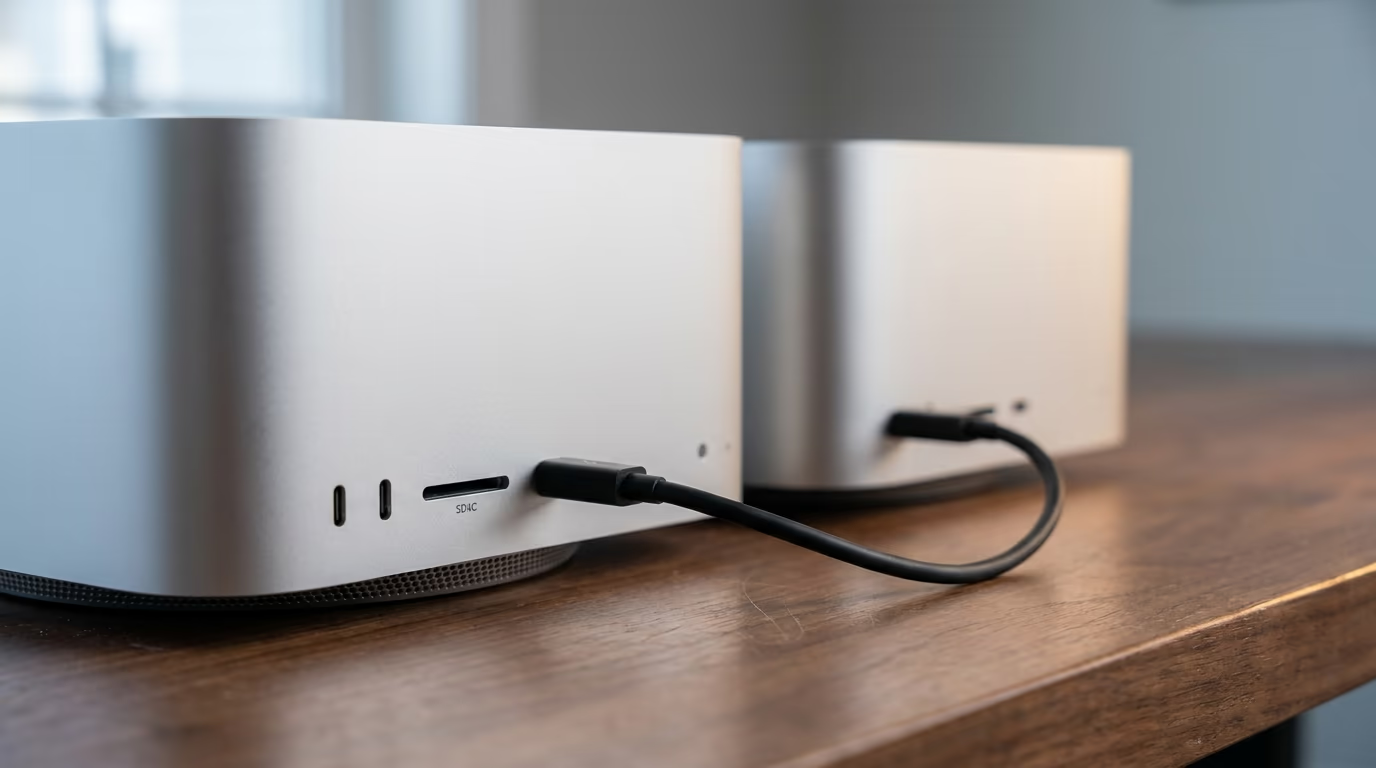
The pair of machines holds about a terabyte between them, the published files weigh 1,644 GB, and the shortfall is roughly the size of a whole second download. What runs on that desk has to be squeezed to about half its original size first, through a process called quantisation that trades a slice of accuracy for a far smaller file. We wrote a plain explanation of which model file you should actually download when a repository offers you half a dozen versions of the same model.
Meta did not publish an Apple format copy at all. The one that exists came from the MLX community, the volunteer group that converts models for Apple silicon, and it went up a few hours after the announcement. It is small enough to sit inside a single machine with the big memory option, and when it was checked this morning it had no recorded downloads whatsoever. The headline experience of this launch currently depends on unpaid volunteers who were faster than the company.
So the honest answer to the question everybody is asking has 3 steps. You need a Mac that Apple has not shipped yet, you need a compressed copy that Meta did not make, and you need to accept that the thing humming on your desk is a reduced version of what the lab actually released. None of that makes the engineering fake, and getting a model of this size to run outside a data centre at all is a genuine achievement by both companies, it simply is not the same as downloading a file tonight and double clicking it.
The engineering behind the Apple route is the genuinely unusual thing here. Meta's announcement lists Apple MLX among the engines the model was tuned for, beside the tooling for AMD, Intel and NVIDIA chips, so a frontier lab shaped its largest downloadable model to fit a desktop machine rather than a server rack. Several outlets have described that as a partnership between the 2 companies. What the announcement itself documents is narrower and odder, which is that the Apple software route is officially supported while the Apple format weights are not.
Ollama, the app most people reach for when they want a model running at home, now lists Muse Spark Open with a single cloud tag and a dash where the download size usually sits. Clicking it sends your text to somebody else's computer, which is the opposite of the reason people chase downloadable models. That is the same pattern we found when Mistral called Large 4 open weight and published no weights last week, and it is quietly becoming the normal first week of any big model release.
What do the 2 Mac Studios cost, and can you buy them today?
A Mac Studio with the M5 Ultra chip starts at $5,499 according to Apple's own announcement, so the pair Meta describes starts at a little under twice that before anybody adds a single gigabyte of extra memory. Apple has published no price for the largest memory configuration, and that same announcement says the machine is coming in late October, which is still ahead of us.
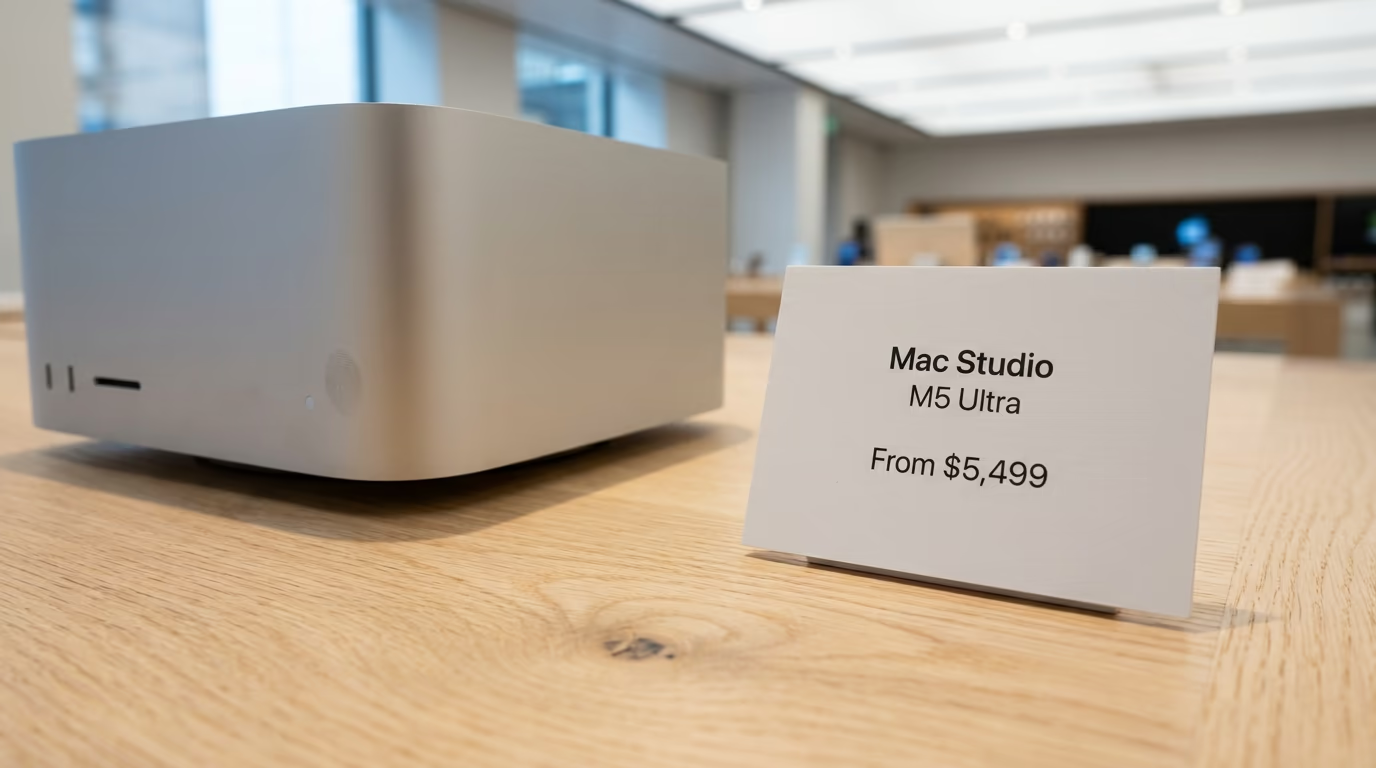
Memory is where that starting price climbs, and on Apple machines it climbs steeply, because the memory is fused to the processor and cannot be bought cheaply from anybody else later. Going from the entry configuration to the largest one is the most expensive option on the page, which is precisely why nobody can state the true cost of Meta's desktop setup today. The honest answer is that the total starts well above the price of 2 entry machines and ends wherever Apple chooses to set that upgrade in a fortnight.
The whole appeal of running a model yourself is knowing the cost in advance. A reader comparing a one off hardware purchase against a monthly bill cannot run that comparison at all while one side of it carries no price tag. Anybody tempted to clear a desk for this should wait the fortnight and look at the real figure before deciding.
3 copies of this model exist in public, and only one of them fits inside a single machine.
| Copy of the model | Size | Who made it | Fits in one 512 GB Mac? |
|---|---|---|---|
| Published weights, 16 bit | 1,644 GB | Meta | No |
| NVIDIA format copy | 533 GB | Meta | No |
| Apple format copy, 4 bit | 461.7 GB | MLX community volunteers | Yes |
Read that table from the bottom upwards and the picture inverts. The only copy that fits inside one of Meta's machines is the copy Meta did not make, and it arrived from volunteers hours after the announcement went live. The 2 machine setup in the post is not the minimum required to run this model, it is the setup needed to hold a bigger and more faithful copy than the compressed one most people will end up using.
What does the Muse licence let you do with it?
The Muse Model License lets you use the model, change it, fine tune it, build on it and sell with it, and it asks for 2 things in return. You have to show the words Built with Muse Spark Open somewhere in your product, its documentation, its website or its settings menu, and if you resell the model itself to other people through an API while your company takes more than $20 million in any rolling year, you have to sign a separate agreement with Meta before you begin.
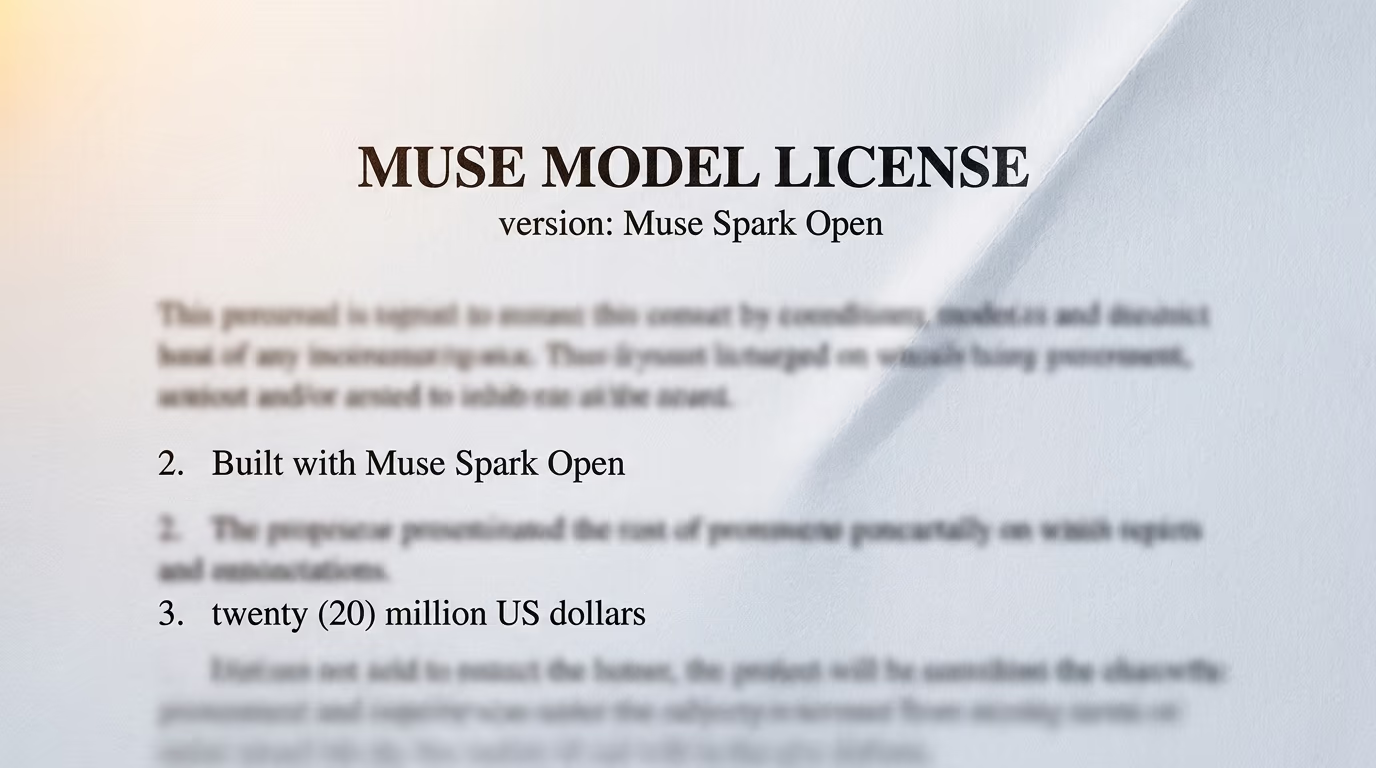
That revenue condition is considerably narrower than the phrase limited commercial terms suggests. The licence states that it does not apply to internal use, to research, or to using the model as a component to power features of your own product or service. A freelancer shipping a writing tool built on these weights owes Meta a credit line in the settings menu and nothing else, however well the tool sells.
Reading that text requires going around Meta. The licence file on Meta's own repository refuses to open without approved access, so the wording quoted here came from one of the community copies, which carry the licence precisely because the licence orders every copy to include it. The gate hides the document that explains the gate.
The usage policy attached to the licence is the ordinary one for a model this size, and it runs to a long list of prohibited uses covering weapons, fraud, impersonation and the rest. One line in it is worth knowing before anybody builds a business here, which is that the model is not intended for minors, so any product aimed at school students inherits that restriction on day one.
Measured against the rest of the field, these are reasonable terms. Alibaba shipped an image model this year that is free to download and not yours to sell anything with, and we ranked the downloadable models by what their licences genuinely permit in our ranking of the best open source AI models by what their licence allows. A trigger set that high on reselling alone, with a credit line as the only other condition, is close to the friendliest clause a frontier lab currently attaches to weights of this calibre.
What does it cost to call Muse Spark Open instead of running it?
OpenRouter, one of the hosts Meta names in its own announcement, sells Muse Spark Open at $1.25 per million tokens of text going in and $4.25 per million coming back, with the full context window available. In practical terms, handing the model a long stack of your own documents costs about the price of a coffee, which is the comparison worth holding up against a desk full of Mac Studios.
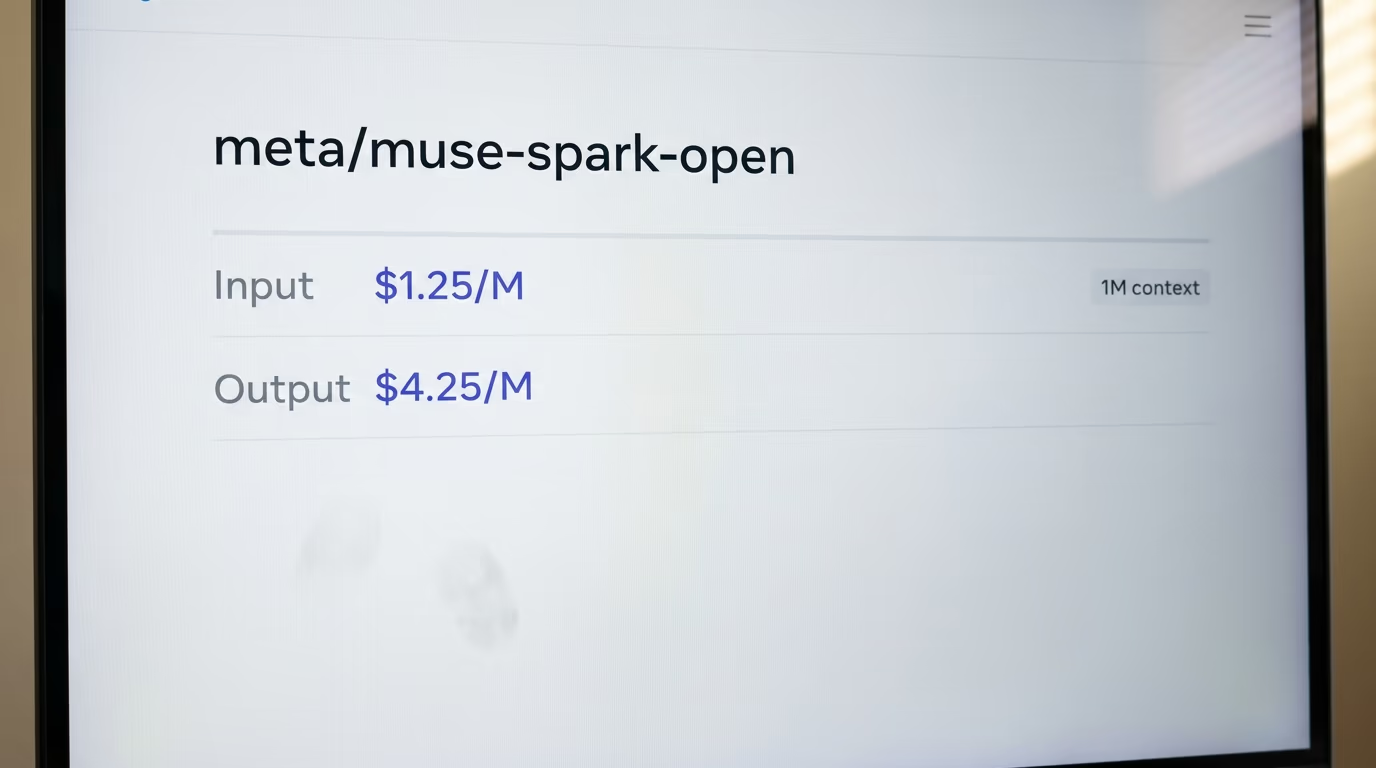
Meta's own rate card does not price Muse Spark Open at all. The model appears in the navigation of the company's developer site, and the pricing table beside it lists every other member of the family while leaving this one out, which fits a release whose stated point is that you host it yourself. It also means the only prices in circulation come from the hosting companies rather than from Meta.
Meta charges exactly the same 2 rates for the closed model in the same family that nobody can download, so giving the weights away has not made renting the model any cheaper. For most people renting stays the only practical route in, which is the same conclusion we reached when pricing the best AI model for agents earlier this week.
What the download buys is not a lower price, it is independence. Weights sitting on your own drive cannot be deprecated, rate limited, repriced or switched off by somebody else's product decision, and for a company whose work depends on one model behaving consistently for years, that insurance is the entire argument for open weight models. It also explains why a download of this size looks worth the trouble to a handful of people and completely absurd to everybody else.
What we do not know yet about Muse Spark Open
Nobody independent has measured this model yet. Meta's announcement points readers towards its own evaluation methodology report rather than printing scores in the post itself, so every quality claim circulating today traces back to the company that built the thing, and the first outside test is probably a week away. Until somebody runs it, the only honest description of how good it is comes with Meta's name attached to it.
Several other questions stay open, and each one matters to a different reader. Apple has published no price for the largest Mac Studio and no date firmer than late October, so the real cost of Meta's desktop setup cannot be stated by anybody. Meta published no Apple format copy of its own, which leaves the headline experience of its own launch resting on volunteers. Nobody has published a measured speed for 2 Mac Studios running this model together either, so how fast that desk actually answers remains a mystery.
There is also the question of what the access gate is for. A model released under a licence this permissive, sitting behind an approval queue that hides the licence itself, is a combination Meta has not explained anywhere. The innocent reading is that the company is throttling download traffic for files this enormous, which would be sensible. Watching whether that gate quietly opens over the next week will say more about how open this release really is than any benchmark score.
For now the practical advice is boring and cheap. Rent the model for a few dollars, give it the longest and messiest document you own, and find out whether a window that size actually changes how you work before anybody spends a small fortune on aluminium. If it does change things, the hardware will be on sale by the time you have made up your mind, and a smaller Apple format copy will almost certainly have arrived alongside it.
Questions people ask
How big is the Muse Spark Open download?
The official Muse Spark Open repository holds dozens of weight files that add up to 1,644 GB in uncompressed form. Meta also publishes a smaller copy in NVIDIA's number format, and the MLX community has converted a compressed copy for Apple machines that is roughly a quarter of the original size.
Can I run Muse Spark Open on my Mac?
Only on a Mac Studio with the largest memory option, which Apple says is coming in late October, and only using a compressed copy rather than the files Meta published. The version made by the MLX community volunteers is small enough to fit inside one such machine.
How much do the 2 Mac Studios Meta describes cost?
A Mac Studio with the M5 Ultra chip starts at $5,499 on Apple's own announcement, so the pair starts at a little under twice that before extra memory is added. Apple has published no price for the largest memory configuration, so the true cost of the setup Meta describes is not public yet.
Is Muse Spark Open free for commercial use?
It is free for almost everybody. The Muse Model License asks you to display the words Built with Muse Spark Open in your product or its documentation, and it only requires a separate agreement with Meta if you resell the model itself through an API while your company earns more than $20 million in a rolling year.
What does it cost to use Muse Spark Open without downloading it?
OpenRouter sells access to Muse Spark Open with the full context window, and feeding it a long stack of your own documents costs roughly the price of a coffee. The rate matches what Meta charges for the closed model of the same generation that cannot be downloaded, to the cent.
Why does Meta's download page ask for approval?
Meta keeps the Muse Spark Open repository behind a manual access gate, so the licence file and the configuration file refuse to open for anybody who has not been approved. Meta has not explained why, and the licence sitting behind that gate turns out to be one of the more permissive ones a frontier lab has published.
How good is Muse Spark Open compared with other models?
Nobody outside Meta has measured it yet. The announcement points to Meta's own evaluation methodology report instead of printing scores, so every quality claim currently in circulation comes from the company that trained the model.