ToolsSeptember 24, 202612 min read
Ray Ban Meta Gen 2 vs Gen 3, what the extra $70 buys
Meta put the Gen 3 on sale on 23 September 2026 at $449 while the Gen 2 stays at $379. The camera is the same on both, so the $70 buys battery, a microphone and a button.
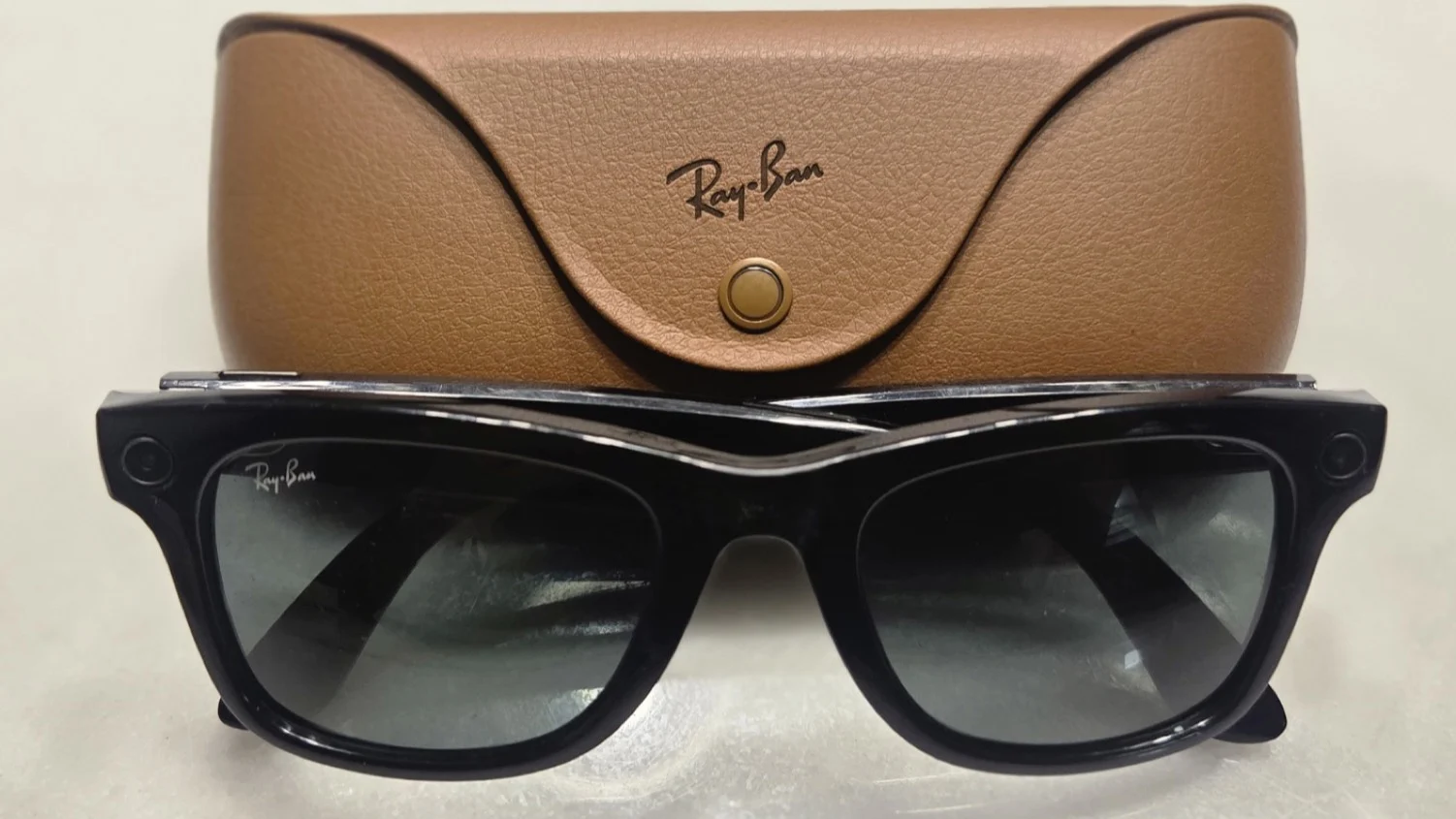
The Ray Ban Meta Gen 3 went on sale the day Meta announced it, priced from $449, and the Gen 2 it replaces is still sold at $379, so choosing between them costs $70. Both pairs shoot the same 3K video, which means that money buys 1 extra hour of battery, a sixth microphone and a small button on the frame, and changes nothing at all in the pictures you take.
A third pair moves the decision again. At the same event Meta announced the Ray Ban Meta Audio, priced from $349, arriving in October with no camera at all, the lightest frame Meta has built and the longest battery life of the 3 pairs. If the camera is the reason you want smart glasses, the Gen 3 is the pair worth arguing about, and if it isn't, the camera free pair is also the one you can wear into a meeting without anybody asking what the lens is for.
Almost every piece published since the keynote is a first impression written by somebody who held the new pair for a few minutes. Very few of them put the 3 prices side by side, and that is the comparison that decides what you actually order tonight. Everything below comes from Meta's own published figures, checked this morning, plus the first accounts from reporters who handled the Gen 3 at the event, each one named where it is used.
What changed between the Ray Ban Meta Gen 2 and the Gen 3?
The Ray Ban Meta Gen 3 adds 1 hour of rated battery, a sixth microphone, a programmable button and 2 new frame shapes over the Gen 2 model, and Meta prices it above the older pair. It went on sale the same day it was announced, in a spread of frame colour and lens combinations that the table below lists in full.
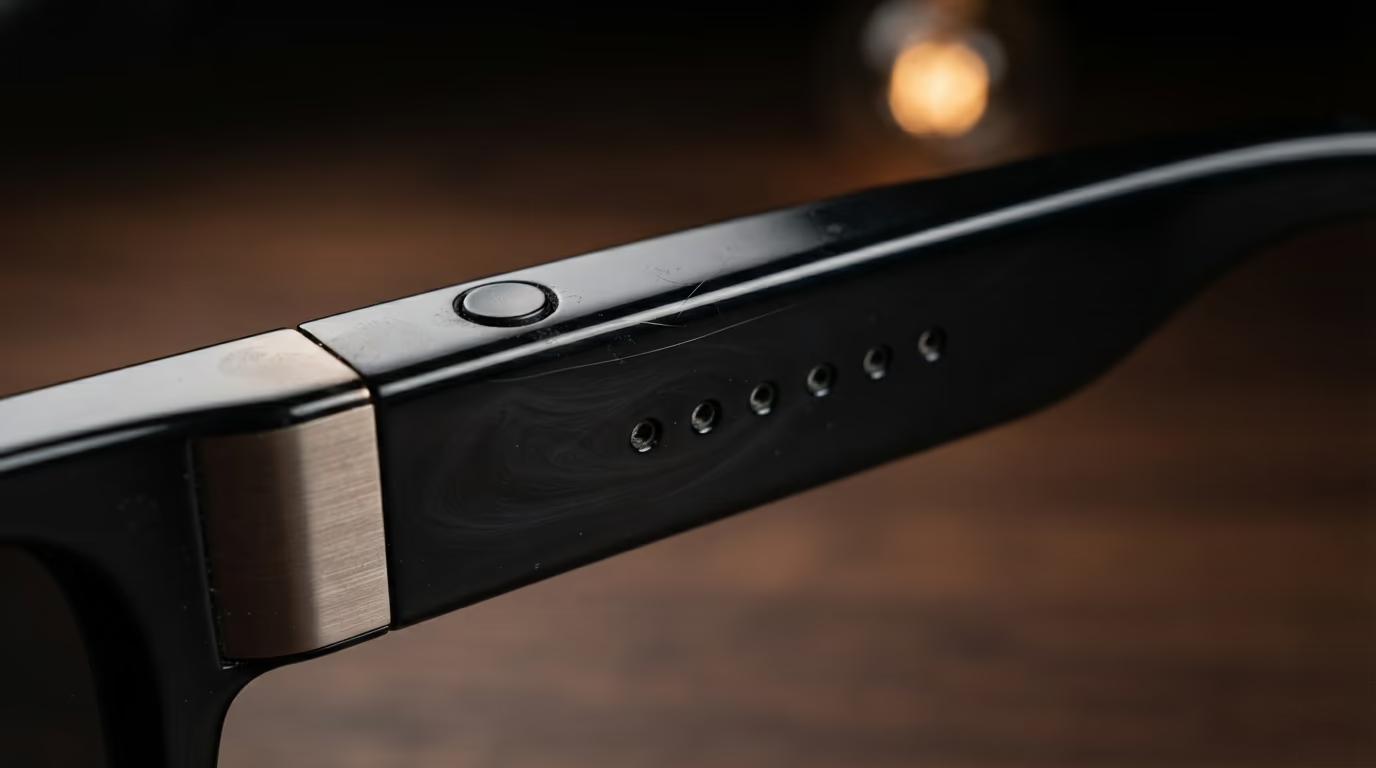
The 2 new shapes are an aviator and a more angular frame that Meta calls Zena, alongside the Wayfarer that has carried this line since the beginning. Engadget, whose writer handled the glasses at the event, reported that the frames are slimmer than the Gen 2 and that the temple tips can now be adjusted for a better fit, which is the kind of detail that decides whether a pair stays on your nose during a run or slides down it. Meta also told reporters that many more frame and colour variations will follow before the end of the year, so the shape you want may not be the shape on sale today.
Everything else a buyer touches stayed where it was. The open ear speakers, the touch strip on the arm, the capture button, the charging case and the phone app all carry over unchanged. That is not a complaint, because the Gen 2 was already a finished product rather than an experiment, and it is exactly why the interesting question here is about that price gap rather than about a redesign.
Does the Gen 3 take better pictures than the Gen 2?
No, the Ray Ban Meta Gen 3 records the same 3K video that the Gen 2 already records, so what lands in your camera roll doesn't change. Meta's own Gen 2 announcement described 3K Ultra HD video capture, and the reporting from the Gen 3 launch describes the same camera capabilities on the new pair rather than a new sensor.
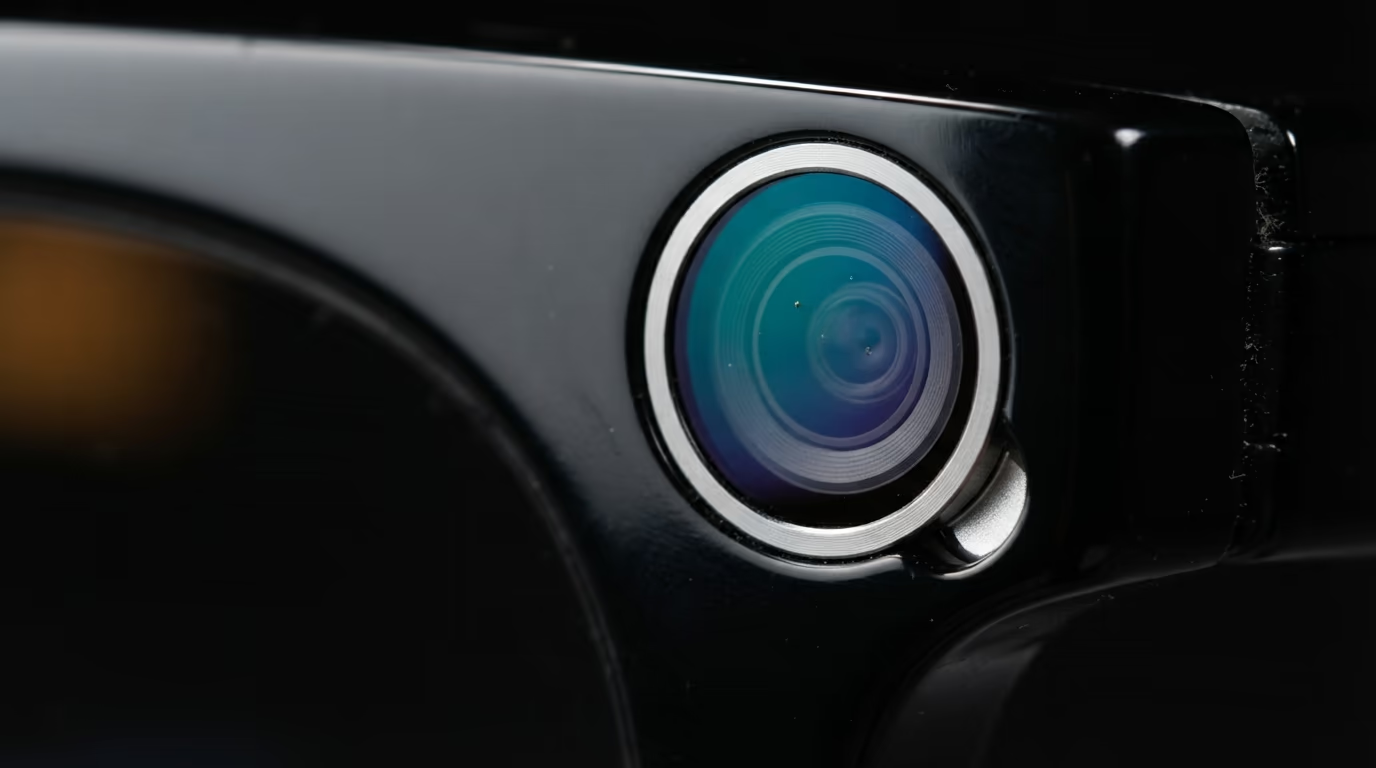
The camera is the whole reason these glasses cost what they do, so an unchanged sensor settles most of this comparison before the other differences get a hearing. Open ear headphones with a voice assistant in them cost far less than any pair here. You're paying the premium for a lens above your right eye that records what you're looking at while your hands stay where they are, and Meta didn't touch that lens this year.
The label on its own tells you very little. A 3K clip holds more detail than most video is ever watched at and less than a modern phone records at its best setting, which is plenty for anything that ends up on a phone screen. In practice the limit on these glasses has never been the number of pixels, it has been low light and the fact that your head moves while you film, and neither of those was addressed this year.
Around the camera, 2 things did move, and both of them are about sound rather than sharpness. Meta says the Gen 3 records video with Dolby Atmos, so a clip keeps some sense of where a voice was standing relative to you instead of flattening the room into one channel. A wide format capture mode is also coming, which lets a clip be shot the way a television is shaped instead of the way a phone is held, and Meta says it will reach other models later. Neither of them changes a single still frame.
How much longer does the Gen 3 last on a charge?
Meta rates the Ray Ban Meta Gen 3 at up to 9 hours of typical use, which is 1 hour more than the Gen 2 rating. Both numbers describe a mixed day of occasional photos, some music and a few questions asked out loud, and neither of them describes a day of solid playback.
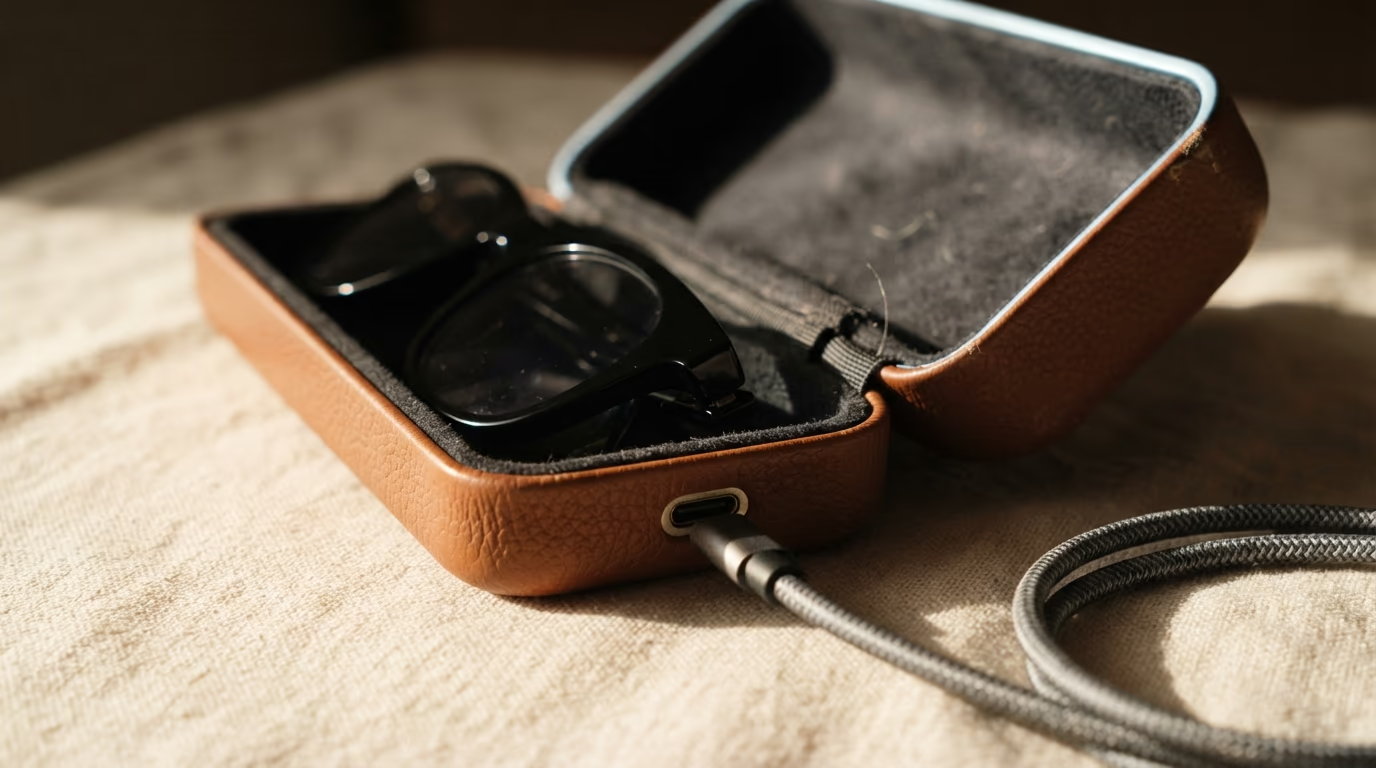
The honest version of that figure is a good deal lower. The Engadget writer who has lived with a Gen 2 reported getting a little more than 5 hours out of it with audio playing without a break, which is how plenty of people wear these things on a commute or a long walk. Nobody has run the same test on a Gen 3 yet, because it has been on sale for 1 day, so the fair way to read Meta's claim is a rise of roughly 1 hour on whatever you personally got before.
The charging case matters more than either rating, and it lives in your pocket rather than on your face. Meta said the Gen 2 case adds about 2 more days of use, which means a weekend away needs no plug at all, and it has published no figure yet for the newer case. When a pair of these dies on you it is almost always because the case was left at home, and buying the newer glasses won't fix a charging habit.
What does the new action button on the Gen 3 do?
The Ray Ban Meta Gen 3 has a small programmable button on the frame that you assign to one job, and the Gen 2 has no equivalent. Meta pitches it as instant access to its assistant, and the same button can be set to a capture mode instead, so a single press does whichever thing you do most often.
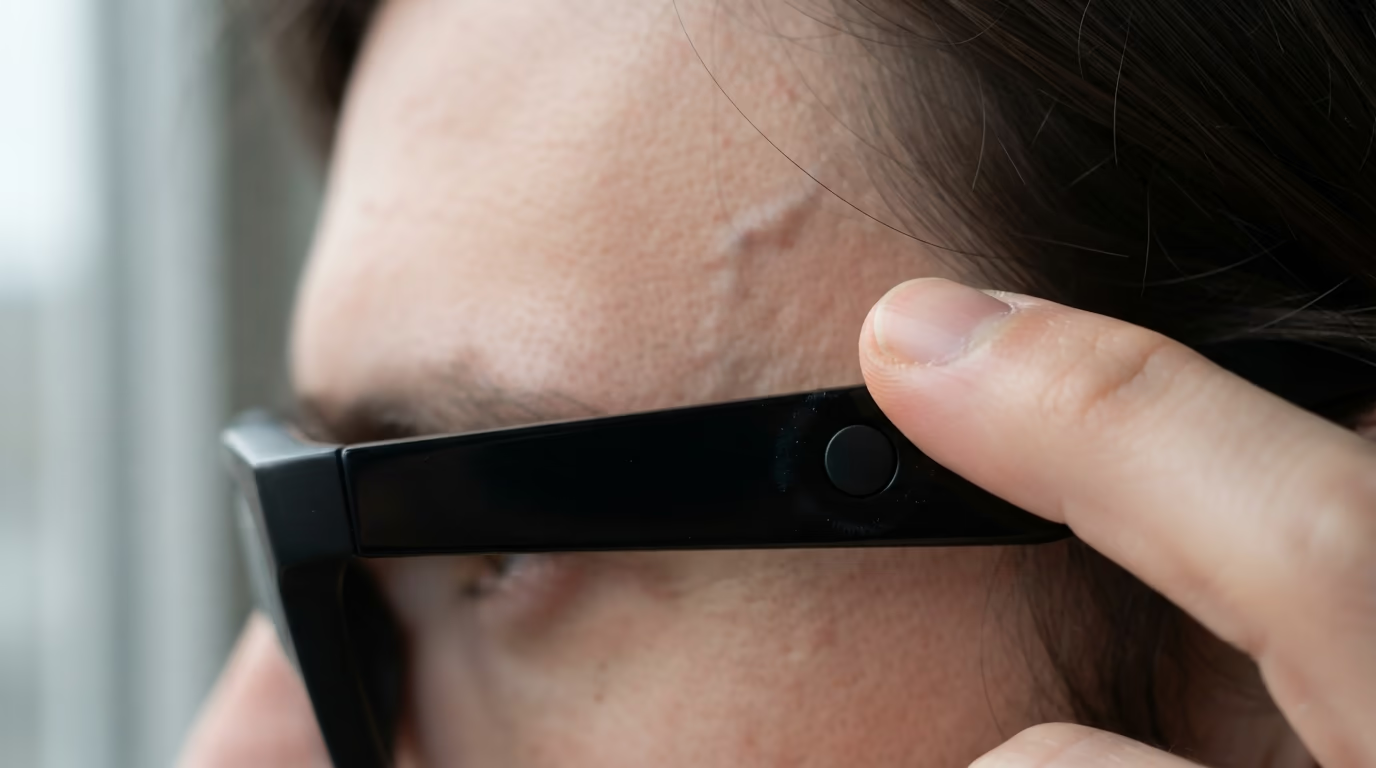
That button is the change most likely to matter to you every single day. Waking these glasses has always meant saying a wake phrase out loud, and saying a wake phrase out loud on a train, in an open office or next to somebody you have just met is the most quietly embarrassing thing about owning them. A button skips the sentence entirely, and nobody around you has to hear you talk to your glasses.
It also lands right before the assistant gets a great deal more ambitious. Meta has said its Muse agent is coming to the glasses in the next few months, triggered by voice, able to walk you through a workout, log a meal or book an appointment for you. We went through what that agent already does on a phone, and what it asks for in return, in our piece on what Meta Muse costs and what it wants from you first. A physical button becomes a lot more interesting when the software behind it can spend your money.
Should you buy the camera free Ray Ban Meta Audio instead?
The Ray Ban Meta Audio is Meta's first pair of AI glasses with no camera, and it is the right choice for anyone who wants music, calls and an assistant without a lens pointed at the room. Meta says it is the lightest and slimmest pair it has made, runs longer on a charge than either camera model, and comes in 2 shapes, a retro Clubmaster and a squarer frame called Burbank.
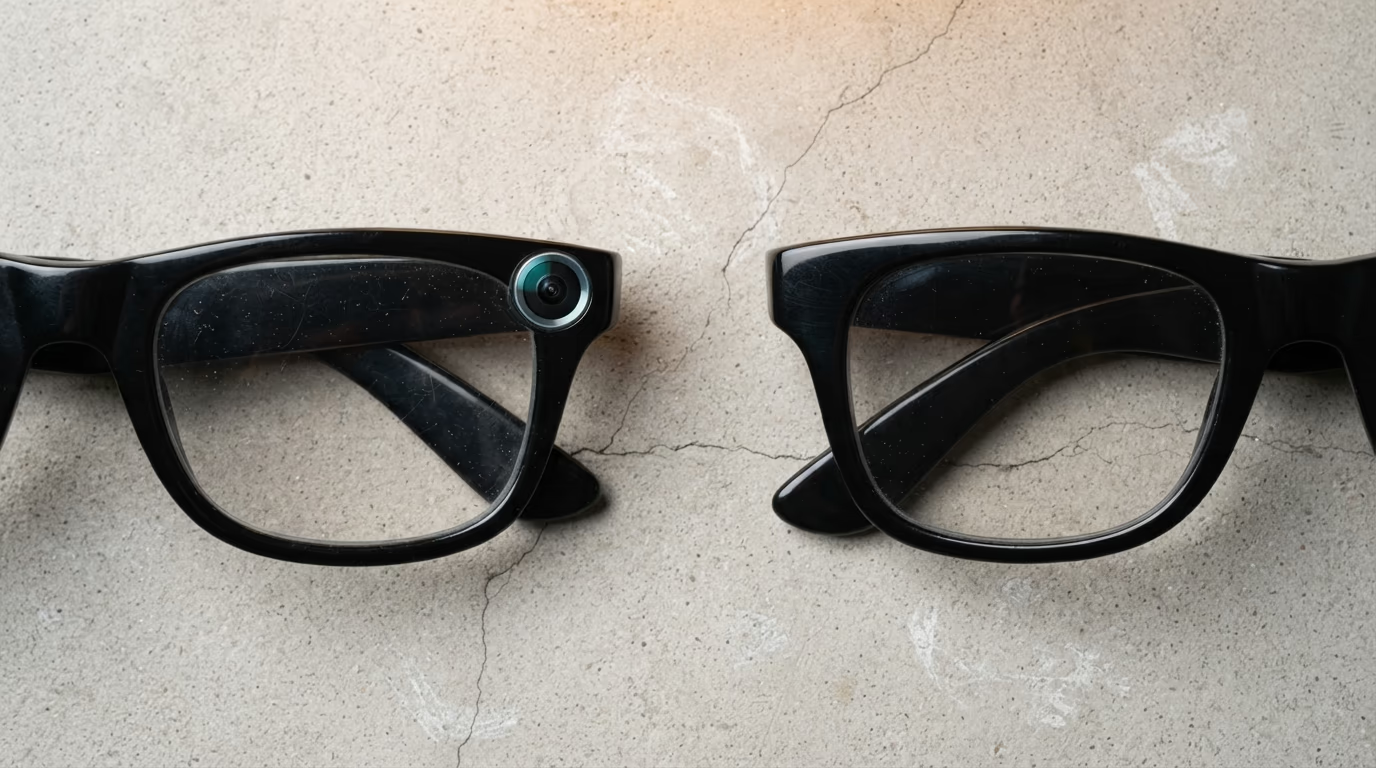
The missing lens buys you 2 things. It takes a useful chunk off the Gen 3 price, and it removes the conversation owners have been having with strangers since these glasses first appeared, the one about whether the person across the table is recording them. Meta describes this pair as its slimmest AI glasses yet, and the reason is simply that a camera module and the cable that feeds it are no longer inside the frame.
Before you dismiss it, do one honest check. Open your phone, scroll back through a month of your camera roll, and count how many of those pictures you took with glasses rather than with the phone in your hand. For a lot of owners the answer is close to none, because the phone is already in your hand and its pictures are better anyway. If that describes you, the camera on the more expensive pair is a feature you are renting rather than using.
There is a real cost to the cheaper pair, and it goes beyond photographs. The assistant on these glasses can answer questions about what it can see, so no camera means no asking it to read a menu, identify a building or make sense of a sign in front of you. Spoken translation through the speakers still works, and if accessibility is what brought you here, our ranking of the apps that translate sign language on a phone covers what a camera can already do for that job today.
Ray Ban Meta Gen 2 vs Gen 3, which pair should you buy?
Buy the Ray Ban Meta Gen 2 if you want a camera on your face for the lowest price, buy the Gen 3 only if the button and the extra hour are genuinely worth the difference to you, and buy the Ray Ban Meta Audio if you have honestly never used the camera you already own. The 5 checks below are the ones that separate the 3 pairs, and every figure in the table comes either from Meta or from a reporter who handled the hardware.

| Ray Ban Meta Gen 2 | Ray Ban Meta Gen 3 | Ray Ban Meta Audio | |
|---|---|---|---|
| Starting price | $379 | $449 | $349 |
| On sale | Now | 23 September 2026 | October 2026 |
| Camera | 3K video | 3K video, Dolby Atmos sound | None |
| Battery, Meta's figure | Up to 8 hours | Up to 9 hours | Up to 12 hours |
| Charging case | Adds 48 hours | Not published | Up to 48 hours with the case |
| Microphones | 5 | 6 | Not published |
| Action button | No | Yes, programmable | Not published |
| Weight | Not published | Not published | 43 grams |
| Frame and colour combinations | Not published | 27 | 23 |
On price, among the 3 pairs in the table, the Gen 2 wins and it is not close, because the difference between them covers an eye test and a set of prescription lenses at most opticians. On the camera the 2 camera pairs tie, since the sensor and the video are the same and only the sound recording differs. On battery the Gen 3 wins by an hour on paper, and the camera free pair wins outright, which tells you how much of the battery a camera quietly eats.
On hearing you, the Gen 3 wins on the only evidence available, which is Meta's own claim that its microphone array removes most of the background noise around you. Nobody outside Meta has measured that yet, and it is the claim most worth being sceptical about. On waking the thing up, the Gen 3 wins alone, because a button you can press without speaking is the one genuinely new idea in this year's hardware.
So the verdict splits by who you are rather than by which pair is better made. Somebody buying their first pair should take the Gen 2 while stock lasts and spend the saving on prescription lenses they will actually notice. Somebody replacing a battered first generation pair and wearing glasses all day should take the newer pair, because the button and the microphones are exactly the annoyances that wear a person down over a year of ownership. Somebody who has been curious but put off by the camera finally has an answer, and that camera free pair is the most interesting thing Meta announced this week.
One more pair deserves a mention here, because it undercuts everything above. Meta also announced a cheaper model under its own name rather than the Ray Ban name, the Adventurer, which Engadget reported at $249 with the same 3K video and the same assistant built in, reaching shelves late in October. If the price is what has kept you out of this category so far, read about that pair before you order either of these.
There is a fourth answer that nobody selling these will give you, which is to buy none of them and wait. Meta showed a separate pair of virtual reality glasses due in the spring of next year, its Muse agent has not reached any of this hardware yet, and the price of the current camera pair is the sort of thing that moves once a newer one has been on shelves for a season. If you are merely curious rather than itching to buy, waiting costs you nothing at all.
What we do not know yet about the Gen 3
Nobody has independently tested the Ray Ban Meta Gen 3 battery, microphones or camera, because it has been on sale for 1 day and every account published so far comes from a short session at Meta's own event. Everything in the paragraphs below is the maker's claim until somebody outside the building checks it.

The noise figure is the clearest example of that gap. Meta says the microphone array cuts more than 90 percent of background noise, and it has not published how that was measured, in what room, against which sound, or compared with which earlier pair. A claim like that can mean a great deal or almost nothing depending on the test sitting behind it, and that test hasn't been shown to anyone.
Another 3 gaps are worth knowing before you order. Meta has not published a weight for the Gen 3 at all, so the line about it being slimmer rests on the impressions of reporters who wore it for a few minutes. Meta has not said whether the Gen 2 price will fall now that a newer pair exists, which matters a lot if you were planning to wait for a discount. Accounts of the camera free launch also differ, with Engadget reporting that preorders opened on the day of the keynote and the pair ships on 13 October, while TechCrunch reported that preorders themselves open on that date, so treat the exact timing as unsettled until Meta's own store shows it.
The assistant is the biggest unknown of all. Meta says Muse is coming to the glasses in the next few months without naming a date, a country list, or a price beyond a free tier with an allowance and transaction fees at some later point. Every claim about what these glasses will do for you next year rests on software that is not on them yet, which is a good reason to buy them for what they already do today.
What to check before you order
Check the prescription cost first, because it is the line that moves the real price of any of these 3 pairs. Meta and Ray Ban both sell prescription lenses for the frames, and a British optician reviewing the Gen 2 listed the light adapting lens version well above the standard frame price, so the lens you pick can matter more to your bill than the generation you pick. Get your own quote from an optician before you decide which pair you can afford.
Then check which country you are buying in, because the rollout is never even. Meta brought the Gen 2 to Switzerland and the Netherlands at launch while Mexico and India waited until later in the season, and there is no reason to expect the Gen 3 to arrive everywhere at once. Read your own store page rather than the American price, and read the return window while you are there, because a pair of glasses either suits your face or it doesn't.
Finally, decide what you want the assistant for, since that is the thing you are really buying. If you would rather it lived on your phone than on your face, we compared the 2 biggest options in Siri against Gemini and ranked what each one is allowed to touch in the best AI app for an iPhone. If the assistant you actually want already lives on your phone, a cheaper pair of glasses will carry it to your ears just as well.
Questions people ask
Ray Ban Meta Gen 2 vs Gen 3, is the newer pair worth $70 more?
It is worth the difference only if you wear the glasses for most of the day. The Ray Ban Meta Gen 3 adds 1 hour of rated battery, a sixth microphone and a programmable button on the frame over what the Gen 2 offers. The camera, the speakers and the charging case are the same on both, so an occasional user is paying for conveniences rather than for better photographs.
Ray Ban Meta Gen 2 vs Gen 3, which one has the better camera?
Neither, because both pairs record the same 3K video from the same camera. Meta describes 3K Ultra HD video capture on the Gen 2 model, and reporting from the Gen 3 launch describes the same camera capabilities. The Gen 3 adds Dolby Atmos sound on video, which changes how a clip sounds rather than how it looks.
How much do the Ray Ban Meta Gen 2 and Gen 3 cost?
The Ray Ban Meta Gen 3 starts at $449 and the Ray Ban Meta Gen 2 starts at $379, which is the gap you are deciding about. Both prices are for the standard lens, so prescription lenses cost extra and can add more than the gap between the 2 generations. Meta also sells cheaper AI glasses under its own name rather than the Ray Ban name.
How long does the Ray Ban Meta Gen 3 battery last?
Meta rates the Ray Ban Meta Gen 3 at up to 9 hours of typical use, 1 hour more than the Gen 2 rating. Nobody has run an independent test yet. An Engadget writer reported getting a little more than 5 hours from a Gen 2 with audio playing without a break, so continuous listening drains either pair far faster than the headline figure suggests.
Can you still buy the Ray Ban Meta Gen 2?
Yes, the Ray Ban Meta Gen 2 is still on sale at its launch price and Meta has not announced a cut or a discontinuation. That is what makes this comparison worth running at all, because most buyers are choosing between 2 pairs sold at the same time rather than between an old pair and its replacement.
What is the Ray Ban Meta Audio and why is it cheaper?
The Ray Ban Meta Audio is Meta's first pair of AI glasses with no camera, arriving in October. Removing the camera brings the price below both Ray Ban camera pairs, makes it the lightest frame Meta has built and gives it the longest battery life of the 3 compared here. You lose photographs, video and any question that needs the assistant to see what you are looking at.
Will Meta's Muse agent work on these glasses?
Meta says Muse is coming to its smart glasses in the next few months, triggered by voice, with examples that include guiding a workout, logging a meal and booking an appointment. Meta has not published a date, a country list or a price beyond a free tier with an allowance and transaction fees later. None of it has shipped on the glasses yet.