ToolsSeptember 15, 202613 min read
Best AI app for iPhone in 2026, ranked by what it can touch
Apple shipped Siri AI this week. Here is how the main assistants rank once you read what each one is allowed to take from your phone, and what each one really costs.
The best AI app for iPhone is ChatGPT for everyday work, Claude if you want the least taken from your phone, and Perplexity when you need an answer with sources you can click. All 3 now sit beside Siri AI, the rebuilt assistant Apple switched on for supported iPhones with iOS 27 on 14 September 2026 at no extra charge, which moves the real question from which assistant to install to which one you let reach your photos, your location and your contacts.
This shortlist is ranked on 2 things anybody can check without trusting a reviewer. The first is the App Privacy label each developer filed on the United States App Store, read listing by listing rather than taken from a press page. The second is what each app is able to do once it is sitting on your home screen, which on an iPhone is a far shorter list than the advertising suggests.
What is the best AI app for iPhone in 2026?
For most people the best AI app for iPhone is ChatGPT kept alongside Siri AI rather than instead of it. ChatGPT is also the only outside assistant Apple has wired into Siri itself, which no rival on this list currently matches.
Ranking these by writing quality would waste everyone's time, because they all write well enough for daily use and the gap between them closes every few months. The differences that still matter after a week are duller and more useful. What does the app want from your phone before it helps you, what can it reach while you are not watching, and when you ask it to do something rather than explain something, can it actually go and do it?
Siri AI takes first place for a reason that has nothing to do with how clever it sounds. It costs nothing, it's already on the phone, and it's the only assistant on an iPhone allowed to open your apps and finish a task inside them. Everything else on this list is a very good text box that hands the work back to you.
ChatGPT is second because it does the most per dollar and because Apple picked it as the assistant Siri can hand a question to. Claude comes third and it is the choice for anyone who reads a privacy label before tapping install, since Anthropic filed the shortest one of the paid apps. Perplexity is fourth for answering with links you can open and check yourself. Gemini lands fifth despite having the cheapest paid tier here, because the connected apps that make it strong on Android are cut back on an iPhone. Grok and Microsoft Copilot close the list, one for people already living inside X and one for people who want an office suite in the same payment.
| App | Cheapest paid tier | What the filed label links to you | What it can do on the phone |
|---|---|---|---|
| Siri AI | Included with iOS 27 | No App Store label, it is the system | Opens your apps and acts inside them |
| ChatGPT | $8.00 Go, $19.99 Plus | Includes a third party advertising purpose | Answers, and Siri can pass it a question |
| Claude | $20.00 Pro | No advertising purpose, no precise location | Answers only |
| Perplexity | $20.00 Pro | No contact details linked to you at all | Answers with sources you can open |
| Gemini | $4.99 Google AI Plus | Precise location, contacts, browsing history | Answers, connected apps reduced on iOS |
| Grok | $30.00 SuperGrok | Email, name, identifiers, diagnostics | Answers only |
| Microsoft Copilot | $9.99 with Microsoft 365 Personal | Includes a third party advertising purpose | Answers, plus your office documents |
What changed on your iPhone when Siri AI shipped?
Apple began rolling out iOS 27 on 14 September, and the headline change is Siri AI, which Apple describes as an assistant with personal context understanding, broad world knowledge, onscreen awareness and systemwide app actions. It arrives with the operating system rather than as a purchase, so nobody is charged for it today.
In plain language, Siri can now find a photo you took years ago from a vague description, dig out an email you can't name, answer a question about whatever is on your screen at that moment, and carry out an instruction inside an app instead of opening the app and leaving you to it. Apple names Messages, Music and Reminders among the places it can act, with examples like taking a selfie, creating a reminder, sending an email and adding a photo to an album.
Not every iPhone gets it, and this trips up more people than any other detail. Apple lists Siri AI as working on the iPhone 15 Pro and Pro Max, and on every iPhone it has released since, including the iPhone Air and the iPhone Duo. On an older handset the update can still arrive and the new assistant simply never appears. Apple also says Siri AI is rolling out in English.
Anyone in the European Union is in a different position entirely. Apple's wording is that Siri AI will not be available initially in the EU in iOS, iPadOS, and watchOS, and in June it named the Digital Markets Act as the reason and said there is currently no timeline for availability in the EU on iOS and iPadOS. EU residents do get Siri AI on a Mac and on Apple Vision Pro, which is little comfort when the phone is the device in your pocket. For them the paid apps below are not a supplement to the assistant, they are the assistant.
There is one more detail Apple publishes and almost nobody repeats. Its support page says that certain Apple Intelligence features relying on its server models are subject to daily usage limits, naming Siri AI among them, and on the same page it says expanded access to such features will be available for a fee in the future. Apple hasn't published what the daily ceiling is, when that fee arrives, or what it will cost. So the assistant everybody is about to switch to is free today, metered today, and priced at some point Apple has not named.
If you want the direct comparison between the 2 assistants most iPhone owners will end up choosing between, we put them side by side in Siri versus Gemini, what each one keeps and what it costs.
What is each AI app allowed to take from your phone?
Every app on the App Store publishes a privacy label listing what its developer says it collects and links to your identity, and the assistant labels read very differently from one another. Apple prints a line above each one saying this information has not been verified by Apple, so these are declarations by the developer rather than audits, and that caveat travels with every sentence below.
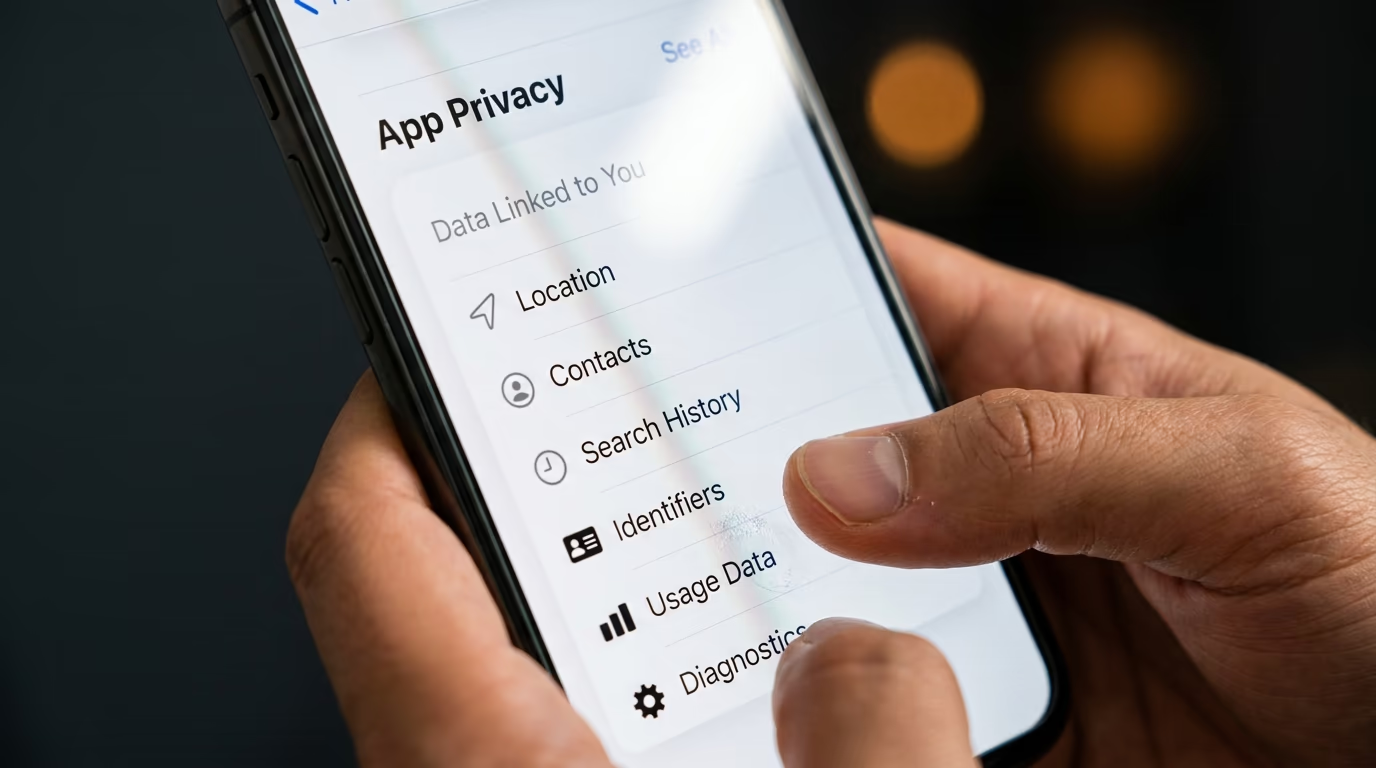
The label OpenAI filed for ChatGPT is one of only 2 here that lists a purpose called Third Party Advertising, covering product interaction and advertising data tied to your identity. The same filing lists health and fitness data under both analytics and product personalization, and under app functionality it lists audio data, your name, your email address, your phone number, coarse location and your search history. Microsoft's Copilot label is the other one carrying an advertising purpose, and it adds your contacts under app functionality.
Google's label for Gemini reaches furthest of the group. It lists precise location, your contacts, your browsing history and your search history under analytics, then precise location again together with your physical address under product personalization. No other app here declares precise location, contacts and browsing history in the same filing, and that is the cost of the deep Google integration people install it for.
Anthropic's label for Claude is the shortest of the paid apps. There is no advertising purpose beyond Anthropic's own marketing, no precise location and no contacts anywhere in the filing. What it does list is coarse location, your name, email address and phone number, photos or videos you share with it, and the identifiers, crash data and performance data that almost every app on the store collects.
Perplexity is unusual in listing no contact details linked to your identity at all, though precise location does appear under product personalization. The lightest label of the whole group belongs to Grok, which declares an email address, a name, identifiers and diagnostics and stops there, with no location and no user content.
None of this tells you what a company does with the data once it has it, and none of it has been checked by Apple either. It's the developer's own written answer to a question you have no other way of asking, and the answers differ enough to change which icon you put on your home screen. The shortest label in this group and the widest one are asking you for very different things.
The same question decides how far you can trust a consumer agent with your accounts, which is why we read Meta's connector list against its App Store privacy label in what Meta Muse costs and what it needs from you first.
Which AI app can actually do something on your iPhone?
Only Siri AI can act inside your apps on an iPhone. ChatGPT, Claude, Gemini, Perplexity, Grok and Copilot can read what you hand them and write you an answer, but none of them can open Messages and send the text for you, and that gap is a design decision in iOS rather than a feature any of them forgot to build.
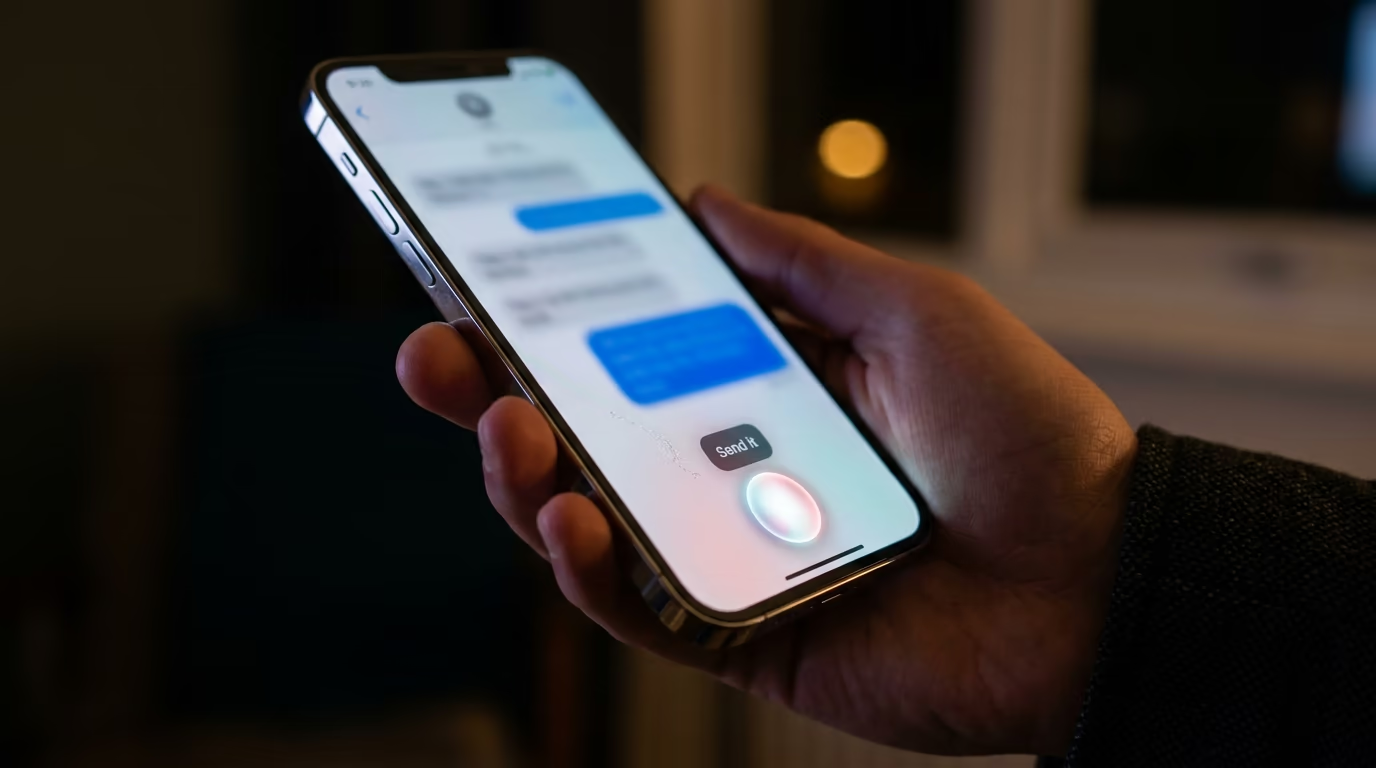
Apple's developer documentation describes the route in. An app publishes its actions through a framework called App Intents, and Siri can then reach that app's content, run those actions and understand what is on the screen. Any developer can walk through that door to make their own app reachable by Siri. What none of them can do is send a rival assistant through it, because the assistant seat belongs to the system.
Google is candid about this on its own help page, which is worth reading if Gemini is already your habit. Gemini connects to Gmail, Google Calendar, YouTube Music, Spotify, Google Home, WhatsApp, Phone and Messages. The same page then says that when Keep Activity is switched off the connected apps stop working on iOS altogether, and that Phone, Messages, WhatsApp and the device assistance app remain available only on Android. The Gemini that runs a phone is the Android one, and a subscription on an iPhone does not buy that version.
ChatGPT is the single exception, and it is Apple's choice rather than OpenAI's. Apple's support page lists a ChatGPT extension for iPhone, iPad, Mac and Apple Vision Pro, and notes that it works only in regions where the ChatGPT app and service is available. That makes ChatGPT the one outside assistant Siri can pass a question to when its own answer runs out, which is a real advantage for as long as Apple keeps that arrangement in place.
On an iPhone tonight the work splits cleanly in 2. Siri AI handles anything that touches the phone itself, which means the reminder, the photo, the message and the question about the screen in front of you. The paid app handles the thinking you would otherwise do across a dozen browser tabs, and it gives that thinking back to you as text you then act on. Anyone promising an app that runs your iPhone for you is describing an Android phone or a product that doesn't exist yet.
If the decision comes down to which single subscription to keep, we compared the 2 obvious candidates in Claude Pro against ChatGPT Plus, side by side.
What does each AI app cost on an iPhone in 2026?
Every figure in the table below was read off the In App Purchases list on the United States App Store on 15 September, which is what Apple actually charges rather than what a marketing page advertises. Siri AI costs nothing today, Google sells the cheapest paid tier of the group, and Grok sells the most expensive one.
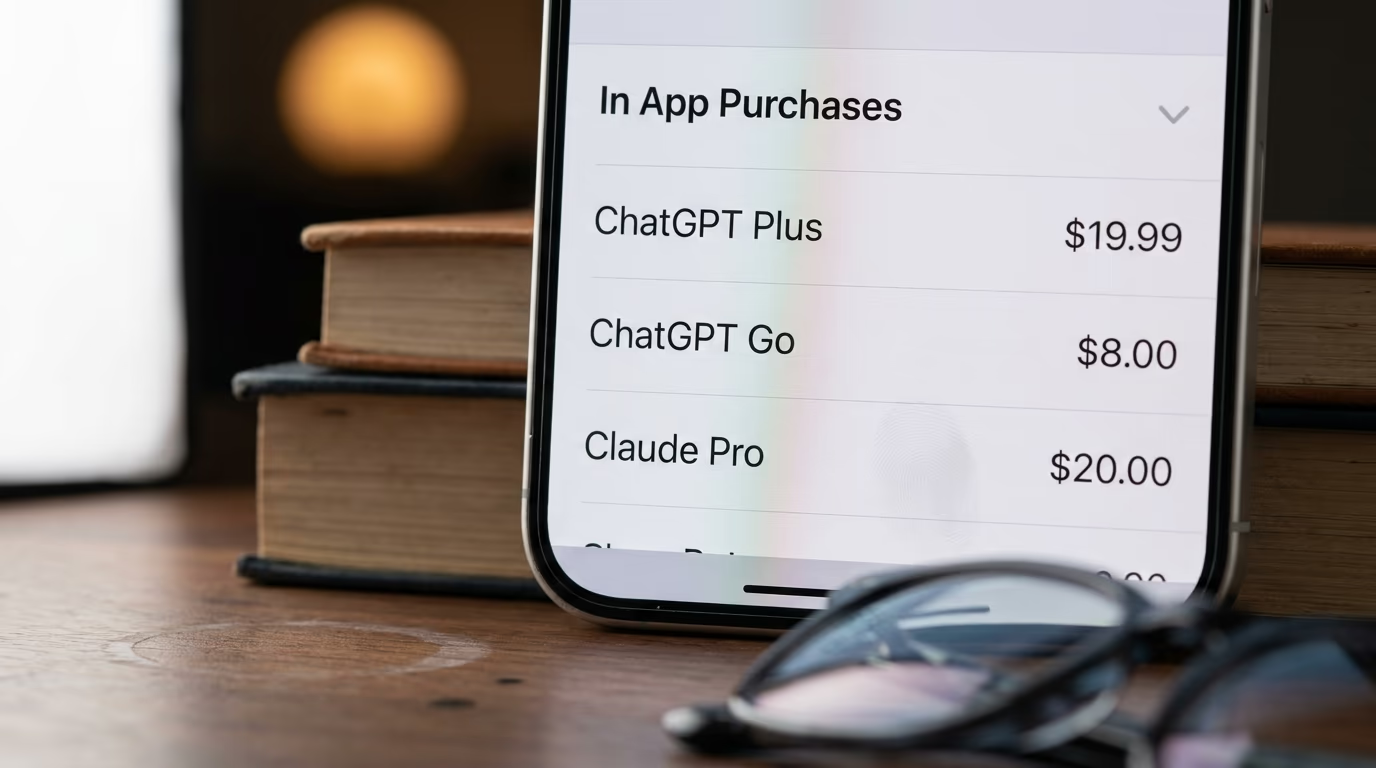
| App | App Store price | Entry paid tier | Higher tiers | What comes with the subscription |
|---|---|---|---|---|
| Siri AI | Included with iOS 27 | Nothing to buy today | None announced | Daily limits, and Apple says a fee is coming |
| ChatGPT | Free to download | Go, $8.00 | Plus $19.99, Pro from $100.00 | The assistant on its own |
| Claude | Free to download | Pro, $20.00 | Pro annual $214.99, Max $124.99 and $249.99 | The assistant on its own |
| Gemini | Free to download | Google AI Plus, $4.99 | Google AI Pro, $19.99 | 400 GB of Google storage, 5 TB on Pro |
| Perplexity | Free to download | Pro, $20.00 | Credit packs at $5.00 | Answers carrying their sources |
| Grok | Free to download | SuperGrok, $30.00 | Credit packs at $5.00 | The assistant on its own |
| Microsoft Copilot | Free to download | Microsoft 365 Basic, $1.99 | Personal $9.99, Family $12.99, Premium $19.99 | The Microsoft 365 apps and the assistant |
The sensible way to read those numbers is by what comes attached rather than by the headline figure. Google is selling you storage with an assistant included, Microsoft is selling you an office suite with an assistant included, and OpenAI, Anthropic and Perplexity are selling you the assistant alone at roughly the same monthly price as each other. If you already pay Google to keep your photos or Microsoft to keep your documents, an assistant has quietly arrived in a bill you were paying anyway.
2 notes keep the comparison honest. Google prices Gemini through its storage plans, so the cheapest line in that table buys you an assistant and a large amount of cloud storage together, and comparing it against a pure assistant subscription flatters it. The heaviest tiers from OpenAI and Anthropic are professional tooling for people running an assistant all day, and nobody reading this article needs to look at them. Every app here is free to download and sells its upgrade from inside, so you can spend a week with any of them before paying.
Which AI app should you install tonight?
If you install only one AI app on your iPhone tonight, make it ChatGPT and turn on Siri AI in Settings while you are there, because that pairing covers general questions, writing and the jobs that need to touch the phone itself. The choices below are better when you already know the job you want done.
Pick Perplexity if most of your questions are really research questions. It answers with sources you can open, which matters when you are checking a medicine dose, a warranty clause or a claim somebody made at dinner, and its filing is the only one here that links no contact details to your identity at all.
Pick Claude if you read privacy labels and you want the paid app that asks for the least. No advertising purpose, no precise location and no contacts, at much the same monthly price the others charge for a similar assistant. Grok's label is lighter still, so anyone already inside X can reasonably use it, although it carries the highest price in this group for an assistant that does nothing to your phone.
Pick Gemini if your life already runs through Gmail, Google Calendar and Google Photos, and if the storage bundled into its cheapest tier suits you better than paying for an assistant on its own. Go in knowing that its filed label reaches further than any other here, and that the connected apps which make it impressive on an Android phone are reduced on yours.
Pick Microsoft Copilot if you already pay for Microsoft 365 or you were about to. The Personal tier gives you the office apps and the assistant together, which undercuts every dedicated assistant on this list on raw value. The trade is a filed label that includes an advertising purpose and lists your contacts.
If you live in the European Union, read this list differently. Siri AI is not on your iPhone, Apple has given no date for it, and the free layer the rest of this article leans on does not exist for you. That makes the paid app your only assistant rather than your second one, and it makes Claude or Perplexity the reasonable default, since neither depends on a system integration you can't get.
Whichever way you go, spend the free week first. Every app here is free to download and good enough on its free tier to tell you whether you reach for it on a Tuesday afternoon, and the answer is usually obvious within 3 days. If you're unsure, set a reminder to cancel before the first charge lands. The same fight is now playing out in the browser, which we ranked in the best AI browser and the one that shut down.
What we do not know yet about AI apps on iPhone
4 things in this picture are genuinely unsettled today, and almost every page ranking these apps is written as though they were settled. Here they are, with what is actually confirmed about each one.
Apple hasn't said how hard the daily limits on Siri AI bite. Its support page confirms that limits exist on the features using its server models and confirms that expanded access will cost a fee in the future, then stops. Nobody outside Apple can tell you how many requests a heavy user gets before the assistant slows down, or what the eventual price will be, and that matters because the whole case for Siri AI over a paid app rests on it being free.
Nobody knows when Siri AI reaches an iPhone in the European Union. Apple named the Digital Markets Act in June and said there is currently no timeline, and the September release repeated the exclusion without adding a date. Anyone in those countries is buying an assistant rather than choosing between a free one and a paid one.
Whether you will be able to put Claude or Gemini where ChatGPT sits inside Siri is unresolved. MacRumors reported on 14 September that a code researcher found private frameworks in the shipped release designed to let another company's model appear as a Siri extension, and the same report says Apple has not opened that entitlement to other companies and that it isn't visible to users. Treat it as something found in code and not as a feature you can switch on.
There is no independent measurement of Siri AI against these apps, because it reached the public this week. Every claim about what it can do, including the ones quoted in this article, comes from Apple's own pages. The first honest comparisons will appear once people have lived with it for a fortnight, and this page will be worth rereading then.
For tonight the useful move is a small one. Open Settings and see whether Siri AI appears on your iPhone at all, install the free version of whichever app matched your job above, and read its privacy label on the App Store page before you sign in, because that screen takes less time to read than any review and tells you more.
Questions people ask
What is the best AI app for iPhone in 2026?
For general use the best AI app for iPhone is ChatGPT, used alongside Siri AI rather than instead of it, and its Plus tier is the one most people end up paying for. Claude is the better pick if you want the assistant that asks for the least data, and Perplexity is better when you want answers with sources you can open and check.
Is the best free AI app for iPhone now Siri AI?
Siri AI is included with iOS 27 at no charge on supported iPhones, so it is the cheapest capable assistant on the phone, and it is the only one allowed to act inside your apps. Apple's support page does say that features relying on its server models carry daily usage limits and that expanded access will be available for a fee in the future, so free today doesn't mean free forever.
Which AI app collects the least data on iPhone?
By the labels their developers filed on the App Store, Grok declares the least, listing an email address, a name, identifiers and diagnostics and nothing more. Among the full assistants, Claude declares no advertising purpose, no precise location and no contacts. Apple states that it has not verified any of these labels, so they are developer declarations rather than audits.
Can ChatGPT or Gemini control my iPhone the way Siri can?
No. On an iPhone only Siri AI can open your apps and complete an action inside them, using a framework called App Intents that developers use to expose their app's actions to the system. Google's own help page confirms that Gemini's connections to Phone, Messages and WhatsApp remain available only on Android.
Does Siri AI work in the European Union?
It doesn't work on an iPhone there. Apple says Siri AI will not be available initially in the EU in iOS, iPadOS, and watchOS, and in June it named the Digital Markets Act as the reason and said there is currently no timeline. EU users do get Siri AI on a Mac and on Apple Vision Pro, so the phone is the device left out.
Which iPhones support Siri AI?
Apple lists the iPhone 15 Pro and Pro Max, and every iPhone it has released since, including the iPhone Air and the iPhone Duo. On an older handset the update can still install and Siri AI will not appear, so check the model before planning around it.
Is the best AI app for iPhone worth paying for now that Siri AI is free?
For most people yes, because they do different jobs. Siri AI acts on the phone, setting reminders, finding photos and sending messages, while a paid app such as ChatGPT or Claude does the longer thinking and writing. If money is tight, install both and use the free versions for a week before subscribing to either one.