ToolsAugust 6, 202613 min read
Best AI code review tools in 2026, priced per pull request
10 tools compared on price, free tiers and what 20 pull requests a month actually cost, with every number read off the vendor's own pricing page.
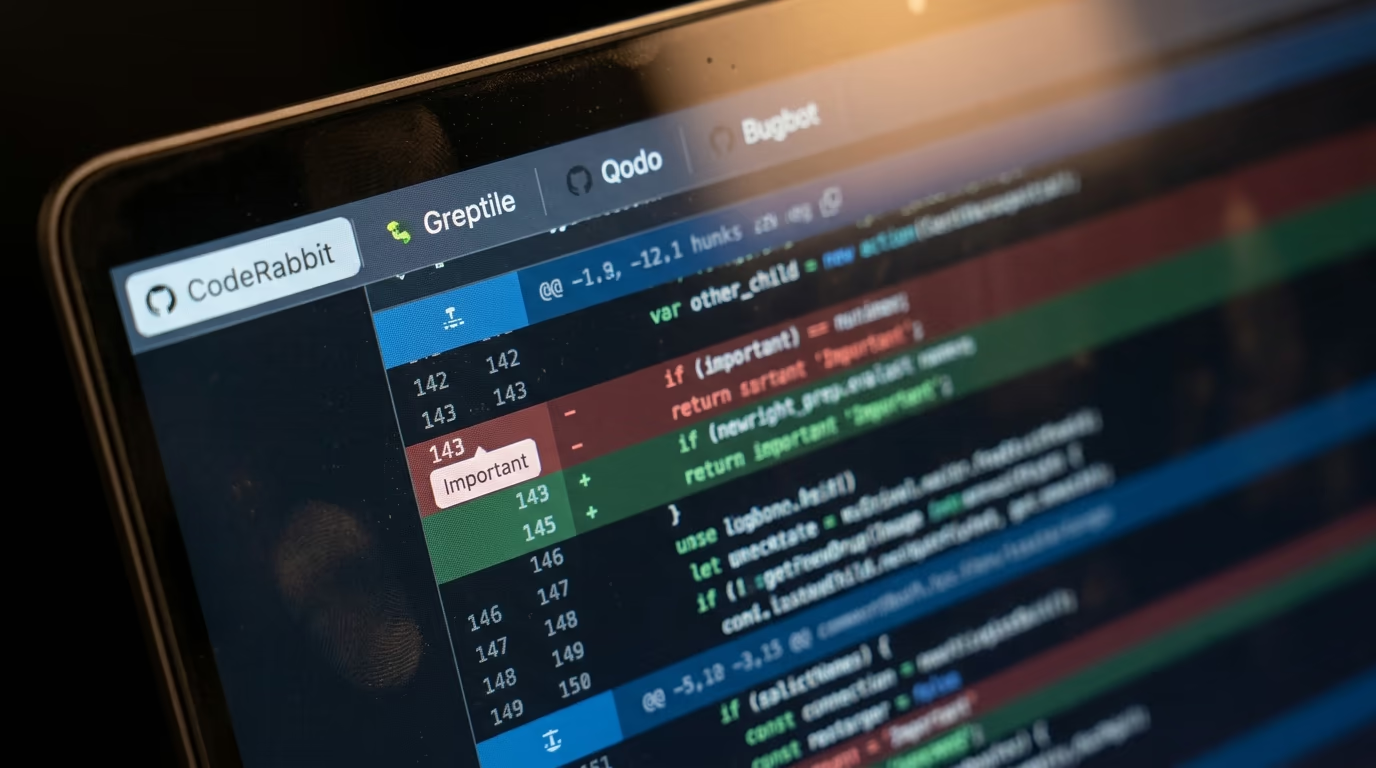
The best AI code review tools in 2026 are CodeRabbit when you want the sharpest reading of a pull request and can pay for a seat, Greptile when you want a free tier that survives the trial, and PR Agent when you would rather self host and pay only for the tokens you burn. CodeRabbit Pro costs $24 a month per user on annual billing, Greptile's Starter plan hands you 50 reviews a month at no cost, and PR Agent is MIT licensed on GitHub with 12.7k stars.
Prices in this market move faster than the reviews do. Cursor retired the $40 Bugbot seat and moved to usage billing for renewals after 8 June 2026, and Anthropic bills its managed Code Review by the token at an average of $15 to $25 per review. Every figure below was read off the vendor's own pricing page for this piece rather than copied from an older roundup, and where a vendor publishes only an annual rate, the annual rate is what you see here.
This comparison is written for a solo developer or a team of 2 to 5 people merging somewhere around 20 pull requests a month, because that is the volume where the billing models stop looking equivalent. At 20 reviews, the cheapest option on this page costs nothing and the most expensive one costs $500, and both of them are legitimate products doing real work.
Which AI code review tools are worth paying for in 2026?
4 AI code review tools earn a paid seat for a small team in 2026, and they are CodeRabbit at $24 a month per user, Sourcery at $12 per seat a month, Greptile at $30 per seat a month, and Qodo at $30 a month for a pooled bundle of credits. All 4 install as a GitHub app, comment inline on the diff, and re review when you push a fix, so the difference between them is depth, noise and the shape of the bill rather than the basic mechanic.

CodeRabbit sits at the top of most shortlists for a plain reason. Its Pro plan is $24 a month per user billed annually, it puts no ceiling on how many pull requests or repositories you connect, and it allows 5 reviews per developer per hour under a fair usage policy. Pro Plus at $48 a month per user raises that to 10 reviews an hour and adds analysis across up to 10 repositories at once. Public repositories are reviewed free forever, which is the single most useful sentence on their pricing page if you maintain anything open source.
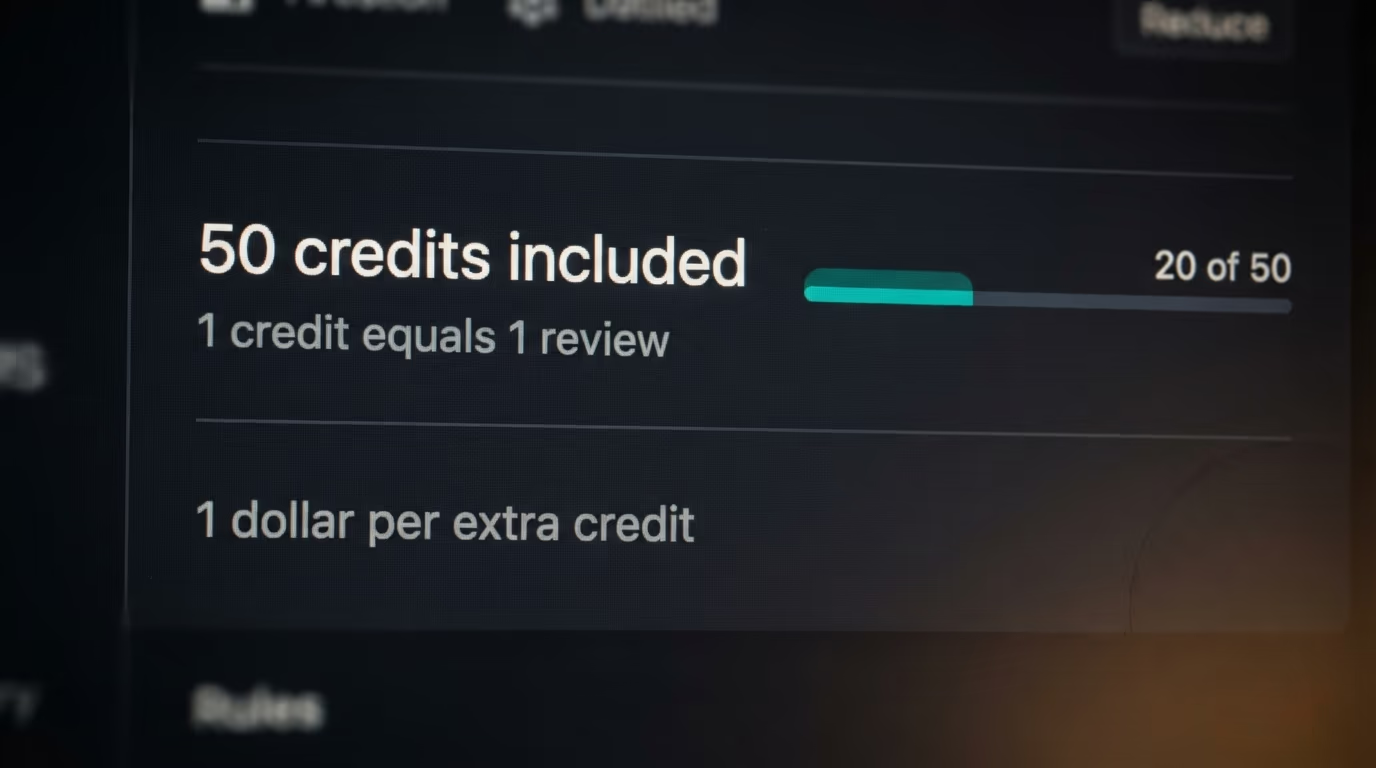
Greptile is the one to reach for when you do not want a subscription at all. Its Starter plan is free and includes 50 credits a month, where 1 credit buys 1 standard review, so a solo developer merging 20 pull requests a month never touches a payment page. The Pro plan is $30 per seat a month, ships 50 credits per seat, and charges $1 for each extra credit after that, which makes the cost of a busy month easy to predict instead of a surprise.
Sourcery is the cheapest paid seat here at $12 per seat a month, with a 20 percent discount if you pay yearly, and it is free on open source repositories. Qodo takes a different route with a Pro Team plan at $30 a month, no annual commitment, and a pool of credits shared across up to 30 users. Qodo's own page prices a 2,500 credit bundle at roughly 18 reviews a month, with more credits available at $0.012 each, so the arithmetic is yours to do before you commit.
Graphite and DeepSource both aim at slightly larger teams. Graphite's Hobby tier is free with what the page calls limited AI reviews, Starter is $20 per user a month billed annually, and unlimited AI reviews only arrive on the Team plan at $40 per user a month. DeepSource charges $24 per user a month billed yearly, throws in a $100 annual credit per user for its AI Review, and says on the record that it is free for open source projects and always will be.
| Tool | Free option | Paid price | 20 reviews a month |
|---|---|---|---|
| CodeRabbit | Free forever on public repos, plus a free CLI tier | $24 per user a month, billed yearly | $24 |
| Greptile | Starter, 50 credits a month | $30 per seat a month | $0 on Starter |
| Sourcery | Free on open source repos | $12 per seat a month | $12 |
| Qodo | 14 day trial only | $30 a month for 2,500 credits | about $33 with overage |
| Graphite | Hobby, limited AI reviews | $20 or $40 per user a month, yearly | $40 on Team |
| DeepSource | Free for open source, 1,000 PRs a month | $24 per user a month, billed yearly | $24 plus AI credits |
| GitHub Copilot | Not included on Copilot Free | $10 a month on Pro | $10 plus AI credits |
| Cursor Bugbot | None, usage billing only | About $1.00 to $1.50 a run | $20 to $30 |
| Claude Code Review | /code-review in your terminal on any plan | $15 to $25 a review, Team and Enterprise | $300 to $500 |
| PR Agent | MIT licensed, self hosted | Your own model bill | Tokens only |
How much does an AI code review cost per pull request?
An AI code review costs between $0 and $25 per pull request in 2026, and the spread comes from the billing model rather than from quality. A flat seat like CodeRabbit's $24 a month divides down to $1.20 a review at 20 pull requests, Cursor says a Bugbot run averages $1.00 to $1.50, and Anthropic prices a managed Code Review run at $15 to $25 because a fleet of agents reads your whole codebase rather than the diff alone.
There are 3 billing shapes on this page and they behave very differently once your team grows. A flat seat charges the same whether you merge 2 pull requests or 200, which rewards a busy repository and punishes a quiet one. A credit pool charges by the review and makes a quiet month cheap, but a refactor week that touches 40 files can empty the bundle before Thursday. Pure usage billing removes the floor entirely and removes the ceiling with it.
Run the numbers at 20 pull requests a month and the ranking almost inverts. Greptile Starter costs $0, Sourcery costs $12, Copilot Pro costs $10 with reviews drawn from its included credits, CodeRabbit costs $24, Qodo lands near $33 once you buy the extra credits, Graphite Team costs $40, Bugbot lands between $20 and $30, and Anthropic's managed Code Review lands between $300 and $500. The same 20 merges cost nothing on one tool and the price of a laptop on another.
That $300 to $500 figure is not a mistake and it is not a rip off either. Anthropic's documentation describes multiple agents analyzing the diff against the full codebase in parallel, then a verification step that checks each candidate finding against actual code behavior before anything is posted, with an average run time of 20 minutes. You are buying a different product, and the same logic applies to the token bills we broke down in the LLM API pricing comparison, where the cheap model and the careful model are rarely the same model.
Copilot code review bills a second currency that never shows up on the pricing page. GitHub's documentation says a review has 2 cost components, AI credits for the model interaction and GitHub Actions minutes for the context gathering and tool use, so a repository with a tight Actions budget pays twice without noticing the second bill.
Which AI code review tools are actually free?
3 AI code review tools are genuinely free rather than free for 14 days, and they are Greptile's Starter plan at 50 credits a month, CodeRabbit on any public repository, and PR Agent, which is MIT licensed and self hosted. Sourcery and DeepSource are also free on open source repositories, and DeepSource's open source plan covers unlimited public repositories with 1,000 pull requests reviewed each month.
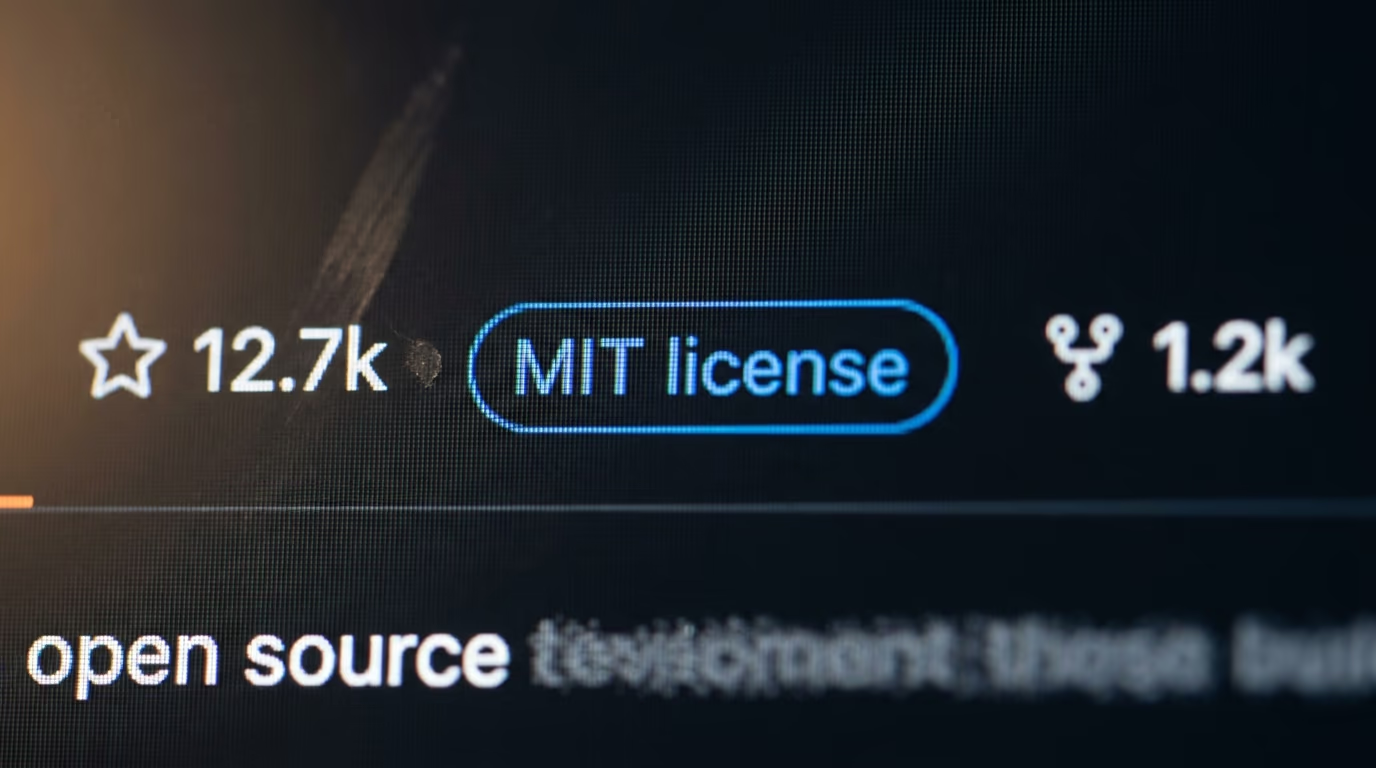
PR Agent is the one worth understanding properly, because it is the only option here that nobody can reprice on you. Qodo describes it as an open source review agent and a community maintained legacy project, it carries 12.7k stars on GitHub, and it runs as a GitHub Action, a command line tool, a Docker container or a webhook against GitHub, GitLab, Bitbucket, Azure DevOps and Gitea. Its commands are small and readable, with /describe writing the summary, /review posting findings, /improve suggesting changes and /ask answering questions about the diff.
Free here means free of subscription rather than free of cost, which is worth knowing before you commit to PR Agent. You bring credentials for OpenAI, Anthropic, Google or anything else reachable through LiteLLM, and your bill is whatever those tokens cost, which for a small repository is usually cents rather than dollars. If you already run models locally, the setups in our guide to the best local LLM for coding will drive it without any cloud bill at all.
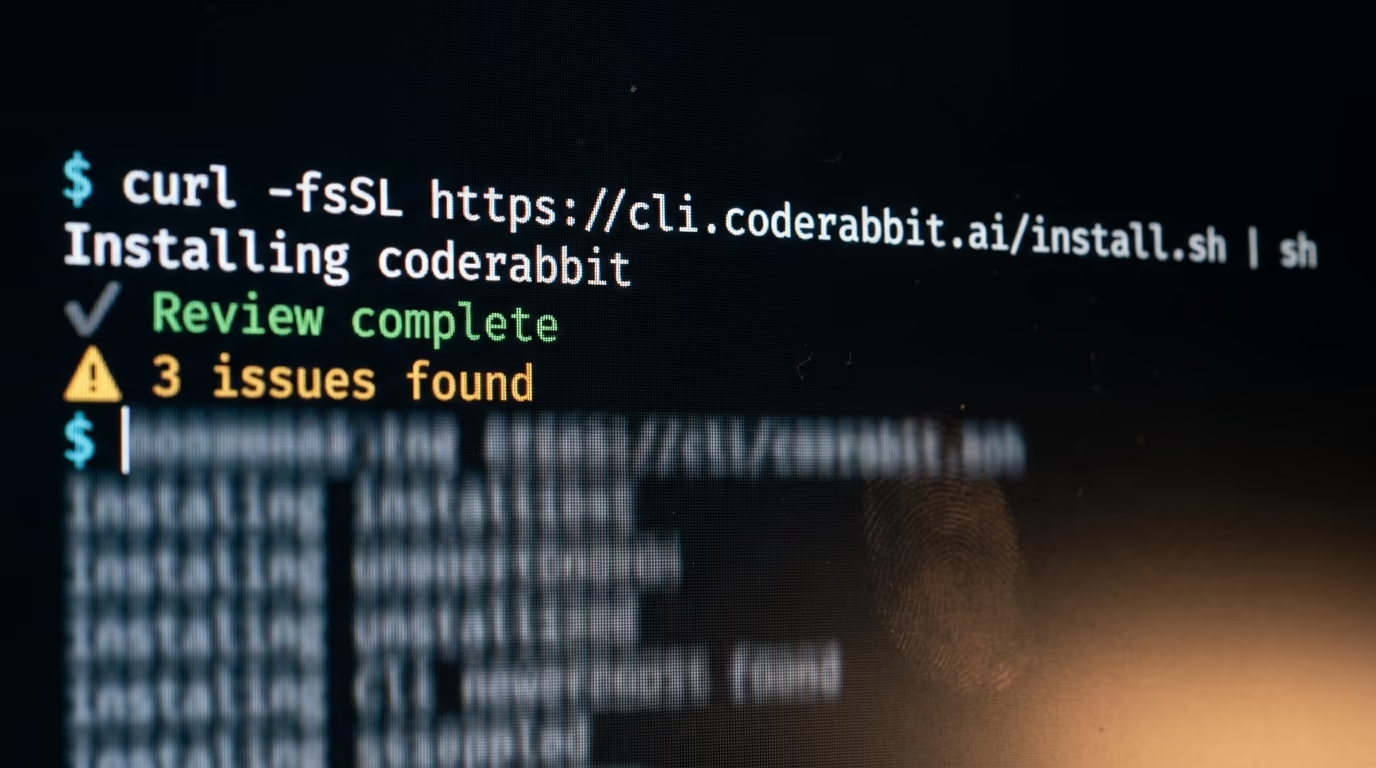
2 more free routes exist and neither one lives on a pricing page. CodeRabbit ships a command line tool that installs with one curl command and reviews staged, unstaged or committed changes before you ever open a pull request, and its documentation lists a free tier doing basic static analysis with limited daily usage. Anthropic's own review command works in a plain Claude Code session on any plan, reviews your branch against its upstream plus anything uncommitted, and posts inline comments on a pull request when you add the comment flag.
curl -fsSL https://cli.coderabbit.ai/install.sh | shThat one line installs the CodeRabbit command line tool on macOS and Linux, and Homebrew works too if you prefer it. After it finishes you run coderabbit in a repository with uncommitted changes and it prints its findings in the terminal, which is the cheapest way to see whether any of this is useful to you before a card is involved.
Is CodeRabbit worth $24 a month for a small team?
CodeRabbit is worth $24 a month per user for a team that merges more than 10 pull requests a month and has nobody spare to read them properly. The plan puts no cap on repositories or pull requests, allows 5 reviews per developer per hour, and includes a 14 day trial with no card, so the decision costs you an afternoon rather than a quarter.
The honest criticism of CodeRabbit is volume. In the only public head to head comparison of these products, LinearB reports that CodeRabbit caught the most total issues but generated heavy noise, while its own tool produced the best signal to noise ratio. LinearB sells a competing product and publishes no numbers in that post, only adjectives and a whitepaper download, so treat it as a vendor's opinion rather than a benchmark. It matches what teams say out loud, which is that the tool finds plenty and you learn to skim.
What justifies the seat for a small team is the second and third review rather than the first. CodeRabbit learns from the comments you dismiss, applies its fixes in one click, and re reviews on every push, so the loop closes without anybody remembering to ask. Pro Plus at $48 a month per user is worth looking at only if you need analysis across up to 10 repositories at once or custom checks that run before merge, and most teams of 2 to 5 people do not.
If the price is the obstacle rather than the value, Sourcery does the same job for $12 per seat a month and Greptile does a smaller version of it for nothing. If the noise is the obstacle, the fix is a review configuration file rather than a different vendor, and every serious tool here now reads one.
What if you already pay for Copilot, Cursor or Claude?
If you already pay for GitHub Copilot, Cursor or Claude, you may already own an AI code reviewer and not know it. Copilot code review needs a paid Copilot plan and the cheapest one is Pro at $10 a month, Cursor includes Bugbot on Pro and above with usage billing, and Anthropic's review command runs locally in Claude Code on any plan including the $20 Pro subscription.
The exclusion that trips people up is the free tier. GitHub's documentation states outright that users on the Copilot Free plan do not have a monthly allowance of AI credits for code review, because Copilot Free does not include the feature at all. Copilot Pro is $10 a month and comes with 1,500 AI credits, Pro Plus is $39 a month with 7,000, and Max is $100 a month with 20,000, where 1 AI credit is worth $0.01. Each review draws on that allowance and on your Actions minutes at the same time.
Cursor's change is the one most lists have not caught up with. Bugbot used to cost $40 per seat a month and now bills purely on usage, a switch that started at each customer's first renewal after 8 June 2026, and Cursor's own post puts the average run at $1.00 to $1.50 depending on the size and complexity of the pull request. You can also choose the effort level per review, which means a large refactor legitimately costs more than a typo fix.
Anthropic splits its offering in a way worth reading carefully before you budget for it. The managed Code Review service that posts on GitHub is a research preview limited to Team and Enterprise subscriptions, billed separately through usage credits at $15 to $25 a review, and Team seats start at $20 per seat a month on annual billing. On Pro and Max, you still get the same review command in the terminal, which reviews your branch, applies its findings with the fix flag, and posts them with the comment flag.
/code-review --commentThat is the whole command, typed inside a running Claude Code session in your repository. It reviews the commits your branch has ahead of its upstream plus anything still uncommitted, and the comment flag posts each finding as an inline comment on the matching pull request instead of printing it in your terminal. We put both agents through 5 practical checks in Claude Code vs Codex if you are choosing between them.
Do AI code reviewers actually catch real bugs?
AI code reviewers do catch real bugs, and the honest answer about how many is that nobody has published an independent measurement. The only head to head test in public is LinearB's, which covers 16 bug types from unused variables to Go channel deadlocks and interface nil semantics, names CodeRabbit, Qodo, GitHub Copilot and Graphite Diamond alongside its own tool, and reports the results as adjectives rather than as precision and recall figures.
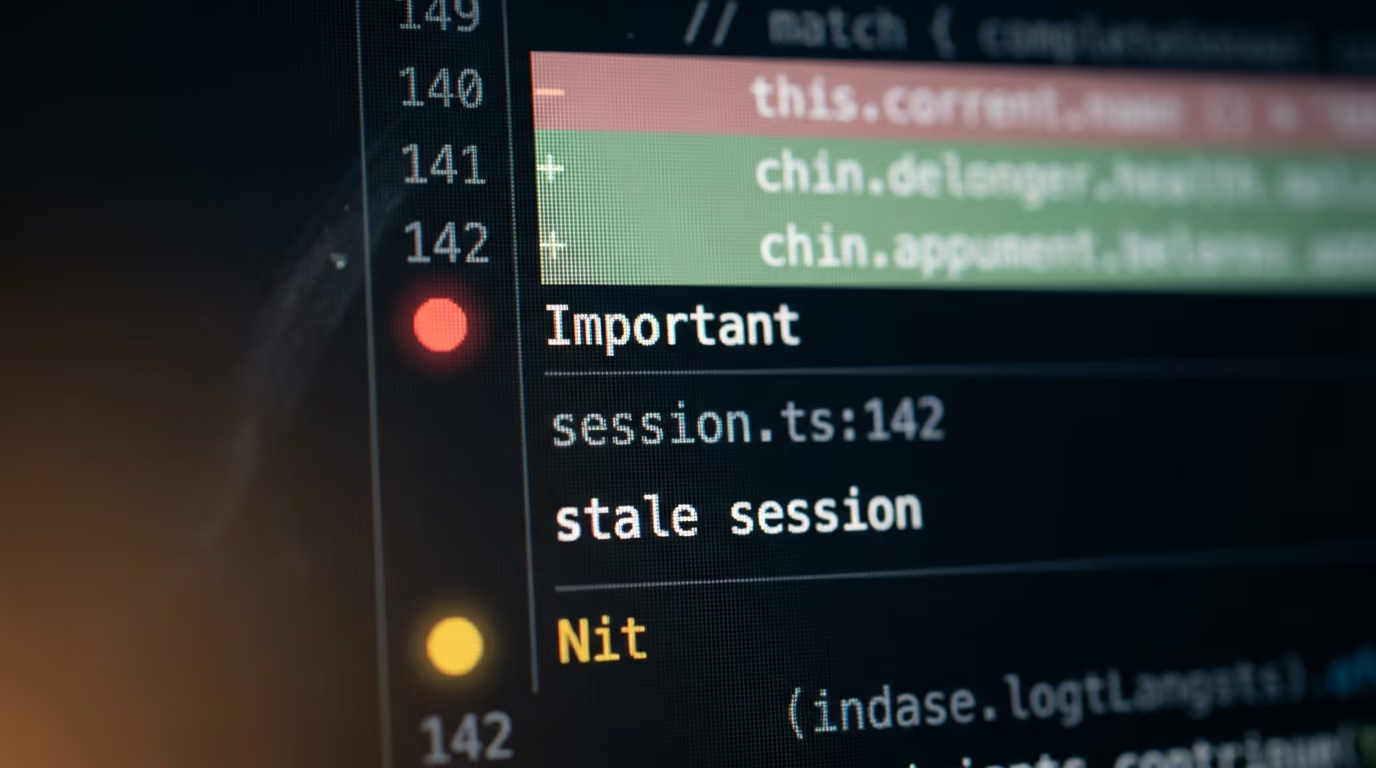
What you can verify is how each vendor tries to keep false positives down, because that is the failure mode that kills adoption. Anthropic's Code Review runs a verification step that checks every candidate finding against actual code behavior before posting, tags each one as Important, Nit or Pre existing, and completes with a neutral check run so it can never block a merge. CodeRabbit learns from the comments your team dismisses. Sourcery and Qodo both let you write custom review rules.
The configuration file does more for false positives than the choice of vendor does. Anthropic documents a REVIEW.md at the repository root that redefines what Important means for your codebase, caps how many minor comments a single review posts, lists paths to skip such as generated code and lockfiles, and sets a verification bar like requiring a file and line citation before a behavior claim is posted. That file is the difference between a reviewer your team reads and a bot your team mutes in week 3.
The skeptical position is still reasonable and worth stating. These tools are excellent at the bugs that live inside a diff, meaning a race between a token refresh and a logout, or a parser that silently returns 0 on malformed input. They are far weaker at the review a human does best, which is asking whether this feature should exist at all and whether the person who wrote it understood the requirement. Buy one to replace the reading you no longer have time for, never to replace the judgment.
Which AI code review tool should you install tonight?
Install Greptile if you are solo and merge fewer than 50 pull requests a month, because the Starter plan is free and 50 credits cover more work than most side projects generate. Install CodeRabbit if you are a team of 2 to 5 people with a real product and a real review backlog, and start with the 14 day trial, which asks for no card. Install PR Agent if you object to renting the reviewer at all and would rather point it at your own model.
If you already pay for something, check what you own before you buy again. Copilot Pro at $10 a month covers a lot of small teams, Bugbot is already on your Cursor plan if you work there daily, and the review command is already in your terminal if you run Claude Code. Anthropic's managed service is worth its $15 to $25 a review only for a Team or Enterprise account where a missed regression costs more than a review does, and on a repository that ships every day that math works out more often than it looks.
Whichever you pick, spend the first hour on the configuration file rather than on the vendor comparison. Write down what Important means in your repository, cap the minor comments, and list the directories the reviewer should ignore. Every tool here reads some version of that file, and the teams who write it keep their reviewer past month 2 while the teams who do not end up muting the noise and canceling the seat.
Nothing about this pricing is settled. A $40 seat became usage billing in June, a research preview costs more than 10 times per review what a mature product charges, and the free tiers are generous because everyone is buying the habit rather than the margin. Sign a monthly plan rather than an annual one, keep the receipts, and re read the pricing page in 6 months. If you want the reviewer inside your own automation instead of on the pull request, our walkthrough of Claude Code subagents shows how that piece is wired.
Questions people ask
What are the best AI code review tools for a solo developer?
Greptile's free Starter plan is the best AI code review tool for a solo developer, because it includes 50 credits a month and 1 credit buys 1 standard review. CodeRabbit is the better choice if your repository is public, since it reviews public repositories free forever. PR Agent suits anyone who would rather self host and pay only for model tokens.
Are any of the best AI code review tools actually free?
Yes, 3 of them are free rather than free for a trial period. Greptile's Starter plan gives 50 reviews a month at no cost, CodeRabbit reviews any public repository free forever, and PR Agent is MIT licensed and self hosted so you pay only your model provider. Sourcery and DeepSource are also free on open source repositories.
How much does an AI code review cost per pull request?
It ranges from $0 to about $25 per pull request depending on the billing model. A flat CodeRabbit seat at $24 a month works out to $1.20 a review across 20 pull requests, Cursor puts an average Bugbot run at $1.00 to $1.50, and Anthropic prices its managed Code Review at $15 to $25 a review because it analyzes the whole codebase rather than the diff alone.
Does GitHub Copilot include code review on the free plan?
No, Copilot Free does not include Copilot code review, and GitHub's documentation says those users have no monthly allowance of AI credits for it. The cheapest plan that includes it is Copilot Pro at $10 a month with 1,500 AI credits, where 1 credit is worth $0.01. Each review also consumes GitHub Actions minutes on top of those credits.
Can an AI code reviewer replace a human reviewer?
No, and none of these vendors claim it can. They are strong on defects contained inside the diff, such as a race condition, an unscoped query or an edge case that returns the wrong default. They cannot judge whether a feature should exist or whether the author understood the requirement, so treat the tool as the first reader rather than the last.
Which AI code review tools work with GitLab or Bitbucket?
PR Agent supports GitHub, GitLab, Bitbucket, Azure DevOps and Gitea, according to its own repository. CodeRabbit supports GitHub and GitLab at sign up. Anthropic's managed Code Review is a GitHub service, though its GitLab CI integration exists separately for teams running their own pipeline.
Do the best AI code review tools work on private repositories?
Yes, every paid plan on this list covers private repositories, and that is usually what you are paying for. The free tiers are where the limits bite, since CodeRabbit's free reviews and Sourcery's free plan both apply to public or open source repositories only. Greptile's free Starter plan and a self hosted PR Agent are the 2 routes that cover private code at no subscription cost.