AgentsJuly 28, 202612 min read
Best free AI agents in 2026, and where each one stops
The free AI agents you can start today, the exact monthly allowance each one hands you, and the 2 popular picks that no longer have a free plan.
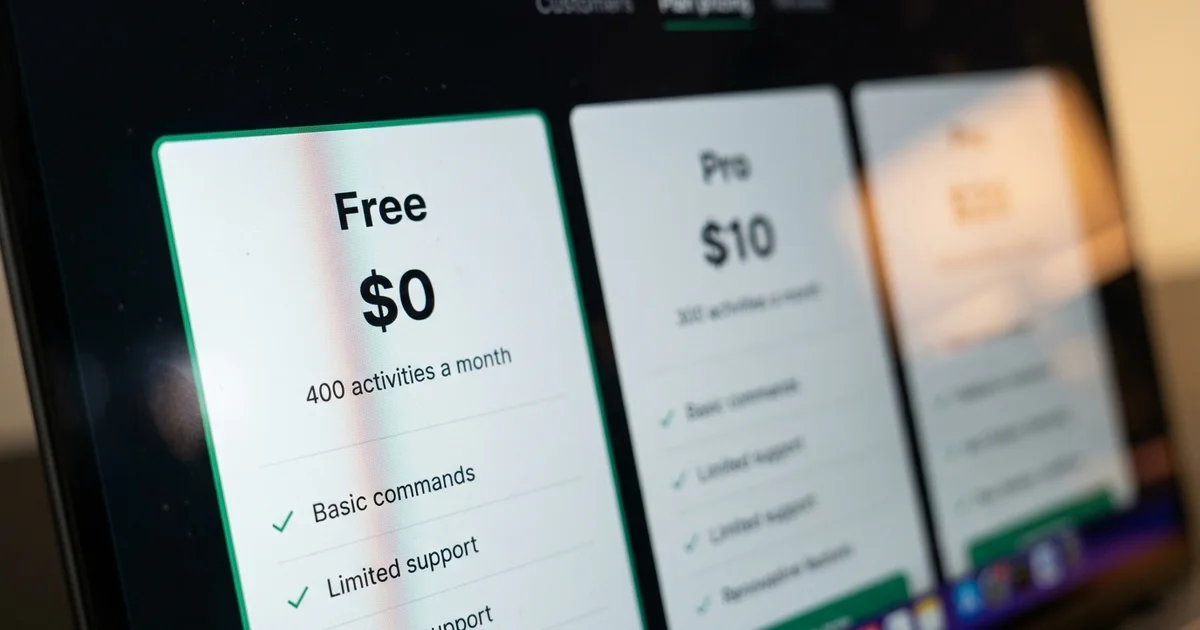
The best free AI agents you can start today are Zapier Agents for wiring together the apps you already use, Google Jules for fixing code in a repository you own, and OpenClaw for an assistant that runs on your own machine with no monthly bill attached. All 3 are plans rather than trials, so none of them ends with a payment page after a fortnight, and each one stops somewhere different.
Free means 3 separate things once an agent is involved, and mixing them up is how people end up surprised by a charge. An allowance gives you a fixed number of runs a month on somebody else's servers, free software costs nothing to download and still needs a paid brain behind it, and a free trial is a countdown with a card attached to the end of it. Every allowance quoted below comes from the vendor's own pricing or help page rather than from another roundup.
What are the best free AI agents right now?
The best free AI agents right now are Zapier Agents, Google Jules, GitHub Copilot Free, CrewAI, n8n Community Edition and OpenClaw. Each of them gives away a different kind of work, so the table below sets out what you get before anything asks you for money, and where the free road ends in each case. The order is by how much real work you can finish without paying, not by how good the launch video was.
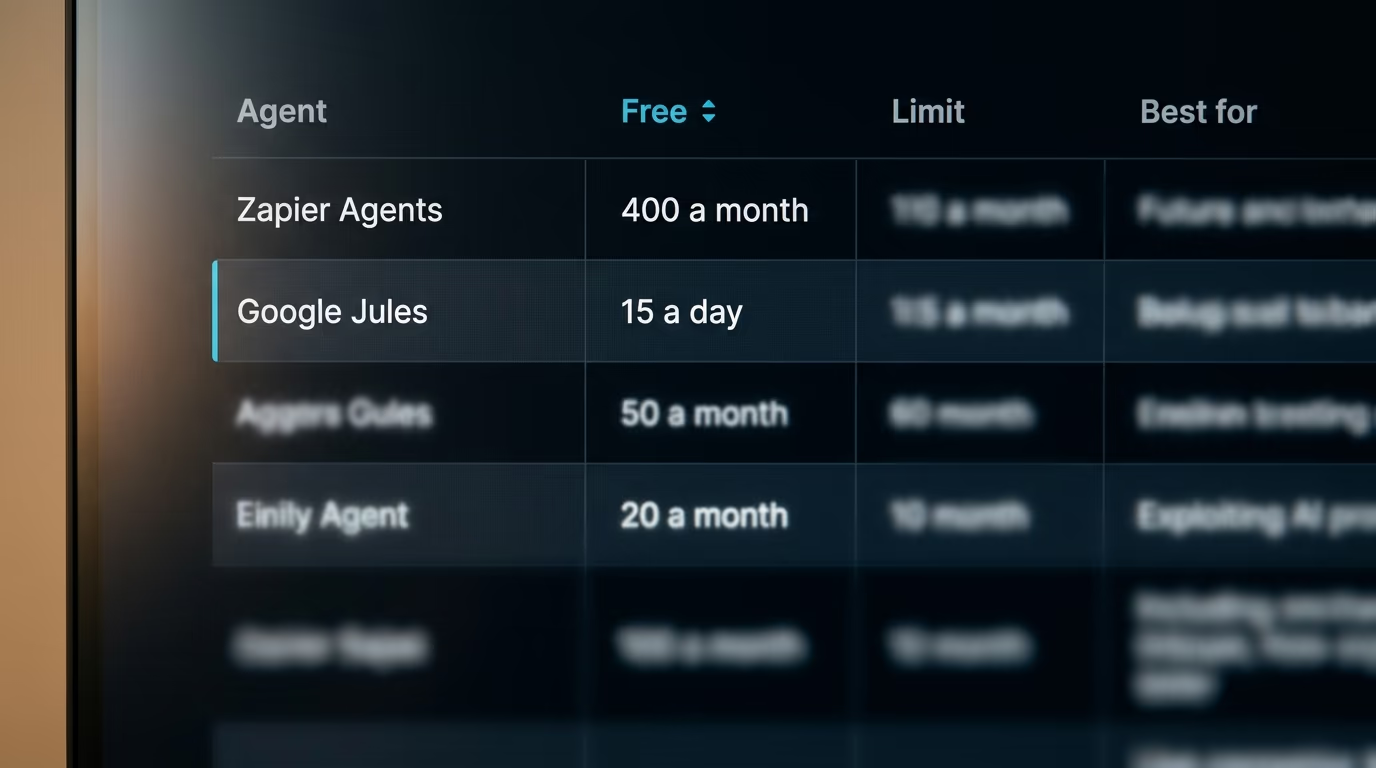
Zapier Agents takes the top slot because its free allowance is the only one that reaches across the apps a normal person already lives in, so a single agent can read your inbox, look something up and write a row to your spreadsheet in one go. Google Jules comes next because it works on a repository you own and hands back a change for you to read, which is a long way past answering questions about code. OpenClaw sits third and it is the odd one out, since the software is free forever and the running cost moves entirely onto whichever model you point it at.
| Agent | What you get without paying | Where it stops | Best for |
|---|---|---|---|
| Zapier Agents | 400 agent activities a month across every app Zapier connects | 10 activities inside a single run, and your tests count against the total | Wiring together apps you already use |
| Google Jules | 15 coding jobs a day, 3 running at once, on Gemini 2.5 Pro | Upgrades are sold through Google AI plans, not as a Jules subscription | Fixing a bug in a repository you own |
| GitHub Copilot Free | 2,000 completions plus 50 chat requests a month | Limited chat and agent usage, and Pro costs $10 a month | Writing code inside the editor you already have |
| CrewAI | 50 workflow executions a month, visual editor, GitHub connection | Everything above the free tier is quote only | Several agents handing work to each other |
| n8n Community Edition | As many runs as your own hardware can handle | Your own business or personal use only, no reselling it | Owning the whole thing outright |
| OpenClaw | The entire program under the MIT licence, on macOS, Linux or Windows | You supply the model it thinks with, or run one locally | An assistant living in the chat apps you use |
2 names that appear on almost every list like this one are missing here, and their absence is deliberate and not an oversight. Gumloop and Lindy are both listed with a free plan all over the web, neither one shows a free plan on its pricing page today, and the section further down documents that against their own pages. A shortlist that quietly carries a dead free tier is worse than no shortlist at all, because somebody signs up on the strength of it.
What does free actually mean when an AI agent is involved?
Free splits into 3 kinds when an AI agent is involved, and each kind fails you in a different way. A free allowance is a monthly quota of runs on the vendor's own servers, free software is a program you download that still needs a model behind it to think, and a free trial is a clock that ends on a payment page. Knowing which kind you signed up for tells you in advance how the arrangement will break.
The allowance is the friendliest of the 3 for anybody starting out, because nothing gets installed and nothing gets configured beyond signing in and connecting an app. Zapier, CrewAI and GitHub all work this way. The quota is spent by the agent as it works rather than by you as you type, and that distinction matters more than it sounds, because an agent stuck in a loop can burn a month of allowance in an afternoon while you are downstairs making coffee. Watch the meter for the first few days.
Free software is the opposite trade. n8n and OpenClaw cost nothing to install and will run every day of the year without asking you for a card, and neither of them contains a brain. Both need a model behind them, and that model is either a paid account with a company such as Anthropic, OpenAI or Google, or an open weight model running on your own computer. If you want to know whether your laptop can hold one, we ranked the local models by how much memory each one needs, which is the number that decides it.
The trial is the arrangement to watch. A trial that takes a card at signup is a subscription with a grace period in front of it, and forgetting to cancel is the most ordinary way people end up paying for an agent they opened once and never went back to. Nothing on the shortlist above is a trial, which is the whole reason the shortlist looks the way it does. When you see free written anywhere else, the first thing to find out is which of these 3 arrangements it describes.
Which free AI agent connects the apps you already use?
Zapier Agents is the best free AI agent for connecting apps you already use, and its free plan carries 400 agent activities a month across the apps Zapier already connects to. An activity is one thing the agent does, so a trigger firing, a question answered from a document you attached, an action run inside another app, a web search and a page it browses each spend one of them. Zapier's own help pages describe the count that way, and it is the number that governs everything else.
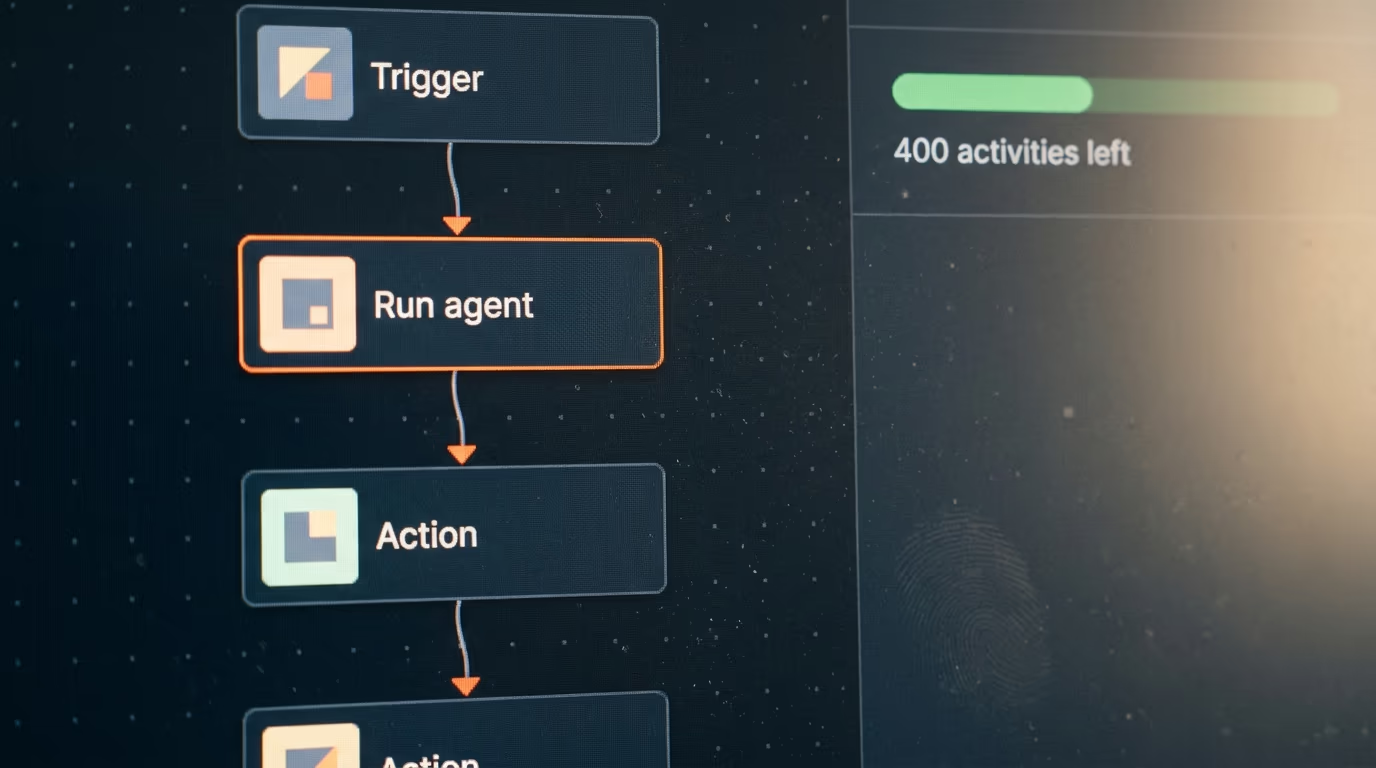
That vocabulary is worth slowing down on, because the allowance sounds enormous until you watch an agent work. A single run is capped at 10 activities on the free plan, so an agent that reads an email, looks up the sender, checks a spreadsheet, drafts a reply and files a row has already spent half of what that run is allowed. Working at the cap, about 40 finished runs fit inside a month, which is a little more than one a day. So you get a real assistant for a handful of jobs a day, and nothing like staff you can forget about.
There is a trap on the free plan that the pricing page does not shout about, and it catches beginners specifically. Zapier's help pages say that tests count against your monthly activities on the free plan, while on the paid plans they do not, so every press of the test button while you are still building moves the meter. The habit that works is to think the agent through on paper, build it in as few test runs as you can stand, then let it run for real once you trust it.
CrewAI is the runner up here and it is built on a different idea, which makes it worth a look even if you stay with Zapier. Its free tier gives 50 workflow executions a month with the visual editor and the GitHub connection included, and the shape of it is several agents passing work to each other instead of one agent doing everything alone. If the phrase agent builder is new to you, our ranking of the agent builders explains what these platforms are and what they cost once you outgrow the free row.
Which free AI agent will write and fix your code?
Google Jules is the best free AI agent for code, because its free plan is open to every user and allows 15 coding jobs a day with 3 of them running at once. A job here is a whole task, not a single question, so you point Jules at a repository, describe the bug in your own words, and it goes away and comes back with a change for you to look over. Google's own documentation sets out those limits in a plan table.
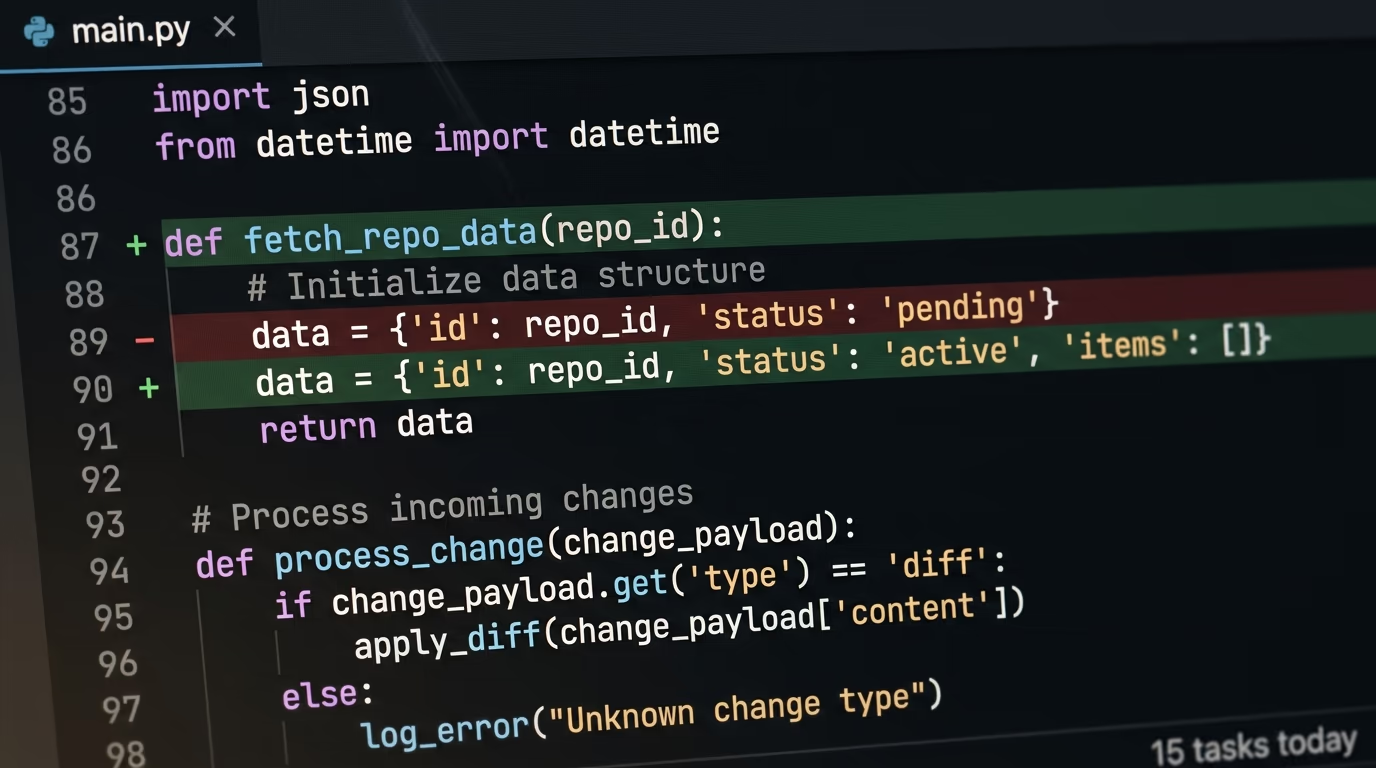
The wording in Google's documentation is that Jules has a plan available to all users without cost, which is a clearer promise than most free tiers make. The free plan runs on Gemini 2.5 Pro, and the paid steps above it are sold through Google AI plans instead of as a Jules subscription of their own, which at launch means an individual Google account and not a work one. When you hit the daily limit the new task button stops working, and everything you have already done stays where it is.
GitHub Copilot Free is the other one worth having, mostly because it sits inside an editor you have already opened. The free plan hands you 2,000 completions a month plus what GitHub describes as limited chat and agent usage, so it will hold a conversation about your code and make edits for you, and it runs dry faster than Jules if you talk to it all day. It is the better choice when your work is spread across scattered files rather than shaped like a single task.
Neither of these replaces a paid coding agent for a full working day, and pretending otherwise would waste your evening. The free ones are excellent at a bounded job you can describe in a sentence, and they get slower and stingier exactly when you start relying on them. If you want to see where the money goes once you cross that line, we put the 2 dominant paid ones head to head in Claude Code vs Codex and priced the rest in our coding agents shortlist.
Can you run an AI agent for free forever on your own machine?
Yes, and OpenClaw pointed at a model on your own computer is the only arrangement here with no monthly ceiling at all. OpenClaw is released under the MIT licence, its installer covers macOS, Linux and Windows, and its documentation lists Ollama among the supported model providers, so the assistant and the model it thinks with can both sit on hardware you already own. Nothing in that loop reports back to a billing meter.
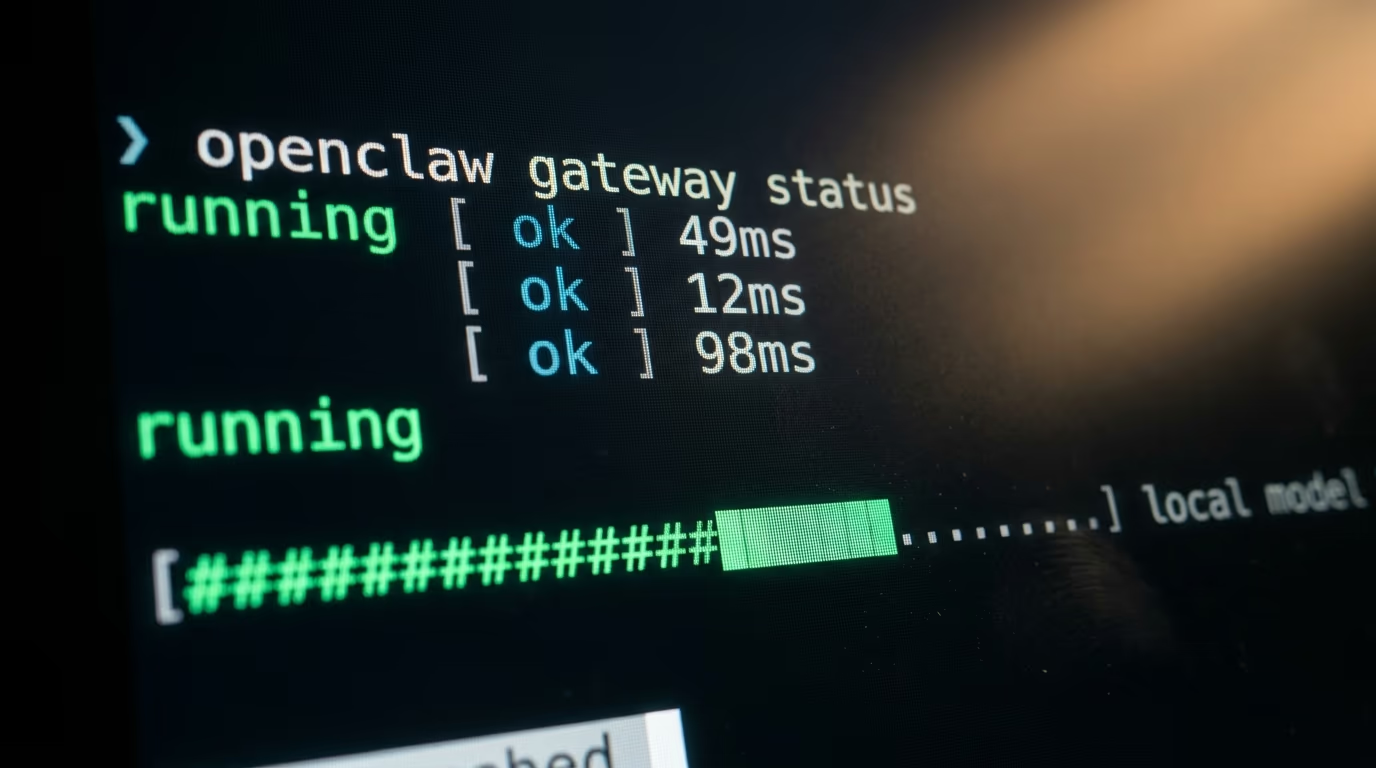
What OpenClaw actually is takes a sentence, because the name gives away nothing. It runs as a service on your machine and meets you inside the chat apps you already have open, so you message it the way you would message a colleague and it goes off and uses tools on your behalf. The installer sets up its own copy of Node when your machine has no suitable one, and the getting started guide walks through the wizard that asks for your model access at the right moment.
The cost of this route lands on your hardware rather than on your card, which is a real cost and deserves saying out loud. A model good enough to drive an agent needs a serious slice of your memory to sit in, so a recent machine with plenty of it will feel fine and an older cheap laptop will crawl. There is also nobody to email when it breaks at midnight. Our walkthrough of a first OpenClaw skill is the gentlest way to find out whether that trade suits you.
n8n Community Edition is the other thing you can own outright, and its licence deserves a read before you build a company on it. The Sustainable Use License lets you use and modify the software for your own internal business purposes, or for personal use, and it lets you pass it to other people only free of charge and outside commerce. So running it for your own business is fine, reselling it to clients is not, and a separate enterprise licence covers the files the project marks as enterprise.
Which agents are still called free but are not?
Gumloop and Lindy are the 2 agents most often listed as free that show no free plan at all on their own pricing pages. Gumloop's pricing page starts at Pro for $37 a month with a trial in front of it, and Lindy's starts at Plus for $29.99 a month for each user, with a trial offered to teammates who join through Slack while direct signups are billed straight away.
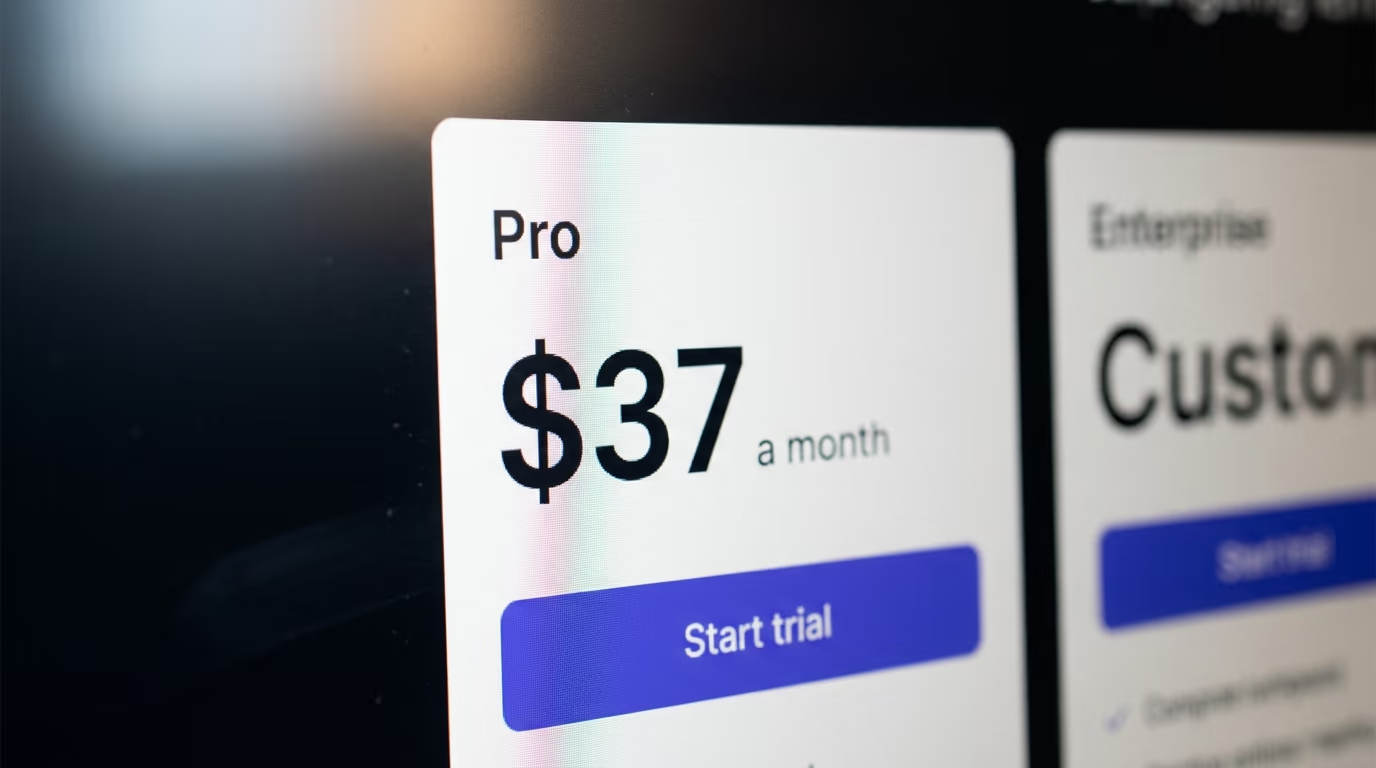
This matters more than a pedantic correction, because both tools still sit near the top of published shortlists with a free plan and a credit figure printed next to them. Somebody reads one of those lists, signs up expecting an allowance, and meets a payment form instead. The lesson generalises to every roundup including this one. Open the vendor's pricing page in another tab before you believe a free row, because a roundup gets written once and a pricing page changes every quarter.
ChatGPT is the other common misunderstanding and it is a subtler one, because the free plan genuinely exists. It lets you try quick coding tasks with Codex, and the agent mode, the thing that goes off and does several steps on its own, sits on the paid plans instead. So a shortlist that tells you ChatGPT hands you a free agent is describing the chat window rather than the agent. The chat answers your questions, the agent goes off and does things, and only the first one is free.
What breaks first when you depend on a free AI agent?
The allowance runs out in the middle of a job, and that is what breaks first on every free agent plan. A Zapier agent run stops when it reaches its activity cap on the free plan, so an agent that needed one more step to be useful does not finish slowly, it simply stops where it is and leaves you to work out which half of the job got done. Design the agent to do less than you want, and it will finish.
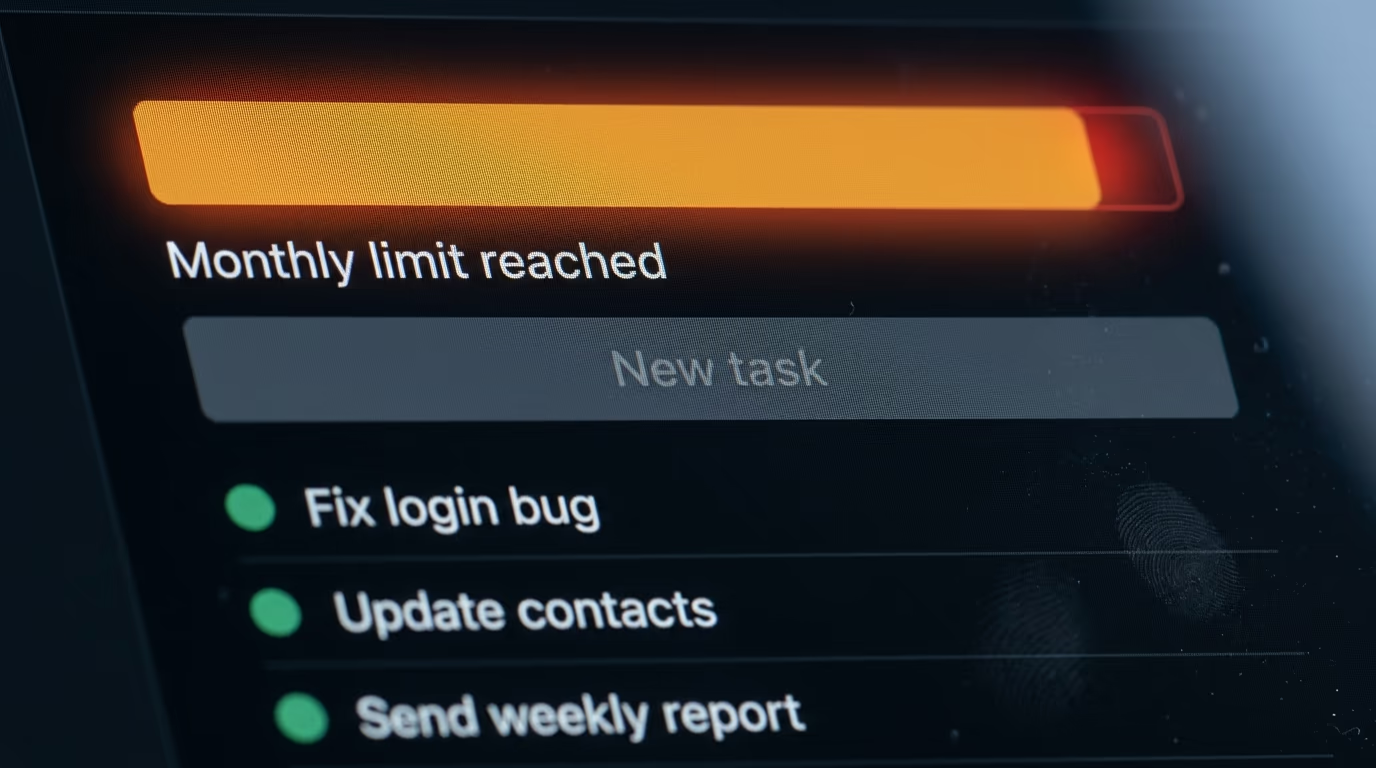
The second thing that breaks is your own learning. Since tests count against the free allowance on Zapier, the natural way to learn a new tool, which is to poke it over and over until it makes sense, is the exact behaviour that empties the meter fastest. Jules handles the same tension in a kinder way by disabling the button that starts new work when you reach the daily limit, and leaving the history and the finished jobs alone, so you lose the ability to start rather than the work itself.
The third thing is quieter and nobody warns you about it in the signup flow. A hosted free agent reads whatever you connect it to, so the moment you attach your inbox or your customer spreadsheet, that content travels to somebody else's servers under terms you agreed to without reading them. None of that is sinister and it is how most software works now, and it is still the honest reason some people take the self hosted road. Decide it on purpose rather than by accident, especially with client data.
The fourth thing is that free tiers move under you. Gumloop sells a subscription today while half the internet still lists it as free, and every allowance in this article was read off a page whose owner can change it tomorrow afternoon. Anything you build on a free plan should survive that plan changing, which in practice means keeping each agent small enough that you could rebuild it somewhere else in an evening without mourning it.
Which free AI agent should you start with this week?
Start with Zapier Agents if you want something running tonight without installing anything, since the allowance is real and the connections to your apps already exist, and you will know inside an hour whether an agent is useful to you at all. Start with Google Jules instead if you write code and have a small annoying bug sitting in a repository, since a free coding agent that hands you back a change to review is the fastest demonstration there is of what these things actually do.
Move to OpenClaw or n8n when you notice yourself hitting a monthly ceiling and resenting it, which usually happens in the second month and not the first. The install takes an evening, the model has to come from somewhere, and nothing about it feels as smooth as a hosted product on the first day. What you get back is a ceiling that disappears and a system that belongs to you, which matters more the longer you keep it running.
And stay sceptical of the next shortlist you read, this one included. Open the pricing page, find free printed on it with your own eyes, then check whether the row you found is a plan or a trial with a card at the end of it. That habit costs you half a minute per tool and it is the whole difference between a free agent and a subscription you will find on your statement in March.
Questions people ask
What are the best free AI agents for someone who has never used one?
Zapier Agents and Google Jules are the best free AI agents for a first attempt, because neither of them needs anything installed and both explain themselves as you go. Zapier suits you when your work lives in email, spreadsheets and other everyday apps, and Jules suits you when your work lives in a code repository.
Are the best free AI agents really free, or do they want a card?
The free plans named here are plans rather than trials, so they keep working after the first month without a payment. The ones to watch are Gumloop and Lindy, which are widely described as free and today sell a monthly subscription with a trial in front of it.
How much work can a free AI agent actually do in a month?
About one useful run a day is the honest answer for a hosted free plan. Zapier's free allowance is 400 agent activities a month and a single agent run stops at its cap, which works out at roughly 40 finished runs, while Google Jules allows 15 coding jobs a day.
Can a free AI agent write code for me?
Yes, and Google Jules is the strongest of them because its free plan is open to every user and it works on a repository you own rather than in a chat window. GitHub Copilot Free is the alternative when your work is spread across scattered files instead of shaped like one clear task.
Do free AI agents keep or train on my data?
A hosted agent reads everything you connect it to, so your inbox or spreadsheet content reaches the vendor's servers under whatever terms you accepted at signup. If that is a problem for client work, the self hosted options such as n8n Community Edition and OpenClaw keep the whole loop on hardware you control.
What is the cheapest way to keep an agent running once the free allowance ends?
Running the agent yourself is the cheapest floor, because n8n Community Edition and OpenClaw are both free software and the only bill left is the model behind them. Pointing either of them at an open weight model on your own computer removes that bill too, at the cost of memory and speed.
Which free AI agent is best for automating work across several apps?
Zapier Agents is the best free AI agent for work that crosses several apps, because its free allowance covers the apps Zapier already connects to. An agent can read from one app, look something up and write to another inside the same run, which none of the other free plans here do as easily.