AgentsSeptember 25, 202612 min read
Meta Muse Charm ships in December with no price yet
Meta published 3 sentences about its keychain AI device and no price at all. Here is what the reported hardware would cost you every month, and what Meta already sells that does the same job.
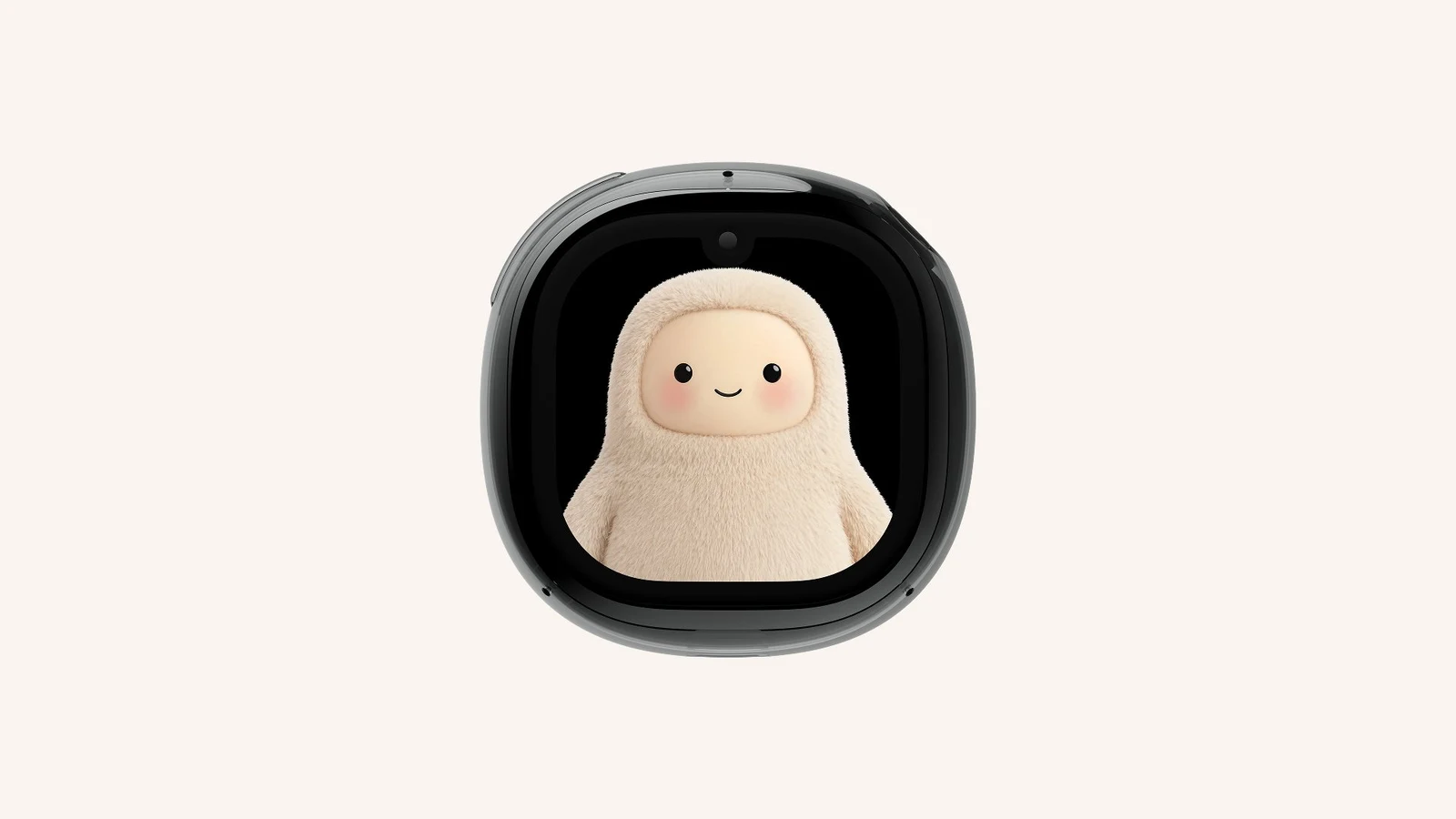
The Meta Muse Charm is a pocket device you press and talk to, it runs Meta's Muse agent, and Meta has published no price for it. Bloomberg reports the Charm goes on sale in December, at roughly what a smartwatch costs, but that figure comes from unnamed sources rather than from Meta, and the 3 sentences Meta actually published carry no price, no date and no specifications.
That gap is the story today. Dozens of outlets ran the keychain photograph yesterday and most of them printed the screen, the cameras and the December date as though Meta had announced all of it. None of those details came from Meta. So this piece prices the decision instead of the device, using what Meta is charging right now for hardware that already does the same job, what a gadget with its own mobile connection costs every month, and what stays honestly unknown.
We looked at what Meta Muse costs and what it wants from your accounts when the agent itself launched earlier this month. The Charm is that same agent given a body, and the body is the only thing in Meta's hardware line without a number attached to it.
What is the Meta Muse Charm?
The Meta Muse Charm is a small handheld device that runs Meta's Muse agent, with a screen showing an animated character and a fingerprint sensor on one corner that you press to start talking. Mark Zuckerberg showed it on stage at Meta Connect on 23 September and said it would arrive in time for the holidays.
Zuckerberg described how you use it during the keynote, quoted here from TechCrunch's report of the event, and he added that it works without opening your phone or an app first.
You just go ahead and tap here in the fingerprint sensor in the corner, and you can start talking.
That's the whole pitch, and it's a smaller one than the headlines suggest. The Charm doesn't do anything Muse can't already do from an app. What it removes is the 3 or 4 seconds between wanting to ask your agent something and actually asking it, and Meta is betting that those seconds are the reason most people forget they have an agent at all.
For anyone who missed the agent itself, Muse is not a chatbot wearing a new coat of paint. Meta describes it as software that acts for you, opening a browser, filling in a form and finishing a purchase while you get on with something else, which is a different job from answering a question. That difference is the only reason a dedicated device is even arguable. An assistant you type at belongs on a screen you are already looking at, while an agent you hand a task to belongs somewhere you can reach without stopping what you were doing.

The shape is designed to hang off something. Reporting describes a wrist strap, a lanyard and a keyring loop, with a translucent case that lets you see the circuitry through the back, and people who have handled it call it a holdable rather than a wearable. The screen carries a fuzzy cream character, and TechCrunch reports that staff inside Meta call it Jolly.
TechCrunch's reading of that shape explains the design better than the reported specifications do. Bag charms are everywhere on bags and backpacks right now, and Meta has drawn a device that slots into a habit people already have rather than asking them to pick up a new one. That's a shrewder bet than a lapel pin was, and it's also why the thing looks like a toy.
What has Meta actually published about the Muse Charm?
Meta has published 3 sentences about the Muse Charm, and they contain no price, no ship date, no screen size, no battery figure and no country list. Meta's own Muse Charm page carried no price, no specifications and no preorder button when we loaded it on 25 September 2026, and its only button sends you to the Muse app.
Here is the opening of the complete published record, taken from Meta's own Connect round up.
Muse Charm is a delightful and fun device built for you to talk and interact with your Muse.

The 2 sentences after that one say the device brings Muse and a voice model into something that fits in your pocket, and that Meta will have more to share later this year. Those 3 lines are the entire announcement, with no weight, no battery, no colours, no countries and above all no number anywhere in them.
The rest of the same announcement is what makes the omission stand out. On the same day Meta priced Ray Ban Meta Audio with preorders open and shipping in October, priced the Ray Ban Meta Gen 3 and put it on sale immediately, priced the Meta Adventurer for an October release, and priced its new VR Glasses for next spring. Meta was willing to put a figure on a headset that nobody can wear until the spring, and not on the gadget it says arrives this year.
So where do all the specifications come from? Bloomberg reported them, and we read that reporting in the Irish Times' syndication of it. Meta's chief technology officer Andrew Bosworth said the company has not decided what to charge. People familiar with the plans told Bloomberg it would land in the money range of a smartwatch. An on board 5G modem is described as letting the device reach Muse when there's no network nearby, and cameras on the front and the back are said to be there mainly to give Muse something to look at. Bosworth called the device "the classic v0".
Treat all of that accordingly, because reported specifications from unnamed sources are usually right and occasionally wrong, and none of them is a commitment Meta has made in public. If the Charm turns up in December without a mobile modem, nobody at Meta will have broken a promise, and every article that printed the modem as a fact will quietly need an edit.
What will the Muse Charm cost, and what will it cost every month?
Nobody outside Meta knows the Muse Charm's sticker price, and the only public guidance is Bloomberg's report that people close to the plans expect smartwatch money. The cost nobody has counted is the recurring one, because a device carrying its own mobile modem needs its own line, and Verizon's smartwatch plan page today lists a watch line at as low as $7.50 a month.
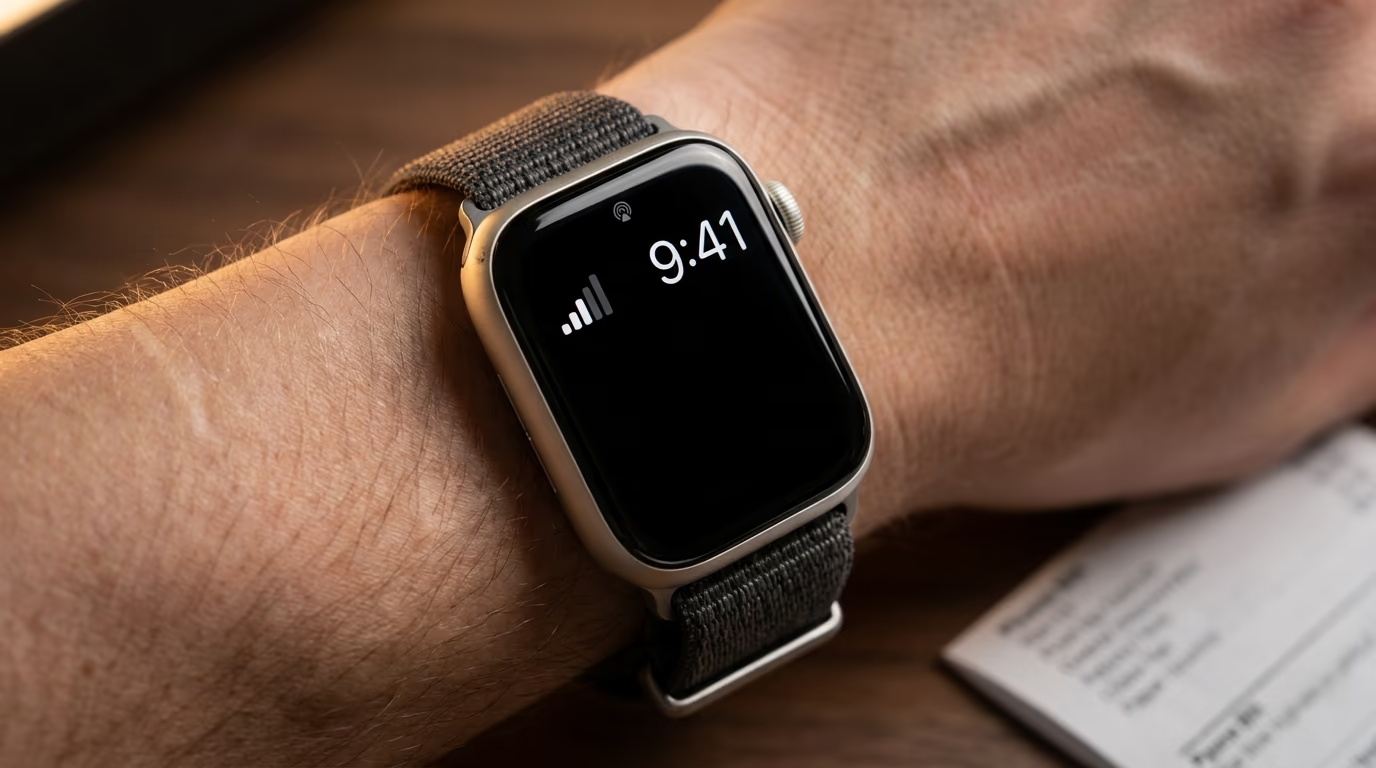
That rate has a condition printed on the same page. The discount behind it requires a smartphone line on one of Verizon's named unlimited plans, so a watch line standing on its own is $15 a month, and both figures sit before taxes and fees. Across a year that's roughly $90 to $180 added to whatever the hardware costs, which is real money next to a device that might itself be priced like a watch.
Meta has said nothing whatsoever about this, and the honest position is that we don't know. The Charm might ship with connectivity folded into the price. Meta might resell a line the way watch makers do, or partner with carriers the way tablet makers do. It might fall back to your phone over Bluetooth whenever there's no signal plan, and the modem might turn out to be an option rather than a requirement. What's certain is that a standalone connection is never free to somebody, and that somebody is usually the person holding the device.
There are 3 questions worth holding onto until Meta answers them, and not one of them is about the screen. Does the advertised price include a connection, or does the connection sit on top of it? Does the device work at all without that connection, or does it become an ornament the month a plan lapses? And does Meta charge for Muse itself once you are using it all day instead of a few times a week, given that the free tier is defined as most of what people need rather than everything? Each of those answers moves the real cost by more than any specification on the box does.
There is a recent worked example of how that goes wrong. Humane sold the Ai Pin with its own mobile connection and a subscription on top of the hardware, and switched the servers off less than a year after the device reached customers, leaving the pins without the assistant they were sold for. Nobody sensible is predicting that ending for Meta, which has a balance sheet Humane never had. The warning still stands, because a second device means a second thing to charge and usually a second bill.
What can Muse already do on the phone you own?
Muse already runs on iPhone, on Android and on muse.ai in the United States, and Meta's own announcement says it is "free for most of what people need, with subscription plans for people who want to do more". The Charm buys faster access to an agent you can already reach tonight without paying anything.

What the agent does is the only reason anyone would want a dedicated button for it. Meta says Muse can open a browser, fill in forms and check out on your behalf, and at Connect it widened the list of places it is allowed to do that. Walmart, Best Buy, Gap, Sephora, Ulta and Wayfair joined for shopping, Shop Pay and PayPal for paying, Instacart for groceries, Expedia for travel soon, and Notion, Granola, GitHub and Box for work.
Muse also gained its own email address at Connect, which reads as a small line in the announcement and has a large consequence. You can forward a booking confirmation or an invoice to your agent the way you would forward it to a human assistant, and Meta says you decide whether it may only read your mail or also send from it. An agent with an inbox can be handed a job by somebody who never opens a chat window at all.
There is one thing the app version makes far easier to judge than a gadget will. On a phone you read the permission screen before you grant anything, and you can take a permission back in the same place you gave it. A small object with cameras on both faces and a microphone waiting for your thumb is a harder thing to reason about, and Meta has published nothing about what the Charm keeps, what it sends home, or what happens to a recording once the agent has finished using it. Those answers usually arrive with the privacy label on the day a device goes on sale.
One limit decides this question for most readers of this site. Muse is rolling out in the United States only, and Meta's Muse Charm page returns a not available in your region notice when you load it from outside that rollout. If you are reading this in Paris or in Lagos, the device question stays theoretical until Meta names countries, and so far it has named none of them.
If you want an agent on a phone today and you sit outside that rollout, the ranking in the best AI app for iPhone and the head to head in Siri versus Gemini are more useful places to start than waiting for a Meta shipping date.
How does the Muse Charm compare to the gadgets that tried this before?
The Muse Charm enters a category where the best known device is switched off, the next best is still selling with no subscription attached, and the cheapest way to carry an AI agent remains the phone already in your pocket. Every published price in the table below was read on the maker's own page during this run, apart from Humane's, which is a launch price for a product that no longer runs.
| Device | Published price | Recurring cost | Where it stands |
|---|---|---|---|
| Meta Muse Charm | none published | none published | reported for December 2026 |
| Meta Adventurer glasses | from $249 | none published | on sale 23 October |
| Ray Ban Meta Audio | $349 | none published | ships 13 October |
| Ray Ban Meta Gen 3 | from $449 | none published | on sale now |
| Meta VR Glasses | $1,299.99 | none published | spring 2027 |
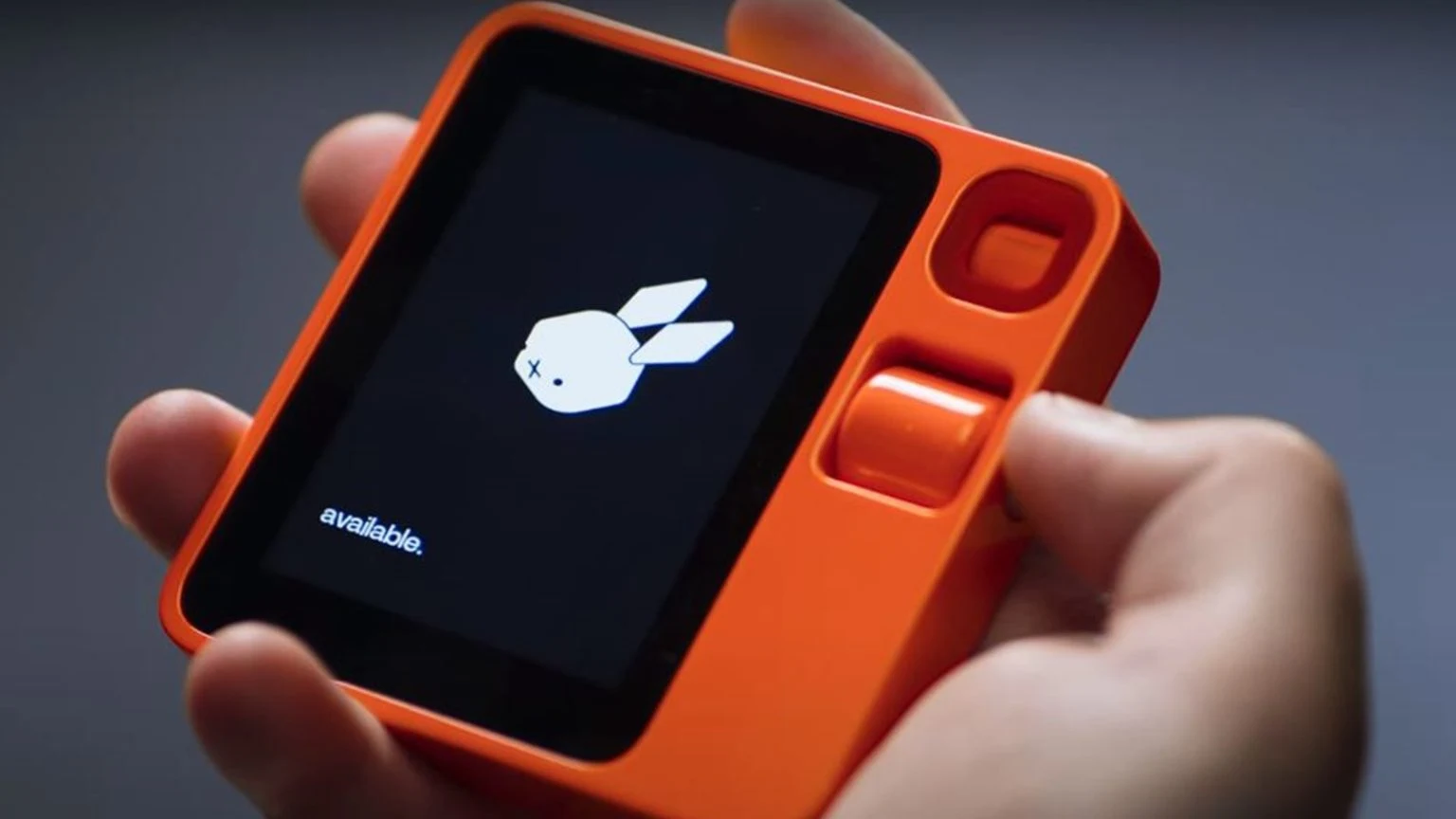
| rabbit r1 | $199 | none, the maker says no subscription | still on sale |
| Humane Ai Pin | $700 at launch | a subscription was required | servers switched off 28 February 2025 |
Read down the price column and the decision gets simpler than the coverage makes it sound. If what you want is Meta's agent with you during the day, and you want to buy it this month, Meta will already sell you that starting at $249, and its glasses hold an advantage the Charm does not have, because Muse is coming to them and you are not carrying a second object around. We put the 2 newest pairs beside each other in Ray Ban Meta Gen 2 versus Gen 3.
The rabbit r1 is the sharper comparison on money. It sells for $199 on the maker's own site today and the company says there is no subscription, which is the opposite bet to the one Humane made and lost. If the Charm lands above that with a monthly line on top of it, Meta will be asking more than the device the Charm most resembles in both shape and ambition, for an agent that is free on the phone you already own.
The shape of this category has looked the same every time somebody tries it. A small company ships a pocket AI device, reviewers find it slower than a phone at the same tasks, sales stall, and the servers eventually go quiet. Meta arrives with advantages none of those companies had, including a model it trains itself, an app with real users, shelves in real shops and no need to make its money back on the hardware. That is a different starting position, and it still leaves open the question of why somebody who owns a phone and a pair of Meta glasses would carry a third thing around.
The objection a sceptical reader raises here is fair and hard to answer. A phone does everything the Charm does, it is already in your pocket, and it already carries a data plan you pay for. New Atlas made that argument the day the device appeared, describing the available details as slim and the hardware as unnecessary next to the smartphone and the glasses Meta already ships. Meta's answer is friction, and friction is a real force in product design, because people reach for what is instantly there far more often than for what takes a few taps. Whether that difference justifies a second device and possibly a second bill is what December will settle.
What do we still not know about the Muse Charm?
As of this morning, Meta has not published the Muse Charm's price, its release date, its battery life, its screen size, whether the mobile connection costs extra, or which countries will get it. Everything specific circulating today comes from the Connect stage and from Bloomberg's reporting, and none of it comes from a Meta product page.
The open questions sit in roughly this order, from the one that changes your decision most to the one that changes it least.
- The price is undecided by Meta's own account, and smartwatch money is an unnamed source's estimate.
- The monthly cost of the mobile line is unknown, and so is who ends up paying for it.
- Meta has not said what the cameras do while you are not talking to the device.
- Battery life and how often it needs charging have not been published by anybody.
- No country list exists, and the Muse agent itself is United States only today.
The December date deserves the same caution as everything else. Bloomberg reports that Meta originally aimed at next year and pulled the Charm forward after Zuckerberg pushed for it, and Bosworth's own description of the device as an early version is not the language anyone uses about a finished product. Hardware dates slip in normal conditions, and a device moved up by a year slips more often than most do.
Watching for the answer yourself is easier than waiting for somebody to report it. Meta's Muse Charm page is where a price has to appear first, ahead of any press release, because that is where a buy button has to live. The earliest signal will be a preorder button rather than a specification sheet, since Meta opened preorders for its glasses on the same day it named their prices. Until one of those turns up, every number attached to this device is somebody's estimate being repeated by somebody else.
What to do about it tonight is short. If you are in the United States, install Muse and use the free tier, because it costs nothing and it will tell you within a week whether you would ever want a dedicated button for an agent. If you want that agent with you while your hands are busy, the glasses are what Meta will actually sell you today with a figure attached, starting at $249. And if what you want is the Charm itself, wait for the price, because it is the only fact that decides anything and Meta has not printed it yet.
Questions people ask
How much does the Meta Muse Charm cost?
Meta has published no price for the Meta Muse Charm, and its own product page carries no figure at all. Bloomberg reported that Meta's chief technology officer Andrew Bosworth said the price is undecided, and that people familiar with the plans expect it to sit in the money range of a smartwatch. Treat any specific number you see today as an estimate rather than a price.
When does the Muse Charm come out?
Bloomberg reported that the Muse Charm goes on sale by December, in time for the holiday season, after Mark Zuckerberg pushed the team to move it forward from an original 2027 target. Meta itself has only said it will have more to share later this year, so the December date is reporting rather than an announced release.
Does the Muse Charm need a phone to work?
Bloomberg reported that the Muse Charm carries its own 5G modem so it can reach Meta's Muse models when no network is nearby, which suggests it works without a phone beside it. Meta has published nothing about connectivity, so whether a paid mobile line is required, included in the price or optional is still unknown.
Does the Meta Muse Charm have a camera?
Bloomberg reported that the Meta Muse Charm has cameras on the front and the back, described as being there mainly to give the Muse agent visual information rather than to work as a camera you shoot with. Meta has not confirmed the cameras itself, and it has published nothing about what they do while you are not talking to the device.
Is Meta's Muse free?
Meta's announcement says Muse is free for most of what people need, with subscription plans for people who want to do more, and Meta has not published the price of those plans. Muse is rolling out in the United States only, on iPhone, on Android and on muse.ai.
Should I buy the Muse Charm or Meta's AI glasses?
Meta's glasses are the only option carrying a published price today, and the cheapest of them is the Meta Adventurer, while Meta says Muse is coming to its glasses so the agent reaches you hands free either way. The Muse Charm has no price and no confirmed release date, so waiting for the number is the only honest way to compare them.
Can you buy the Meta Muse Charm outside the United States?
Meta has published no country list for the Meta Muse Charm, and the Muse agent it runs is rolling out in the United States only. Meta's Muse Charm page returns a not available in your region notice when it is loaded from outside that rollout.
