AgentsOctober 22, 202612 min read
Claude Duet vs Meta Muse, the same $20 and $100
Claude Duet opened this week as a US waitlist on Claude Pro and Max. Meta Muse is free and already used by 10 million people. Both paid ladders carry the same $20 and $100.
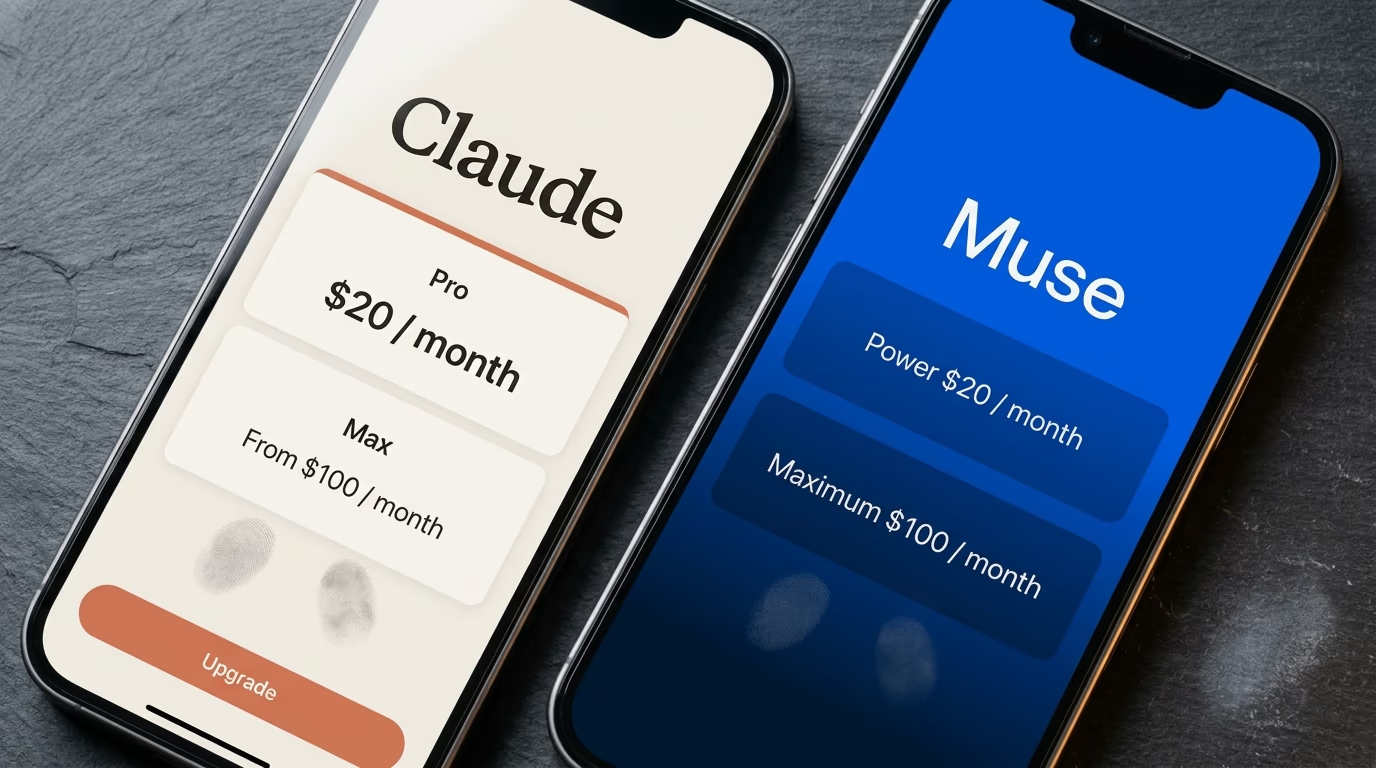
Claude Duet and Meta Muse charge exactly the same 2 prices, $20 a month and $100 a month, and only Meta Muse has a free tier underneath them. Claude Duet opened this week as a waitlist in the United States for people who already pay for Claude Pro or Claude Max, while Meta Muse is open to anyone in a country where Meta has switched it on, and Meta says it has passed 10 million users.
Anthropic put the Claude Duet page up on Wednesday, and almost every piece written since has said the same thing in a different order, that Anthropic is coming for Muse. Very few of them opened both companies' own money pages side by side. We did that this morning, and above the free line the 2 rate cards turn out to be copies of each other to the dollar.
What follows runs the same 5 checks on both agents, what each one costs, who can sign up today, what it is allowed to do without asking you, what it connects to, and what work it really does all day. Every figure here was read off a page published by Anthropic or by Meta during this run, and where a company has published nothing, this article says so rather than filling the gap.
What is Claude Duet, and what is Meta Muse?
Claude Duet is an app from Anthropic where Claude keeps working between your messages, sending a short brief every morning and waiting for your approval before it does anything sensitive. Meta Muse is Meta's personal agent, which opens a browser, fills in forms and buys things on your behalf, and Meta says shopping is one of the top activities on it.
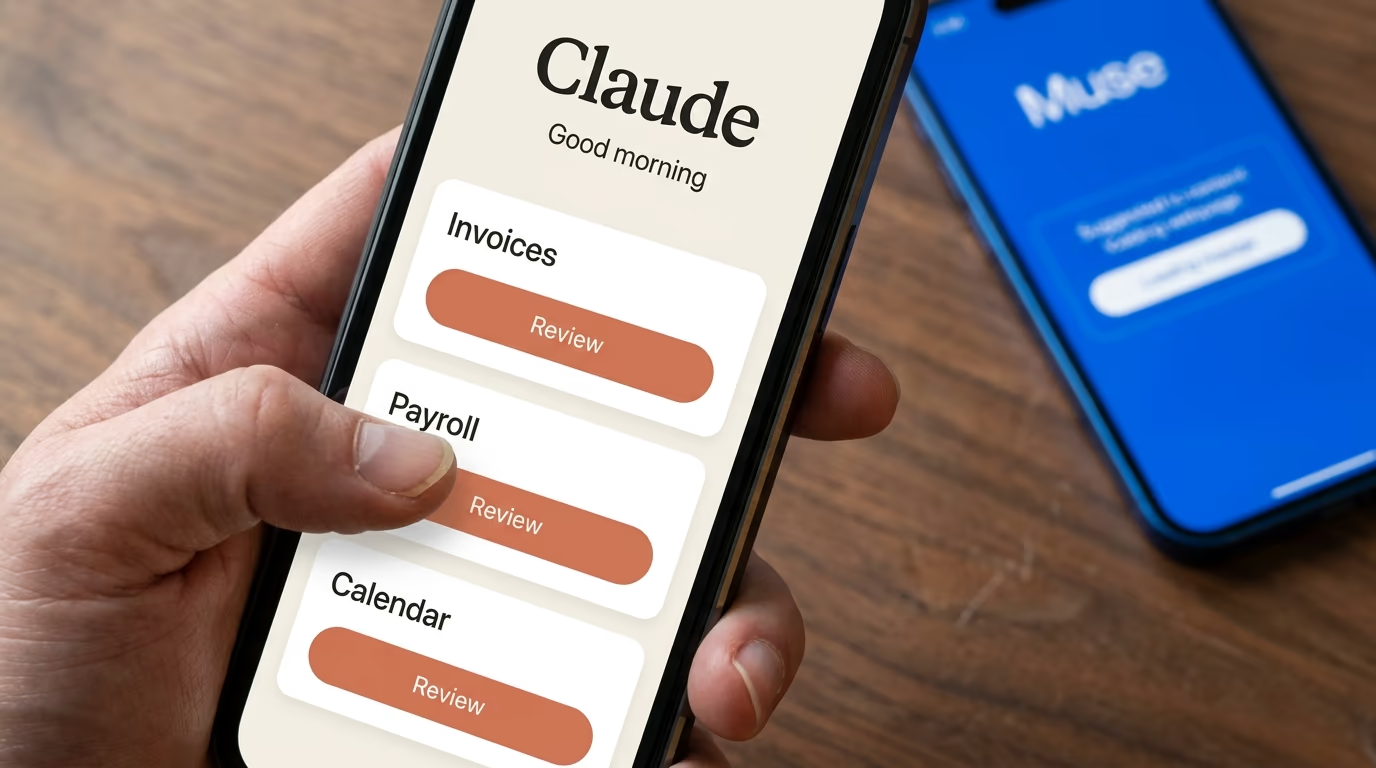
Anthropic describes Duet as a research preview built around Claude Opus 5.5, running as its own app on iPhone and Android and on claude.ai. Every morning it sends a short summary of what needs you across the apps you have connected to it. Through the day it watches those same apps and messages you only when something comes up. The examples Anthropic prints are the admin work of a small company, scheduling meetings, building dashboards, preparing payroll, chasing invoices, drafting job adverts and putting together sales forecasts.
Meta announced Muse in September and described it as a private personal agent that does the work instead of answering questions about it. Meta's own announcement says Muse can open a browser, fill out forms and negotiate for you, and that it pays through Link, the Stripe checkout product. You pick which apps it touches and how far each permission goes, and Meta uses email as its worked example, where you decide whether Muse only reads your mail or can also send on your behalf.
Anthropic built an agent that prepares work and then stops to ask you, while Meta built one that goes out and finishes the errand. We wrote up the Meta launch at the time in what Meta Muse costs and what it needs from you first, and most of it still stands, except the prices, which Meta has published since.
What does Claude Duet cost against Meta Muse?
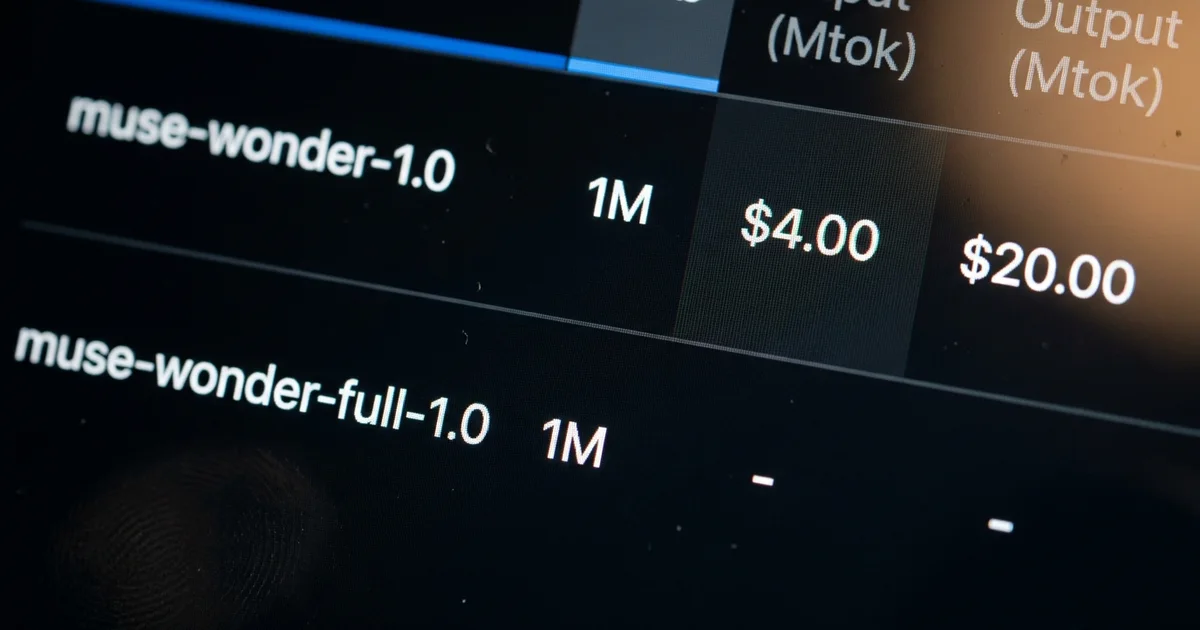
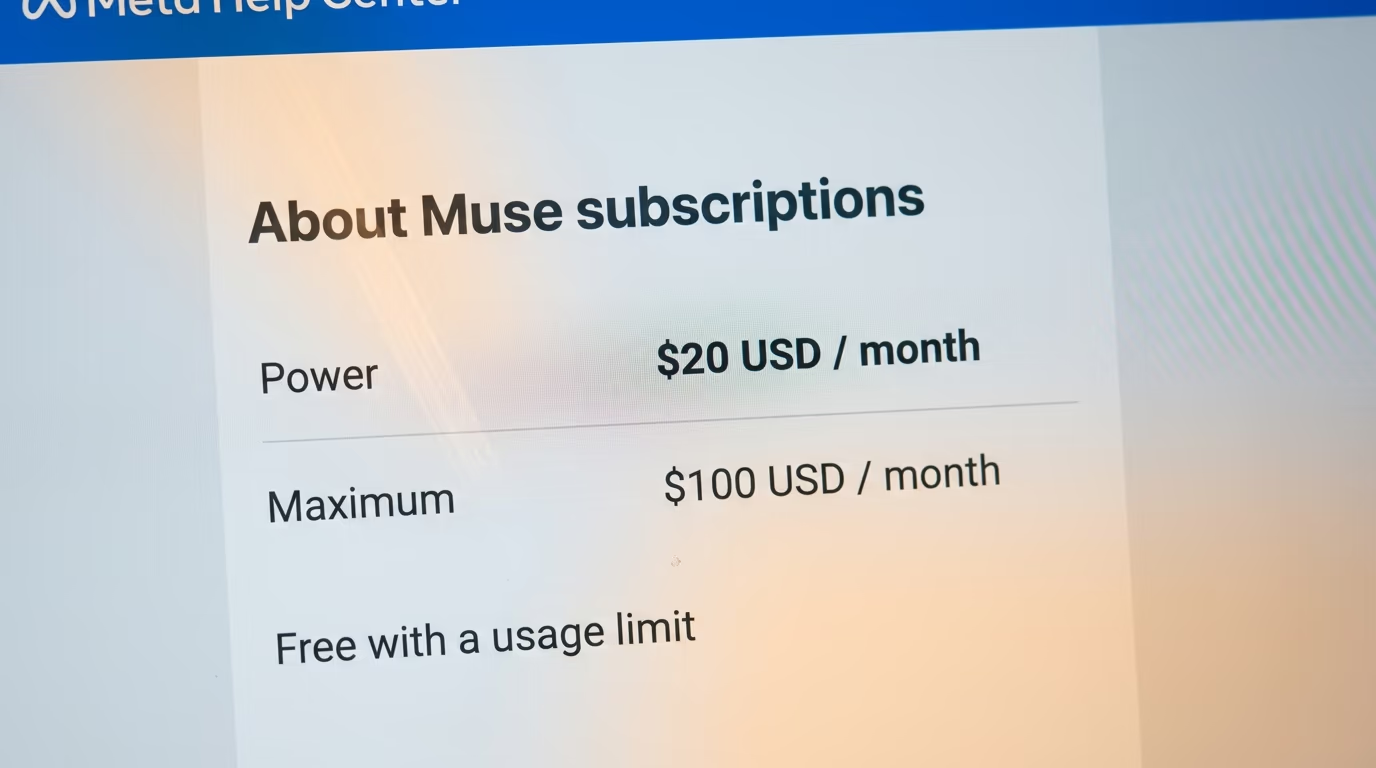
Claude Duet costs $20 a month on Claude Pro or from $100 a month on Claude Max, and Anthropic charges nothing on top for Duet itself while the research preview runs. Meta Muse is free with a usage limit, and its 2 paid plans, Power and Maximum, carry those same 2 prices on Meta's own subscriptions help page.
| Claude Duet | Meta Muse | |
|---|---|---|
| Free tier | None, the free Claude plan does not include Duet | Yes, free with a usage limit Meta does not quantify |
| First paid price | $20 a month, Claude Pro | $20 a month, Muse Power |
| Higher plan | From $100 a month, Claude Max | $100 a month, Muse Maximum |
| What the paid plan buys | The whole Claude plan, Duet included during the preview | 500 million Muse tokens a week, or 3 billion on Maximum |
| Billing | Monthly, or $17 a month if Pro is paid yearly | Monthly only, renews on the same day each month |
| Who can buy it | Pro and Max in the United States, by waitlist | Countries where Meta has turned Muse on, adults only |
| Runs on | iPhone, Android, claude.ai | iPhone, Android, muse.ai |
The ladder above the free line is identical. Anthropic sells Pro and Max at those rates on its pricing page, and Meta sells Power and Maximum at the same ones on its own Muse subscriptions help page. 2 companies with almost no shared history landed on the same pair of numbers for the same category of product.
Anthropic's term for Duet on the Pro and Max plans is included, and included is doing real work in that sentence. There is no Duet line on the pricing page, no add on to buy and no separate meter you can watch. The agent lives inside the plan you already bought, which is generous while the preview runs and tells you nothing about what happens after it ends. Pro also has an annual option that brings the monthly figure down, while Meta's plans renew monthly with no yearly discount offered at all.
Meta has a free tier and Anthropic does not, and that single rung decides more than the rest of the ladder. Somebody who has never paid for an AI subscription can install Muse tonight and find out inside a week whether an agent is any use to them. The free Claude plan does not include Duet at all, which makes the Pro plan the floor for trying it, and a floor is a very different thing from a price when you have no idea yet whether you want the product.
So why does Meta give Muse away at all? Meta told investors on its earnings call this week, in remarks TechCrunch reported, that shopping is a top activity on Muse, with email and calendar work behind it. Mark Zuckerberg said shoppers were averaging purchases above $200, which is a real shop rather than a sandwich, and that Plaid had told Meta it had not seen activity like it on any other service. Meta's route to revenue runs through the shopping rather than through the subscription.
That is still a price, it simply never appears on a card statement. With Duet you hand Anthropic money and Anthropic has no further interest in what the agent does afterwards. With Muse you hand Meta nothing and Meta earns when the agent buys something for you, which gives the free tier a job to do. Neither arrangement is dishonest and both are ordinary, but a reader deciding tonight should know that one of these products is paid for by them and the other is paid for by their shopping.
Can you sign up for either one today?
Not immediately for Claude Duet, because Anthropic's page says the research preview is open by waitlist to Pro and Max subscribers in the United States only, and that Claude Team and Claude Enterprise are not included yet. Meta Muse can be signed up for today in any country where Meta has switched it on, though Meta's help page still describes Muse and its subscriptions as being tested on a limited basis.

Duet runs as a standalone app on iPhone and Android and on claude.ai, so there is nothing to install on a computer beyond opening the site. Joining the queue is the only move available today, and Anthropic has published no date for when the preview opens wider, no date for the plans it skips, and no country list beyond the United States.
Claude Team and Claude Enterprise are the strange exclusion here. Every example Anthropic prints on its own Duet page is company work, payroll, invoices, sales forecasts, job adverts and storefronts, and those 2 plans are exactly what a company buys. For now the agent built for the admin of a business is only reachable from the plans individuals buy for themselves. A shop owner paying for Claude Team cannot get near it, while the same person paying for Pro out of their own pocket can join the list this afternoon.
Muse is in the opposite position, because it is already installed. Meta says Muse has passed 10 million users, and TechCrunch, citing Sensor Tower, puts that milestone at about 40 days from launch. One of these agents is a queue you join and the other is an app you open, and that gap is wider than any feature either company has listed.
There is a second difference hiding in those 2 sign up routes. A waitlist is a judgement Anthropic makes about you and an app store is not, so how many people will have used Duet by the end of the year is a number Anthropic controls and Meta does not. That is a deliberate choice rather than a limitation, and it is the normal way a lab ships something that can spend your money, but it does mean the 2 products will be judged on very different sample sizes for a while.
What is each agent allowed to do without asking you?
Claude Duet shows you exactly what it is about to do and waits for your approval before it sends a message, makes a payment, signs a document or deletes anything, and Anthropic names 2 actions it will not take at all, trading securities and moving money between accounts. Meta Muse also checks with you before sensitive actions like sending an email or making a purchase, and Meta's announcement names nothing that is refused permanently.
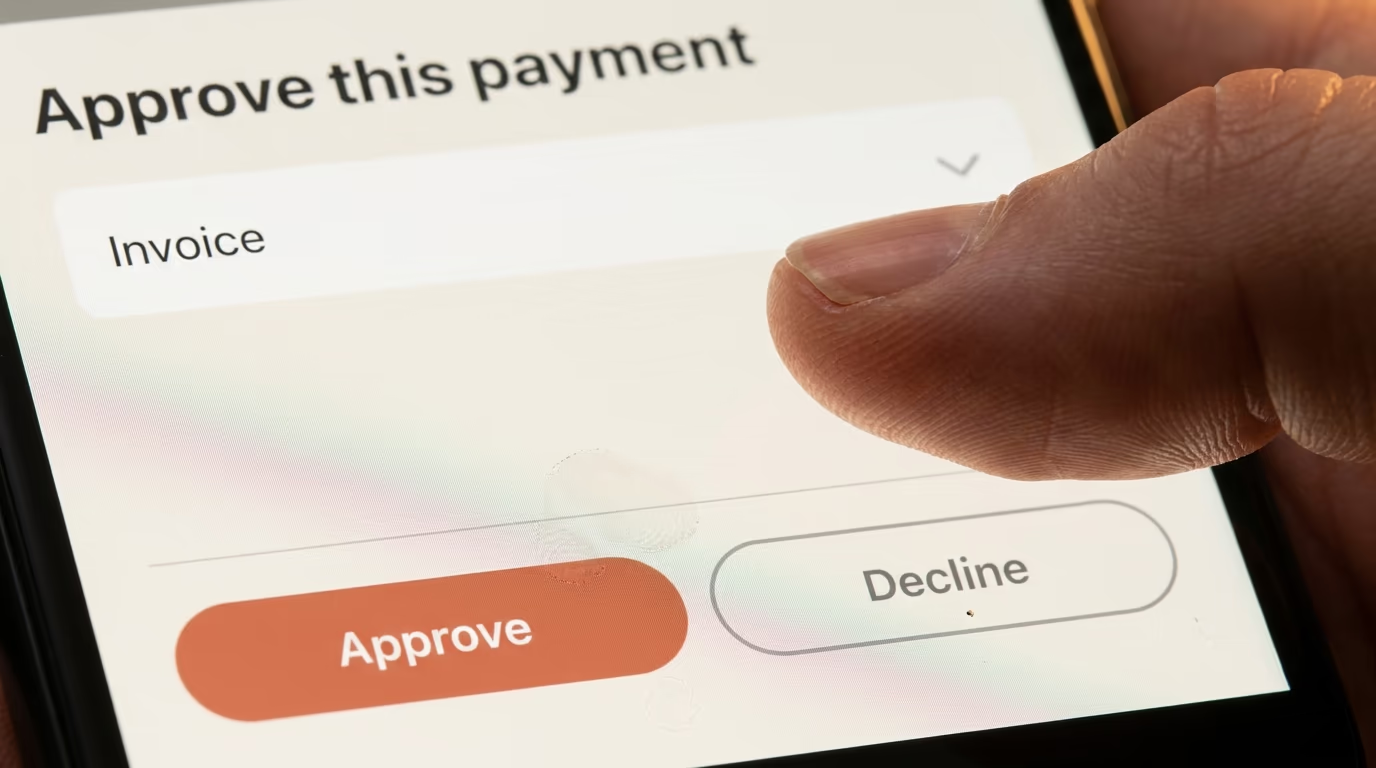
A refusal works differently from a permission setting. A setting can be switched on by a tired person late at night, and a refusal cannot be switched on at all. Anthropic has decided in advance that no setting inside Duet will let it trade shares or move cash between your accounts, which is a narrower promise than a permission screen and a much harder one to undo by accident.
Meta's design goes the other way, towards control in your hands rather than limits inside the product. Meta says people choose which apps Muse connects to and exactly how much access each one gets, and email is the example it uses, where reading your mail and sending on your behalf are separate decisions. Muse is then allowed to open a browser, fill out forms and negotiate for you, which is a wider licence to act than Anthropic has handed Duet.
Anthropic also says where the machinery lives. Its page says approvals, logins and safety checks run in your own cloud computer, so the browser session where Duet signs into your accounts belongs to you rather than sitting in a shared pool with everybody else's. Anthropic is honest about the failure mode too, writing that Duet still might misread a thread or miscalibrate what is urgent, which is an admission that rarely survives a launch page.
Neither company has shown what happens when an approval goes wrong. If Duet asks you to approve a payment and you tap approve at a glance, nothing either company has published says what the undo looks like, or whether there is one. Anybody about to hand an agent real access to their machine should read our walk through of how to check Full Disk Access on a Mac before they start connecting things to it.
What can each one plug into, and what work does it do all day?
Anthropic says Claude Duet reaches more than 6,000 connectors and plugins in the Claude Marketplace, and its page names Stripe, Gmail, Google Calendar, Slack, Shopify, QuickBooks, DocuSign, HubSpot and Notion among them. Meta Muse connects to apps you approve one at a time, and Meta publishes no count of its own.
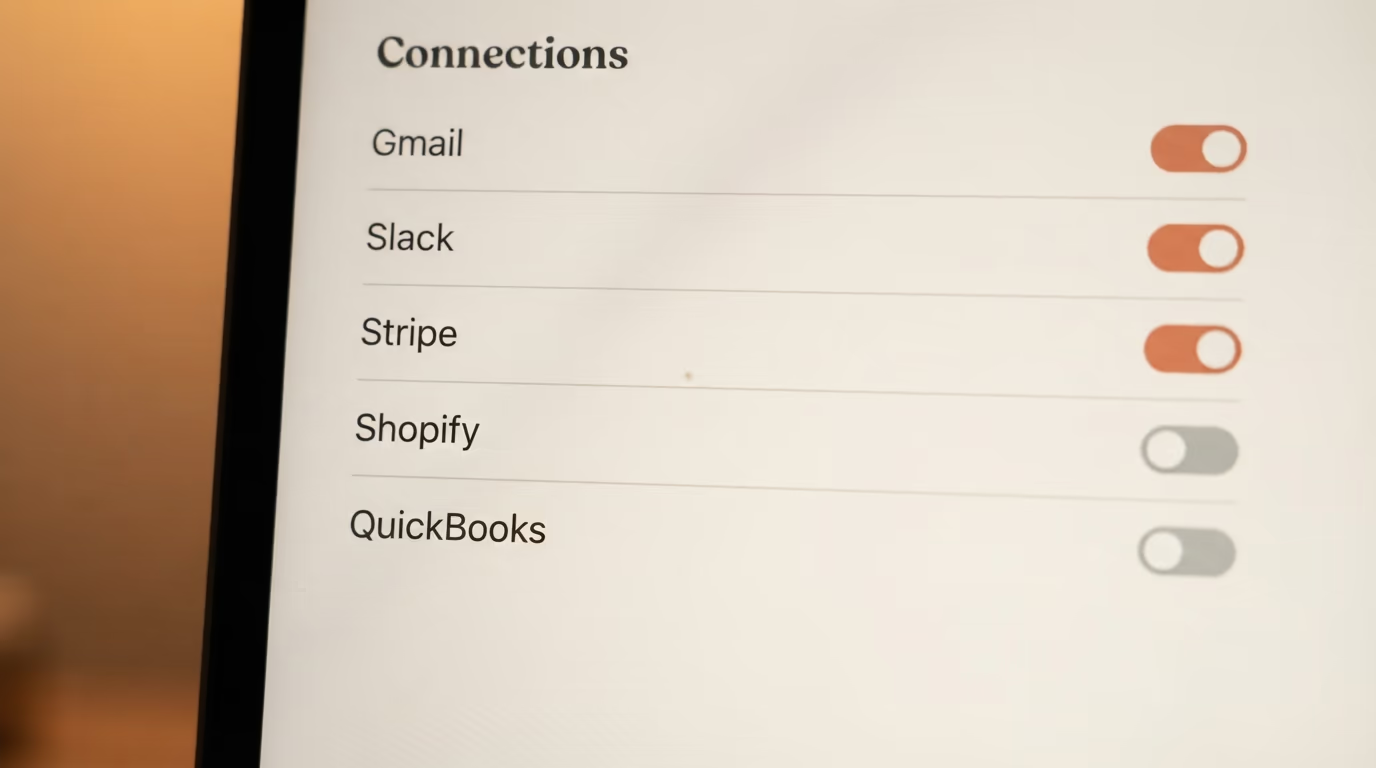
A number that size mostly means you will not hit a wall. Whatever a small company already pays for, Duet can probably reach it, and the named list leans in one direction, towards money and operations rather than entertainment. That matches the work Anthropic says Duet is good at, and it is a fair signal of who the product was designed for.
What each agent does with those connections is where the 2 products stop being rivals. Anthropic's examples are building a dashboard across dozens of tools, drafting a financial forecast, preparing payroll, prototyping and building a small web app. Anthropic also says where it is weaker, writing that personal services like booking tickets are not quite as strong yet, and that showing you its own browser is still to come.
The record on Muse is the mirror image of that. Meta told investors that shopping is a top activity on Muse and that email and calendar work comes behind it. So the agent with the wider licence to act is being used mostly for errands, and the agent with the tighter leash is being pointed at the operations of a business.
That makes the framing around the launch, that Anthropic is taking on Muse, less useful than it reads. The 2 products compete for the words in a headline more than they compete for an hour of your day, and somebody who wants both would be buying 2 different tools rather than choosing between rivals. If you would rather compare the models underneath these apps than the apps themselves, our ranking of the best AI model for agents and what each one costs prices them against each other.
What do we not know yet about Claude Duet and Meta Muse?
Neither company has published how much work its money buys, which is the biggest gap across both products. Anthropic prints no usage figure for Claude Duet anywhere, and Meta prints a weekly token allowance that nobody outside Meta can convert into finished tasks.

Anthropic's own wording on the Duet page is that during the research preview Duet "shares your plan's usage limits with the rest of Claude, and it uses them differently than a typical conversation does". Background checking runs while you are asleep and spends the same allowance you use for chatting during the day, and nothing published says how fast it burns through it. Somebody on Pro could reasonably find their ordinary Claude usage running out earlier than it used to, and Anthropic has given them no way to predict that.
The gap at Meta has the opposite shape. Its subscriptions page prints a weekly token allowance for each paid plan and never says what a Muse token measures in work, so the bigger allowance is only a promise that it is bigger. The same page describes the free tier as free with a usage limit and puts no figure on that limit anywhere on the page.
4 more questions have no published answer today.
- What Claude Duet costs once the research preview ends, which Anthropic has not dated.
- When Claude Duet reaches Claude Team, Claude Enterprise and countries outside the United States.
- What cut Meta takes when Muse buys something on your behalf.
- How either agent scores in a test run by somebody other than its maker.
Those 4 questions will decide whether either product is worth the money in 3 months rather than today. An agent that quietly halves your Claude usage is a different purchase from one that does not, and nobody can tell you today which of those Duet turns out to be.
Which one should you choose?
Choose Meta Muse if you want to try an agent tonight without paying anybody, and choose Claude Duet if you already pay for Claude Pro or Claude Max and the work you need doing is company admin rather than errands. At the same price, Muse is the better first agent and Duet is the better second one.
That verdict turns on where you already are. Somebody paying for Claude today gets Duet thrown in, so the only cost is the queue and whatever it quietly takes out of their usage allowance. Somebody paying for nothing today gets Muse for nothing, and can decide after a week whether a paid plan is worth it, which is a cheaper way to find out than reading anybody's review, including this one.
A sceptical reader will say the matching prices prove nothing, that these are simply the numbers this market charges and both companies arrived at them on their own. That is fair, and we cannot show otherwise, because neither company has said anything about the other's rate card. The conclusion survives the objection either way. Price is not what separates these 2 products, so nobody should be choosing between them on it. The free rung, the waitlist and the kind of work each one was built for are what actually decide it.
Each company carries a mismatch it will have to close. Anthropic has built a business agent and withheld it from the plans businesses buy. Meta has millions of people holding a general agent and most of them are using it to shop. Whichever company closes its own gap first takes the category, and both of them can see that gap perfectly well from where they are standing.
Anthropic's waitlist sits on the Claude Duet page and Meta's plans are on its Muse subscriptions help page, and only one of those asks for a card before you can see what the thing does. If you would rather not pay either company anything at all, our list of the best free AI agents and where each one stops covers what else is available right now.
Questions people ask
Is Claude Duet free?
No. Claude Duet is included with Claude Pro and Claude Max rather than sold on its own, so the cheapest route to it is the Claude Pro plan. Anthropic's free Claude plan does not include Duet, and there is no separate Duet subscription to buy.
How much does Meta Muse cost?
Meta Muse is free with a usage limit, and Meta sells 2 paid plans above it, Power and Maximum, on its own subscriptions help page. Those 2 plans carry the same monthly prices as Claude Pro and Claude Max, so both agents land on the same pair of figures.
Claude Duet vs Meta Muse, which one can buy things for me?
Meta Muse is the one that buys. It opens a browser, fills in forms and pays through Link, the Stripe checkout product, and Meta says shopping is a top activity on it. Claude Duet can make a payment, but only after showing you what it is about to do and waiting for your approval, and Anthropic says it will never move money between your accounts.
Can I get Claude Duet outside the United States?
Not yet, and no date has been given. Anthropic's Claude Duet page says the research preview is open to Pro and Max subscribers in the United States, and no other country has been named. Anthropic has published no date for a wider opening.
Does Claude Duet use up my normal Claude usage?
Yes. Anthropic says Claude Duet shares your plan's usage limits with the rest of Claude and uses them differently than a typical conversation does. Background checking counts against the same allowance you use for chatting, and Anthropic has published no figure for how much it takes.
Claude Duet vs Meta Muse, which should a small business pick?
Claude Duet, if somebody there already pays for Claude Pro or Claude Max. Anthropic's own examples are payroll, invoices, forecasts and job adverts, which is company admin, but Claude Team and Claude Enterprise cannot reach Duet yet, so a business buying seats is locked out for now.
Is Claude Duet available on a computer?
Yes. Claude Duet runs on claude.ai in a browser as well as on iPhone and Android, so there is nothing to install on a desktop machine. Anthropic describes it as a standalone app on the mobile platforms and a page on the web.
What is a Muse token?
It is the unit Meta uses to meter Muse, and Meta has not published what one of them buys. The subscriptions page prints a weekly token allowance for each paid plan without saying how much work that represents, so the larger allowance only tells you that it is larger.