AgentsOctober 13, 202613 min read
Best AI model for agents in 2026, ranked by what it costs
Meta shipped Muse Wonder on 12 October at exactly Claude Opus 5.5 money. On Meta's own scorecard, Anthropic still wins 9 of the 14 rows where both models have a score.
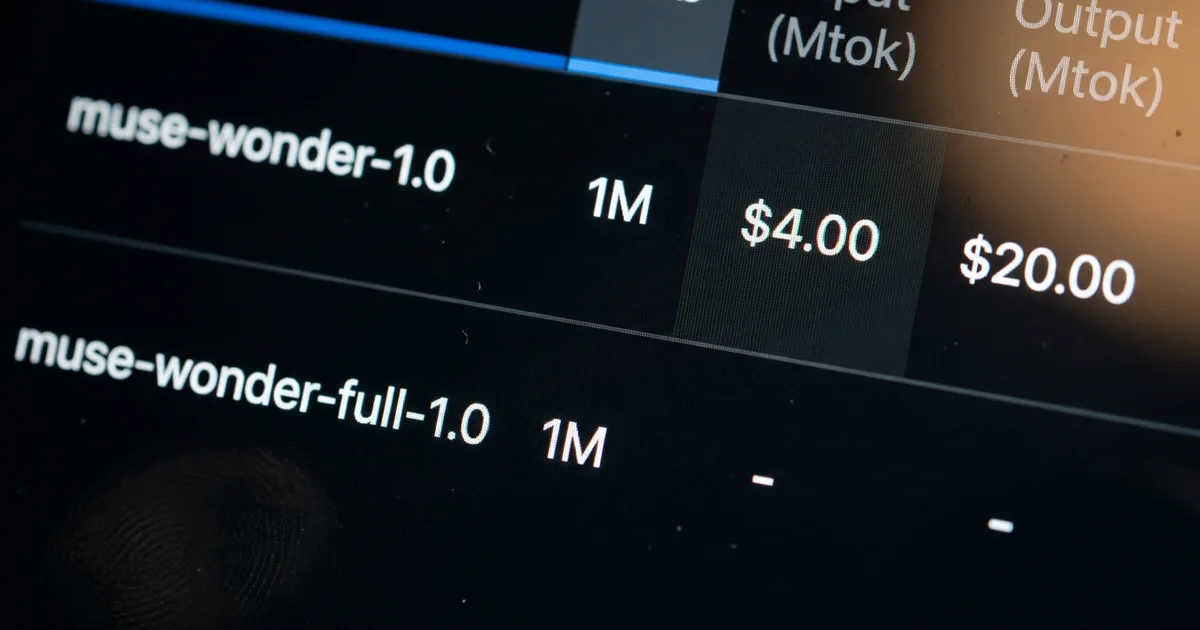
The best AI model for agents in 2026 is Claude Opus 5.5, and Meta is the company that just proved it. Meta released Muse Wonder at exactly the rate Anthropic charges for that model, the same money to read a million tokens, the same money to write a million and the same money for a cached read, and Meta's own launch comparison then puts the Anthropic model ahead on 9 of the 14 rows where both of them carry a score.
Muse Wonder Full, the bigger model that does finish ahead of Claude, cannot be bought at any price. Its row on Meta's own rate card shows a dash in every money column, and the only door to it is a Muse Code subscription that starts at $50 a month. Every other ranking of agent models scores them on an index and stops there, so this one starts from the rate card instead, prices the same long job on each model, and names what each of them actually wins.
What is the best AI model for agents in 2026?
Claude Opus is the best AI model for agents today for most builders, because it charges what Meta's brand new Muse Wonder charges and finishes ahead of it on most of the tests Meta itself chose to publish. The ranking below prices one long agent run on each model's own published rate, so the column that decides is money rather than a score on somebody's leaderboard.
Agent work is mostly reading, which is why the reading rate matters more than the writing rate in the headline. A long session spends most of its money pulling in files, web pages and its own earlier output, and only a thin slice of it writing anything back to you. So the job priced below is a reading heavy one, and every cost in the table was computed from the rate the vendor publishes.
One long run means an agent that reads about 190,000 words of your material, roughly a fat novel, and writes back about 37,000 words of code, notes and tool calls. Every price was read from the vendor's own page on 13 October 2026, and none of these costs counts caching, which cuts the reading bill on all of these models.
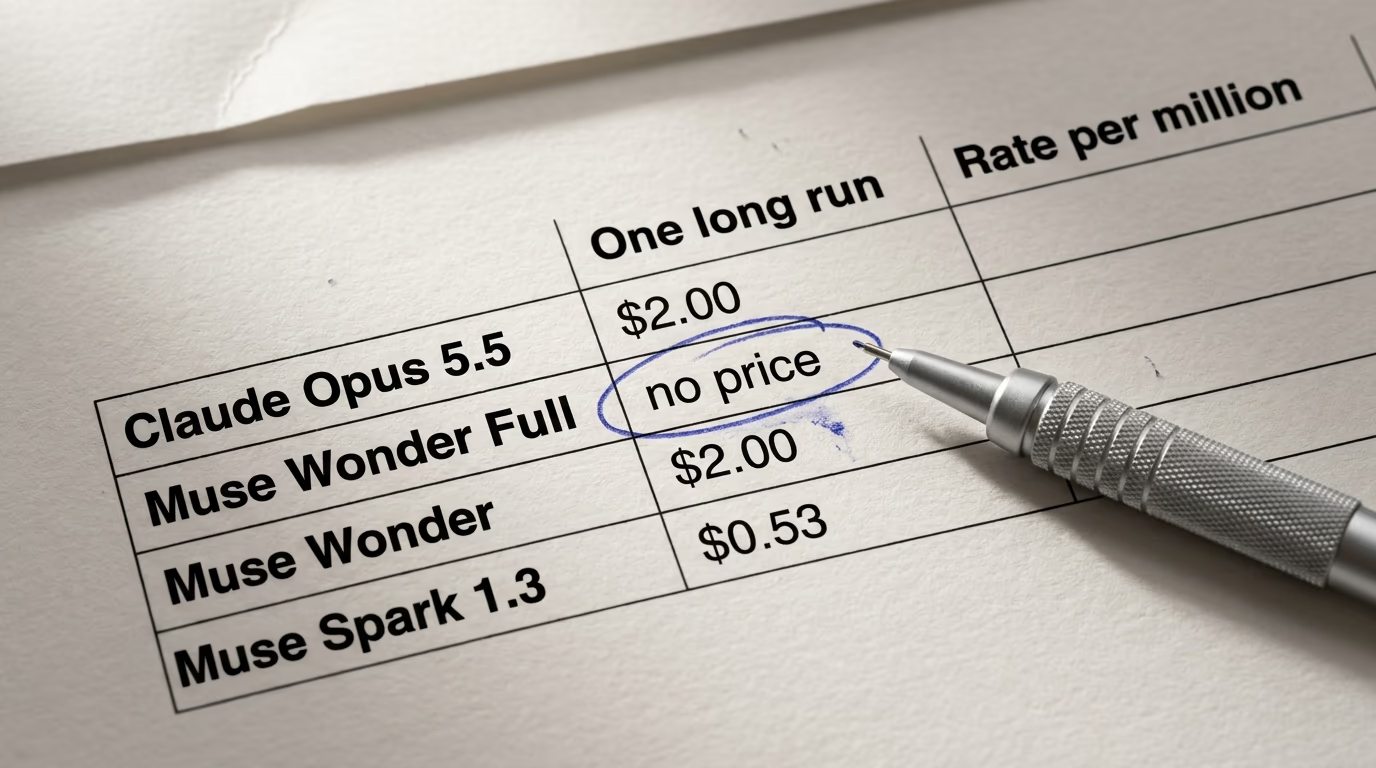
| Model | One long run | Published rate per million tokens | Where you can call it | What it tops on Meta's own card |
|---|---|---|---|---|
| Claude Opus 5.5 | $2.00 | $4.00 read, $20.00 written | Claude API | The independent intelligence index, computer use, programming from scratch |
| Muse Wonder Full | no published price | subscription only, from $50.00 a month | Muse Code only | Legal work, business workflows, software jobs that run for hours |
| Muse Wonder | $2.00 | $4.00 read, $20.00 written | Meta Model API, OpenRouter, Muse Code | Remembering what you told it earlier |
| Claude Fable 5.1 | $5.00 | $10.00 read, $50.00 written | Claude API | Computer use tasks finished end to end |
| GPT-6 Astra | $5.00 | $10.00 read, $50.00 written | OpenAI API | Professional work grounded in a supplied document |
| Muse Spark 1.3 | $0.53 | $1.25 read, $4.25 written | Meta Model API, OpenRouter | Nothing, and it runs the same job for about half a dollar |
Read the first column against the second and the ranking stops being a matter of taste. Claude and Muse Wonder cost the same money for the same work, which turns the whole decision into a single question about which of them does more of your job. Anthropic's Fable and OpenAI's Astra both charge more than twice as much to read your files and more than twice as much to answer, and each of them tops exactly one row of Meta's grid. Muse Spark, Meta's older and cheaper model, runs that long job for about half a dollar.
The entry nobody can rank properly is Muse Wonder Full, because it has no rate at all. It is the strongest model in the table on the agent rows Meta cares about, and the only way to reach it is a subscription whose allowance is described in multiples of a vague prompt count. A model you cannot meter is a model you cannot budget for, which is why it sits second in this ranking rather than first, and why it would sit last for anyone trying to build a product on top of it.
What did Meta ship on 12 October, and what does Muse Wonder cost?
Meta shipped Muse Wonder and Muse Wonder Full, its first models aimed squarely at agents rather than at chat, and Muse Wonder costs $4 to read a million tokens and $20 to write a million on the Meta Model API, with cached reading cheaper again. Muse Wonder Full has no published price of any kind, because the row for it on Meta's own pricing table shows a dash in all 3 money columns, and the model is sold only inside a Muse Code subscription on the paid plans Meta says carry its most powerful models.
Line those rates up against Anthropic's and they match exactly. Anthropic publishes 3 numbers for Claude Opus, a reading rate, a writing rate and a cached reading rate. Meta publishes the same 3 numbers for Muse Wonder, and every one of them lands on the same figure as Anthropic's. The comparison between the 2 models is therefore not about budget at all, it is a straight contest of output on an identical bill. TechCrunch described the new rate as roughly equivalent on launch day, and the 2 rate cards are not roughly anything, they match wherever both companies publish a number.
A million tokens is about 750,000 words, so $4 buys an agent enough reading to get through a small shelf of books before it answers you. That is the figure worth carrying around when you plan a budget, because reading your own documents is cheap and thinking out loud is what costs. Reasoning models bill their thinking at the writing rate, so a model that deliberates for a long time quietly moves itself into the expensive column.
The subscription side is harder to pin down. Muse Code sells 4 tiers, and Meta's own page describes the cheapest one as a range of prompts every 5 hours rather than a fixed number, then describes the tier that reaches the bigger model as a multiple of that range. Nobody outside Meta can turn that into a number of agent runs. It is the same problem that turns up in every usage based plan, including the ones we counted in our piece on what Meta Muse costs and what it needs from you first.
Why does Meta's own scorecard put Claude Opus 5.5 ahead?
Meta published a comparison grid with its launch, and counting the rows by hand gives Claude 9 of them and Muse Wonder the other 5 rows. Claude finishes ahead on the independent intelligence index, on health questions, on professional tool use, on computer use, on terminal work and on writing a program from scratch, where the gap is widest of all. Muse Wonder finishes ahead on legal work, on remembering earlier conversation, on long coding jobs and on documents handed to it as source material.
That count is the whole argument for picking Claude first, and it comes from the table Meta chose to publish rather than from a rival's marketing. Meta had every reason to pick tests where its own models look good, and the honest reading of its grid is that the cheaper of its 2 new models trades blows with a rival at the same price and loses more of those trades than it wins. Anyone can repeat the count, because the same grid sits on Meta's own model page.
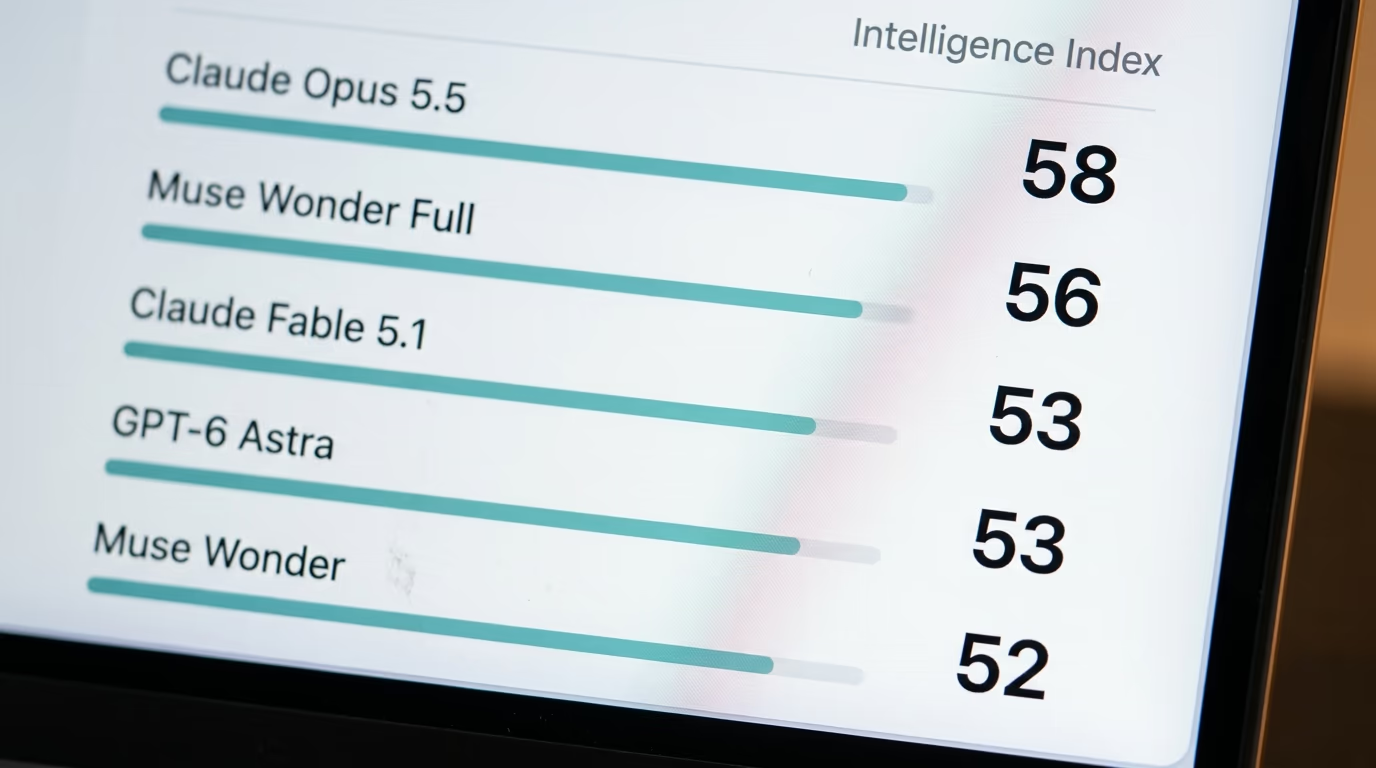
The bigger model turns the count around. Muse Wonder Full finishes ahead of Claude on more of those same rows than it loses, and it wins the ones Meta built it for, which are agent tasks in law, finance and business workflows. The last line of the grid is the one to read twice, because it is the only row in the whole grid scored by an outside company rather than by Meta. On Artificial Analysis's intelligence index, which that firm runs itself across every major model, Claude scores higher than both new Meta models, and Artificial Analysis still had no price to publish for Muse Wonder Full when we read its page this morning.
Meta deserves credit for how it labelled the grid. Its methodology notes say the rival models were run on common settings where practical, but that those runs stay a best effort and may not be tuned the way each model's own maker would tune them. Very few launch scorecards admit that in print. The notes also flag that the strongest software row was not a controlled comparison, and that Meta's own model ran at a higher reasoning setting there, which most companies would bury in an appendix.
Which model should you give a job that runs for hours?
Give a job that runs for hours to Muse Wonder Full if you already pay for Muse Code, and to Claude Opus if you do not. On the 2 tests Meta uses for software work that stretches across a whole project, both Muse models finish clearly ahead of Claude, of Anthropic's Fable and of OpenAI's Astra, and the margin on the longer of those tests is the widest gap anywhere in the grid.
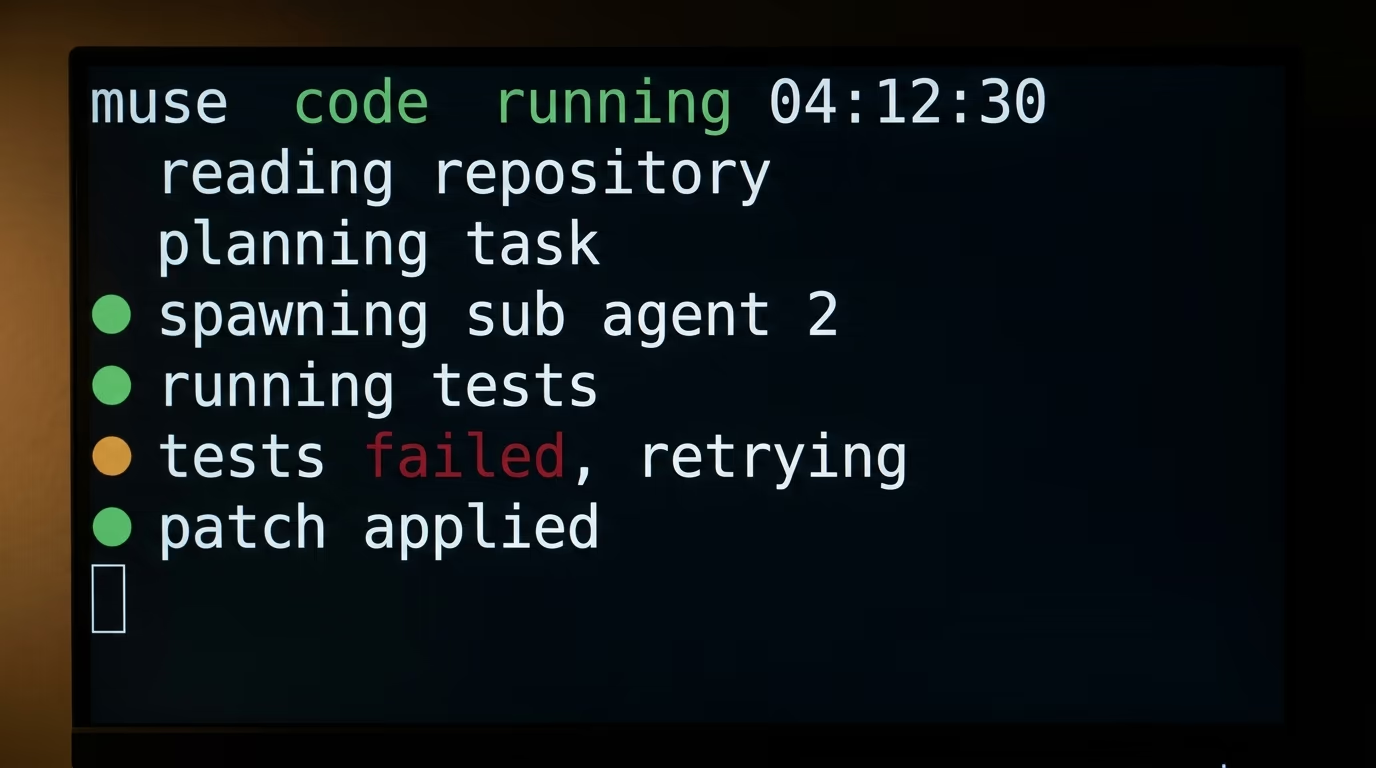
This is the one place where Meta's claim lands cleanly, and it matches what the models were built to do. Meta describes Muse Wonder as planning long tasks, handing pieces of them to sub agents, calling tools in parallel and recovering from its own errors, which is the exact shape of work those tests measure. The company gave that behaviour a name, Active Focus, and gave its sibling the name Active Memory for carrying context between sessions. Both are marketing names for real rows on the scorecard, and the memory row is the single line where the cheaper Muse Wonder beats everything else in the table, including its own bigger sibling.
Before you reorganise your week around that, read Meta's own footnote on the longest test. It says the row is not a controlled comparison, because the rival results came off a public leaderboard where each model ran inside its own maker's agent tooling, and it says Muse Wonder Full was reported at a higher reasoning setting than the one used elsewhere in the column. Meta is comparing its model at full stretch against rivals at a different stretch, and it tells you so in writing. If your own work looks like a long afternoon of refactoring, test both models on one real job of yours before you trust any grid, this one included.
There is a second reason to be careful with long jobs, and it has nothing to do with quality. A run that lasts hours reads an enormous amount, so the reading rate decides the bill, and an agent that loops over the same files without caching can spend more in an afternoon than a careful one spends in a week. We went through those sums model by model in what the big models charge for the same real jobs, and the ordering there has barely moved since.
What is the cheapest model for agent work, and what does cheap cost you?
The cheapest model for agent work in this ranking is Muse Spark, which charges about a quarter of what Muse Wonder and Claude charge to read, and runs that long job for about half a dollar instead of $2 on the dearer models. Meta also sells a second version of the identical model at roughly a fifteenth of that price, and the discount there is paid in data rather than in money.
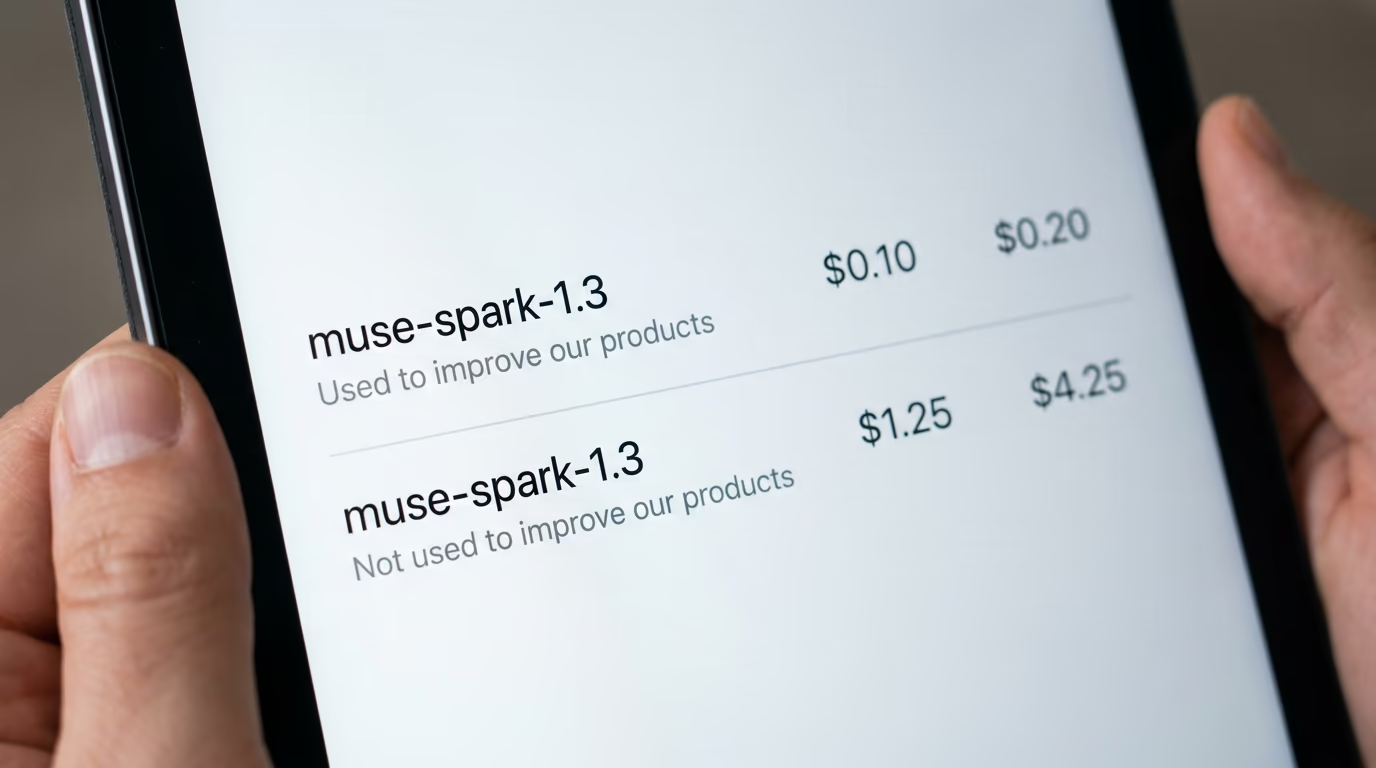
The row is easy to miss on Meta's pricing page. The same model name appears twice, one line above the other, and the only difference printed next to them is a label. The cheap line says it is used to improve Meta's products. The normal line says it is not. The same long agent run costs a few cents on the cheap line and about half a dollar on the one that keeps your text out of training, so Meta's own rate card puts the privacy of a long run at well under a dollar.
That is an honest trade, and Meta labels it in the open, which is more than several rivals manage. It is also the only cheap entry here worth considering, because the gap in ability is real. Muse Spark tops no row of the comparison grid and sits well below the frontier models on the independent index, so it belongs on the jobs where a mistake costs you a retry rather than a client. Use it for sorting, extracting, labelling and first drafts, and keep the expensive model for work you would be embarrassed to send out wrong.
The same logic applies to the tools you wrap around these models. A cheap model inside a careful agent loop often does better work than an expensive model inside a sloppy one, which is the finding that keeps coming back every time we rank these things, including in our list of AI agents for coding and what each one costs to run.
Can you use Muse Wonder tonight, and where?
Yes, Muse Wonder is callable tonight on the Meta Model API, which is in public preview, and on OpenRouter, where it already appears under the name Meta: Muse Wonder at the same rate Meta publishes. Muse Wonder Full is on neither of them, and TechCrunch reported on launch day that it will not be served through the API at all.
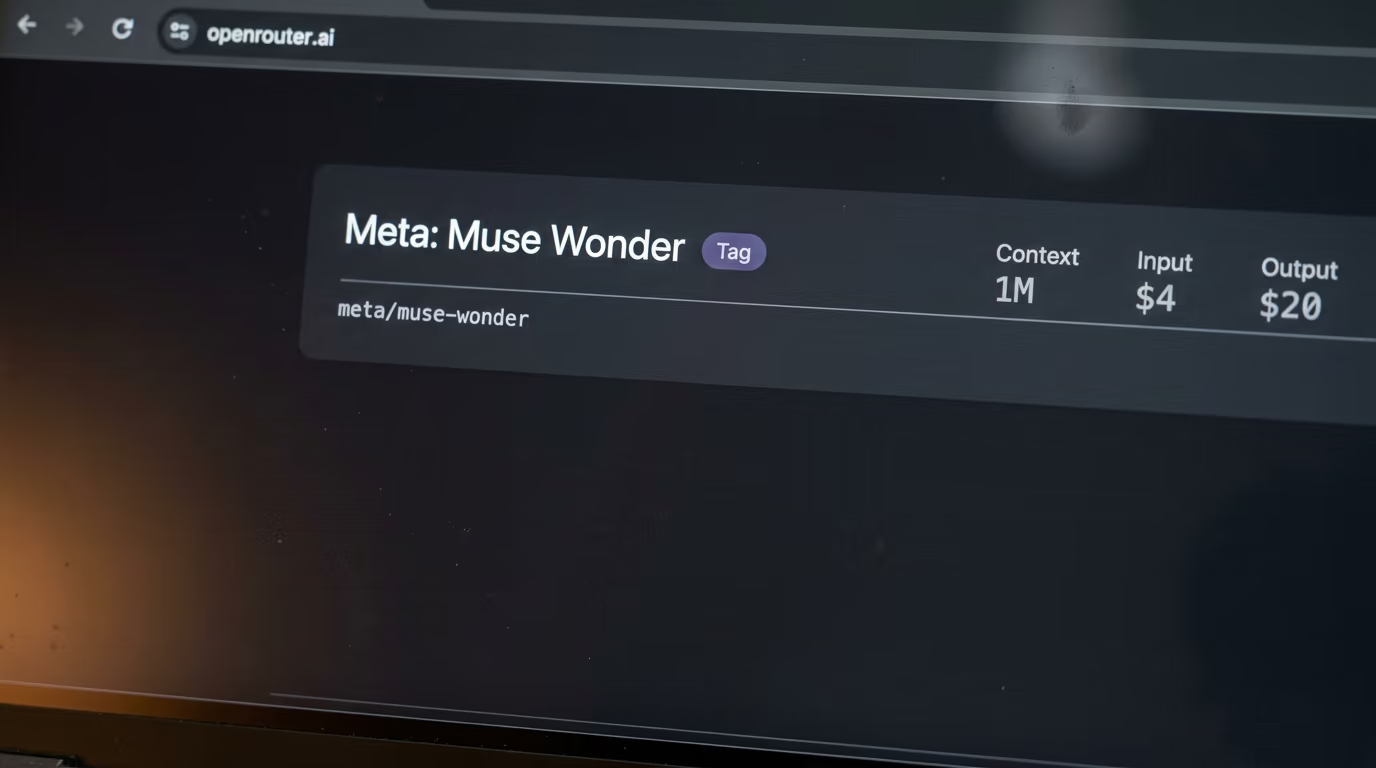
Meta made the API deliberately easy to swap into. Its own documentation tells you to generate a credential and point an existing OpenAI client at the new address, which means an agent you already run against another provider can usually be moved with an address change and a model name. There is also a browser playground if you want to try one prompt before wiring anything up. If you would rather stay inside tools you already have, our walkthrough of how to use OpenRouter covers the same swap from the other direction.
Muse Code is the other door, and it is the only one that reaches the bigger model. It installs with a single line in a terminal, and Meta's page says it runs on macOS and Windows, with no mention of Linux anywhere on it. Here is the install line Meta prints on its own product page.
curl -fsSL https://dev.meta.ai/install.sh | bashRun that and you get the Muse Code agent on your machine, after which a paid plan reaches Muse Wonder Full inside it. Read the install script before you pipe anything into bash, the way you would with any installer asking for that much trust, and remember that the subscription is what buys the model rather than the install itself.
What we do not know yet about Muse Wonder
Nobody outside Meta knows what Muse Wonder Full costs per unit of work, how big either model is, or what licence governs them. Meta published a model card with the launch, and that card names the release date, the context window, the kinds of input the models accept and a support address, while leaving the parameter count, the training data and the licence blank. For a launch this size, that is a lot of blank space in the one document written to be quoted.
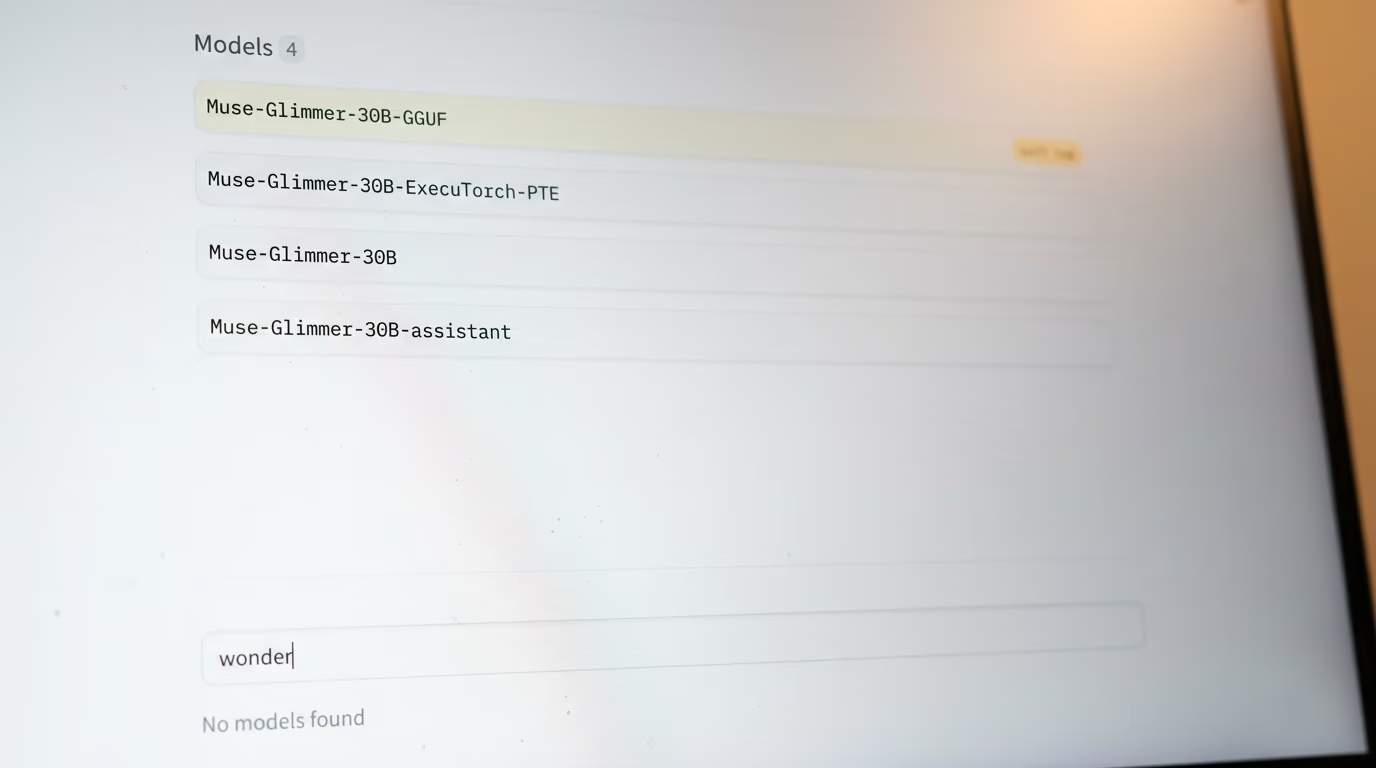
There are no weights either, and that deserves stating carefully. Meta's official account on Hugging Face still carries exactly one open model, Muse Glimmer, built for small local agents and downloaded hundreds of thousands of times. Nothing named Wonder has appeared there, and the independent trackers list both new models as proprietary. Meta has not stopped publishing weights, it has stopped publishing them at the top of its own range, which is the move Google made with its forecasting model and the move Mistral made with its latest flagship.
The safety write up is still coming too. Meta's post says a full report with additional safety evaluations will be available soon, and the model card already carries one unusually frank figure, a count of security flags its model captured where only a fraction went through the route the test intended and the rest came through holes the test never meant to leave open. Meta published both numbers rather than the flattering one, which is a small thing that says a lot about the care taken with the rest of the document.
What is missing most, for anyone choosing a model this week, is an outside measurement of Muse Wonder Full that was not commissioned for the launch. Artificial Analysis has scored it on its own index, which is how we can say Claude still leads, but the agent rows that make Meta's case come from a mix of outside evaluators and Meta's internal tests, and several of those tests exist nowhere except inside Meta. When somebody runs the same long job on both models and publishes the bill, that is the comparison worth reading, and today it doesn't exist.
Which model should you pick for your own agent?
Pick Claude Opus if you want the strongest agent model you can actually meter, because it costs what Muse Wonder costs and wins more of the rows on Meta's own grid. Pick Muse Wonder if your agent lives or dies on remembering what happened yesterday, or if you want a second provider at an identical rate so that one company's bad afternoon doesn't stop your work. The memory row is not a small difference, and anyone who has watched an agent forget a decision it made earlier in the same session will understand why it can matter more than another point on a reasoning index.
Pick Muse Wonder Full only if you already pay for Muse Code and your work is long software jobs or document heavy professional work, where it is genuinely the strongest thing in the table. Treat it as a subscription feature rather than as a model you can build a business on, because you can't forecast what it will cost you once your volume grows. Pick Muse Spark for the cheap half of your pipeline, and read the label on the row before you take the deeper discount.
The broader lesson of this launch is about pricing rather than intelligence. Meta arrived at the frontier and set its public model exactly where Anthropic sits, which tells you the rate card is now the product decision and the scores are the argument that follows it. We saw the same shape when Google announced a model nobody could buy, and again when a European lab called its flagship open weight with no weights published. A model you can call at a price you can predict is worth more than one that wins a chart you can't reproduce.
If you are assembling a stack this week, the companion piece to this one is our breakdown of the kinds of AI agent memory and what each costs, which explains why the memory row above is worth more than its single line in the grid. And for the other half of the picture, where a model nobody can purchase still tops a leaderboard, we wrote that up in the model you can't buy.
Questions people ask
What is the best AI model for agents in 2026?
Claude Opus 5.5 is the best AI model for agents today for most builders. It charges the same rate as Meta's new Muse Wonder, and Meta's own launch comparison puts it ahead on 9 of the 14 rows where both models carry a score, including the only row scored by an independent company.
How much does Muse Wonder cost?
Muse Wonder costs $4 to read a million tokens and $20 to write a million on the Meta Model API, with a cheaper rate again for cached reading. Muse Wonder Full has no published price at all and is sold only inside a Muse Code subscription, on the paid plans Meta says carry its most powerful models.
Is Muse Wonder better than Claude Opus 5.5?
Not on most of the tests Meta published itself. Counting Meta's own launch grid by hand, the Anthropic model finishes ahead on most of the rows where both models have a score, including the independent intelligence index. Muse Wonder wins on memory, on legal work and on long coding jobs.
Can you download Muse Wonder and run it yourself?
No. Meta has published no weights and no licence for either Muse Wonder model, and its official Hugging Face account still carries only Muse Glimmer, a smaller model built for local agents. The independent trackers list both new models as proprietary.
What is the cheapest AI model for agents?
Of the models compared here, Muse Spark is the cheapest, at roughly a quarter of what Muse Wonder and Claude Opus charge to read your files. Meta sells a second version of the same model at about a fifteenth of that price, labelled on its own pricing page as used to improve Meta's products.
Do you need a Muse Code subscription to use Muse Wonder?
No for Muse Wonder, yes for Muse Wonder Full. Muse Wonder is self serve on the Meta Model API and on OpenRouter, so a credential and a model name are enough to call it. Muse Wonder Full appears on neither, and Meta restricts it to its paid Muse Code plans.
What is Active Memory in Muse Wonder?
Active Memory is Meta's name for carrying what matters about you across conversations and pulling the relevant details back when a task needs them. On Meta's own launch grid, the cheaper Muse Wonder scores highest of every model tested on the memory row, above its bigger sibling Muse Wonder Full.