ToolsOctober 15, 202611 min read
OpenCode vs Claude Code, and the version you really get
OpenCode 2 was announced this week and installing OpenCode today still gives you 1.19.0. Here are 5 checks against Claude Code, with both pricing pages read at the source.
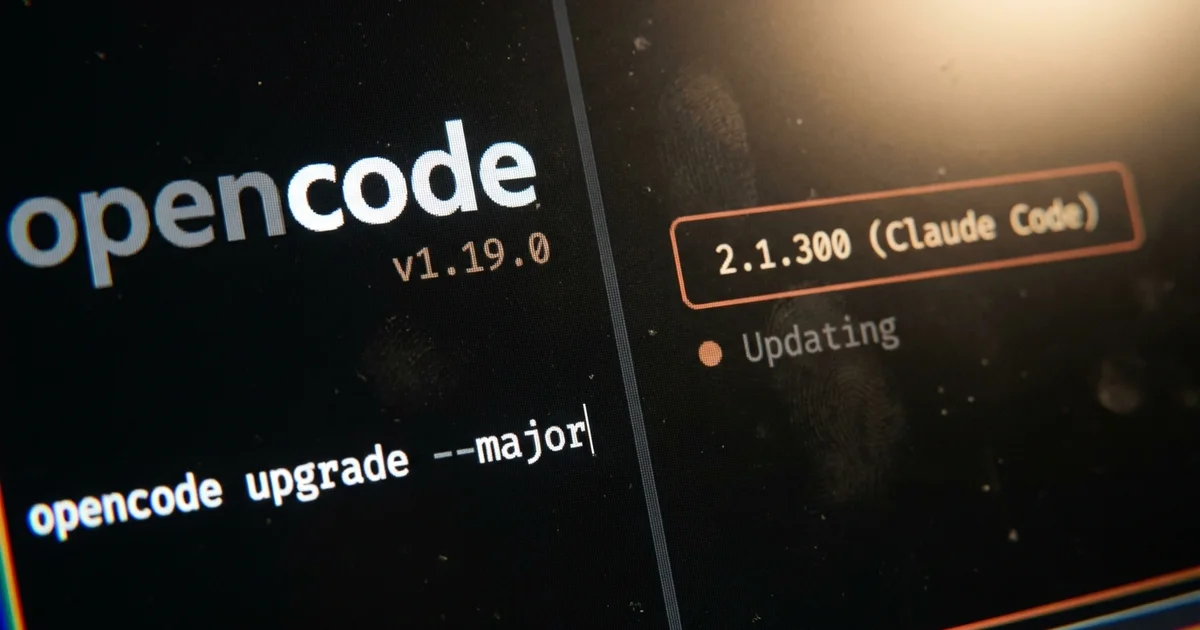
OpenCode vs Claude Code is decided by 2 facts that the feature comparisons leave out. Installing OpenCode today gives you version 1.19.0 rather than the OpenCode 2 that Anomaly announced this week, and OpenCode is not allowed to run on your Claude Pro or Max subscription, because its own documentation says Anthropic prohibits it and the plugins that once did it came out of the program in 1.3.0.
The OpenCode program itself is free under the MIT licence and you pay whichever model provider you point it at. Claude Code is free to install and needs a paid Claude account, and Anthropic's own setup page says the free claude.ai plan does not include access. Both agents live in a terminal, both edit the files in front of them, and the real question is which company is already charging your card.
The 2 comparisons at the top of the results for this question both argue about features and both call OpenCode the free one. Neither checked the installed version against the announcement, and neither printed what OpenCode's own gateway charges for a Claude model. We read both vendors' pages at the source this morning, and the gateway's rates match Anthropic's published ones to the cent.
What do you actually install when you install OpenCode today?
Installing OpenCode today gives you version 1.19.0, and not the OpenCode 2 that Anomaly announced this week. The install script hosted at opencode.ai asks GitHub for the project's newest published release, and that release still belongs to the older series.
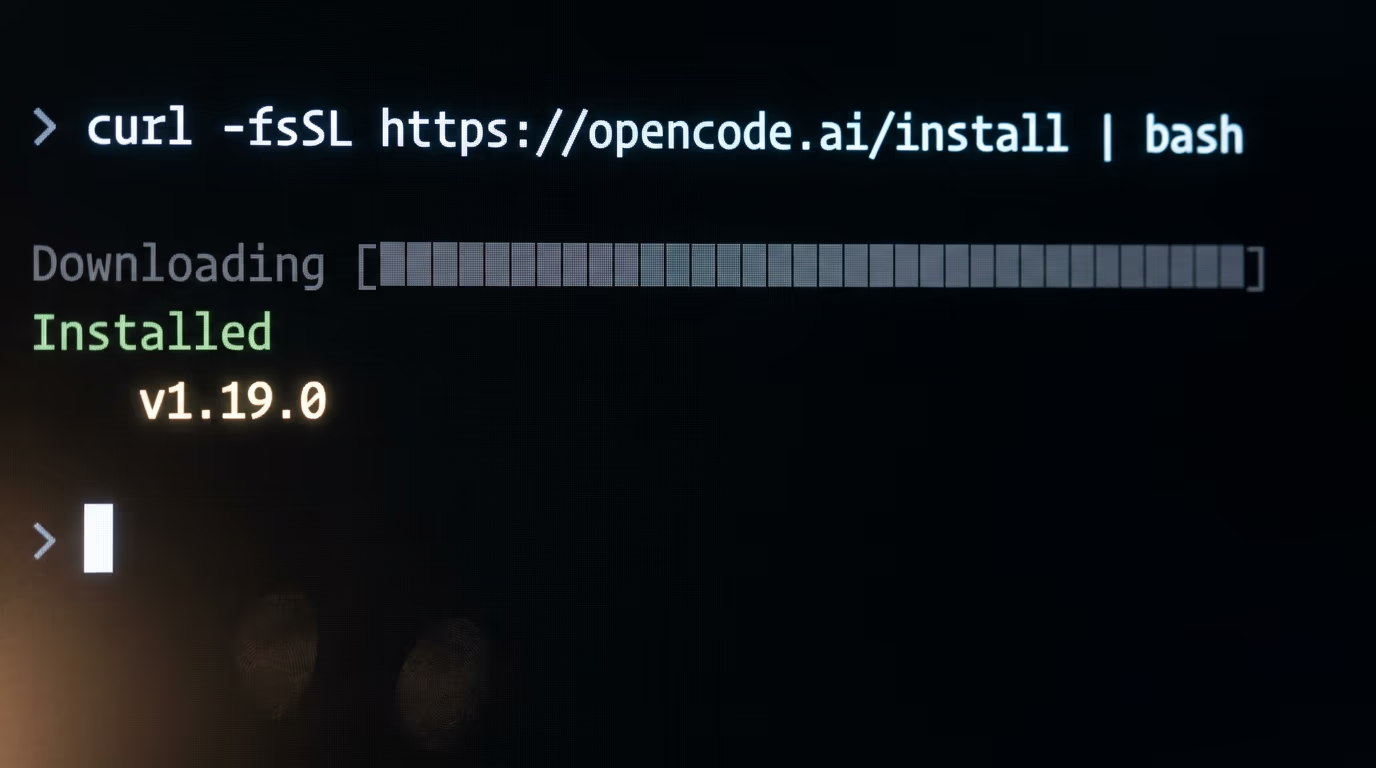
The check takes a minute and anybody can repeat it. GitHub's releases page for anomalyco/opencode lists that same version as the newest published release, and every release sitting behind it belongs to the older series too. The npm registry says the same thing from the other side, because the package resolves its latest tag to that same version, and not one of the thousands it has ever published carries a 2 at the front.
Anomaly is not hiding any of this. The release notes shipped with that version tell you how to move up, and they also tell you that moving up is now something you ask for.
Use /update to install OpenCode updates or upgrade to OpenCode 2; updates are no longer installed automatically.
That line comes from the maker's own release notes rather than from a reviewer. OpenCode 2 is real and it is shipping, and the changelog on opencode.ai has already moved well past the announcement. It simply is not what lands on your machine when you follow the install instructions.
Asking for the newer version is only sensible if you know what it changes. Anomaly describes OpenCode 2 as a rebuild rather than a feature release, and the largest change is that the program now runs as a single background service on your machine, which the terminal interface, the desktop app and the web view all talk to. The API around it was rewritten from scratch, there is now a software library so other programs can drive OpenCode directly, and subagents and shell commands can run in the background while you carry on typing. All of that comes from the announcement itself, because no independent teardown of the newer version has appeared yet.
Claude Code works the other way around. Its npm package resolves to 2.1.300, which is the newest version Anthropic has shipped, and the native installer updates itself in the background unless you switch that off. Anthropic also runs a slower channel for anyone who wants it, where the version you get is roughly a week old and skips releases with known regressions.
Here are the 2 install commands, each taken from its own vendor's documentation this morning.
# installs OpenCode 1.19.0 today
curl -fsSL https://opencode.ai/install | bash

# installs Claude Code 2.1.300 today
npm install -g @anthropic-ai/claude-code
Run either one and the version printed at the end is the version you have. OpenCode answers with the older series and Claude Code answers with its newest release, which is the opposite of what this week's headlines suggest.
What does each agent cost for a month of work?
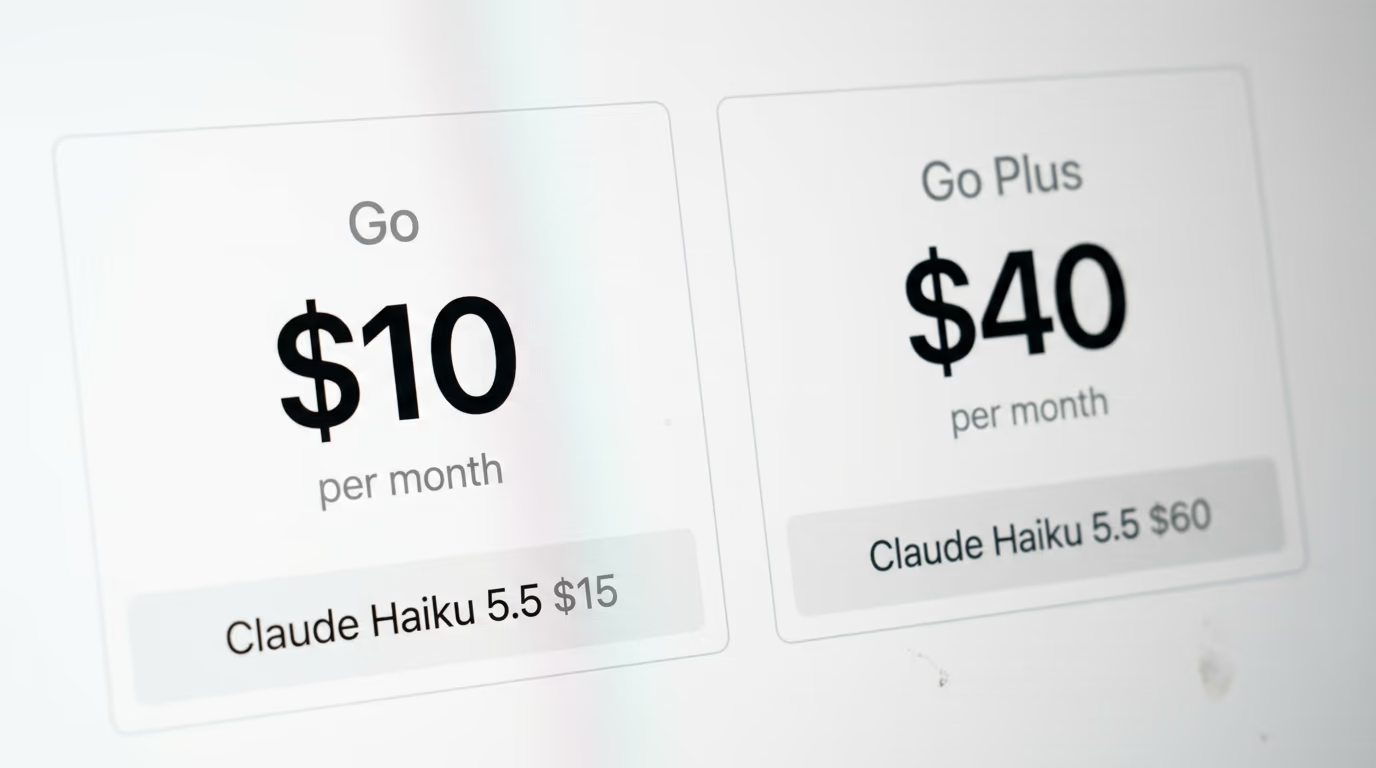
Claude Code needs a paid Claude account and the cheapest one is Pro at $20 a month, while OpenCode costs nothing to install and bills you through whichever model provider you choose, starting at $10 a month on Anomaly's own OpenCode Go plan. Anthropic's setup page states that the free claude.ai plan does not include Claude Code access.
| What you pay for | OpenCode | Claude Code |
|---|---|---|
| The program itself | $0, MIT licence | $0 to install, paid account required |
| Cheapest working month | OpenCode Go, $10 | Claude Pro, $20, or $17 billed yearly |
| The tier above that | Go Plus, $40 | Max, from $100 |
| Paying per token instead | OpenCode Console, no monthly fee | Anthropic Console, no monthly fee |
| Models included at no cost | several on the gateway | none |
| Prices read at the source | opencode.ai/go, 15 October 2026 | claude.com/pricing, 15 October 2026 |
OpenCode Go does not count your requests, it counts your money. Every model on the plan carries a monthly usage ceiling in dollars rather than a request quota, and Anomaly calls those figures estimates rather than promises. That ceiling is also split across time, so a fifth of the monthly allowance is available in any 5 hours and half of it in a week.
Anthropic prices the other way, by plan rather than by model. Pro covers Claude Code alongside everything in the free plan, and the Max plans above it are shown on claude.com/pricing with a starting price rather than a fixed one. What no plan publishes is how much Claude Code work a month of usage actually buys, which is the same gap we found reading every provider's billing page for AI spending limits.
For a first month the arithmetic is short. The cheaper way to have a working coding agent on your machine tonight is OpenCode Go, and the cheaper way to have Claude Code is Claude Pro at twice that price. Neither figure tells you how far it goes, because neither company publishes a number you could plan against.
Can you use your Claude Pro subscription inside OpenCode?
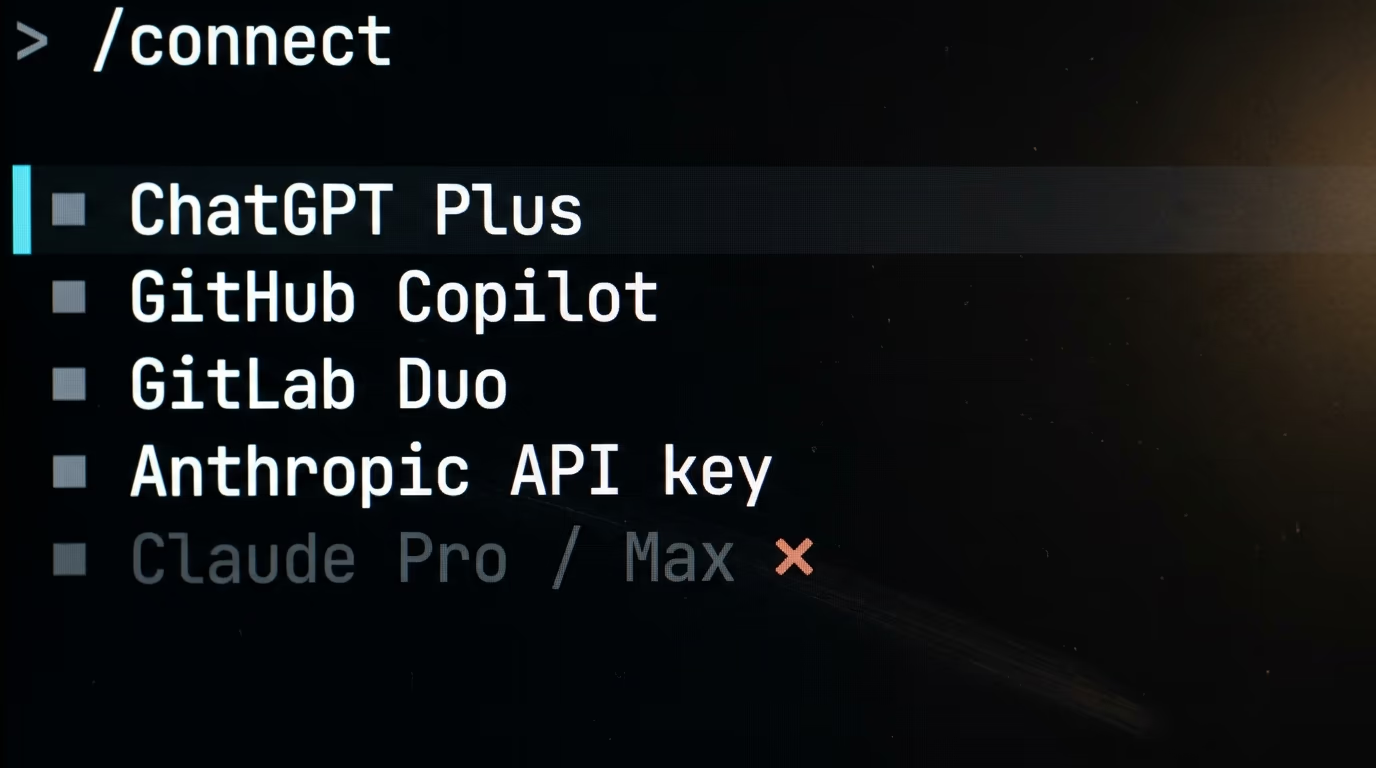
No, and OpenCode says so itself. Its provider documentation states that Anthropic prohibits using Claude Pro or Max models with OpenCode, and the plugins that used to make it work came out of the program in version 1.3.0.
Anthropic explicitly prohibits this.
That sentence sits on OpenCode's own provider documentation for the version that installs today, and not in a forum thread. The same page lists the subscriptions that do work with no setup at all, and it names ChatGPT Plus, GitHub Copilot and GitLab Duo. So the asymmetry is real, and it runs in one direction only.
This is less of a scandal than it sounds, and the reason is an ordinary one. Anthropic sells Claude Code as the way to use a Claude subscription in a terminal, and a flat monthly price only holds while the company controls what runs against it. The result for you is still concrete, because the subscription you may already pay for cannot follow you into the other agent.
The subscriptions OpenCode does accept sign in through a browser window, the way any website does, and the program keeps the result on your own machine instead of asking you to paste anything. For every other provider you supply a credential by hand, which is one more errand on a first evening and the reason an existing subscription is worth more to you than the money it stands for.
You can run Claude models inside OpenCode anyway, by paying per token instead of per month. OpenCode's own gateway lists the same 3 Claude models Anthropic sells directly, and the rates on both pages match.
| Claude model | OpenCode Console, per million tokens | Anthropic's own page, per million tokens |
|---|---|---|
| Claude Haiku 5.5 | $0.10 in, $0.50 out (prompts up to 100,000 tokens) | $0.10 in, $0.50 out (prompts up to 100,000 tokens) |
| Claude Sonnet 5.5 | $2.00 in, $10.00 out | $2 in, $10 out |
| Claude Opus 5.5 | $4.00 in, $20.00 out | $4 in, $20 out |
| Both pages read on | 15 October 2026 | 15 October 2026 |
No markup is added anywhere in that grid, and neither of the 2 rival comparisons printed it. A job that costs a dollar through Anthropic costs a dollar through OpenCode, so the choice in front of you is between a flat monthly fee and a meter you watch, rather than between Claude and something cheaper.
Claude Code can be metered too, through an Anthropic Console account, so this is not a trick only OpenCode knows. The real difference is narrower and more useful than that, because OpenCode will take your ChatGPT subscription and your Anthropic credit inside the same program, while Claude Code takes Anthropic billing and nothing else. If you are weighing those monthly fees against each other, we priced the consumer side of it in Claude Pro against ChatGPT Plus.
Which models can each agent actually run?
OpenCode runs models from more than 75 providers, including models running on your own machine, while Claude Code runs Claude models only, whichever billing route you reach them through.
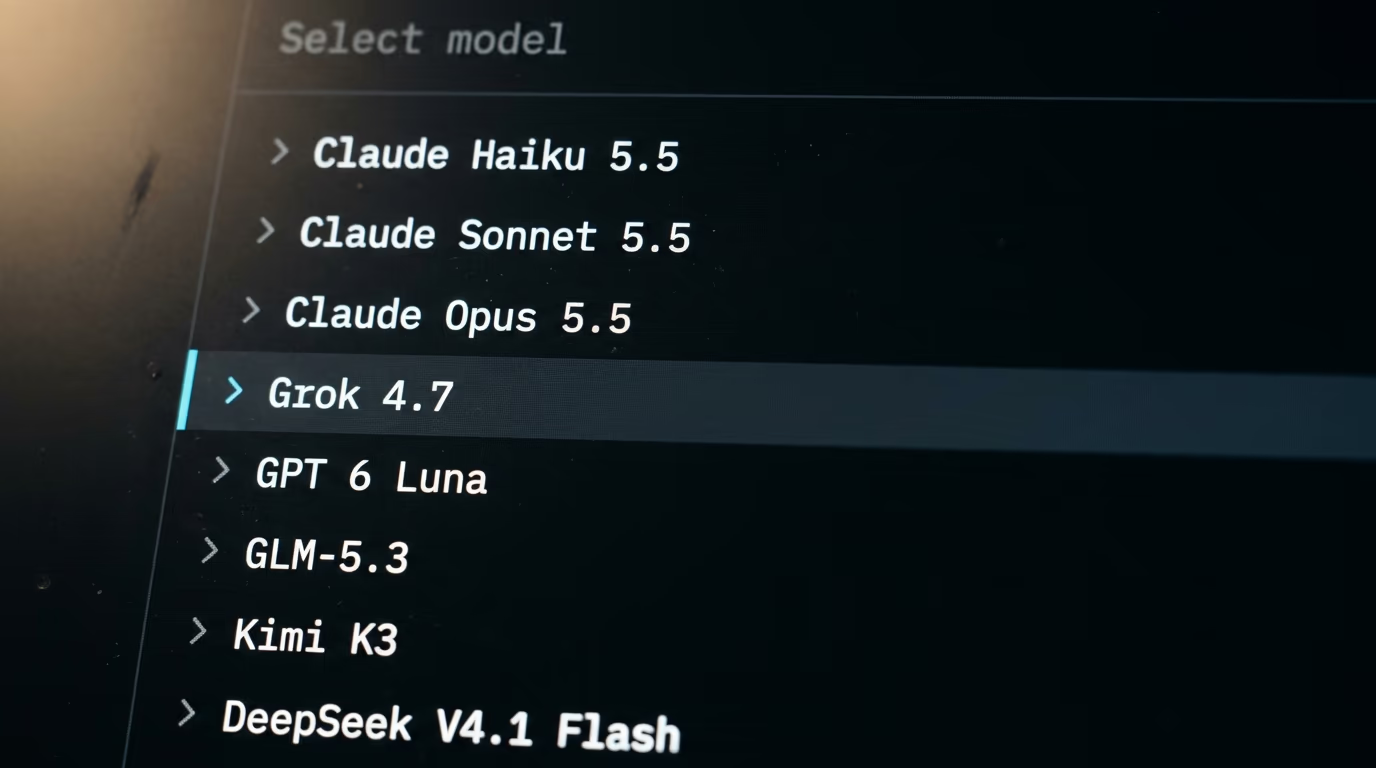
Anthropic publishes its own routes on its deployment page, and they are the Claude API direct, an Anthropic Console account, Amazon Bedrock, Claude Platform on AWS, Google Cloud's Agent Platform, which used to be called Vertex AI, and Microsoft Foundry. Each of them is a different company's invoice for the same family of models. No setting points Claude Code at a GPT model or at something running on your laptop.
OpenCode's list reads like a different kind of product. The cheaper Go plan alone carries dozens of models, one of which is Anthropic's, and the gateway's pricing page also lists a row of models that cost nothing at all. Point OpenCode at Ollama and it runs whatever you have already downloaded, which is the route we costed in the best local model for coding.
Where each agent runs is a smaller difference than it looks. OpenCode ships a terminal interface, a desktop application and an editor extension, and after the rebuild all of them speak to the same background service, so a session you start in one surface stays visible from another. Anthropic covers the same ground from its own side, with a terminal, a desktop application, extensions for VS Code and JetBrains, and sessions that run in the cloud and open in a browser. Neither of them lives only in a terminal any more.
One family of models buys something back, and the comparisons rarely credit it. Anthropic tunes the agent against the models it ships, which is why its sandboxing and its permission system are further along than anything in the open field. Breadth and fit are a genuine trade, and a long model list does little for you if you only ever reach for 2 of them. We ranked that whole field in the best coding agents.
Who owns the code, and what breaks when you upgrade?
OpenCode is published under the MIT licence, so anyone may read it, fork it and ship it commercially, while Claude Code's public repository carries a licence file saying only that Anthropic reserves all rights and that use falls under its commercial terms.
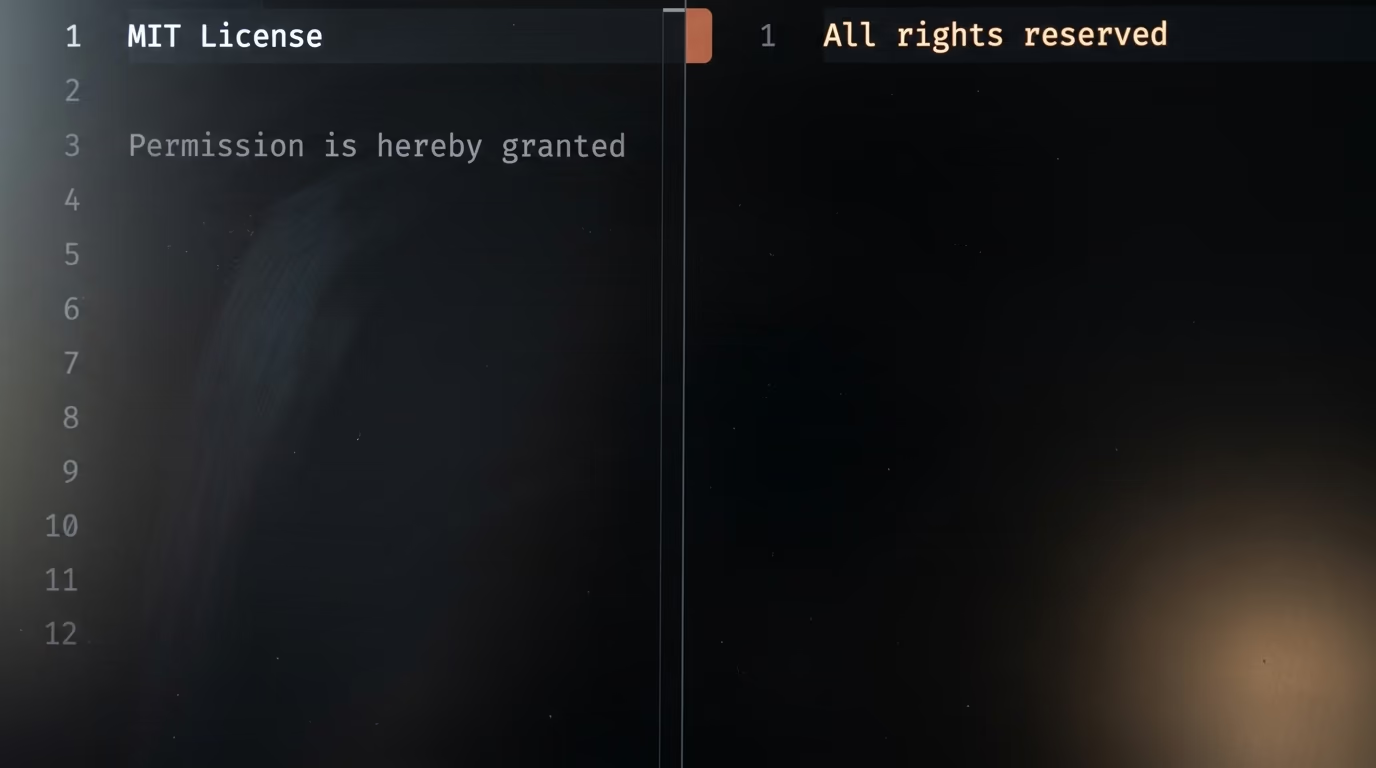
The 2 repositories are not the same kind of thing, and the star counts flatter the comparison. anomalyco/opencode holds the program's actual source in TypeScript, which is what those stars are pointing at. anthropics/claude-code holds documentation, plugins, mods and examples, while the program itself arrives as a signed binary nobody outside Anthropic can read.
A licence matters on the day a company changes direction. An MIT project can be forked by anyone who disagrees with where it goes, and a closed one leaves you waiting for a decision you have no vote in, which is the difference we took apart in a model you can download but cannot ship.
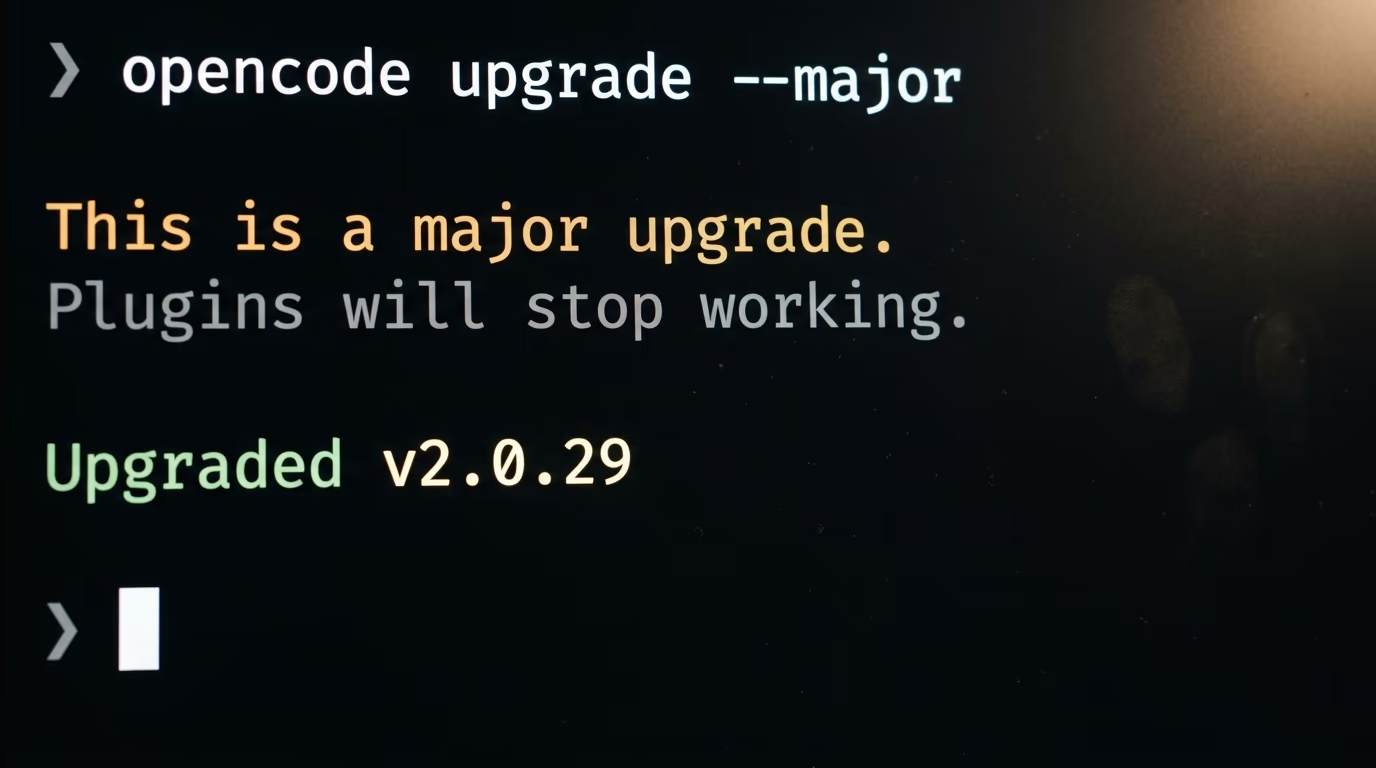
Upgrading is where the 2 programs diverge again. OpenCode 2 is a break and Anomaly says so, because plugins written for the previous version stop working, the server API is different, and the configuration file for the terminal interface has moved. Every entry at the top of Claude Code's newest release notes is an addition instead, which is what a version that installs itself in the background has to be.
Neither position is obviously the safer one. Running a program you can read means you also carry the upgrade, and OpenCode has just proved it by shipping a major version that breaks what you built on the old one. Running a signed binary means somebody else carries the upgrade and you accept whatever arrives, which has been fine so far and is still a bet.
What do we not know yet about OpenCode 2?
3 things about OpenCode 2 are not published anywhere today. Nobody outside Anomaly knows when it becomes the default install, whether the npm package will ever carry the newer series at all, or whether an upgraded machine can be moved back to the version before it.
Anomaly's announcement describes the rebuild and the breaking changes without ever naming a date for the switch, and GitHub and npm both still point at the older release while the changelog has moved on. Both of those can be true at once, because a project may ship a major version behind an opt in for as long as it likes. Nobody should plan around a date that has not been printed.
The announcement also rests the rebuild on the experience of millions of daily users, and Anomaly has published no figure behind that phrase, so it belongs here as the company's own description rather than as a measurement anybody checked. We found no independent comparison of the 2 versions either, which is normal this early. Its changelog is currently the only account of what the new version does.
If you want the newer version tonight, one command moves you across, and it is the command Anomaly's own release notes name.
opencode upgrade --majorThe program prints the version it moved you to when it finishes, and your old plugins stop working at the same moment. Anomaly's own migration guide never says whether you can go back, and it tells you to keep a copy of your version 1 setup while you check the new one over, which is worth doing on an evening when a reinstall would not ruin your week.
The open question on the Claude Code side is older and larger. No Claude plan publishes how much Claude Code work a month of usage buys, so the only way to find your ceiling is to reach it, and that has been true since the first Max plan shipped.
Which one should you install tonight?
Install Claude Code if you already pay for Claude, because the subscription you hold is the one thing OpenCode is not allowed to use, and paying twice to reach the same models makes no sense. Install OpenCode if you already pay for ChatGPT, GitHub Copilot or GitLab Duo, because it takes any of those with no setup at all and Claude Code takes none of them.
If you pay for neither of them, OpenCode Go is the cheaper first month and the decision is not final, because the same program will run Anthropic's largest model at Anthropic's own rate the week you decide you want it. Claude Code has no door in the other direction, and that is what decides it.
There is a case for keeping both of them. Claude Code is the tidier place to spend a Claude subscription you already hold, and OpenCode is where you reach everything else, including a model running on your own machine with no network at all. They install separately and keep their credentials in different places, and running both costs you whatever you were already paying for one of them.
Whichever one you install, check what you actually installed. The OpenCode you get tonight is the older release, the OpenCode 2 everyone read about this week is one command away, and that command breaks your plugins. We ran the same 5 checks against a different rival in Claude Code against Codex, and the billing and the licence decided more there than the feature list did as well. If you end up keeping both agents, give them a single instruction file to read, which is what an AGENTS.md file is for.
Questions people ask
In OpenCode vs Claude Code, which one is actually free?
OpenCode is free as a program, published under the MIT licence, and Claude Code is free to install but needs a paid Claude account. Neither of them is free to use, because both spend money on model calls, and the cheapest working month is OpenCode Go at $10 against Claude Pro at $20.
Can OpenCode use my Claude Pro or Max subscription?
No. OpenCode's provider documentation says Anthropic prohibits using Claude Pro or Max models with OpenCode, and the plugins that used to allow it are no longer bundled with the program. You can still reach Claude models in OpenCode by paying per token through its gateway, at the same rates Anthropic publishes on its own pricing page.
How do I get OpenCode 2?
Run the major upgrade command in a terminal, or type /update inside the program. A fresh install today gives you 1.19.0 instead, because GitHub's newest release and the npm latest tag both still point there, and the version announced this week is an upgrade you opt into.
Does Claude Code run any model that is not Claude?
No. Claude Code reaches Claude models through the Claude API, an Anthropic Console account, Amazon Bedrock, Claude Platform on AWS, Google Cloud's Agent Platform and Microsoft Foundry, and every one of those routes serves the same family of models. There is no setting that points it at a GPT model or at a model running on your own machine.
In OpenCode vs Claude Code, which one suits a beginner better?
Claude Code asks fewer questions, because the account you buy and the model you run are the same decision, and Anthropic publishes a terminal guide for people who have never opened one. OpenCode asks you to choose a provider and supply credentials before you can work, which is more power and more setup on the first evening.
What breaks when I upgrade OpenCode?
Plugins written for the previous version stop working, anything built against the old server API needs updating, and the configuration file for the terminal interface has moved. Anomaly lists all 3 of those as breaking changes in its own announcement.